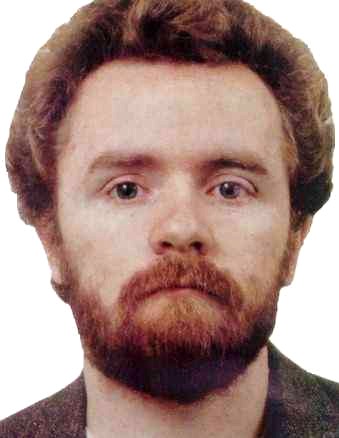
John Duffy
Murderer John Cooper
Murderer · United Kingdom · 1985
John Cooper was a serial killer from Milford Haven, Pembrokeshire. Cooper was c…
4 victims
John Cooper
Murderer · United Kingdom · 1985
John Cooper was a serial killer from Milford Haven, Pembrokeshire. Cooper was c…
4 victims
 Andrew Walker
Murderer · United Kingdom · 1985
Royal Scots corporal Andrew Walker killed three Army colleagues in a payroll ro…
3 victims
Andrew Walker
Murderer · United Kingdom · 1985
Royal Scots corporal Andrew Walker killed three Army colleagues in a payroll ro…
3 victims
 Arthur Hutchinson
Murderer · United Kingdom · 1983
Arthur Hutchinson was an English murderer and rapist who committed three murder…
3 victims
Arthur Hutchinson
Murderer · United Kingdom · 1983
Arthur Hutchinson was an English murderer and rapist who committed three murder…
3 victims
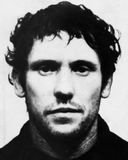 Barry Prudom
Murderer · United Kingdom · 1982
Barry Prudom was the prime suspect in the killings of police officers after pol…
3 victims
Barry Prudom
Murderer · United Kingdom · 1982
Barry Prudom was the prime suspect in the killings of police officers after pol…
3 victims
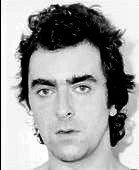 John Cannan
Murderer · United Kingdom · 1986
John Cannan Susannah “Suzy” Lamplugh was a British estate agent reported missin…
3 victims
John Cannan
Murderer · United Kingdom · 1986
John Cannan Susannah “Suzy” Lamplugh was a British estate agent reported missin…
3 victims
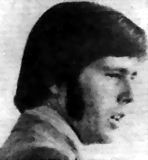 Wayne Clifford Boden
Serial killer · Canad a · 1969
Wayne Clifford Boden was a Canadian serial killer and rapist active from 1968 t…
4 victims
Wayne Clifford Boden
Serial killer · Canad a · 1969
Wayne Clifford Boden was a Canadian serial killer and rapist active from 1968 t…
4 victims
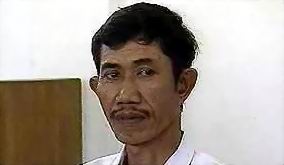 Ahmad Suradji
Serial killer · Indonesia · 1986
Ahmad Suradji (born 10 January 1949) was a serial killer in Indonesia. He was a…
42 victims
Ahmad Suradji
Serial killer · Indonesia · 1986
Ahmad Suradji (born 10 January 1949) was a serial killer in Indonesia. He was a…
42 victims
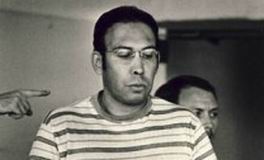 Teófilo Medina
Murderer · USA · 1984
Teofilo Medina, Jr. stole a gun from a pawn shop in Santa Ana, California. In t…
4 victims
Teófilo Medina
Murderer · USA · 1984
Teofilo Medina, Jr. stole a gun from a pawn shop in Santa Ana, California. In t…
4 victims
 Brian Rooney
Murderer · USA · 2006
Brian Rooney (born June 27, 1970) was a former construction worker. He was conv…
1 victim
Brian Rooney
Murderer · USA · 2006
Brian Rooney (born June 27, 1970) was a former construction worker. He was conv…
1 victim
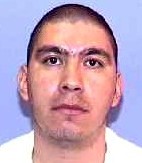 Rigoberto Avila
Murderer · USA · 2000
Rigoberto Avila, Jr. was convicted of capital murder in El Paso County, Texas.…
1 victim
Rigoberto Avila
Murderer · USA · 2000
Rigoberto Avila, Jr. was convicted of capital murder in El Paso County, Texas.…
1 victim
- Gender
- male
- Country
- United Kingdom
- Location
- North London, England, United Kingdom
- Date of birth
- 1956
- Age at first offence
- 29
- Characteristics
- serial rapist, rapist
- Victim profile
- Alison Day, 19 / Maartje Tamboezer, 15 / Anne Lock, 29
- Method of murder
- Strangulation
- Date(s) of murder
- 1985 - 1986
- Years active
- 1985–1986
- Date of arrest
- November 23, 1986
- Status
-
Life imprisonment
Convicted of two murders and four rapes; sentenced to life in prison (minimum 30 years) in February 1988
Case record: John Duffy
Status
John Duffy was convicted of two murders and four rapes and was sentenced to life in prison (minimum 30 years) in February 1988.
Timeline
- 29 December 1985 — Alison Day, 19, was dragged off a train at Hackney Wick station by John Duffy and David Mulcahy and was repeatedly raped; she was then strangled with a piece of string.
- 15 January 1986 — Alison Day’s body was found in the River Lea.
- 17 April 1986 — Maartje Tamboezer, 15, was killed.
- 18 April 1986 — Maartje Tamboezer’s body was found.
- 18 May 1986 — Anne Lock, 29, was ambushed getting off a train at Brookmans Park station in Hertfordshire; she was abducted, raped and murdered.
- 21 July 1986 — Anne Lock’s body was found.
- February 1988 — John Duffy went on trial and was convicted of two murders and four rapes.
- February 2001 — David Mulcahy received three life sentences and was convicted of three murders and seven rapes (and related offences stated in the record), after a trial in which John Duffy gave evidence against him for 14 days.
- 2001 — A television movie, Witness of Truth: The Railway Murders, was released, starring Huw Higginson and Nicholas Marchie as Duffy and Mulcahy respectively.
- 2004 — An entry in the record listed further reading: Forensic Psychology: Concepts, Debates, and Practice by Joanna R. Adler (Willan Publishing, 2004).
People
- John Duffy — defendant; British rapist and serial killer; martial arts instructor; later convicted for two murders and four rapes.
- David Mulcahy (born 1959) — accomplice; British rapist and serial killer; convicted separately (three murders and seven rapes, with additional sentencing details stated in the record).
- Alison Day — victim; aged 19; murdered (killed) with reported dates and circumstances.
- Paul Tidiman — Alison Day’s fiancé.
- Maartje Tamboezer — victim; aged 15; murdered (killed) with reported dates and circumstances.
- Anne Lock — victim; aged 29; secretary; murdered with reported dates and circumstances.
- Margaret Mustafa — Duffy’s wife; gave evidence at the Old Bailey about Duffy raping her during bondage sex sessions and terrorising their German Shepherd dog Toby.
- Ted Biggs — a rapist who later attacked on Hampstead Heath; his case and investigation were described as leading to events that implicated Mulcahy.
- Caroline Murphy — DC; met DC John Haye in a pub; took action involving checking Duffy’s custody status.
- John Haye — DC; was exhibits officer in the Duffy inquiry.
- Jenny Cutler — psychologist; interviewed Duffy and was described as being the person who told Caroline Murphy Duffy had given the name of his accomplice as David Mulcahy.
- Mark Dennis — prosecutor; made statements quoted in the record.
- Michael Hyam — Recorder of London; made remarks quoted in the record at the end of Mulcahy’s trial in February 2001.
- Dr. David Canter — psychologist from the University of Surrey; produced a psychological profile used in the inquiry.
- Professor David Canter — described in the record as professor of Applied Psychology at the University of Surrey; also described as having produced the profile with multiple pointers.
- Huw Higginson — actor; starred as Duffy in the television movie Witness of Truth: The Railway Murders.
- Nicholas Marchie — actor; starred as Mulcahy in the television movie Witness of Truth: The Railway Murders.
- Judge Michael Hyam — referenced through “late Recorder of London Judge Michael Hyam” and quoted at the end of Mulcahy’s trial (not Duffy’s sentencing).
Background
John Duffy and David Mulcahy together attacked numerous women at railway stations in the south of England through the 1980s. They were known as the Railway Rapists and the Railway Killers. The record described first attacks in 1982 and subsequent attacks over the next years, including multiple assaults and several murders.
The record stated that Duffy was on the sex offenders register following conviction for the rape of his wife. Rope found in Duffy’s parents’ house linked him to the second murder victim. Mulcahy was also questioned due to his close friendship with Duffy, but victims were still traumatised and unable to pick him out of an identity parade; Mulcahy was released for lack of evidence.
The record described a shift in naming after Alison Day’s death, changing a moniker from Railway Rapist to Railway Killer. After the rape and murder of 15-year-old Maartje Tamboezer in West Horsley on 17 April 1986, the body was set on fire.
The record also stated that on 18 May 1986 local TV presenter Anne Locke, 29, was abducted and murdered after dismounting a train in Brookmans Park, Hertfordshire. It further described that police brought in Dr. David Canter (University of Surrey) to help their inquiries and that Canter examined the details of each crime and built up a profile of the attacker’s personality, habits and traits.
The record stated that Duffy was arrested while following a woman in a secluded park. He was questioned about the spate of rapes and murders and was charged the next day on all counts.
The offence
The record described the attacks as occurring repeatedly at or connected with railway locations in the south of England. It described multiple rapes and murders involving blinding, binding, strangulation, and other forms of violence.
Murder and rape convictions at trial
At trial in February 1988, Duffy was convicted of two murders and four rapes. The record stated that he was acquitted of raping and killing Anne Locke.
Investigation
Police set up an urgent workshop to try to find the perpetrators, called Operation Hart. A psychologist from the University of Surrey, Dr. David Canter, was brought in. The record described that there had been no previous use of “psychological offender profiling” as it was known, but something fresh was required as three women had been murdered and numerous more raped, with little progress being made.
The record described a breakthrough in which a profile produced 17 pointers; 13 pointers fitted Duffy. It also described that police found Duffy’s dog named Bruce matching a rape victim’s story. It stated that during a search of Duffy’s mother’s house a ball of Somyarn was found under the stairs, and it was matched to a length of Somyarn used to bind a murder victim. It also described that fibres found on Duffy’s clothes matched those recovered from the body of Alison Day.
In custody, Duffy was described as not admitting anything even when faced with evidence, remaining impassive as he was charged with rape and murder and betraying no emotion at trial.
The record described a later re-examination of exhibits using DNA techniques that were not available in the 1980s, and it described fingerprint testing that led to confirming Mulcahy’s involvement.
Arrest and charging
The record stated that Duffy was arrested while following a woman in a secluded park, was questioned about the rapes and murders, and was charged on all counts the next day.
It also described an earlier police interest in Duffy in the context of interrogation and arrests around 17 May and subsequent events, including a refusal to give blood samples when called in for questioning; however, these elements were included in the narrative and not tied to a separate legal outcome for Duffy beyond his later trial and conviction.
Trial
John Duffy went on trial in February 1988 and was convicted of two murders and four rapes.
The record stated that Duffy pleaded not guilty to all counts, but was convicted of all the rapes and the murders of Maartje Tamboezer and Alison Day. It further stated that the prosecution agreed that there was insufficient evidence in the case of Anne Lock and Duffy was acquitted of this murder.
The record included that Duffy was acquitted of raping and killing Anne Locke, and that he had been cleared of Anne’s murder at his trial. It stated that Duffy had taken the stand without emotion described and had refused to admit anything throughout questioning and at trial.
Sentencing
The record stated that Duffy was given a minimum tariff of 30 years by the judge and later that this was extended to a whole life tariff by the Home Secretary.
The record stated that a European Court of Human Rights ruling later removed the right of politicians to reset sentence tariffs, and so Duffy’s stay in prison was reverted to the original 30 years. It further stated that Duffy’s stay in prison was reverted to the original 30 years, and that he would be in prison until at least 2018 and the age of 69.
The record also stated that Duffy was sentenced to life in prison (minimum 30 years) in February 1988.
Appeals
The record stated that a European Court of Human Rights ruling removed the right of politicians to reset sentence tariffs, affecting Duffy’s sentence tariff.
Outcome
Aftermath
After his conviction, the record stated that Duffy revealed to a forensic psychologist what the police knew already—that he had not attacked the women alone. It stated that Duffy implicated Mulcahy in 1997.
The record stated that in 2000 Duffy appeared at the Old Bailey as a witness against Mulcahy and gave detailed evidence over 14 days, and that it was the first time a highest-category prisoner had ever given evidence against an accomplice.
The record stated that at Mulcahy’s trial in February 2001 Mulcahy was convicted of three murders and seven rapes and handed 3 life sentences, with a 30-year recommendation as stated in the record. The record also stated that neither man was expected to be released from prison alive.
The record also described occasional publicity, including newspaper claims about payment and other descriptions.
Victims and described circumstances
Alison Day
Alison Day was aged 19. The record stated she was murdered on December 29, 1985 and found on January 15, 1986. It stated she was on her way to keep her fiancé Paul Tidiman company while he was working overtime at a printers by Hackney Wick station, and that she was late. The record stated she planned to walk the short distance to the print works, met her killer while walking down a towpath alongside a canal, and was forced at knifepoint into a block of rat-infested garages with her hands tied behind her with coarse string in a “praying position.”
The record described that she was savagely raped and strangled using a technique known as a “Spanish Windlass.” It stated that once she was dead her killer weighted the body down using stones and threw the body into the nearby River Lea, and it stated it was not found until 15 January 1986 with forensic evidence washed away. It further described that police found her body face down in the adjacent river Lee and that her blouse had been cut into three pieces and used to gag and bind her, with the third piece round her neck used as a tourniquet to strangle her.
The record also described that on December 29, 1985 Alison was the only person to get off the train, that Mulcahy grabbed her and Duffy produced a knife, and that Mulcahy cut up her blouse and put a tourniquet around her neck; it stated that Mulcahy told Duffy to take hold of the tourniquet and give it a twist. It included a quotation attributed to Mulcahy in court:
"It was the right thing to do".
The record also included an extended quotation attributed to Duffy during his account of events:
"She was saying things like ''It is only his moustache I have seen, I won't tell anyone, please don't hurt me.'' I was watching David and the girl. The next thing I noticed was he was putting some material round her neck and starting to twist it.'
It also included a quote attributed to Duffy about Mulcahy’s enjoyment and power:
'David actually enjoyed it, saying it gave him power - the decision over life and death. I remember him going on: ''It is God-like - having the decision over life and death.''
The record stated that Alison’s sheepskin coat was weighed down with stones and she was hurled back into the water, and that she was found 17 days later bound and gagged with her hands tied behind her back.
Maartje Tamboezer
Maartje Tamboezer was aged 15. The record stated she was murdered on April 17, 1986 and found on April 18, 1986. It stated she was one of 3 sisters, children of a Dutch businessman living in West Horsley, Surrey.
The record described that on the afternoon of Thu 17 April 1986 Maartje was to leave on holiday the next day and had cycled to buy sweets for the journey. It stated she was knocked off her bicycle with a length of fishing line stretched across the path, describing a technique Duffy had learned from one of his favourite books, The Anarchist's Cookbook. It described that the teenager was marched across fields between Effingham and East Horsley in Surrey and raped by Duffy.
The record stated that Duffy claimed Mulcahy suddenly lost his temper and that Mulcahy hit her across the head with a rock or a stone. It included a quotation attributed to Duffy:
'He was becoming very aggressive - hyper, shouting at the girl,' Duffy recalled. 'He then raised his fists and hit the girl. She crumpled to the floor. She was struck on the head, at the side. It was a swinging blow. I noticed he had a rock in his hand, or a stone. She just crumpled up and fell on the floor. I believe she was unconscious.'
It then described that Duffy ripped off Maartje’s belt and looped it around her throat, and it included additional quotations attributed to Duffy:
'I did the last one, you'll do this one. He passed me the belt. It had a piece of stick through it which was twisted and he gave it to me in my hand,' Duffy told the jury. 'I actually started twisting it while David turned away. I think I just got caught up in it. It is very difficult to explain. I just continued twisting until she was dead.'
The record described that they left the scene but Mulcahy returned and set Maartje’s body alight, stuffing burning tissues into her vagina hoping to destroy forensic evidence.
The record also included a quotation attributed to Duffy about his alleged explanation of karate and a broken neck bone, and it described that police noted one neck bone was broken possibly caused from a karate blow in the opinion of the pathologist.
In a separate section, the record stated that after the killing Mulcahy went back to wipe away fingerprints.
A quotation attributed to Duffy described Mulcahy’s belt instruction:
"I did the other one. It's your turn to do this one."
The record stated her bicycle was found propped against a tree and described an orange nylon wire stretched across a footpath at chest height, and described that it had been purposely set to force Maartje to dismount.
Anne Lock
Anne Lock was aged 29. The record stated she was murdered on May 18, 1986 and found on July 21, 1986. It stated that she worked as a secretary for London Weekend Television, had only been married for a month, and returned from her honeymoon only a week in the Seychelles before she was murdered.
The record stated that Anne usually took a train home to Brookman’s Park near Potter’s Bar, Hertfordshire. It described that she left work at 8.30pm but never returned home, leaving her bicycle in the shed at the station at Brookmans Park. It described that Duffy and Mulcahy hid her bike intending to trap her as she went to find it, seized her, led her down the railway tracks to a field, and raped and murdered her.
The record stated that her badly decomposed body was found in undergrowth on July 21, 1986. It described that one sock was inside her mouth and the other had been tied around her jaw, and that an attempt was made to burn her.
The record included a quotation attributed to Duffy about Mulcahy being evasive and making comments:
'David said he had taken care of it. He was very evasive, like he was playing mind games. He was saying: ''She won't identify us now''. He was very excitable, buzzing. He was even saying: ''Keep your eyes open for another one.''
The record stated that Anne’s decomposed body was found two months after she was murdered in undergrowth just a mile from her home and that she had been suffocated with her own sock. It also stated that the prosecution agreed there was insufficient evidence in the case of Anne Lock and Duffy was acquitted of this murder.
Other details
Psychological profiling and key persons
The record described that Canter examined the details and built up a profile of the attacker’s personality, habits and traits. It described that within two weeks Canter produced a report giving the police 17 pointers towards the character, behaviour and possible location of the killer.
The record stated that the killer’s profile included that the killer lived in Kilburn or Cricklewood areas of London; was married but had no children; marriage was in serious trouble; had few friends; was physically small and felt unattractive; had an interest in Martial Arts or Bodybuilding; felt the need to dominate women; fantasised about rape and bondage; had a fascination for weapons, especially knives and swords; indulged fantasies with videos and magazines; kept a souvenir of crimes; had a semi skilled job as a plumber, carpenter or similar; and was age 20 to 30.
The record stated that 13 pointers fitted Duffy exactly. It also stated that police fed the details into a computer and sifted through a suspect database of 1,999 suspects, and the computer identified John Duffy after detectives cross-checked the profile.
Duffy’s personal and family background
The record described Duffy’s personal background: it stated he was born on the 29 November 1958 in Northern Ireland, was the second of John and Philomena Duffy’s 3 children, and came from a respectable Catholic family. It stated he was a choir and altar boy at the local Catholic Church and attended St Dominic’s RC School in Kilburn, North London, and from the age of 12 Haverstock Secondary School.
The record stated that Duffy was shy and enjoyed swimming and judo and joined the scouts and the Army cadets. It described that his written work was poor and he was advised to seek work learning a trade “with his hands.”
It stated that in April 1975 Duffy enrolled as an apprentice carpenter with a firm in Camden, North London, and obtained his City and Guilds craft certificate. It stated that when he finished his apprenticeship in 1978, he was not offered employment by the firm and that he spent the next two years working for a London building firm. It stated that in 1980 he joined British Rail and that he learned extensive knowledge of the railway system in and around London.
The record stated he met his future wife Margaret Byrne, they were married at Camden register office in June 1980, the marriage was secret because Margaret’s parents disapproved, and they did not begin to live together until 3 months after the wedding. It stated the marriage was happy until spring 1982 when Duffy learned he was unable to father a child, attempted suicide, and began to beat Margaret; Margaret left him in August and returned a month later.
It stated that in August 1985 Duffy raped his wife and that Duffy’s separation, his violent tendencies, and police theorised geographical planning were linked to his martial arts training and sex attacks. It also stated that after his arrest police found several urban guerrilla manuals in his home listing ways to incapacitate, silence and kill and stressed escape routes.
The record also stated that Duffy used a dog named Bruce and that Duffy’s German Shepherd dog Toby was terrorised as part of testimony by Margaret Mustafa.
Statements and quotations attributed to named persons
The record included a quotation attributed to prosecutor Mark Dennis:
'Duffy was the serial rapist. It was his partner who had that aggressive streak and the one who had the desire to dominate and exercise power and control over life and death,' said prosecutor Mark Dennis. 'Mulcahy was getting more out of this. He wanted something more than just rape. It was the taller man who enjoyed exercising power over their victims, tormenting them, humiliating them on occasions. 'Mulcahy was an arrogant and cruel character playing with his victims as if the whole thing was a game, getting satisfaction and enjoyment from bullying and picking on the vulnerable.'
The record included a quotation attributed to Mulcahy explaining the logic he described for the killing of Alison Day:
The record also included additional quotes attributed to victims described in the narrative, including:
'I put my hands up and the taller man said: 'Don't worry, it is a knife.'
"Please don't hurt me.”
'He told me to take off all my clothes and lie down. Then he pulled his trousers down to his knees and lay on top of me.'
'They had a knife and said they would cut me if I didn't do as I was told. All I could say was: ''Please don't hurt me.”
'Don't worry, it is a knife.'
Incidental details about equipment and methods described in the record
The record described “rapist’s kit” elements including balaclavas, knives and tape to gag and blindfold victims, and described the Michael Jackson tape “Thriller” as part of the kit. It described the use of sticking plaster to stifle screams, a “Spanish Windlass” method involving clothing torn away and looped around the throat with a wood twist, and the burning of bodies to destroy forensic evidence.
Film and further reading listed in the record
The record listed further reading items including:
- Forensic Psychology: Concepts, Debates, and Practice by Joanna R. Adler (Willan Publishing, 2004; ISBN 1-84392-009-3).
- Crime: Psychology in Practice by Julie Harrower (Oxford University Press, 2001; ISBN 0340844973).
- Written in Blood: A History of Forensic Detection by Colin Wilson and Damon Wilson (New York: Carroll & Graf Publishers, 2003; ISBN 0-7867-1266-X).
The record also listed a television movie: Witness of Truth: The Railway Murders.
Spotted an error, or have more information about this case?