Stella Williamson
Murderer Lydia Trueblood
Murderer · USA · 1915
Lydia Trueblood was born in 1915. She was convicted in Idaho in 1921 and died o…
6 victims
Lydia Trueblood
Murderer · USA · 1915
Lydia Trueblood was born in 1915. She was convicted in Idaho in 1921 and died o…
6 victims
 Martha Wise
Murderer · USA · 1924
Martha Wise (born 1885; died June 28, 1971), also known as “the Borgia of Ameri…
3 victims
Martha Wise
Murderer · USA · 1924
Martha Wise (born 1885; died June 28, 1971), also known as “the Borgia of Ameri…
3 victims
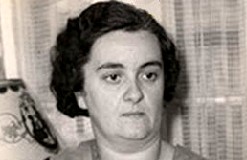 Mary Frances Creighton
Murderer · USA · 1923
Mary Frances Creighton (c. 1898 - July 16, 1936) was a housewife and was execut…
3 victims
Mary Frances Creighton
Murderer · USA · 1923
Mary Frances Creighton (c. 1898 - July 16, 1936) was a housewife and was execut…
3 victims
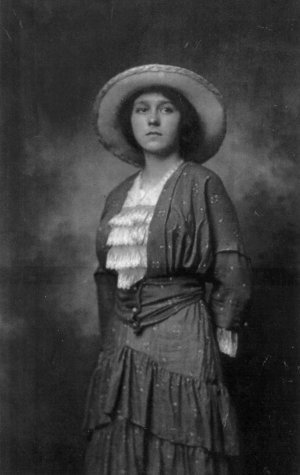 Inez Palmer
Murderer · USA · 1926
Inez Palmer — defendant; lived at the Stout farmhouse and pleaded guilty to a f…
2 victims
Inez Palmer
Murderer · USA · 1926
Inez Palmer — defendant; lived at the Stout farmhouse and pleaded guilty to a f…
2 victims
 Winnie Ruth Judd
Murderer · USA · 1931
Winnie Ruth Judd (January 29, 1905 – October 23, 1998) was a Phoenix, Arizona m…
2 victims
Winnie Ruth Judd
Murderer · USA · 1931
Winnie Ruth Judd (January 29, 1905 – October 23, 1998) was a Phoenix, Arizona m…
2 victims
 Anthony Carr
Mass murderer · USA · 1990
Anthony Carr v. State of Mississippi (Supreme Court of Mississippi; En Banc). N…
4 victims
Anthony Carr
Mass murderer · USA · 1990
Anthony Carr v. State of Mississippi (Supreme Court of Mississippi; En Banc). N…
4 victims
 Donald Henry Gaskins
Serial killer · USA · 1969
Donald Henry Gaskins, also known as Donald “Pee Wee” Gaskins, was a serial kill…
200 victims
Donald Henry Gaskins
Serial killer · USA · 1969
Donald Henry Gaskins, also known as Donald “Pee Wee” Gaskins, was a serial kill…
200 victims
 Martin Raul Soto-Fong
Homicide · USA · 1992
Martin Raul Soto-Fong was sentenced to death on February 3, 1994. Soto-Fong and…
3 victims
Martin Raul Soto-Fong
Homicide · USA · 1992
Martin Raul Soto-Fong was sentenced to death on February 3, 1994. Soto-Fong and…
3 victims
 Kennath Henderson
Murderer · USA · 1997
April 26, 1997 — Kennath Henderson was planning an escape from the Fayette Coun…
1 victim
Kennath Henderson
Murderer · USA · 1997
April 26, 1997 — Kennath Henderson was planning an escape from the Fayette Coun…
1 victim
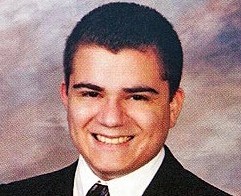 William Freund
Homicide · USA · 2005
October 15, 2005 — Freund wrote that he had tried suicide before. · October 29,…
2 victims
William Freund
Homicide · USA · 2005
October 15, 2005 — Freund wrote that he had tried suicide before. · October 29,…
2 victims
 Charles Stuart
Murderer · USA · 1989
Charles Stuart was born in 1959 and died on January 4, 1990. He was described a…
1 victim
Charles Stuart
Murderer · USA · 1989
Charles Stuart was born in 1959 and died on January 4, 1990. He was described a…
1 victim
- Gender
- female
- Country
- USA
- Location
- Gallitzin, Cambria County, Pennsylvania , USA
- Date of birth
- January 22, 1904
- Age at first offence
- 21
- Characteristics
- infanticide, parricide
- Victim profile
- Her children
- Method of murder
- Suffocation - Ligature strangulation
- Date(s) of murder
- 1925 - 1932
- Years active
- 1925–1932
- Date of arrest
- —
- Status
-
Died in custody
Died of natural causes on August 25, 1980, leaving directions to the remains with an explanatory letter
Background
Stella Williamson was born in 1904 and died at age 76 on August 25, 1980 from natural causes.
She lived a reclusive life and was unmarried. She was described as quiet and sweet, and she made a regular appearance in a local church. Parishioners knew little about her past and present life. Neighbors characterized her differently, including claims that she was domineering, unkind, coveting, and quick to anger, and that she made unkind remarks about passersby from a window on her enclosed front porch. She was described as skilled at needlework and as a good cook. She was also described as overweight her entire life and as rarely venturing past the front porch of her life-long home on Forest Street. Records showed she weighed 229 pounds at her death.
In 1975, one of Stella’s legs was amputated, and she never quite recovered.
After her death, a sealed envelope marked to be opened after her death was discovered and a letter written in 1960 was found inside.
Other details
Stella Williamson’s home address was 310 Forest St., Gallitzin.
Stella’s companion, Guy Schrack, shared the home with her. Schrack later buried Stella.
Stella’s parting message to authorities included guidance about the attic of Williamson’s house and an old trunk.
She wrote personal lines in her letter indicating remorse and placing blame avoidance on herself, and also wrote that “He never wanted me. Only something to play with and I was a fool in his hands.”
Letter content (February 1960)
Guy Schrack found a handwritten letter dated February 1960 while putting Stella’s things in order.
The letter read:
“Today I started to bleed and I want to make things right if anything should happen to me. In the attic in an old trunk you will find babies I had to Howard Drass thirty years or more. How I got away with I don’t know but I did so I don’t want anyone else to be blamed for something they know nothing about. This is one reason I could never marry anyone else. I have lived a good life since so as God is my judge this is the truth. Please forgive me if you can.”
There were a few lines regarding personal items and then she simply wrote, “Stella.”
As a postscript, Stella wrote:
“He never wanted me. Only something to play with and I was a fool in his hands.”
Discovery of the remains
After the funeral, an acquaintance discovered the sealed envelope and opened it. The letter directed police to the attic where an ancient trunk was opened.
The trunk contained the remains of five human infants. The tiny corpses were wrapped in newspapers from Johnstown, Pittsburgh, and New York City, with dates spanning 1923 to 1933. John Barron, coroner for Cambria County, reported that four infants were newborns and one was older, perhaps by as much as eight months.
Authorities found the trunk after being alerted by Stella’s companion. State Trooper Lawrence Malesky and Cambria County Coroner John Barron arrived at Stella’s house initially thinking the call might be mistaken identity with a family of squirrels. Instead, they found the attic trunk and the infant remains.
Investigation
The bundles wrapped in newspapers were transported to Barron’s office, where the remains were removed and x-rayed, which proved they were human remains. The newspaper had hardened from evaporated fluids sealing the bodies inside like coffins.
Further examination went beyond Barron’s experience. Dr. Wilton Krogman, an anthropologist, examined the skeletal remains. Dr. Halbert Fillinger, a pathologist, also examined remains.
The dates on the newspapers were used to create a timeline in determining age, and officials opened the bundles in the order they were removed from the trunk, starting with the earliest dating back to 1929.
Infant-by-infant findings
First infant (bundle dated 1929) The skeletal structure, when removed from its casing, fell apart into a jumbled pile of bones. Krogman was no longer able to prove degrees of relationship. Krogman estimated this infant to be 3–6 months old at time of death. No immediate cause could be determined.
Second infant (born in 1927) The infant was removed intact and determined to be only a few weeks old. No immediate cause of death was determined. Maggots that had laid dormant along side the 53 year old infant suddenly came to life under hot lights and humidity. Traces of beetle fissures were found in the bones. Based on the remains of mummified flesh, it was theorized that the infant was at least well fed while alive.
Third infant (bundle dated 1933) This bundle gave more easily than the other two and the age was also determined to be just a few weeks old. The source indicates that Fillinger found an intact ligature still around its throat for the child in the narrative sequence describing 1933, and that a posterior skull fracture was also found. The fracture was non fatal in itself and described as common in indelicate births, but under the circumstances abuse was strongly suspected. The source later describes strangulation and additional detail tied to the ligature around the throat, including wadded ends shoved down into the mouth.
Fourth infant (dated 1932; estimated 9 months to a year) Krogman estimated this child to be 9 months to a year old. The x-ray revealed “lumbar lordosis” or an S curve to the spine, described as an indication the child was old enough to walk at the time of death. The source describes strangulation with a scarf-like ligature around the yearling’s neck, with remaining ends of the material wadded into a ball and shoved down its throat. Time and decay were described as distorting the child’s mouth around the obstacle.
Fifth infant (bundle wrapped in newsprint dated 1923; includes a second newspaper dated 1925) Krogman carefully peeled back the paper and discovered a second newspaper dated 1925. This child had been unwrapped and rewrapped. Krogman theorized the unwrapping could have been done out of remorse or possible morbid curiosity, noting that at the time of the unwrapping the child would have been skeletonized. Krogman estimated the remains to have been 3–6 months old with no evidence of a violent death. The narrative states that this was long before the age of DNA testing, so Krogman could not determine the sex or relationship of the remains.
Conclusion about which infants were murdered
Barron made a discovery among the chaotic mess of bones of the first bundle, describing a small discolored ligature, which confirmed that three of the five babies were murdered.
Suspected father and family background
The letter Stella wrote implied the infants were fathered by a man named Howard Drass and stated that it had been thirty years or more.
After the discovery, investigators theorized that Stella’s long-stated account of the father might be connected to the children and their deaths. The father lived in Gallitzin and was spotted calling on Williamson at times. He eventually married someone else and moved to the Portage area. By the time authorities questioned him, he was unable to provide information. Barron described authorities attempting to conduct the interview in October 1980 with the man, who was senile and unable to talk or write, stating:
“We got there a year too late.” and: “He was out of it. He was next to death,” Barron said.
People in the household
The investigation described that Alfred Williamson died at age 72 in 1930. It stated that Howard moved out at age 38 to marry Marie in 1931. It stated that Gallitzin was a railroad and mining town and that Dessie began taking in borders during the same year to supplement family income.
Bert Blackburn lived under the Williamson roof until his death in 1964. Guy Schrack moved in across the street in the same year Arthur moved out to marry, 1937, and he lived there ever since. Guy stated that he never knew Stella was pregnant and did not know of the horror in the house before he moved in. He also stated that he had been in the attic only once, when he first moved in to store an old deer bust, and that he had remembered seeing the trunk but had not gone up there again.
Dessie was described as bossing and bullying everyone in the house, including a line of male boarders who were made to do dishes and other chores. Alfred was described as a carpenter with the Pennsylvania Railroad.
The narrative stated that Dessie died in 1942 at age 76.
It stated that Arthur moved out at age 38 in 1937 to marry and that Marie, Howard’s widow, was interviewed. Marie claimed she knew nothing about the babies, and investigators believed her. Investigators also ruled out Alfred as a participant because Alfred had already died before the fifth and final baby was delivered.
The narrative stated that this left Dessie and Arthur present for all of Stella’s children.
Howard Drass
The narrative described that investigators paid Howard Drass an unofficial visit and that Barron and Malesky knew where Drass was from the beginning of the investigation. It stated that at 84, Drass was old and senile and had suffered a stroke that rendered him paralyzed. The narrative said he could not speak, hear, or write. Investigators questioned Drass’s wife, who reportedly knew nothing about the babies, and investigators believed her.
The narrative stated that the only hard evidence investigators had was Stella’s letter, and that the letter did not accuse anyone of murder, but implicated Stella as the mother of the deceased infants.
With all other leads exhausted, officials closed the case.
Public response and statements
Coroner John Barron explained to the press:
“Everybody involved is deceased. But we have to make sure the obvious is the truth. We have to make sure it's not a coverup.”
When asked about questions that remained, Barron said:
“The biggest question was never really answered in my mind” and: “Everyone wanted to know who fathered the babies. We knew who we thought it was. My question was 'why?' Maybe one baby, OK. Maybe even two. But five times. It would have been absolutely wonderful if she would have told us.”
Witness statements and recollections
Dante Capriotti, described as 82 and a long-time neighbor of Williamson, said:
“I was shocked,” and that he had heard Williamson had given birth to five children and had “played a role in their deaths or allowed them to be killed.”
Irene Szynal, Gallitzin Borough secretary, said:
“It was such a shock,” and: “Can you image those five little babies lying up there all those years.”
Sue Rabish, described as taking over as treasurer for the First United Methodist Church in Gallitzin about three decades earlier after Williamson’s health began to fail, said:
“I thought she was a nice lady,” and: “I remember they had beautiful antiques.”
Rabish also said she had walked past Williamson’s large house just prior to the authorities announcing their gruesome find, remarking to a friend that she would love to get into that attic “just to see what was there,” and Rabish said:
“I had no idea,”
John Pudliner, commander of the state police barracks in Ebensburg, said:
“It’s one of those that stand out in your career,” and: “There were no definite answers,” adding: “We’re going back to the days before DNA.”
Kathy Mellott wrote for The Tribune-Democrat in Johnstown, Pa.
Kristine Bottone wrote “Stellas Attic.”
Timeline
- 1931 — Howard moved out to marry Marie.
- 1937 — Guy Schrack moved into the Williamson home as a border; Arthur moved out to marry.
- 1942 — Dessie Williamson died at age 76.
- 1960 — Stella wrote her letter directing where babies’ remains could be found.
- 1975 — One of Stella’s legs was amputated.
- August 25, 1980 — Stella Williamson died of natural causes at age 76.
- October 1980 — Authorities attempted to interview the man Stella named as the father; he was described as senile and unable to talk or write.
- October 10, 1980 — The Stella Williamson case was officially closed.
- October 28, 1980 — John Barron arranged burial for the infants.
- October 29, 1980 — The infants were buried on Oct. 29, 1980 in a plywood box at a nondescript gravesite in Potter’s Field.
- November 5, 1980 — Howard Drass died.
Trial
There was no trial described.
Sentencing
There was no sentencing described.
Outcome
The remains of five human infants were discovered in an attic trunk in Stella Williamson’s house after her death, guided by her February 1960 letter.
The investigation resulted in the case being officially closed on October 10, 1980 with officials having no choice to close the case after leads were exhausted.
Aftermath
John Barron made arrangements for funeral and burial of the infants after the discovery, out of fear their grave would be robbed. The remains were buried together in a plywood box at a nondescript gravesite in Potter’s Field.
Guy Schrack buried his long-time friend Stella Williamson on September 2, 1980.
Authorities alerted by Guy Schrack opened the trunk and discovered the infant remains.
Stella’s burial and the subsequent discovery led to an uproar in Gallitzin.


Spotted an error, or have more information about this case?