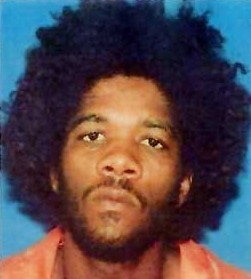
Kevin Cooper
Mass murderer Julio Gonzalez
Mass murderer · USA · 1990
Julio Gonzalez was sentenced to 174 twenty-five-year sentences (a total of 4,35…
87 victims
Julio Gonzalez
Mass murderer · USA · 1990
Julio Gonzalez was sentenced to 174 twenty-five-year sentences (a total of 4,35…
87 victims
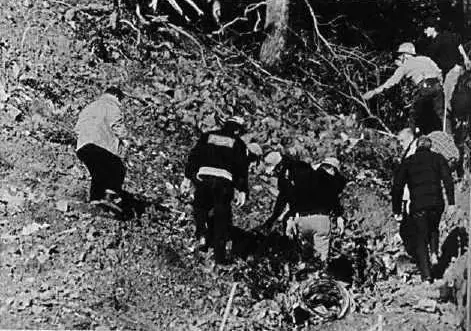 David Burke
Mass murderer · USA · 1987
David Augustus Burke (May 18, 1952–December 7, 1987) was an employee of USAir,…
43 victims
David Burke
Mass murderer · USA · 1987
David Augustus Burke (May 18, 1952–December 7, 1987) was an employee of USAir,…
43 victims
 George Jo Hennard
Mass murderer · USA · 1991
George Jo Hennard carried out a mass killing at a Luby’s Cafeteria in Killeen,…
23 victims
George Jo Hennard
Mass murderer · USA · 1991
George Jo Hennard carried out a mass killing at a Luby’s Cafeteria in Killeen,…
23 victims
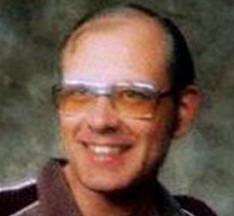 James Huberty
Mass murderer · USA · 1984
James Oliver Huberty was a 41-year-old unemployed security guard. He was born i…
21 victims
James Huberty
Mass murderer · USA · 1984
James Oliver Huberty was a 41-year-old unemployed security guard. He was born i…
21 victims
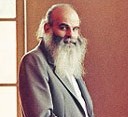 Ronald Gene Simmons
Mass murderer · USA · 1987
Ronald Gene Simmons was a retired United States Air Force sergeant. Over the Ch…
16 victims
Ronald Gene Simmons
Mass murderer · USA · 1987
Ronald Gene Simmons was a retired United States Air Force sergeant. Over the Ch…
16 victims
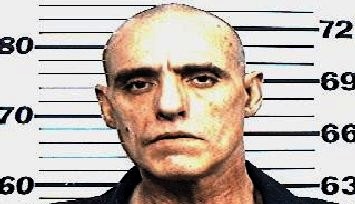 Karl Myers
Murderer · USA · 1993
Defendant/Appellant: Karl Lee Myers · Prosecution/Appellee: State of Oklahoma ·…
2 victims
Karl Myers
Murderer · USA · 1993
Defendant/Appellant: Karl Lee Myers · Prosecution/Appellee: State of Oklahoma ·…
2 victims
 Wesley Gareth Evans
Murderer · Canada · 1984
Defendant: Wesley Gareth Evans Victim: Lavonne Willems (age 27), of Vancouver V…
2 victims
Wesley Gareth Evans
Murderer · Canada · 1984
Defendant: Wesley Gareth Evans Victim: Lavonne Willems (age 27), of Vancouver V…
2 victims
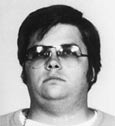 Mark David Chapman
Murderer · USA · 1980
Mark David Chapman (born May 10, 1955, in Fort Worth, Texas) shot and killed mu…
1 victim
Mark David Chapman
Murderer · USA · 1980
Mark David Chapman (born May 10, 1955, in Fort Worth, Texas) shot and killed mu…
1 victim
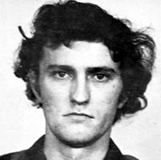 Joachim Knychala
Serial killer · Poland · 1975
Joachim Knychała (September 8, 1952 - October 28, 1985) was a Polish serial kil…
5 victims
Joachim Knychala
Serial killer · Poland · 1975
Joachim Knychała (September 8, 1952 - October 28, 1985) was a Polish serial kil…
5 victims
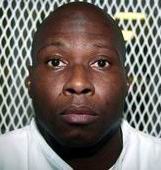 Derrick Leon Jackson
Murderer · USA · 1988
Derrick Leon Jackson was executed by lethal injection in Texas on July 20, 2010…
2 victims
Derrick Leon Jackson
Murderer · USA · 1988
Derrick Leon Jackson was executed by lethal injection in Texas on July 20, 2010…
2 victims
- Gender
- male
- Country
- USA
- Location
- San Bernardino County, California, USA
- Date of birth
- 1957
- Age at first offence
- 26
- Characteristics
- rape, the bodies were never found
- Victim profile
- Franklin Douglas Ryen and Ryen's wife, Peggy, both 41, their daughter, Jessica, 10, and their young houseguest, Christopher Hughes, 11
- Method of murder
- Hitting with a hatchet - St abbing with knife
- Date(s) of murder
- June 4, 1983
- Years active
- 1983
- Date of arrest
- J uly 30, 1983
- Status
-
Sentenced to death
Sentenced to death on May 15, 1985
Case overview
Kevin Cooper (born 1958) was a death row inmate held in California’s San Quentin Prison. He was convicted of four murders that occurred in the Chino Hills area of California in 1983. He continuously denied any involvement in the crimes and became active in writing letters from prison decrying the judicial establishment as racist, protesting his innocence, and protesting the death penalty in general.
Background
Prior criminal record and custody history
On October 8, 1982, Kevin Cooper burglarized a Pennsylvania home and kidnapped and raped the high school student who interrupted him. He was convicted of two other burglaries in Los Angeles and began serving his sentence at the California Institution for Men (CIM) in Chino in Chino on April 29, 1983, under the alias David Trautman.
On June 1, he was transferred to the minimum-security portion of the prison and escaped on foot the next day. He had hidden out in the vacant house next door to the Ryens’ home for two days. Cooper testified at trial that he left that house as soon as it got dark on June 4 and had hitchhiked to Mexico.
In the course of the Chino Hills investigation, deputies decided almost immediately that Kevin Cooper was the likely killer because he had admittedly hidden out in the vacant house next door (the Lease house) about 125 yards away for two days and made repeated calls from that house to two female friends asking for money to help with his escape, but they refused.
Family and victims (Chino Hills murders)
On the morning of June 5, 1983, Bill Hughes arrived at a semi-rural home in Chino Hills, California where his 11-year-old son Christopher had spent the night. Inside, he found Douglas and Peggy Ryen, their 10-year-old daughter Jessica, and his own son dead. They had been chopped with a hatchet, sliced with a knife, and stabbed with an ice-pick. Josh Ryen, the 8-year-old son of Douglas and Peggy, had survived. His throat had been cut.
The family station wagon was gone and was discovered several days later in Long Beach, California, about 50 miles west of Chino Hills. The mother’s purse was in plain sight on the kitchen counter, but no money had been taken.
The offence
Chino Hills killings (1983)
The killings were carried out against Douglas Ryen, Peggy Ryen, Jessica Ryen, and Christopher Hughes, with Josh Ryen surviving having his throat cut.
A hatchet blow, knife slices, and stabbing with an ice-pick were described in connection with the deaths, and the surviving victim later gave statements describing what he believed he saw during the incident.
Investigation
Initial suspect identification
The San Bernardino County Sheriff’s Department deputies who responded to the call decided almost immediately that Kevin Cooper was the likely killer.
Evidence found and forensic indicators
A blood-stained khaki green button identical to buttons on field jackets issued at the state prison from which Cooper escaped was found on the rug at the Lease house. Tests revealed the presence of blood in the Leases’ shower and bathroom sink. Hair found in the bathroom sink was consistent with that of Jessica and Doug Ryen.
A hatchet covered with dried blood and human hair that was found near the Ryens’ home was missing from the Lease house. The sheath for the hatchet was found in the bedroom where Cooper had stayed.
Cooper’s semen was found on a blanket in the closet of the Lease house.
Plant burrs found inside Jessica’s nightgown were similar to burrs from vegetation between the Lease house and the Ryen house and to burrs found on a blanket inside the closet where Cooper slept at the Lease house, and in the Ryen station wagon.
Two partial shoe prints and one nearly complete one found in or near the Ryens’ house and in the Lease house were consistent with Cooper’s shoe size and Pro-Keds Dude tennis shoes issued at CIM that Cooper did not deny having.
A hand-rolled cigarette butt and “Role-Rite” tobacco provided to inmates at CIM were in the Ryens’ vehicle.
Additionally, the defense disputed some interpretations and alleged manipulation of evidence. Judge William A. Fletcher argued that deputies misrepresented Josh Ryen’s recollections and shaped his testimony so it was consistent with the prosecution’s theory that there was only one killer. Fletcher also argued that evidence such as a bloody shoe-print, blond hairs clutched in Jessica Ryen’s hand, and missing cigarette butts from the station wagon initially were consistent with an argument about planted or altered evidence.
Fletcher suggested that chemical tests on the Lease’s shower would have returned a positive result in the presence of bleach as well as blood, and that the shower had recently been cleaned with bleach. Fletcher also wrote that while a button found in the house came from a green prison jacket, “uncontradicted evidence at trial showed that Cooper was wearing a brown or tan prison-issued jacket when he escaped.” Fletcher suggested preservatives found in blood on a t-shirt indicated that it may have been planted. Fletcher wrote:
“If the EDTA testing already performed shows that Cooper’s blood was planted on the t-shirt, or if further EDTA testing does the same thing, that showing greatly increases the likelihood that much of the evidence introduced at trial was false”
Fletcher also wrote that after initial forensic testing, paper from a hand-rolled cigarette butt supposedly found in the station wagon was described as consumed and later “reappeared” and was offered into evidence, and that when the paper “reappeared,” it was significantly larger than the paper in the cigarette butt that had been tested:
“Some of those cigarette butts could have easily been planted in the car. Moreover, after initial forensic testing, paper from a hand-rolled cigarette butt supposedly found in the station wagon was described as consumed. That same paper later “reappeared” and was offered into evidence. When the paper “reappeared,” it was significantly larger than the paper in the cigarette butt that had been tested.”
Josh Ryen survivor statements and related disputes
The videotaped testimony of Josh Ryen included a description that the evening before the murders, just before the family left for the Blade barbecue, three Mexicans came to the Ryen home looking for work. Josh Ryen did not identify the killer but said in an audiotape with his treating psychiatrist that he saw the back of a single man attacking his mother.
Josh Ryen told a sheriff he thought three men had done it because “I thought it was them. And, you know, like they stopped up that night,” but he did not actually see three people during the incident.
Defense-proffered alternative theories
The defense identified evidence they argued pointed to other people and disputed the prosecution’s theory that Cooper acted alone. The defense also presented an expert witness that criticized the forensic investigation. In addition to the disputes summarized above, the record included a call from a woman named Diana Roper who asserted involvement by Lee Furrow.
On June 9, 1983, a woman named Diana Roper called the Sheriff’s Department to tell them that her boyfriend, Lee Furrow, had come home in the early hours on the night of June 4. Roper stated that Furrow arrived in an unfamiliar station wagon with some people who stayed in the car, and changed out of his overalls, leaving them on the floor of a closet. Roper stated Furrow was not wearing a t-shirt that he had been wearing earlier in the day and left the house after about five minutes and did not return. Roper and her father concluded that the overalls were spattered with blood and Roper turned the overalls over to the Sheriff’s Department and told a deputy that she thought Furrow was involved in the murders. Roper later provided an affidavit stating that a bloody t-shirt found beside the road leading from the murder house had been Furrow’s. Roper stated the t-shirt was a Fruit-of-the-Loom t-shirt with a breast pocket and that she recognized it because she had bought it for him. Roper also stated that a bloody hatchet found beside the road matched a hatchet that was now missing from her garage.
The Sheriff’s Department never tested the overalls for blood, never turned them over to Cooper or his lawyers, and threw them away in a dumpster on the day of Cooper’s arraignment. Roper and Furrow allegations included that Furrow had been released from state prison a year earlier, had been part of a murderous gang, had been given a short sentence in return for turning state’s evidence against the leader of the gang, and that the leader was sentenced to death. Furrow told friends that while he was part of the gang he killed a girl, cut up her body, and thrown her body parts into the Kern River.
Another prison inmate, Kenneth Koon, told his cellmate, Anthony Wisely, that he had committed the murders but later recanted his statement.
Arrest and custody events
Cooper was arrested shortly after hitchhiking on a boat that sailed to Pelican Bay near Santa Barbara. It was established that Cooper checked into a hotel in Tijuana at 4:30 pm on June 5, where he befriended an American couple who owned a boat and hitched a ride on the boat with them. Cooper was arrested shortly thereafter when the boat sailed to Pelican Bay near Santa Barbara.
Trial
Venue change
On Cooper’s motion, the court changed the venue of the trial from San Bernardino County to San Diego County.
Plea to prison escape
Cooper pled guilty to the charge of escape from prison.
Testimony from Josh Ryen
In videotaped testimony, Josh Ryen said that the evening before the murders, just before the family left for the Blade barbecue, three Mexicans came to the Ryen home looking for work. Ryen did not identify the killer in that testimony, but said in an audiotape with his treating psychiatrist that he saw the back of a single man attacking his mother.
Cooper’s testimony
Cooper testified in his own defense. He admitted escaping from CIM, hiding out and sleeping at the Lease house, but denied committing the murders or being in the Ryen house. Cooper said he left the Lease house on foot, hitchhiked, stole a purse, and eventually made his way to Mexico.
Verdict
A jury convicted Cooper of four counts of first degree murder and one count of attempted murder with the intentional infliction of great bodily injury, and then imposed the death penalty.
In another account of the verdict details, the seven-woman, five-man panel convicted Cooper of four counts of first degree murder and one count of attempted murder on February 19, 1985, and recommended on March 1, 1985, that Cooper deserved to die for his crimes.
Sentencing
The jury recommended that Cooper deserved to die for his crimes, and the death penalty was imposed.
Appeals
Habeas corpus proceedings in the Ninth Circuit
Cooper filed multiple appeals and applications for a writ of habeas corpus, all of which were denied.
On December 4, 2007, the Ninth Circuit Court of Appeals denied Cooper’s third federal petition for a writ of habeas corpus. The panel concluded:
“As the district court, and all state courts, have repeatedly found, evidence of Cooper’s guilt was overwhelming. The tests that he asked for to show his innocence 'once and for all' show nothing of the sort.”
On May 11, 2009, the Ninth Circuit denied Cooper’s request for a rehearing en banc of the 2007 panel decision. Four judges (Fletcher, Wardlaw, Fisher, and Reinhardt) filed dissents, indicating they disagreed with the decision. Judge Fletcher stated that there was a strong likelihood that the police may have tampered with the evidence and that the Ninth Circuit should have reheard the case en banc and ordered the federal district judge to give Cooper the fair hearing he had never had. Eleven judges joined the dissents, and Judge Rymer filed a concurrence.
Cooper’s petition for certiorari to the United States Supreme Court was denied on November 30, 2009.
California Supreme Court
The California Supreme Court reviewed his case in 1991 and found that the evidence gathered by prosecutors established his guilt “overwhelmingly.”
Post-conviction DNA testing and further court-ordered testing
In 2001, Cooper became the first death row inmate in California to successfully request post-conviction DNA testing of evidence. The results failed to exonerate him of the 1983 murders and indicated that hairs found on three of the victims were likely their own.
The tests suggested “strong evidence” that Kevin Cooper’s DNA was extracted from:
- A bloodstain found inside the Ryens’ home.
- The saliva on a hand rolled cigarette butt found inside the Ryen station wagon.
- The saliva on a manufactured cigarette butt found inside the Ryen station wagon.
- A bloodstain located on a tee shirt that was found beside a road some distance from the Ryen home.
There was strong evidence that Doug Ryen was the donor of another bloodstain found on the same tee shirt. Cooper was consistent with being the donor of two additional blood smears and a possible donor of blood spatter on the same tee shirt.
The testing of the bloodstain on the hatchet (a murder weapon) revealed that Jessica Ryen, Doug Ryen, and Chris Hughes were all possible contributors to that sample. Peggy Ryen and Josh Ryen could not be excluded as possible minor contributors.
Cooper was scheduled to be executed on February 10, 2004, but the execution was postponed only hours before it was to take place to allow for further DNA testing. Denial of clemency occurred as well.
Cooper argued that the DNA evidence linking him to the killings was planted by police and asked a federal judge to allow testing to see if the blood spots contained traces of a crime-lab preservative. The court rejected the request.
A federal district court judge, Marilyn Huff, ordered mitochondrial DNA tests on a cluster of blond hairs found clutched in Jessica Ryen’s hand. The defense stated those hairs could lead to the identity of other suspects. The appeals court ordered old leads re-examined, including coveralls turned over to deputies by a woman in May 1984 who told investigators she thought the coveralls were linked to the Ryen slayings.
The woman told investigators that her boyfriend, Lee Furrow, who had already been convicted of manslaughter, came home wearing the coveralls the night of the Ryen murders and that they looked like they had blood and hair on them. She told investigators Furrow had also been wearing a brown T-shirt similar to the one found on the roadside, and that his hatchet was missing from his tool belt. Deputies from the Yucaipa Sheriff’s station checked the coveralls into their evidence locker and notified homicide detectives. The deputies threw away the coveralls six months later because detectives never came to pick them up. Jurors heard about the coveralls at Cooper’s trial, but the defense argued their importance was compounded by the case of an inmate confession.
While incarcerated at Vacaville prison in 1984, an inmate told police that Kenneth Koon had confessed in detail to committing murders along with two friends as part of a hit. Cooper’s defense stated Koon and Furrow were friends. Koon testified before the federal court in San Diego, said he had a strong dislike for Furrow, and stated he would never have gone to the bar and had a drink with him, let alone commit a murder with him.
Koon said:
“I had a very strong dislike for Furrow” “I would never had gone to the bar and had a drink with him, let alone commit a murder with him.”
Denial of clemency
On January 30, 2004, the office of Governor of California Arnold Schwarzenegger issued a statement regarding his decision not to grant clemency to Kevin Cooper. The statement read:
“I have carefully weighed the claims presented in Kevin Cooper's plea for clemency. The state and federal courts have reviewed this case for more than 18 years. Evidence establishing his guilt is overwhelming, and his conversion to faith and his mentoring of others, while commendable, do not diminish the cruelty and destruction he has inflicted on so many. His is not a case for clemency.”
Execution status and stays
Cooper became active in letters from prison protesting his innocence and against the death penalty in general.
He was scheduled to be executed on February 10, 2004, but his execution was postponed only hours before it took place to allow further DNA testing.
Until he won a stay on his emergency appeals, Cooper would have become the second inmate from San Bernardino County executed in the last 40 years. Stephen Wayne Anderson was put to death in January 2003 for shooting to death 81-year-old piano teacher Elizabeth Lyman inside her Bloomington home in 1980.
On February 9, the U.S. Supreme Court upheld a stay issued by the 9th U.S. Circuit Court of Appeals later the same day.
Outcome
Kevin Cooper was sentenced to death and remained on death row in California’s San Quentin Prison.
A later “stay” prevented execution, and subsequent habeas corpus petitions were denied.
Joshua Ryen made a statement during a hearing in U.S. District Court in San Diego on April 22, 2005.
Ryen said:
“The first time I met Kevin Cooper I was eight years old and he slit my throat.” “He hit me with a hatchet and put a hole in my skull.” “He stabbed me twice, which broke my ribs and collapsed one lung.” “I lived only because I stuck four fingers in my neck to slow the bleeding, but I was too weak to move.” “I laid there 11 hours looking at my mother who was right beside me.” “I know now he came through the sliding glass door and attacked my dad first.” “He was lying on the bed and was struck in the dark without warning with the hatchet and knife.” “He was hit many times because there is a lot of blood on the wall on his side of the bed.” “My mother screamed and Cooper came around the bed and started hitting her.” “Somehow my dad was able to struggle between the bed and the closet but Cooper bludgeoned my father to death with the knife and hatchet, stabbing him 26 times and axing him 11.” “One of the blows severed his finger and it landed in the closet.” “My mother tried to get away but he caught her at the bottom of the bed and he stabbed her 25 times and axed her 7.” “All of us kids were drawn to the room by mom's screams.” “Jessica was killed in the doorway with five ax blows and 46 stabs.” “I won't say how many times my best friend Chris was stabbed and axed, not because it isn't important, but because I don't want to hurt his family in any way, and they are here.” “After Cooper killed everyone, and thought he had killed me, he went over to my sister and lifted her shirt and drew things on her stomach with the knife.” “Then he walked down the hallway, opened the refrigerator, and had a beer.” “I guess killing so many people can make a man thirsty.” “I don't want to be here.” “I came because I owe it to my family, who can't speak for themselves.” “But by coming I am acknowledging and validating the existence of Kevin Cooper, who should have been blotted from the face of the earth a long time ago.” “By coming here it shows that he still controls me.” “I will be free, my life will start, the day Kevin Cooper dies.” “I want to be rid of him, but he won't go away.” “I've been trying to get away from him since I was 8 years and I can't escape.” “He haunts me and follows me.” “For over 20 years all I've heard is Kevin Cooper this and Kevin Cooper that.” “Kevin Cooper says he is innocent, Kevin Cooper says he was framed, Kevin Cooper says DNA will clear him, Kevin Cooper says blood was planted, Kevin Cooper says the tennis shoes aren't his, Kevin Cooper says three guys did it, Kevin Cooper says police planted evidence, Kevin Cooper gets another stay from another court and sends everyone off on another wild goose chase.” “The courts say there isn't any harm when Kevin Cooper gets another stay and another hearing.” “This just shows they don't care about me, because every time he gets another delay I am harmed and have to relive the murders all over again.” “Every time Kevin Cooper opens his mouth everyone wants to know what I think, what I have to say, how I'm feeling, and the whole nightmare floods all over me again: the barbecue, me begging to let Chris spend the night, me in my bed and him on the floor beside me, my mother's screams, Chris gone, dark house, hallway, bushy hair, everything black, mom cut to pieces saturated in blood, the nauseating smell of blood, eleven hours unable to move, light filtering in, Chris' father at the window, the horror of his face, sound of the front door splintering, my pajamas being cut off, people trying to save me, the whap whap of the helicopter blades, shouted questions, everything fading to black.” “Every time Cooper claims he's innocent and sends people scurrying off on another wild goose chase I have to relive the murders all over again.” “It runs like a horror movie, over and over again and never stops because he never shuts up.” “He puts PR people on national television who say outrageous things and then the press wants to know what I think.” “What I think is that I would like to be rid of Kevin Cooper.” “I would like for him to go away.” “I would like to never hear from Kevin Cooper again.” “I would like Kevin Cooper to pay for what he did.” “I dread happy times like Christmas and Thanksgiving.” “If I go to a friend's house on holidays I look at all the mothers and fathers and children and grandchildren and get sad because I have no one.” “Kevin Cooper took them from me.” “I get terrified when I go into any place dark, like a house before the lights are on.” “I hear screams and see flashbacks and shadows.” “Even with lights on I see terrible things.” “After I was stabbed and axed I was too weak to move and stared at my mother all night.” “I smelled this overpowering smell of fresh blood and knew everyone had been slaughtered.” “Every day when I comb my hair I feel the hole where he buried the hatchet in my head, and when I look in the mirror I see the scar where he cut my throat from ear to ear and I put four fingers in it to stop the bleeding which, they say, saved my life.” “Every year I lose hearing in my left ear where he buried the knife.” “Helicopters give me flashbacks of life flight and my Incredible Hulks being cut off by paramedics.” “Bushy hair reminds me of the killer.” “Silence reminds me of the quiet before the screams.” “Cooper is everywhere.” “There is no escape from him.” “I feel very guilty and responsible to the Hughes family because I begged them to let Chris spend the night.” “If I hadn't done that he wouldn't have died.” “I apologize to them and especially to Mr. Hughes for having to find us and see his son cut and stabbed to death.” “I thank the judge who gave my grandma custody of me because she took good care of me and loves me very much.” “I'm grateful to the ocean for giving me peace because when I go there I know my mother and father and sister's ashes are sprinkled there.” “Kevin Cooper has movie stars and Jesse Jackson holding rallies for him, people carrying signs, lighting candles, saying prayers.” “To them and you I say: I was 8 when he slit my throat, It was dark and I couldn't see.” “Through the night and day I laid there, trying to get up and flee.” “He killed my mother, father, sister, friend, And started stalking me.” “I try to run and flee from him but cannot get away, While he demands petitions and claims, some fresh absurdity.” “Justice has no ear for me nor cares about my plight, while crowds pray for the killer and light candles in the night.” “To those who long for justice and love truth which sets men free, When you pray your prayers tonight, please remember me.”
Other details
Prosecutor statement
San Bernardino County Chief Deputy District Attorney John Kochis said:
“We had overwhelming evidence of his guilt” “The footprints, the tobacco, the timing, the murder weapon, the missing car - overwhelming.”
Claims about execution and supporters
Cooper’s letters protested innocence and the death penalty, and postponement preceded the planned February 10, 2004 execution. The postponement was described as allowing for further DNA testing and followed a campaign by various groups including the Campaign to End the Death Penalty, the ACLU, Death Penalty Focus, and The Mobilization to Free Mumia Abu-Jamal.
Misconduct allegations and contested evidence
The defense and dissents alleged evidence manipulation, including Fletcher’s arguments about misrepresentation of Josh Ryen’s recollections and possible tampering. Cooper’s defense also asserted that DNA and other evidence linking him to the killings was planted, and requested further testing which was granted in part through mitochondrial DNA testing ordered by Marilyn Huff.
Counts and parties mentioned in proceedings
Cooper was convicted of four counts of first degree murder and one count of attempted murder with the intentional infliction of great bodily injury. The record also referenced multiple habeas corpus petitions, denials, and dissents by judges including Fletcher, Wardlaw, Fisher, Reinhardt, and concurrence by Judge Rymer.
Spotted an error, or have more information about this case?