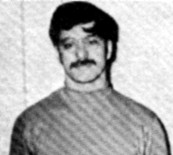
Antone Charles Costa
Serial killer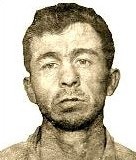 Donald Henry Gaskins
Serial killer · USA · 1969
Donald Henry Gaskins, also known as Donald “Pee Wee” Gaskins, was a serial kill…
200 victims
Donald Henry Gaskins
Serial killer · USA · 1969
Donald Henry Gaskins, also known as Donald “Pee Wee” Gaskins, was a serial kill…
200 victims
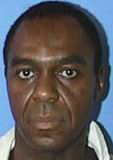 Carl Eugene Watts
Serial killer · USA · 1974
Carl Eugene Watts (born November 7, 1953; died September 21, 2007), also known…
100 victims
Carl Eugene Watts
Serial killer · USA · 1974
Carl Eugene Watts (born November 7, 1953; died September 21, 2007), also known…
100 victims
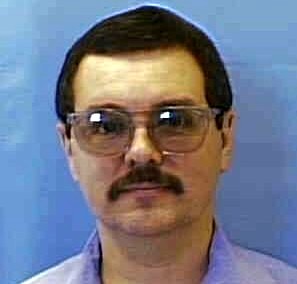 Donald Harvey
Serial killer · USA · 1970
Donald Harvey was known as an American serial killer and a self-professed “Ange…
87 victims
Donald Harvey
Serial killer · USA · 1970
Donald Harvey was known as an American serial killer and a self-professed “Ange…
87 victims
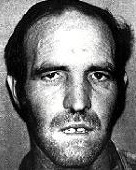 Ottis Toole
Serial killer · USA · 1961
Ottis Elwood Toole (sometimes misspelled as “Otis”) was an American serial kill…
65 victims
Ottis Toole
Serial killer · USA · 1961
Ottis Elwood Toole (sometimes misspelled as “Otis”) was an American serial kill…
65 victims
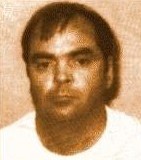 Donald Leroy Evans
Serial killer · USA · 1975
Donald Leroy Evans (born July 5, 1957) was an American serial killer who murder…
60 victims
Donald Leroy Evans
Serial killer · USA · 1975
Donald Leroy Evans (born July 5, 1957) was an American serial killer who murder…
60 victims
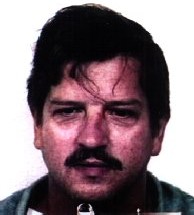 William George Bonin
Serial killer · USA · 1972
William George Bonin was executed by lethal injection in California on February…
44 victims
William George Bonin
Serial killer · USA · 1972
William George Bonin was executed by lethal injection in California on February…
44 victims
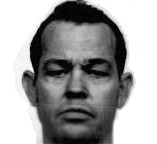 Jerry Walter McFadden
Murderer · USA · 1986
Jerry Walter McFadden nicknamed himself "Animal". He was a former telephone cab…
3 victims
Jerry Walter McFadden
Murderer · USA · 1986
Jerry Walter McFadden nicknamed himself "Animal". He was a former telephone cab…
3 victims
 Azad Abdullah
Murderer · USA · 2002
Azad Abdullah Sentenced to death on November 2004 Azad Abdullah was accused of…
1 victim
Azad Abdullah
Murderer · USA · 2002
Azad Abdullah Sentenced to death on November 2004 Azad Abdullah was accused of…
1 victim
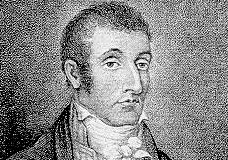 John Bellingham
Assassin · 1812
John Bellingham murdered Spencer Perceval, the British Prime Minister and Chanc…
1 victim
John Bellingham
Assassin · 1812
John Bellingham murdered Spencer Perceval, the British Prime Minister and Chanc…
1 victim
 Frances Newton
Murderer · USA · 1987
Frances Elaine Newton (April 12, 1965 – September 14, 2005) was executed by let…
3 victims
Frances Newton
Murderer · USA · 1987
Frances Elaine Newton (April 12, 1965 – September 14, 2005) was executed by let…
3 victims
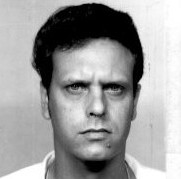 David Wayne Spence
Murderer · USA · 1982
David Wayne Spence was executed by lethal injection in Texas on April 3, 1997.…
3 victims
David Wayne Spence
Murderer · USA · 1982
David Wayne Spence was executed by lethal injection in Texas on April 3, 1997.…
3 victims
- Gender
- male
- Country
- USA
- Location
- Calif ornia /N ew York /Mass achusetts, USA
- Date of birth
- August 2, 1944
- Age at first offence
- 22
- Characteristics
- mutilation, necrophilia, dismemberment
- Victim profile
- Patricia H. Walsh and Mary Anne Wysocki / Susan Perry / Sydney Monzon / Bonnie Williams and Diane Federoff / Barbara Spaulding / Christine Gallant
- Method of murder
- Shooting - Drowning (after barbiturate overdose)
- Date(s) of murder
- 1966 - 1969
- Years active
- 1966–1969
- Date of arrest
- March 6, 1969
- Status
-
Died in custody
Sentenced to life in prison in Massachusetts on May 29, 1969; committed suicide by hanging himself in his cell on May 12, 1974
Case record: Antone Charles “Tony” Costa
Timeline
- January 24, 1969 — Patricia H. Walsh and Mary Ann Wysocki traveled from Providence, Rhode Island, to Provincetown, Massachusetts, in Miss Walsh's light blue Volkswagen automobile and registered for two nights at a guest house operated by Mrs. Morton.
- January 24, 1969 — Mrs. Morton introduced Patricia H. Walsh and Mary Ann Wysocki to Costa, who was also staying as a paying guest at the house; a note pinned to the girls’ room asked, “Could you possibly give me a ride to Truro early in the morning.'” and was signed, “Tony.”
- January 25, 1969 — Costa was seen riding as a passenger in a light colored Volkswagen by a friend named Zackarias; two girls were also in the Volkswagen, one driving.
- January 26, 1969 — Mrs. Morton found a note tacked to the door of the girls’ room stating, “We are checking out. Thank you for your many kindnesses.” signed “Mary Ann and Pat.”
- January 29, 1969 — Costa asked a gasoline station owner what he would charge “to paint a Volkswagen . . . some exotic color.”
- February 2, 1969 — A witness saw the Walsh Volkswagen parked about thirty feet inside a wooded area in Truro.
- February 2, 1969 — Costa asked two friends to ride to Boston with him, told them he had a car in Truro, and said he was sure it would start because he had been out there a week ago and it had started all right.
- February 7, 1969 — Costa rented a parking space for the Walsh vehicle and attempted to register it in his own name at Burlington, Vermont.
- February 8, 1969 — Personal property of the two girls was found in Costa's room at the Morton house.
- February 8, 1969 — Police discovered Susan Perry while looking for the bodies of Patricia Walsh and Mary Anne Wysocki; Perry had been missing since the previous Labor Day, and her body had been cut into eight pieces.
- March 3, 1969 — A telegram from New York City addressed to Costa arrived at his mother’s home in Provincetown; it was signed “Pat and Mary Ann.” Costa's mother took it to the police, and it was later shown to have originated from a New York City telephone number to which Costa had access.
- March 4, 1969 — Searchers found the dismembered bodies of Walsh, Wysocki, and Sydney Monzon buried together, a mile and a half from the first grave site.
- March 5, 1969 — Police uncovered two graves in a wooded area of Truro containing the dismembered remains of the two girls; a .22 caliber pistol was found buried nearby and later identified as Costa’s gun.
- May 6, 1970 — Costa’s trial opened.
- May 29, 1969 — Costa was sentenced to life imprisonment in Massachusetts.
- May 12, 1974 — Costa was found hanging in his prison cell; the death was held to be a suicide.
- September 14, 1971 — Commonwealth vs. Antone Charles Costa: the opinion was issued; the cases were before the court on Costa’s appeals.
- November 1, 1971 — Commonwealth vs. Antone Charles Costa: end date in the procedural listing.
Other details
Identity and background
Antone Charles “Tony” Costa was a carpenter in Cape Cod, Massachusetts. He was born on August 2, 1944 and died on May 12, 1974. Costa was tried for murders in the town of Truro in 1969 and was convicted of killing four women: Susan Perry and Sydney Monzon of Provincetown, and Patricia Walsh and Mary Anne Wysocki of Providence, Rhode Island.
Media remarks attributed to the District Attorney
District attorney Edmund Dinis made comments to the media including:
“The hearts of each girl had been removed from the bodies and were not in the graves…Each body was cut into as many parts as there are joints.”
Dinis also said that teeth marks had been found on the bodies, and when a reporter asked if this was the work of a “Cape Cod vampire,” Dinis nodded.
Victims and missing persons
- Susan Perry was reported missing since the previous Labor Day and was discovered on February 8, 1969.
- Sydney Monzon vanished from her home in Provincetown; her disappearance was reported to police on June 14 (year not specified in that detail, but the surrounding narrative concerns 1969).
- Patricia Walsh and Mary Anne Wysocki disappeared on a visit to Provincetown on January 24, 1969; the narrative later describes the burial discoveries in early March 1969.
- Cynthia Gallant was found dead in her New York apartment on a weekend before Costa’s 1969 trial opening; the narrative described her death as drowned in the bathtub after a barbiturate overdose (the narrative does not link this death to Costa’s convictions in the provided material).
Unpublished novel “Resurrection” and alleged explanations
Costa described the murders of Walsh and Wysocki in his unpublished novel, Resurrection, written while he was in prison. In Costa’s account:
- Costa and a friend named “Carl” were out with Walsh and Wysocki while consuming LSD and Dilaudid.
- Carl shot Walsh and Wysocki.
- Costa claimed he was able to subdue Carl and that, upon realizing Mary Anne Wysocki was still alive, Costa used a knife to end her suffering.
- Costa claimed that he and Carl buried the bodies.
People involved
Defendant
- Antone Charles “Tony” Costa — defendant; tried and convicted of murder in the first degree of two girls.
Victims
- Patricia H. Walsh — victim; about twenty-three years of age.
- Mary Ann Wysocki — victim; about twenty-three years of age.
- Susan Perry — victim.
- Sydney Monzon — victim.
Witnesses and other individuals named in the case record narrative
- Mrs. Morton — operated the guest house where Walsh and Wysocki registered.
- Edmund Dinis — district attorney.
- Kurt Vonnegut — mentioned in the narrative as comparing Costa to Charles Manson in an essay collection titled Wampeters, Foma and Granfalloons.
- Zackarias — Costa’s friend seen riding with Costa on January 25, 1969.
- Russell Norton — appointment reference at Provincetown (failed appointment noted).
- Russell Norton — referenced as the person whom the girls had an appointment with (the appointment was not kept).
- Michael Newton — referenced in the narrative title “An Encyclopedia of Modern Serial Killers - Hunting Humans.”
- Beaudreau, J. — named as trying the cases in the Commonwealth v. Costa procedural listing.
- Maurice M. Goldman — named as counsel for the defendant.
- Richard C. Paull — named as Assistant District Attorney.
- Philip A. Rollins, District Attorney — named “with him” for the Commonwealth.
- Harold L. Shenker — medical examiner who certified Costa’s cause of death.
Other names from the narrative section (biographical incidents)
- Bonnie Williams and Diane Federoff — two hippie girls described in the narrative.
- Barbara Spaulding — girlfriend whose child was left with relatives and who vanished on the day Costa left for Massachusetts (the narrative also states she was never seen again).
- Christine Gallant — referenced as sharing drugs with Costa; Gallant was found dead in her New York apartment after a barbiturate overdose and drowning in a bathtub.
The offence
Costa was convicted of killing four women, and the Commonwealth v. Costa appeals discussed indictments charging murder in the first degree of Patricia H. Walsh and Mary Ann Wysocki.
Injuries and forensic findings described for Walsh and Wysocki
The appeal summary described the injuries and forensic evidence for both victims:
For Miss Walsh:
- She was killed by a gunshot wound entering from the back of the neck.
- After death, the skin was peeled off the chest “in a fashion like a sweater, so that it was attached only about the shoulders.”
- During the autopsy, post mortem incised wounds or stab wounds were found perforating the entire thickness of the chest wall and fracturing one of the ribs.
- The body of Miss Walsh was cut in two pieces at the midline of the abdomen.
For Miss Wysocki:
- She died as a result of a gunshot wound in the brain from the left side of the head.
- Miss Wysocki had also been shot a second time in the head.
- The bodies were cut in five pieces, one consisting of the head, the second the upper portion of the torso, the third the pelvis, the fourth the right lower extremity and the fifth the left lower extremity.
- The buttocks showed many stab wounds, “big slashes,” involving both skin and underlying muscles and soft tissues.
- Stab wounds were also present in the chest and the skin was again peeled, creating a sweaterlike effect.
The appeal summary stated that:
- The mutilation and dismemberment were done after death.
- The pathologist said findings were consistent with a psychiatric condition known as necrophilia, “the perverse sexual attraction to dead bodies.”
- There was evidence of sexual abuse in each case.
Investigation
Notes, cars, and burial locations
The appeal summary described several investigative leads and physical evidence:
- Walsh and Wysocki traveled to Provincetown in Miss Walsh’s light blue Volkswagen; they registered at a guest house operated by Mrs. Morton.
- Mrs. Morton introduced the girls to Costa; a note pinned to the girls’ room asked for “a ride to Truro early in the morning” and was signed “Tony.”
- After Costa took the girls, Mrs. Morton found another note tacked to the girls’ room stating, “We are checking out.
- Personal property belonging to the girls went missing from their room.
- A witness saw the Walsh Volkswagen parked about thirty feet inside a wooded area in Truro.
- On February 7, Costa rented a parking space for the Walsh vehicle and attempted to register it in his own name at Burlington, Vermont; the Rhode Island license plates were later found concealed under a rubber mat within the vehicle.
- Police later uncovered two graves in wooded Truro containing the dismembered remains of the two girls; a .22 caliber pistol was found buried nearby and later identified as Costa’s gun.
- Three expended .22 caliber shells were found near the graves, and expert testimony said they were fired from the Costa gun.
- Blood stains were found both on a piece of rope in Costa’s room and on a pair of Costa’s boots.
- A telegram from New York City to Costa, signed “Pat and Mary Ann,” was taken to the police and traced to a New York City telephone number to which Costa had access.
Susan Perry discovery narrative
The narrative stated that on February 8, 1969 police discovered Susan Perry while looking for Patricia Walsh and Mary Anne Wysocki. Perry had been missing since the previous Labor Day, and her body had been cut into eight pieces.
Additional narrative about “garden” and drugs
The narrative stated that Costa’s “garden” had been used for stashing drugs and growing marijuana and that he had cultivated marijuana in the area.
Arrest
The narrative stated that Costa was arrested on suspicion of murder after detectives learned that the burial site was Costa’s private “garden.”
The narrative also stated that in custody Costa changed his story several times, twice implicating innocent friends, repeatedly failing polygraph examinations.
Trial
Charges and trial parties
The appeal described indictments charging Costa with murder in the first degree of:
- Patricia H. Walsh
- Mary Ann Wysocki
The trial was subject to G. L. c. 278, Sections 33A-33G.
- Costa was found guilty by a jury on two indictments charging him with murder in the first degree.
- The jury recommended that the death penalty not be imposed.
- The cases were before the court on Costa’s appeals.
Defence of insanity and psychiatric evidence
The appeal stated that evidence in support of the defence of insanity included testimony from witnesses about Costa’s frequent use of harmful drugs, evidence of dismemberment and severe mutilation and sexual abuse after death, and testimony of two psychiatrists that Costa had not possessed substantial capacity to appreciate the criminality of his conduct or to conform his conduct to the requirements of the law.
The appeal stated that evidence to negate the defence included testimony from two other psychiatrists that Costa suffered from no more than a personality disorder, support from all medical witnesses in some measure that Costa was sane, and circumstantial evidence supporting deliberate premeditation and deliberate premeditated malice aforethought.
Evidence relevant to deliberate premeditation
The appeal summarized circumstantial evidence from which the jury could infer sanity and deliberate premeditation, including that Costa left notes, maneuvered the girls in the Walsh Volkswagen to an isolated wooded area for the purpose of killing them, carried a pistol (or had it hidden in advance), had a knife and probably other cutting instruments, procured his paycheck from a friend on the same day as the killings, accomplished two successive killings by gunshots, concealed the bodies and the murder gun by burying them, parked the Walsh automobile in a wooded area, wrote a note and left it on the girls’ door to persuade Mrs. Morton the girls had checked out, cleared personal property, concealed the Walsh vehicle in remote cities, inquired about painting it, sought false documents, and attempted to persuade police that the girls had left Massachusetts.
Jury instructions and requested manslaughter instructions
The appeal addressed assignments of error related to:
- denial of Costa’s motions for directed verdicts,
- refusal to instruct the jury that they were warranted in returning verdicts of guilty of manslaughter,
- refusal to give instructions concerning certain harmful drugs under Commonwealth v. Leis.
The court held there was no reversible error in the denial of motions for directed verdicts, in the refusal to instruct on manslaughter, and in the refusal to instruct with certain language requested from Commonwealth v. Leis.
Verbatim phrases from the appeal included in the discussion of manslaughter and instruction requests are not presented as quotes, but the ruling itself stated:
- The trial judge’s rulings were correct.
- There was no error in the judge’s refusal to instruct the jury about manslaughter in these circumstances.
Sentencing
Costa was sentenced to life imprisonment.
The narrative stated that in May 1970 Costa was convicted and imprisoned to life at Massachusetts’ Walpole Correctional Institution.
The status field stated that he was sentenced to life in prison in Massachusetts on May 29, 1969.
Appeals
The appeal was styled COMMONWEALTH vs. ANTONE CHARLES COSTA. and listed procedural details including a hearing/consideration window and a panel:
- Present: TAURO, C.J., CUTTER, REARDON, QUIRICO, & HENNESSEY, JJ.
The appeal summary stated the court’s holdings on several assignments of error:
- No error in denial of motions for directed verdicts, including rejection of claims regarding insanity and deliberate premeditation.
- No error in refusal to instruct on manslaughter.
- No error in refusal to give certain drug-related instructions based on Commonwealth v. Leis.
- After review under G. L. c. 278, Section 33E, the court declined to disturb the judgments.
Outcome
Costa died in custody. He was found hanging in his prison cell and the death was held to be suicide.
The narrative included details that on Sunday May 12, 1974 a Walpole corrections officer making a routine tier check at 8:10 P.M. discovered Antone Costa hanging by the neck from a woven leather belt knotted around the upper bars of his cell. The narrative stated:
- His eyes bulged open.
- His face was frozen.
- Blood foamed against his gaping lips from having bitten his tongue nearly in half.
- One unlaced sneaker had been kicked off during his death struggles, revealing a mended white sock.
- Costa had urinated down the front of his unpressed prison trousers.
- Medical examiner Harold L. Shenker certified that Costa died “of asphyxiation by hanging- suicide.”
- Costa was twenty-nine years old.
Burial
The narrative stated that Costa was buried in Provincetown in an unmarked grave next to his mother.
Other details
Biographical and earlier criminal history (as described in the narrative)
The narrative included the following biographical and earlier-incident details:
- Costa’s father died in World War II when Costa was an infant.
- Around age seven, Costa told his mother that “a man” was entering his room by night, and he identified a photo of his father as the silent prowler.
- In November 1961, at age sixteen, Costa invaded a Somerville, Massachusetts, apartment, bending over the bed of a teenage girl before she woke; her screams drove him off.
- Three days later, he returned and tried to drag the teenage girl down the stairs of her apartment house; neighbors intervened.
- Costa was convicted of burglary and assault on January 4, 1962; he received a one-year suspended sentence with three years probation.
- Costa was married in April 1963 and fathered three children before drugs complicated the relationship.
- In June 1966, he brought home two hippie girls, Bonnie Williams and Diane Federoff, with the announcement that he would be driving them to Pennsylvania; he later told police he drove the girls to Hayward, California, but they never got there.
- Costa resurfaced at his home in Massachusetts ten days later, and the girls were believed to be his first known victims.
- In August 1967, hiking in the Truro woods near Provincetown, Costa shot a female acquaintance with an arrow, afterward apologizing for the “accident.”
- By early 1968 his marriage was in shambles; he drove to California in the latter days of January and settled briefly in San Francisco’s Haight-Ashbury district.
- Girlfriend Barbara Spaulding left her child with relatives and vanished on the day that Costa left for Massachusetts; she was never seen again, and homicide detectives were described as believing Costa murdered her.
- Costa burglarized a doctor’s office on May 17, stealing various surgical instruments and drugs valued at $5,000.
- In mid-September, Costa was divorced.
- A live-in lover, Susan Perry, lasted for a week before she disappeared on September 10; when questioned, Costa told his friends she had “gone to Mexico.”
- In mid-September, Costa was arrested for driving with a suspended driver’s license.
- He was picked up on the twenty-fifth for failure to support his wife and children and was held in custody until November 8.
- After release, Costa started sharing drugs with Christine Gallant.
Additional narrative events (as described in the narrative)
- On the weekend of November 23, Gallant was found dead in her New York apartment, drowned in the bathtub after a barbiturate overdose.
- The narrative described that in custody Costa repeatedly failed polygraph examinations and changed his story several times.
Commonwealth appellate issue on manslaughter and diminished mental capacity
The appeal discussion included references to whether reduced mental capacity not amounting to legal insanity could warrant manslaughter instructions. It cited cases from other jurisdictions and stated the Massachusetts rule was governed by Commonwealth v. Cooper, except as modified in cases including Commonwealth v. Taylor relating to voluntary intoxication. It concluded that:
- Neither voluntary manslaughter nor involuntary manslaughter was warranted on the evidence presented.
Quoted remark used in narrative regarding suicide and confession
The narrative stated: Costa never confessed to the killings, “unless you happen to subscribe to Daniel Webster's belief that ‘suicide is confession.’”
Spotted an error, or have more information about this case?