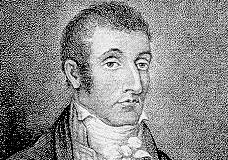
John Bellingham
Assassin Alexandros Schinas
Assassin · Greece · 1913
Alexandros (Alekos) Schinas (Greek: Αλέξανδρος Σχινάς) was a Greek anarchist as…
1 victim
Alexandros Schinas
Assassin · Greece · 1913
Alexandros (Alekos) Schinas (Greek: Αλέξανδρος Σχινάς) was a Greek anarchist as…
1 victim
 David Herold
Assassin · USA · 1865
David Edgar Herold (16 June 1842 – 7 July 1865) conspired with John Wilkes Boot…
1 victim
David Herold
Assassin · USA · 1865
David Edgar Herold (16 June 1842 – 7 July 1865) conspired with John Wilkes Boot…
1 victim
 Faisal bin Musaid
Assassin · Saudi Arabia · 1975
Faisal bin Musaid bin Abdul-Aziz (April 4, 1944 - June 18, 1975) was the assass…
1 victim
Faisal bin Musaid
Assassin · Saudi Arabia · 1975
Faisal bin Musaid bin Abdul-Aziz (April 4, 1944 - June 18, 1975) was the assass…
1 victim
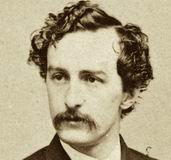 John Wilkes Booth
Assassin · USA · 1865
John Wilkes Booth (May 10, 1838 – April 26, 1865) was an American stage actor w…
1 victim
John Wilkes Booth
Assassin · USA · 1865
John Wilkes Booth (May 10, 1838 – April 26, 1865) was an American stage actor w…
1 victim
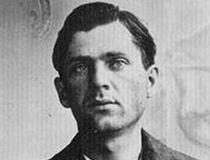 Leon Frank Czolgosz
Assassin · USA · 1901
Leon Frank Czołgosz (1873 – October 29, 1901) was the assassin of U.S. Presiden…
1 victim
Leon Frank Czolgosz
Assassin · USA · 1901
Leon Frank Czołgosz (1873 – October 29, 1901) was the assassin of U.S. Presiden…
1 victim
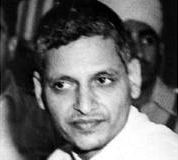 Nathuram Godse
Assassin · India · 1948
Nathuram Vinayak Godse (May 19, 1910 – November 15, 1949) was born at Baramati,…
1 victim
Nathuram Godse
Assassin · India · 1948
Nathuram Vinayak Godse (May 19, 1910 – November 15, 1949) was born at Baramati,…
1 victim
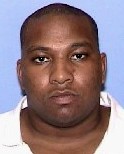 Marcus Druery
Murderer · USA · 2002
Marcus Druery (Marcus Ray Tyrone Druery) was assigned TDCJ Number 999464. His d…
1 victim
Marcus Druery
Murderer · USA · 2002
Marcus Druery (Marcus Ray Tyrone Druery) was assigned TDCJ Number 999464. His d…
1 victim
 Robert Hawkins
Mass murderer · USA · 2007
Robert A. Hawkins committed suicide by shooting himself after a mass shooting a…
8 victims
Robert Hawkins
Mass murderer · USA · 2007
Robert A. Hawkins committed suicide by shooting himself after a mass shooting a…
8 victims
 Gordon Northcott
Serial killer · USA · 1928
Gordon Stewart Northcott was a Canadian-born ranch owner who later murdered boy…
20 victims
Gordon Northcott
Serial killer · USA · 1928
Gordon Stewart Northcott was a Canadian-born ranch owner who later murdered boy…
20 victims
 Danilo Restivo
Murderer · United Kingdom · 1993
Danilo Restivo was born in Sicily in April 1972. He later lived in Potenza, Ita…
2 victims
Danilo Restivo
Murderer · United Kingdom · 1993
Danilo Restivo was born in Sicily in April 1972. He later lived in Potenza, Ita…
2 victims
 Michael McCrea
Murderer · Singapore · 2002
Michael McCrea was sentenced to 24 years imprisonment on June 29, 2006. · 2 Jan…
2 victims
Michael McCrea
Murderer · Singapore · 2002
Michael McCrea was sentenced to 24 years imprisonment on June 29, 2006. · 2 Jan…
2 victims
 Cameron Willingham
Murderer · USA · 1991
Cameron Willingham was convicted of capital murder for murdering his three chil…
3 victims
Cameron Willingham
Murderer · USA · 1991
Cameron Willingham was convicted of capital murder for murdering his three chil…
3 victims
- Gender
- male
- Country
- —
- Location
- —
- Date of birth
- 1769
- Age at first offence
- 43
- Characteristics
- revenge
- Victim profile
- British Prime Minister Spencer Perceval, 49
- Method of murder
- Shooting Loca tion : Lond on, England, United Kingdom
- Date(s) of murder
- May 11, 1812
- Years active
- 1812
- Date of arrest
- Same day
- Status
-
Executed
Executed by hanging on May 18, 1812
Case details
John Bellingham murdered Spencer Perceval, the British Prime Minister and Chancellor of the Exchequer, by shooting him in the House of Commons on 11 May 1812. He then made no attempt to get away and blamed the government for denying him justice.
Bellingham was tried at the Old Bailey for murder on 15 May 1812. The jury found him guilty. The judge ruled that Bellingham understood what he had done and sentenced him to death. He was hanged publicly at 8 am on 18 May 1812 by William Brunskill. His body was dissected and anatomized.
Timeline
- 11 May 1812 — Bellingham entered the House of Commons via the lobby of St Stephens chapel, lay in wait for Lord Leveson Gower, and shot him dead; he later realised he had shot the Prime Minister Spencer Perceval instead.
- 15 May 1812 — Bellingham was tried at the Old Bailey for murder.
- 18 May 1812 — Bellingham was executed by hanging at 8 am; his body was later carried to St Bartholomew's Hospital and privately dissected.
Background
John Bellingham developed an irrational grudge against authority when a business venture in Russia he was involved in collapsed and the government refused to rescue him from the financial mess he was in.
Bellingham’s early life details were unclear, as few sources survived. Bellingham was said to have been born in St Neots, Huntingdonshire, and later brought up in London. He was apprenticed to a jeweller, James Love, at the age of fourteen. Two years later, he was sent as a midshipman on the maiden voyage of the Hartwell from Gravesend to China. A mutiny on board on May 22, 1787, led to the ship running aground and sinking.
In 1794, a John Bellingham opened a tin factory on London’s Oxford Street, but the business failed and he was declared bankrupt that March. It was not definitely established that this was the same person. Bellingham worked as a clerk in a counting house in the late 1790s. Around 1800 he went to Archangel in Russia as an agent for importers and exporters. He returned to England in 1802 and worked in Liverpool as a merchant broker. He married Mary Neville in 1803. In the summer of 1804, he went to Archangel again to work for a short time as an export representative.
Russian imprisonment and grievances
A Russian ship, Soleure, insured at Lloyd’s of London, was lost in the White Sea. The owners (the house of R. Van Brienen) attempted to claim on their insurance. An anonymous letter informed Lloyd’s that the ship had been sabotaged. Soloman Van Brienen suspected Bellingham and decided to retaliate by accusing him of a debt of 4,890 roubles to a bankrupt for which he was an assignee.
Bellingham, on the verge of leaving for Britain on November 16, 1804, had his travelling pass withdrawn because of the debt. Van Brienen persuaded the Governor-General of the area to imprison Bellingham. A year later Bellingham secured his release and managed to get to St. Petersburg, where he attempted to impeach the Governor-General. This provoked the Russian authorities and he was charged with leaving Archangel in a clandestine manner and again imprisoned.
He was in prison until October 1808 when he was put out onto the streets without permission to leave. In his desperation, he personally petitioned the Tsar. He was permitted to leave in 1809 and arrived back in England in December.
Bellingham began to petition the United Kingdom Government for compensation for his imprisonment, but was refused because the United Kingdom had broken off diplomatic relations with Russia in November 1808. His wife tried to persuade him to drop the issue and Bellingham went back into work.
Bellingham renewed his attempts to win compensation in 1812. On April 18 he went in person to the offices of the Foreign Office where a civil servant called Hill told him he was at liberty to take whatever measures he thought proper. Bellingham then bought two half-inch calibre (12.7 mm) pistols from W. Beckwith, gunsmith of 58 Skinner Street, on April 20. He arranged with a tailor to have a secret inside pocket put on his coat. He was often seen in the lobby of the House of Commons.
Investigation, approach, and detention
After taking the family of a friend to see a water-colour painting exhibition on May 11, 1812, Bellingham remarked he had some business to attend to and made his way to Parliament. He waited in the lobby until the Prime Minister, Spencer Perceval appeared. He stepped forward and shot him through the heart. Bellingham then calmly sat on a bench.
Bellingham was detained immediately by those present. He was identified by Isaac Gascoyne, MP for Liverpool. During the immediate reaction after the shooting, loud cries of “Shut the door; let no one out!” were heard and several persons exclaimed: “Where’s the murderer?” Bellingham answered, “I am the unfortunate man,” and was seized and searched.
During searches, a pistol loaded with ball and primed was found in Bellingham’s left-hand trousers-pocket, along with an opera-glass and a number of papers. When asked about his motives, he replied: “Want of redress, and denial of justice.”
Bellingham made no attempt to escape and was escorted under a strong military escort to Newgate, where he was conducted to a room adjoining the chapel. An officer and head turnkeys sat up with him all night. He retired to bed soon after arrival, and he was disturbed during the night and had no sound sleep.
Police correspondence and threats
Bellingham wrote to the police magistrates of Bow Street in the following terms:
TO THEIR WORSHIPS THE POLICE MAGISTRATES OF THE PUBLIC OFFICE IN BOW STREET SIRS, -- I much regret its being my lot to have to apply to your worships under most peculiar and novel circumstances. For the particulars of the case I refer to the enclosed letter of Mr Secretary Ryder, the notification from Mr Perceval, and my petition to Parliament, together with the printed papers herewith. The affair requires no further remark than that I consider his Majesty's Government to have completely endeavoured to close the door of justice, in declining to have, or even to permit, my grievances to be brought before Parliament for redress, which privilege is the birthright of every individual. The purport of the present is, therefore, once more to solicit his Majesty's Ministers, through your medium, to let what is right and proper be done in my instance, which is all I require. Should this reasonable request be finally denied, I shall then feel justified in executing justice myself -- in which case I shall be ready to argue the merits of so reluctant a measure with his Majesty's Attorney-General, wherever and whenever I may be called upon so to do. In the hopes of averting so abhorrent but compulsive an alternative I have the honour to be, sirs, your very humble and obedient servant, JOHN BELLINGHAM. No. 9 NEW MILLMAN STREET, March 23, 1812
After this letter was conveyed to government members, it was treated as a mere threat, and no further notice was taken of it other than a fresh refusal when Bellingham again presented himself.
Bellingham also wrote a letter to his wife while in custody. It included the following content:
Tuesday morning, Old Bailey DEAR MADAM -- Yesterday midnight I was escorted to this neighbourhood by a noble troop of Light Horse, and delivered into the care of Mr Newman (by Mr Taylor, the magistrate and M.P.) as a state prisoner of the first class. For eight years I have never found my mind so tranquil as since this melancholy but necessary catastrophe, as the merits or demerits of my peculiar case must be regularly unfolded in a criminal court of justice to ascertain the guilty party, by a jury of my country. I have to request the favour of you to send me three or four shirts, some cravats, handkerchiefs, night-caps, stockings, &c, out of my drawers, together with comb, soap, tooth-brush, with any other trifle that presents itself which you think I may have occasion for, and inclose them in my leather trunk, and the key please to send sealed, per bearer; also my great-coat, flannel gown, and black waistcoat: which will much oblige, 'Dear madam, your very obedient servant, 'JOHN BELLINGHAM. 'To the above please to add the prayer-books.'
He later wrote again:
MY BLESSED MARY, -- It rejoiced me beyond measure to hear you are likely to be well provided for. I am sure the public at large will participate in, and mitigate, your sorrows; I assure you, my love, my sincerest endeavours have ever been directed to your welfare. As we shall not meet any more in this world, I sincerely hope we shall do so in the world to come. My blessing to the boys, with kind remembrance to Miss Stephens, for whom I have the greatest regard, in consequence of her uniform affection for them. With the purest intentions, it has always been my misfortune to be thwarted, misrepresented and ill-used in life; but however, we feel a happy prospect of compensation in a speedy translation to life eternal. It's not possible to be more calm or placid than I feel, and nine hours more will waft me to those happy shores where bliss is without alloy. Yours ever affectionate, JOHN BELLINGHAM.
Trial
Bellingham was tried at the Old Bailey. The trial began on Wednesday May 13 at the Old Bailey for murder. The judges at ten o’clock took their seats on each side of the Lord Mayor. The recorder, the Duke of Clarence, the Marquis Wellesley and almost all the aldermen of the City of London occupied the bench. The court was crowded to excess.
Bellingham appeared at the bar with a firm step and bowed to the court most respectfully. His counsel, Mr Alley, made application to have the trial postponed for the purpose of procuring proofs of his client’s insanity, alleged in two affidavits.
Before pleading, Bellingham told the court:
My lords -- Before I can plead to this indictment, I must state, in justice to myself, that by hurrying on my trial I am placed in a most remarkable situation. It so happens that my prosecutors are actually the witnesses against me. All the documents on which alone I could rest my defence have been taken from me and are now in possession of the Crown. It is only two days since I was told to prepare for my defence, and when I asked for my papers, I was told they could not be given up. It is therefore, my lords, rendered utterly impossible for me to go into my justification, and under the circumstances in which I find myself, a trial is absolutely useless. The papers are to be given to me after the trial, but how can that avail me for my defence? I am, therefore, not ready for my trial.
He pleaded “Not guilty” to both counts of the indictment.
The indictment charged him with the murder of the Right Hon Spencer Perceval, with which he was also charged on the coroner’s inquisition.
Mr Abbott opened the case and the Attorney-General addressed the jury. The Attorney-General argued that revenge or resentment should not influence the verdict and that Bellingham was criminally accountable, addressing arguments about insanity.
Bellingham’s defence statement to the court was long and included the following quotation:
Recollect, Gentlemen, what was my situation. Recollect that my family was ruined and myself destroyed, merely because it was Mr Perceval's pleasure that justice should not be granted; sheltering himself behind the imagined security of his station, and trampling upon law and right in the belief that no retribution could reach him. I demand only my right, and not a favour; I demand what is the birthright and privilege of every Englishman. Gentlemen, when a minister sets himself above the laws, as Mr Perceval did, he does it as his own personal risk. If this were not so, the mere will of the minister would become the law, and what would then become of your liberties? I trust that this serious lesson will operate as a warning to all future ministers, and that they will henceforth do the thing that is right, for if the upper ranks of society are permitted to act wrong with impunity, the inferior ramifications will soon become wholly corrupted. Gentlemen, my life is in your hands, I rely confidently in your justice.
Evidence that Bellingham was insane was put forward by witnesses, but not by Bellingham himself, and was discounted by the trial judge, Sir James Mansfield.
After the jury deliberated for 14 minutes, the jury found Bellingham guilty. The sentence was death. The Recorder passed the sentence of death and ordered Bellingham for execution on the following Monday; his body was to be anatomized.
Sentencing
The judge sentenced Bellingham to death. The sentence included the following wording:
That you be taken from hence to the place from whence you came, and from thence to a place of execution, where you shall be hanged by the neck until you be dead; your body to be dissected and anatomized.
Execution and aftermath
Bellingham was executed in public on Monday, 18 May. The hanging was carried out at 8 am by William Brunskill.
On the morning of the execution, Bellingham read for half-an-hour in the Prayer Book. Dr Ford announced him and he shook hands cordially. He left his cell for the condemned room and repeated that his mind was calm and composed. A sacrament was administered and he seemed deeply impressed with the Christian religion. He told Dr Ford he was “perfectly ready also.”
When the executioner proceeded to fasten his wrists together, Bellingham turned up the sleeves of his coat and clasped his hands, presenting them and saying:
So.
He requested his arms be sufficiently fastened to prevent inconvenience and asked whether they thought his arms were sufficiently fastened, saying he might struggle. He was told the cord was secure, and it was tightened.
During the execution, he appeared perfectly composed and collected. Before leaving the room to proceed to the place of execution, he stooped down and appeared to wipe away a tear. On the scaffold, he made no remark before the cap was put over his face. Dr Ford asked if he had any last communication to make; Bellingham was praying and later thanked God for enabling him to meet his fate with “so much fortitude and resignation.”
When the cap was being fastened, a crowd shouted “God bless you!” and “God save you!” The ordinary asked whether he heard what the mob were saying. Bellingham said he heard crying out something but did not understand what it was, and inquired what.
The clock struck eight and, while striking the seventh time, the supporters of the internal part of the scaffold were struck away and Bellingham dropped out of sight. There was a “perfect and awful silence.”
After the execution, the body was carried in a cart to St Bartholomew’s Hospital and privately dissected.
A large bill was placarded at all avenues of the Old Bailey and carried about on a pole warning:
Beware of entering the crowd! Remember thirty poor creatures pressed to death by the crowd when Haggerty and Holloway were executed.
No accident of any moment occurred. Military force was stationed near Islington and to the south of Blackfriars Bridge and volunteer corps were instructed to be under arms during the whole of the day.
A subscription was raised for the widow and children of Bellingham. The widow and children’s “fortune was ten times greater than they could ever have expected in any other circumstances”.
Other details
- Bellingham was identified as having shot Lord Leveson Gower in the House of Commons but later realised he had shot the Prime Minister Spencer Perceval.
- He was found guilty by the jury and sentenced to death; his defence included arguments about grievances and denial of justice.
- Evidence of Bellingham’s alleged insanity was discounted by trial judge Sir James Mansfield.
- A letter about his situation while in custody described him as escorted as a state prisoner of the first class and requested clothing and toiletries as well as the key for a trunk.
- A note written on the night preceding his execution stated: “I lost my suit solely through the improper conduct of my attorney and counsel, Mr Alley, in not bringing my witnesses forward (of whom there were more an twenty): in consequence, the judge took advantage of the circumstance, and I went on the defence without having brought forward a single friend -- otherwise I must inevitably have been acquitted.”
- A subscription was raised for Bellingham’s widow and children after his conviction.
- A trivia claim said that in the 1983 general election, his descendant Henry Bellingham was elected to Parliament for North West Norfolk; in the 1997 election, one of Bellingham’s opponents was Roger Percival, a descendant of Spencer Perceval; Bellingham’s execution-related assassination was the subject of a song titled “Spencer Perceval” by iLiKETRAiNS, and it appeared on their 2007 debut album Elegies to Lessons Learnt.
- Notes mentioned Patrick Magee’s attempt on the life of Margaret Thatcher in the Brighton Bombing, alongside references to serious attempts on the lives of King George III and Queen Victoria, and the Gunpowder Plot to bomb the Palace of Westminster.
- A quotation attributed to René Martin Pillet described the crowd sentiment at Bellingham’s execution as: “Farewell poor man, you owe satisfaction to the offended laws of your country, but God bless you! you have rendered an important service to your country, you have taught ministers that they should do justice, and grant audience when it is asked of them.”
Spotted an error, or have more information about this case?