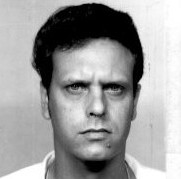
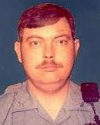
David Wayne Spence
Murderer Ervil LeBaron
Murderer · USA · 1972
Ervil Morrell LeBaron (1925 to August 16, 1981) was the leader of a polygamous…
35 victims
Ervil LeBaron
Murderer · USA · 1972
Ervil Morrell LeBaron (1925 to August 16, 1981) was the leader of a polygamous…
35 victims
 Brian Kevin Rosenfeld
Murderer · USA · 1985
Brian Kevin Rosenfeld Brian Kevin Rosenfeld was sentenced to three concurrent l…
23 victims
Brian Kevin Rosenfeld
Murderer · USA · 1985
Brian Kevin Rosenfeld Brian Kevin Rosenfeld was sentenced to three concurrent l…
23 victims
 Marvin Gray
Murderer · USA · 1975
Marvin Gray was convicted killer who claimed responsibility for 23 slayings and…
23 victims
Marvin Gray
Murderer · USA · 1975
Marvin Gray was convicted killer who claimed responsibility for 23 slayings and…
23 victims
 Yahweh ben Yahweh
Murderer · USA · 1980
Yahweh ben Yahweh was born and legally named Hulon Mitchell Jr. (October 27, 19…
23 victims
Yahweh ben Yahweh
Murderer · USA · 1980
Yahweh ben Yahweh was born and legally named Hulon Mitchell Jr. (October 27, 19…
23 victims
 Russell Ellwood
Murderer · USA · 1991
Russell Ellwood was a former taxi driver. Authorities suspected him of killing…
20 victims
Russell Ellwood
Murderer · USA · 1991
Russell Ellwood was a former taxi driver. Authorities suspected him of killing…
20 victims
 Robert Lee Willie
Murderer · USA · 1980
Robert Lee Willie (died December 28, 1984) was a man convicted in Louisiana of…
1 victim
Robert Lee Willie
Murderer · USA · 1980
Robert Lee Willie (died December 28, 1984) was a man convicted in Louisiana of…
1 victim
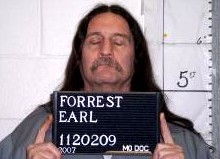 Earl Mitchell Forrest
Murderer · USA · 2002
Earl M. Forrest was drinking in December 2002 when he went to Harriet Smith's h…
3 victims
Earl Mitchell Forrest
Murderer · USA · 2002
Earl M. Forrest was drinking in December 2002 when he went to Harriet Smith's h…
3 victims
 Wayne Butler
Murderer · Australia · 1983
Wayne Butler was convicted of murdering Celia Natasha “Tasha” Douty, who was a…
1 victim
Wayne Butler
Murderer · Australia · 1983
Wayne Butler was convicted of murdering Celia Natasha “Tasha” Douty, who was a…
1 victim
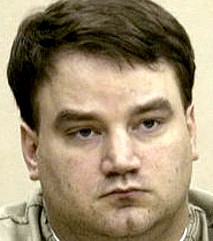 Charles McCoy
Murderer · USA · 2003
Charles McCoy Jr. was an admitted highway shooter in Ohio. His defense attorney…
1 victim
Charles McCoy
Murderer · USA · 2003
Charles McCoy Jr. was an admitted highway shooter in Ohio. His defense attorney…
1 victim
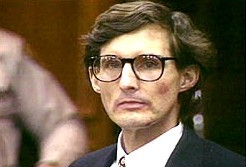 Fred Tokars
Murderer · USA · 1992
Fredric W. Tokars (also written as Fred Tokars) was tried for the murder of his…
1 victim
Fred Tokars
Murderer · USA · 1992
Fredric W. Tokars (also written as Fred Tokars) was tried for the murder of his…
1 victim
- Gender
- male
- Country
- USA
- Location
- McLennan County , Texas, USA
- Date of birth
- J uly 18, 1956
- Age at first offence
- 26
- Characteristics
- murder for hire, rape, torture
- Victim profile
- Jill Montgomery, 17; Raylene Rice, 17, and Kenneth Franks, 18
- Method of murder
- St abbing with knife
- Date(s) of murder
- July 13, 1982
- Years active
- 1982
- Date of arrest
- —
- Status
-
Executed
Executed by lethal injection in Texas on April 3, 1997
Case overview
David Wayne Spence was executed by lethal injection in Texas on April 3, 1997.
Spence was convicted and sentenced to die in Texas courts in connection with the rape and torture murders of three teenagers: Jill Montgomery (17) and Raylene Rice (17), and Kenneth Franks (18). The victims’ bodies were found in a wooded area of Speegleville Park at Lake Waco. The killings were described as involving a murder-for-hire plot that went awry, with the victims dying after Spence and accomplices attacked them.
The appellate opinion identified Spence as “David Wayne Spence, Petitioner-Appellant, v. Gary L. Johnson, Director, Texas Department of Criminal Justice, Institutional Division, Respondent-Appellee,” Nos. 94-20212, 94-20213, in the United States Court of Appeals, Fifth Circuit, dated March 29, 1996. The Fifth Circuit affirmed the district court’s denial of habeas corpus relief and found no reversible error.
Timeline
- July 13, 1982 — Jill Montgomery and Raylene Rice drove to Waco to pick up and cash Jill’s paycheck from the Fort Fisher Ranger Museum and to meet their friend Kenneth Franks; later that day the three drove to Koehne Park on the banks of Lake Waco; after encountering David Wayne Spence and his cohorts, Jill, Kenneth, and Raylene were never seen alive again by their loved ones.
- July 14, 1982 — The bodies were found in a wooded area of Speegleville Park, across the lake from Koehne Park, and described as stabbed and raped victims of Spence and his cohorts.
- September 1982 to March 1983 — Inmate witnesses testified that they were housed with Spence during this period in the McLennan County jail.
- September 1982 — The Waco Police Department reduced the case to inactive status.
- November 21, 1983 — The McLennan County grand jury indicted four men on capital murder charges related to the apparent murder-for-hire case.
- July 1984 — Spence was convicted in the 54th Judicial District Court of McLennan County for the capital murder of Jill Montgomery; after a separate punishment hearing, the jury answered the special issues required by the former Texas Code of Criminal Procedure Article 37.071, and the court sentenced him to death.
- September 1985 — After a change of venue, Spence was convicted in the 85th Judicial District Court of Brazos County for the capital murder of Kenneth Franks; after a separate punishment hearing, the court sentenced him to death.
- September 1993 [sic] — After January 1993 [sic], a newly elected district attorney, Vic Feazell, encouraged the investigation; by late March 1993 [sic], Truman Simons persuaded Gilbert Melendez to confess.
- December 12, 1991 — The Texas Court of Criminal Appeals denied Spence habeas relief based on the trial court’s findings in Ex parte Spence, Application No. 15,346-03.
- April 29, 1992 — The federal district court denied Spence’s federal habeas petitions in separate opinions and orders dated April 29, 1992.
- March 29, 1996 — The United States Court of Appeals, Fifth Circuit affirmed the district court’s denial of habeas corpus relief and found no reversible error.
Background
Spence’s case involved “tortured and stabbed to death three teenagers in Waco, Texas.” He was convicted and sentenced to die for two of the murders in Texas courts and denied habeas corpus relief by the federal district court. On appeal, he sought relief from the Fifth Circuit.
The appellate opinion described the murders as involving a failed murder-for-hire plot. The later Jill Montgomery trial differed from the later capital murder trial for Kenneth Franks, and the opinion set out that perspective.
The offence
Victims and events at Lake Waco
On the morning of July 13, 1982, Jill Montgomery and Raylene Rice drove to Waco to pick up and cash Jill’s paycheck from the Fort Fisher Ranger Museum and to meet their friend Kenneth Franks. Later that day, they drove to Koehne Park on the banks of Lake Waco.
After encountering David Wayne Spence and his cohorts, Anthony (Tony) and Gilbert Melendez, the group “hung out” for some time drinking beer and smoking marijuana joints. In the evening, Spence persuaded the group to go to a convenience store to buy more beer. En route in his car, Spence attempted to grab Jill’s breast. When she resisted, they argued heatedly. Spence then warned Kenneth and Jill he was going to “get even” with them “for some dope that he [Kenneth] had burned me for.” Kenneth denied he had “burned” Spence for anything. Instead of driving to the convenience store, Spence turned and drove back into a wooded area in Koehne Park.
After everyone got out of the car, Spence produced a knife and ordered Jill and Raylene to undress. Jill and Raylene complied. Spence forced Jill to walk with him to another part of the park. Gilbert ordered Raylene into the car. Gilbert raped Raylene. Spence told Anthony to bring Kenneth forcibly to where Spence was with Jill so that Kenneth could watch Kenneth watch Spence rape Jill. Spence forced Jill to the ground, sat on her legs, rubbed her breasts with his knife, and raped her while Kenneth and Anthony watched.
After Spence finished, Anthony traded places and raped Jill. Spence marched Kenneth back to the car where he raped Raylene. After this rape, Spence returned to Jill. He cut her breasts and repeatedly stabbed her. The opinion stated that at some point Spence bit off one of Jill’s nipples. Spence then handed his knife to Anthony, telling him to stab Jill. When Spence believed Anthony was not properly stabbing her, Spence took back his knife and inflicted lethal wounds. Spence then returned to the car and stabbed Kenneth to death. After this second murder, Spence grabbed Raylene and repeatedly stabbed her, and he ordered Tony to stab her. Spence bit Raylene’s body several times and rammed a piece of wood “—which he referred to as his ‘lovestick’—into her vagina.”
While Spence remained with the bodies, Anthony and Gilbert drove to Spence’s mother’s home and exchanged the car for Gilbert’s pick-up truck. During their absence, Spence bound the bodies. When the Melendezes returned, the trio threw the bodies into the back of the truck and, at Spence’s direction, drove to Speegleville Park. The opinion described the bodies being dumped apart from each other in an off-the-road area.
Boasting and division of property
In placing Kenneth’s body, Spence boasted to Tony that the police “were going to freak out when they find this boy because he will be sitting up.” Spence and the Melendez brothers divided up several hundred dollars Spence had taken from Jill’s wallet.
Location of bodies
The opinion stated that the tortured bodies of Jill, Raylene, and Kenneth were found the next day and described it as a wooded area of Speegleville Park at Lake Waco, across the lake from Koehne Park.
Investigation and case background (as described in the appeal)
The appellate opinion described that after intensive investigation the Waco Police Department reduced the case to inactive status in September. A dogged police officer, Truman Simons, volunteered to pursue the investigation and continued working on it even after he changed jobs and became a jailer employed by the McLennan County Sheriff’s Office.
After January 1993 [sic], a newly elected district attorney, Vic Feazell, encouraged the investigation. By late March 1993 [sic], Simons persuaded Gilbert Melendez to confess his involvement and that of Spence in the crimes.
Judicial proceedings
Spence was indicted and tried in two capital murder prosecutions. Spence and Muneer Deeb were indicted in November 1983, with three Waco men also named: Muneer Mohammed Deeb (24), Gilbert Melendez (28), and Tony Melendez (24). The Melendez brothers pleaded guilty and received life prison terms while Spence and Deeb maintained their innocence.
Trial for Jill Montgomery (capital murder)
In July 1984, Spence was convicted in the 54th Judicial District Court of McLennan County for the capital murder of Jill Montgomery. After a separate punishment hearing, the jury answered the required special issues and the court sentenced Spence to death.
The Texas Court of Criminal Appeals affirmed the conviction and sentence in Spence v. Texas, 795 S.W.2d 743 (Tex. Crim. App. 1990) (en banc), cert. denied, 499 U.S. 932, 111 S.Ct. 1339, 113 L.Ed.2d 271 (1991). Spence filed an application for a writ of habeas corpus with the convicting court; the court adopted the State’s response as findings and recommended relief be denied. The Texas Court of Criminal Appeals denied relief in Ex parte Spence, Application No. 15,346-03 (Dec. 12, 1991).
Trial for Kenneth Franks (capital murder)
In September 1985, Spence was convicted after a change of venue in the 85th Judicial District Court of Brazos County for the capital murder of Kenneth Franks. After a separate punishment hearing, Spence was sentenced to death. The Texas Court of Criminal Appeals affirmed in Spence v. Texas, No. 69,554 (Tex. Crim. App. 1990), cert. denied, 501 U.S. 1239, 111 S.Ct. 2875, 115 L.Ed.2d 1038 (1991). Spence’s application for a writ of habeas corpus was denied by the Texas Court of Criminal Appeals based on the trial court’s recommendation in Ex parte Spence, Application No. 15,346-03 (Dec. 12, 1991).
Federal habeas proceedings and evidentiary hearing
In December 1991, Spence filed federal petitions for writs of habeas corpus regarding each conviction and sentence. The district court consolidated proceedings and ordered an evidentiary hearing on allegations that the State had suppressed material exculpatory evidence. The parties agreed the evidentiary record would be developed through depositions and affidavits, followed by briefing and oral argument. Numerous depositions were taken and affidavits submitted.
After the hearing, the district court re-entered its earlier judgments denying habeas corpus relief with very brief opinions. The Fifth Circuit granted certificates of probable cause to appeal, heard consolidated oral argument, and treated both cases in one opinion.
Appellate claims and court findings (Fifth Circuit)
Standards of review
The appellate court described its review as de novo for legal conclusions and clear error for factual conclusions. It defined “clearly erroneous” as when the reviewing court on the entire evidence is left with a firm and definite conviction that a mistake has been committed.
Claims regarding the Kenneth Franks murder
Spence raised multiple constitutional claims concerning the State’s handling of evidence and witness testimony in relation to the trial for Kenneth Franks. The appellate court described the evidence offered at trial, including expert bite injuries, incriminating statements made by Spence to Regina Rosenbaum and inmate David Puryear, and the defense’s arguments about lack of conventional demonstrative evidence, inconsistencies and unreliability of forensic odontology evidence.
Brady claims: disclosure of benefits and privileges for Gilbert Melendez
Spence contended the State violated Brady v. Maryland by failing to disclose certain privileges and benefits Gilbert Melendez received in exchange for testimony. The appellate court analyzed the materiality standard for suppressed evidence.
The opinion noted that the State did not deny the nondisclosure of information about alleged incentives. The court concluded the nondisclosed evidence was not material because Gilbert’s testimony was supported by other evidence, including Tony Melendez’s testimony, state autopsy reports, testimony of Regina Ann Rosenbaum and David Puryear, and odontological evidence.
The appellate court addressed separate elements of Spence’s Brady theory:
- It concluded Spence’s argument about initial “overtures” of immunity was unpersuasive because Gilbert’s early statements did not tell the complete truth, foreclosing the chance of immunity. Even if the immunity overture influenced initial statements, any effect on later credibility after the plea bargain being known was not material.
- It concluded oral promises not to oppose Gilbert’s release on parole were conceded but not material.
- It concluded allegations of unsupervised visits with Gilbert’s girlfriend were not material because a reasonable jury would not have believed fabrication of testimony over two and a half years for a limited benefit.
Napue claims: perjury allegations involving Gilbert Melendez and David Puryear
Spence contended the State violated Napue v. Illinois by failing to correct perjured testimony by Gilbert and David Puryear. The appellate court concluded the district court did not clearly err in finding neither Gilbert nor Puryear’s trial testimony was perjured. It further concluded that even if Spence had proven the claims, they would not have affected the jury’s verdict.
The opinion addressed:
- Gilbert’s allegedly perjured 1993 federal habeas deposition statements about alleged help by Truman Simons in fabricating statements. The appellate court concluded it was unlikely Gilbert would have had incentive to fabricate given his acceptance of life sentences and the outcome of trial testimony.
- Puryear’s allegedly perjured trial testimony about decorating a bandana with pictures and a knife. The appellate court concluded the district court’s factual finding that Puryear did not commit perjury was not clearly erroneous. It described that an affidavit from Puryear’s former brother-in-law was inadmissible hearsay and that Puryear had written an unsolicited letter to prosecutor Ned Butler stating willingness to testify and that he was not seeking any “deal.”
Police reports: other suspects and drug-related theory
Spence contended the State violated Brady by not disclosing Waco Police Department reports that might have implicated other persons. The appellate court rejected these contentions and addressed:
- Reports indicating Terry “Tab” Harper was a suspect. The appellate court found the information did not undermine confidence in the verdict as officers concluded the murders were not drug-related and were inconsistent with Harper’s prior behavior and/or had alibi.
- Reports suggesting Kenneth Franks was in debt over drugs and was a known drug associate of Harper. The appellate court found these inadmissible reports not material, and stated the autopsy found no evidence of drugs in Kenneth’s body and officers could not find people to verify drug dealing.
The appellate court considered the withheld evidence collectively and concluded the cumulative effect was not reasonably likely to have affected the jury verdict.
Odontological evidence challenge
Spence argued the district court erred by not holding a hearing on challenges to admission of testimony by the State’s forensic odontologist, Dr. Homer Campbell, and by excluding Spence’s expert reports. The appellate court rejected these arguments. It stated that the standards requiring a hearing were not met because Spence did not raise a question of false testimony. It also noted that at trial Spence had introduced his own forensic odontologist, Dr. Gerald Vale, who criticized methodology but admitted he could not rule out Spence’s teeth as the source of bite marks. The appellate court found no violation of fundamental fairness.
It also rejected challenges to the exclusion of additional expert reports because they were filed after the district court’s discovery deadline without explanation.
Cumulative error doctrine
The appellate court rejected a cumulative errors claim, concluding Spence could not demonstrate deprivation of a fundamentally fair trial regarding the Kenneth Franks murder. It stated that undisclosed evidence undermining credibility was not material, Spence failed to establish perjury or knowing presentation of false testimony, and police reports did not reasonably undermine the jury’s verdict.
Claims regarding the Jill Montgomery murder
The appellate court described that the evidence in Jill Montgomery’s trial differed from that in Kenneth Franks’s trial. It outlined the failure murder-for-hire theory involving Muneer Deeb’s jealousy over Gayle Kelley and the attempt to kill Gayle, with mistaken identity allegedly resulting in Jill Montgomery and Raylene Rice being attacked instead.
Inmate witness privileges and recantations
Spence contended the State violated Brady by failing to disclose that inmate witnesses received special privileges in exchange for testimony, and by presenting false testimony from inmates. Two inmate witnesses later recanted in affidavits or depositions.
The appellate court described that the district court found only David Snelson and Jesse Ivy received undisclosed privileges and rejected claims that David Puryear and Charles Sypho received undisclosed inducements. The appellate court upheld those findings and also found the undisclosed evidence not material under Brady.
The appellate court stated that trial cross-examinations addressed agreements with the State and that conflicting law enforcement testimony existed. It reiterated that recanting affidavits and witnesses were viewed with extreme suspicion.
Napue perjury claims for inmate witnesses
The appellate court rejected broad Napue allegations of mass-manufactured inmate testimony. It stated that at best Snelson and Ivy might have delivered false testimony and noted that the district court did not clearly err in rejecting the broad claim. It concluded that even if Snelson and Ivy testified falsely, the testimony was cumulative in light of Spence’s incriminating admissions and the circumstantial and forensic odontological evidence.
Brady claims involving reports on other suspects
The appellate court addressed additional Brady claims:
- Police reports about Tab Harper and drug dealing theory were rejected as invalid in this case as well.
- Spence alleged Brady suppression of police reports implicating James Russell Bishop and Ronnie Lee Breiten. The appellate court noted that one report stated a man resembling Bishop threatened Kenneth over drug debts, and that another report suggested Bishop and Breiten were acquainted. The court rejected the Brady contention and stated it did not find the information exculpatory or material because forensic odontological evidence eliminated Bishop as a suspect and the report about Breiten being acquainted was too tenuous to undermine confidence in Spence’s conviction.
Cumulative effect and odontological evidence
The appellate court concluded that cumulatively the undisclosed evidence did not undermine confidence in the verdict. It also rejected the odontological evidence hearing claim as identical to the earlier Kenneth Franks issue and again concluded the district court had not erred.
Last statement (verbatim)
The case record included the following last statement by David Wayne Spence:
“First of all I want you to understand I speak the truth when I say I didn’t kill anyone,” Spence said.
“Honestly, I have not killed anyone. I wish you could get the rage from your hearts and you could see the truth and get rid of the hatred.”
He also said:
“I love you all – (names of children) – Corey, Steve (garbled) – This is very important. I love ya’ll and I miss ya’ll. O.K., now I’m finished.”
Sentencing and post-sentencing status (as described)
Spence received death sentences in two trials:
- Death sentence after conviction for the capital murder of Jill Montgomery in the 54th Judicial District Court of McLennan County.
- Death sentence after conviction for the capital murder of Kenneth Franks in the 85th Judicial District Court of Brazos County following a change of venue.
The Fifth Circuit affirmed the district court’s judgments denying habeas corpus relief regarding Spence’s convictions and sentences, finding no reversible error.
Other details
Indicted parties and related procedural outcome
The opinion described that besides Spence, Muneer Deeb was charged and sentenced to death in the case, and that Deeb received a new trial and was acquitted. It stated that Deeb died in November of liver cancer.
Investigator acknowledgment and deposition statement (as described in the case narrative)
The case narrative described that the original police homicide investigator Ramon Salinas acknowledged in the appeals process that he had serious doubts about Spence’s guilt. It further described a sworn deposition given to Spence’s lawyers in 1993 by Marvin Horton, a former Waco police lieutenant involved in the case, stating:
“I do not think David Spence committed this offense.”
Evidence described in the appellate decision
The Fifth Circuit described the prosecution’s case as relying on expert evidence identifying Spence as the source of bite injuries and on incriminating statements Spence had made to Regina Ann Rosenbaum and inmate David Puryear. The defense’s arguments included challenges to witness consistency and to forensic odontology evidence.
Quoted statements and references
The record contained additional quoted material:
- Spence warned Kenneth and Jill he was going to “get even” with them “for some dope that he [Kenneth) had burned me for.”
- The appellate court’s opinion also included Spence’s boasting to Tony that the police “were going to freak out when they find this boy because he will be sitting up.”
Outcome
The United States Court of Appeals, Fifth Circuit, affirmed the district court’s judgments. The appellate court “AFFIRM[ED]” the district court’s decision denying Spence habeas corpus relief regarding both convictions and sentences.
Spotted an error, or have more information about this case?