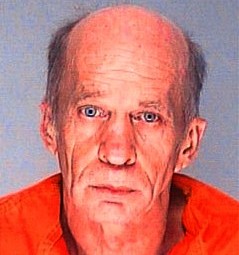
John Couey
Murderer Robert Glen Jones
Murderer · USA · 1996
Defendant: Robert Glenn Jones (ADC#070566) · Co-defendant: Scott Nordstrom (ADC…
7 victims
Robert Glen Jones
Murderer · USA · 1996
Defendant: Robert Glenn Jones (ADC#070566) · Co-defendant: Scott Nordstrom (ADC…
7 victims
 Joshua Wayne Andrews
Murderer · USA · 2000
Joshua Wayne Andrews was a serial killer accused of killing several people in V…
5 victims
Joshua Wayne Andrews
Murderer · USA · 2000
Joshua Wayne Andrews was a serial killer accused of killing several people in V…
5 victims
 Juan Carlos Alvarez
Murderer · USA · 1998
Juan Carlos Alvarez, born on March 9, 1977, in San Luis, Mexico, was a Hispanic…
5 victims
Juan Carlos Alvarez
Murderer · USA · 1998
Juan Carlos Alvarez, born on March 9, 1977, in San Luis, Mexico, was a Hispanic…
5 victims
 Leon Davis Jr.
Murderer · USA · 2007
Leon Davis Jr. was sentenced to death on April 29, 2011, for the execution-styl…
5 victims
Leon Davis Jr.
Murderer · USA · 2007
Leon Davis Jr. was sentenced to death on April 29, 2011, for the execution-styl…
5 victims
 Eliseo Hernandez Moreno
Spree killer · USA · 1983
Eliseo Hernandez Moreno was executed by lethal injection in Texas on March 4, 1…
6 victims
Eliseo Hernandez Moreno
Spree killer · USA · 1983
Eliseo Hernandez Moreno was executed by lethal injection in Texas on March 4, 1…
6 victims
 Katariina Pantila
Murderer · Finland · 2007
Katariina Meri-Tuulia Pantila was born as Katariina Hyttinen and had a first ma…
1 victim
Katariina Pantila
Murderer · Finland · 2007
Katariina Meri-Tuulia Pantila was born as Katariina Hyttinen and had a first ma…
1 victim
 Thomas Doty
Mass murderer · USA · 1962
Thomas G. Doty was a passenger on Continental Airlines Flight 11. He was a marr…
44 victims
Thomas Doty
Mass murderer · USA · 1962
Thomas G. Doty was a passenger on Continental Airlines Flight 11. He was a marr…
44 victims
 Martin Link
Murderer · USA · 1991
Martin Link was convicted by a jury in the Circuit Court of the City of St. Lou…
1 victim
Martin Link
Murderer · USA · 1991
Martin Link was convicted by a jury in the Circuit Court of the City of St. Lou…
1 victim
 William L. Thompson
Murderer · USA · 1976
William L. Thompson was convicted and sentenced to death for the 03/30/76 kidna…
1 victim
William L. Thompson
Murderer · USA · 1976
William L. Thompson was convicted and sentenced to death for the 03/30/76 kidna…
1 victim
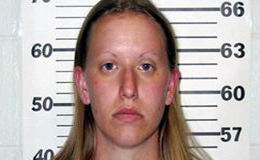 Jessica Hill
Murderer · USA · 2007
Jessica Hill was convicted in connection with the death of her husband, Michael…
1 victim
Jessica Hill
Murderer · USA · 2007
Jessica Hill was convicted in connection with the death of her husband, Michael…
1 victim
- Gender
- male
- Country
- USA
- Location
- Homosassa, Citrus County, Florida, USA
- Date of birth
- September 19, 1958
- Age at first offence
- 47
- Characteristics
- kidnapping, rape
- Victim profile
- Jessica Lunsford, 9
- Method of murder
- Suffocation
- Date(s) of murder
- February 24, 2005
- Years active
- 2005
- Date of arrest
- March 18, 2005
- Status
-
Died in custody
Sentenced to death on August 27, 2007; died in prison on September 30, 2009
Case identification
- Name: John Evander Couey
- Lifespan: September 19, 1958 – September 30, 2009
- Status: Sentenced to death on August 27, 2007; died in prison on September 30, 2009
- Florida Department of Corrections number: 063425
Timeline
- February 24, 2005 — The family of Jessica Lunsford discovered that Jessica was missing from the home she shared with her father and grandparents.
- Late evening before March 18, 2005 — Police later alleged that Couey entered Jessica’s house through an unlocked door at about 3 a.m., awoke her, told her “Don't yell or nothing,” and told her to follow him out of the house.
- March 18, 2005 — Police found Lunsford's body at Couey’s residence on West Sparrow Court, under the front porch and buried in a shallow grave.
- March 7, 2007 — Couey was found guilty of all charges in relation to Jessica Lunsford’s death, including first degree murder, kidnapping, burglary, and sexual battery.
- March 15, 2007 — A jury recommended that Couey receive the death penalty.
- August 11, 2007 — A jury voted 10-2 that Couey be eligible for the death sentence.
- August 24, 2007 — Couey was sentenced to death by Circuit Judge Richard Howard, and also received three consecutive life terms for his crimes.
- August 27, 2007 — Sentenced to death (as recorded in the case status).
- September 30, 2009 — Couey died at Jacksonville Memorial Hospital at 11:15 a.m. EST after complications from anal cancer.
Background
John Evander Couey was an American sex offender convicted of kidnapping, raping, and murdering nine-year old Jessica Lunsford in Florida.
Couey’s actions led to changes in law described in the case summary: “Jessica's Law” was enacted in Florida, and Congress created the “Jessica Lunsford Act.”
Couey had an extensive criminal record that included 24 arrests for burglary, carrying a concealed weapon without a permit, and indecent exposure.
During a house burglary in 1978, Couey was accused of grabbing a girl in her bedroom, placing his hand over her mouth, and kissing her. He was sentenced to 10 years in prison and was paroled in 1980.
In 1991, Couey was arrested in Kissimmee on a charge of fondling a five-year-old child. Because of more lenient laws at that time, Couey was released early.
The offence
Disappearance
On February 24, 2005, Jessica Lunsford’s family discovered that she was missing from the home she shared with her father and grandparents.
Alleged abduction and control of Jessica
Couey was later accused of entering Jessica Lunsford’s house through an unlocked door at about 3 a.m. He awoke her, told her “Don't yell or nothing”, and told her to follow him out of the house.
A videotaped and recorded deposition included an admission that later was thrown out by the Florida trial court (see below). In that admission, Couey said that:
- he sexually assaulted Lunsford in his bedroom,
- she was kept in his bed that evening and he raped her again in the morning,
- he put her in his closet and ordered her to remain there, which she did as he reported for work at “Billy's Truck Lot”, and
- three days after he abducted her, he bound the child’s wrists together with speaker wire, placed her in a garbage bag, placed the bag containing her inside another garbage bag, and buried her alive in a shallow grave where she suffocated to death.
Investigation
Finding of the body
On March 18, 2005, police found Lunsford’s body at Couey’s residence located on West Sparrow Court. The body was found under the front porch and buried in a hole approximately 2½ ft deep by 2 ft in diameter (0.8 m deep by 0.6 m dia.), covered with leaves.
The body was removed from the ground and transported to the coroner’s office. The body had undergone “moderate” to “severe” decomposition and, according to publicly released autopsy reports, was skeletonized on two fingers that Lunsford had poked through the bags before suffocating to death.
The coroner ruled that death would have happened even in best circumstances within three or five minutes from lack of oxygen.
Confession and exclusion
The admission in the videotaped and recorded deposition was thrown out by Couey’s Florida trial court because Couey had asked for an attorney before being interrogated but was not given one. The trial court determined the statement was obtained in violation of Couey’s Sixth Amendment right to counsel and right to due process under the Fifth and Fourteenth Amendment.
The case material also described investigators obtaining evidence of Couey’s alleged confession “in violation of Couey's Miranda rights,” and that this was not presented to the jury during the penalty recommendation phase described later.
Arrest
Couey was fingerprinted and booked in open court immediately after the March 7, 2007 verdict.
Couey awaited trial in Citrus County jail in 2006, where three jailers later testified about statements he made to them.
Trial
Venue change
The trial was moved to Miami after officials were unable to seat an impartial jury in Citrus County, where the trial was first scheduled to be held.
Verdict on guilt
On March 7, 2007, Couey was found guilty of all charges related to Jessica Lunsford’s death, including:
- first degree murder,
- kidnapping,
- burglary,
- sexual battery.
A jury panel heard and returned a guilty verdict after deliberations described as four hours.
Jessica Lunsford disappeared on Feb. 24, 2005, and the case material described that her body was found three weeks later buried in two plastic garbage bags behind Couey’s trailer, with her wrists bound with speaker wire and her clutching a stuffed dolphin.
Evidence described during the guilt phase
The case material stated that Jessica’s blood and fingerprints were found in Couey’s bedroom.
During the penalty phase described later, jurors did not learn of Couey’s prior conviction exposing himself to an 11-year-old girl because, under Florida statute, felonies that were not violent crimes cannot be considered as aggravators for the death penalty.
The case material also stated that the jury did not hear about Couey’s alleged confession to killing Jessica, describing that investigators obtained it in violation of Couey’s Miranda rights.
In the penalty phase, juror Thais Prado said she was convinced of Couey’s guilt by evidence of Jessica’s prints and DNA in his room.
Statements to jailers
Assistant State Attorney Richard Ridgway urged the panel not to consider Couey’s childhood, focusing on the choices made by abducting and killing Jessica.
Three jailers testified during the penalty phase that Couey said he did not mean to kill Jessica and that he would apologize to her when he met her in heaven.
Assistant State Attorney Peter Magrino said:
- “Knotting those bags, digging a hole in the ground, putting Jessie in the hole and then covering her up to die, that's not acting on an impulse, folks,”
and he also reminded the panel that Jessica's blood and fingerprints were found in Couey's bedroom.
During closing argument, defense lawyer Dan Lewan questioned how Couey could have abducted Jessica from her grandparents' home, hidden her in the closet for three days, or buried her body without anyone knowing, and he asked why authorities did not examine Couey's room for fingerprints or DNA from the three other adults living in the single-wide trailer with him.
Defendant’s courtroom behavior (as described)
Couey often doodled at the defense table and appeared disinterested in testimony during his trial. He listened as the verdict was read but did not visibly react.
As Couey exited the courtroom after the verdict, his legs were shackled.
Sentencing
Advisory recommendation
After the March 7, 2007 guilty verdict, the jury deliberated about one hour and 15 minutes and recommended Couey be put to death.
The advisory recommendation was 10-2 in favor of death.
A week later from the guilt conviction, on March 15, 2007, the jury recommended that Couey be executed.
Eligibility vote
On August 11, 2007, a jury overseeing the Lunsford case voted 10-2 that Couey be eligible for the death sentence.
Mental health and IQ arguments
Defense argued that Couey had a lifetime of emotional abuse and a below normal IQ that would enable him to avoid a death sentence under a 2002 Supreme Court ruling prohibiting the execution of mentally handicapped people.
The most credible intelligence test in the material rated Couey’s IQ at 78, slightly above the standard accepted level of mental retardation, 70.
Mitigating testimony described
During the two-day penalty phase:
- a defense psychologist blamed childhood brain damage, a dysfunctional upbringing, and chronic substance abuse for what he diagnosed as Couey’s mental illness and retardation,
- three relatives testified that Couey's mother abandoned him and his sister when they were young and that he never seemed to mature beyond childhood.
Juror Marvin Gunn said:
- “At the end of the day, it's no excuse,”
and he said he sympathized with Couey’s childhood plight but was unconvinced that he suffered from mental illness.
Sentencing date and terms
On August 24, 2007, Couey was sentenced by Circuit Judge Richard Howard to death, and also received three consecutive life terms for his crimes.
In accordance with Florida State law, the death sentence was automatically appealed.
Appeals
The automatic appeal of the death sentence was described as occurring in accordance with Florida State Law.
No additional appeal outcomes were stated in the provided material.
Outcome
Couey died in prison on September 30, 2009, at 11:15 a.m. EST, at Jacksonville Memorial Hospital, due to complications from anal cancer, before the sentence of the court could be carried out.
Aftermath
Mark Lunsford became an active lobbyist in the fight to reform sex offender legislation through the “Jessica Marie Lunsford Foundation.”
Outside the courthouse, Mark Lunsford said:
- “We're not going to let our children's deaths be in vain,”
- “Before the next family loses a child to America's failed system, we are going to hold lawmakers accountable for allowing this open season on our children,”
Assistant State Attorney Brad King addressed criticism of his office's failure to prosecute Couey's housemates for crimes related to the disappearance, including harboring a sex offender at an unregistered address, and said:
- “At the time this occurred, there was not a crime in the state of Florida they could be charged with,” adding that the laws had since been changed.
Other details
Identification of Jessica’s estranged parents and reactions
Jessica Lunsford’s estranged parents were Mark Lunsford and Angela Wright. They teared up silently as a clerk read the verdict before a packed courtroom.
After the verdict, Mark Lunsford told reporters:
- “He ain't dead yet,” and later said:
- “This is justice for Jessie, but not just for her. I'm sure there are other victims out there,”
- “If you crossed paths with Couey, and he hurt you, then this is justice for you,”
Evidence concerning the crime scene and objects
The case material described a bloody mattress and pieces of a closet wall that authorities seized from Couey's room.
The autopsy photos showed the girl’s badly decomposed body.
Juror comments
Juror Thais Prado said:
- “Those pictures are still very alive in my mind,”
- “They will be hard to forget, if I ever do.”
Juror Thais Prado described the premeditated nature of the crime as a factor in favor of the death penalty and hugged Mark Lunsford outside the courthouse.

Spotted an error, or have more information about this case?