
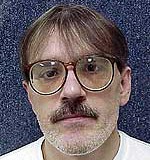
Martin Link
Murderer Brian Kevin Rosenfeld
Murderer · USA · 1985
Brian Kevin Rosenfeld Brian Kevin Rosenfeld was sentenced to three concurrent l…
23 victims
Brian Kevin Rosenfeld
Murderer · USA · 1985
Brian Kevin Rosenfeld Brian Kevin Rosenfeld was sentenced to three concurrent l…
23 victims
 Russell Ellwood
Murderer · USA · 1991
Russell Ellwood was a former taxi driver. Authorities suspected him of killing…
20 victims
Russell Ellwood
Murderer · USA · 1991
Russell Ellwood was a former taxi driver. Authorities suspected him of killing…
20 victims
 Robert Martines Perez
Murderer · USA · 1994
Name: Robert Martines Perez · Other name used in proceedings: Robert Martinez P…
15 victims
Robert Martines Perez
Murderer · USA · 1994
Name: Robert Martines Perez · Other name used in proceedings: Robert Martinez P…
15 victims
 Billy Frank Vickers
Murderer · USA · 1993
Billy Frank Vickers Vickers was executed by lethal injection in Texas on Januar…
14 victims
Billy Frank Vickers
Murderer · USA · 1993
Billy Frank Vickers Vickers was executed by lethal injection in Texas on Januar…
14 victims
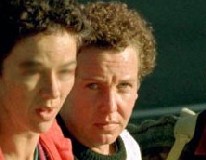 Gay Oakes
Murderer · New Zealand · 1993
Gay Oakes — convicted of the murder of her partner Doug Gardner. · Doug Gardner…
1 victim
Gay Oakes
Murderer · New Zealand · 1993
Gay Oakes — convicted of the murder of her partner Doug Gardner. · Doug Gardner…
1 victim
 Will Purvis
Murderer? · USA · 1883
Will Purvis was a member of the White Caps, a group described as having foundat…
1 victim
Will Purvis
Murderer? · USA · 1883
Will Purvis was a member of the White Caps, a group described as having foundat…
1 victim
 Brian Rooney
Murderer · USA · 2006
Brian Rooney (born June 27, 1970) was a former construction worker. He was conv…
1 victim
Brian Rooney
Murderer · USA · 2006
Brian Rooney (born June 27, 1970) was a former construction worker. He was conv…
1 victim
 Ronald Straight
Murderer · USA · 1976
Ronald Straight was executed by electrocution in Florida on May 20, 1986. · Jul…
1 victim
Ronald Straight
Murderer · USA · 1976
Ronald Straight was executed by electrocution in Florida on May 20, 1986. · Jul…
1 victim
 Dennis McGuire
Murderer · USA · 1989
Dennis McGuire was executed by lethal injection in Ohio on January 16, 2014. He…
1 victim
Dennis McGuire
Murderer · USA · 1989
Dennis McGuire was executed by lethal injection in Ohio on January 16, 2014. He…
1 victim
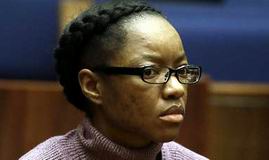 Kiana Barker
Murderer · USA · 2010
Kiana Barker was a foster mother who tried to adopt Viola Vanclief in 2010. Bar…
1 victim
Kiana Barker
Murderer · USA · 2010
Kiana Barker was a foster mother who tried to adopt Viola Vanclief in 2010. Bar…
1 victim
- Gender
- male
- Country
- USA
- Location
- St. Louis City County, Missouri, USA
- Date of birth
- April 17, 1963
- Age at first offence
- 28
- Characteristics
- rape
- Victim profile
- Elissa Self, 11
- Method of murder
- Ligature strangulation
- Date(s) of murder
- January 11, 1991
- Years active
- 1991
- Date of arrest
- 15 days after
- Status
-
Executed
Executed by lethal injection in Missouri on February 9, 2011
Parties and case identifiers
Martin Link was convicted by a jury in the Circuit Court of the City of St. Louis of kidnapping, forcible rape, and murder in the first degree, and was sentenced to death. He later filed applications for post-conviction relief and federal habeas corpus relief, which were denied; the conviction and sentence were affirmed on appeal. The United States Court of Appeals for the Eighth Circuit denied habeas relief in Link v. Luebbers, 469 F.3d 1197 (8th Cir. 2006).
Timeline
- January 11, 1991 — Eleven-year-old Elissa Self left her house at 3844 Humphrey Street in South St. Louis to walk less than three blocks to catch her bus to Enright Classical Junior Academy.
- January 15, 1991 — Elissa Self’s body was found at the Black Bridge recreation area along the St. Francis River, 135 miles south of St. Louis in Wayne County.
- January 26, 1991 — A City of Kirkwood police officer attempted to pull Martin Link over; Link led officers on a high-speed chase and crashed into a telephone pole; officers took him into custody.
- August 10, 1995 — A jury returned verdicts of guilty of murder in the first degree, rape, and kidnapping.
- August 12, 1995 — A jury returned death sentences as punishment for the first degree murder conviction.
- October 13, 1995 — The St. Louis City Circuit Court sentenced Link to death.
- November 9, 1995 — Link filed a notice of appeal.
- October 1, 1996 — Link filed a Rule 29.15 motion for post-conviction relief in the St. Louis City Circuit Court.
- July 2, 1999 — The Circuit Court denied post-conviction relief.
- 2000 — The Missouri Supreme Court affirmed Link’s conviction and sentence and the denial of post-conviction relief (State v. Link, 25 S.W.3d 136 (Mo. banc 2000)).
- 2001 December 4 — Link filed a petition for writ of habeas corpus in the United States District Court for the Eastern District of Missouri.
- September 10, 2004 — The District Court denied the petition for writ of habeas corpus in an unpublished order.
- December 8, 2006 — The Court of Appeals affirmed the denial of habeas relief (Link v. Luebbers, 469 F.3d 1197 (8th Cir. 2006)).
- April 17, 2008 — The state filed a motion to set an execution date.
- February 9, 2011 — Missouri executed Martin Link by lethal injection.
Background
On Friday, January 11, 1991, just before 6:30 a.m., eleven-year-old Elissa Self left her house at 3844 Humphrey Street in South St. Louis to walk less than three blocks to catch her bus to Enright Classical Junior Academy, a school for gifted children. It was a cold, rainy morning, and Elissa’s mother insisted that she wear boots and carry an umbrella. Elissa never arrived at school, and at about 8:20 a.m. the school called Elissa’s parents to tell them that Elissa was not present. Elissa’s parents drove around the neighborhood looking for her, but they were unable to find her, and they went home and called the police.
During the next four days, police canvassed the neighborhood, interviewed possible witnesses, and investigated calls and letters on possible sightings.
In the early 1980s, Link lived in a house less than a mile away from the Black Bridge recreation area, the place where Elissa’s body was found. At the time Link was arrested, he was living in South St. Louis, about 1 1/2 miles from where Elissa was kidnapped.
The record described Link’s birth as April 17, 1963 (unverified), in St. Louis, Missouri. The record also stated that Link was executed on February 9, 2011.
The offence
Elissa was kidnapped on January 11, 1991. Her body was later found and autopsied. The cause of death was ligature strangulation. The autopsies revealed bruising on Elissa’s neck consistent with a cord wrapped completely around her neck, with each end held in front of her. A pathologist testified that Elissa had been strangled to death slowly, losing consciousness after about five to ten minutes and dying after about thirty minutes. The cold water had preserved her body, so the time of death could be established only during the interval between the time of her kidnapping and twenty-four hours before she was found.
In addition to strangulation, the autopsies revealed that Elissa had been raped. Her external genitalia were bruised and swollen, there was a five-millimeter tear in the area leading to her vagina, and her hymen had been torn. Inflammation had begun in her vagina, and blood in her panties had partially dried, indicating that she survived for some time after the rape.
At trial, the jury found Link guilty of kidnapping, forcible rape, and murder in the first degree.
Investigation
On Tuesday, January 15, 1991, two people scavenging at the Black Bridge recreation area along the St. Louis in Wayne County, found Elissa’s body in a large pile of debris that had washed up on the riverbank. Police soon searched the area and found Elissa’s boots, but none of her other belongings.
The record stated that one of the small boulders that defined the perimeter of the parking area had been pushed out of place, and there was a tire rut in the gravel leading up to that boulder.
During the investigation, officers found that Link had grown up five blocks from where Elissa was kidnapped and had attended the school near Elissa’s bus stop.
Officers also discovered that Link was registered at a motel just outside of St. Louis from January 9, 1991 to January 11, 1991, and that Link checked out at an unknown time on January 11, the morning Elissa was kidnapped. That night, at about 1:55 a.m. on January 12, Link checked into a motel in Desloge, Missouri, about seventy miles north of Black Bridge on a direct route from Black Bridge to St. Louis.
A witness noted that Link’s car was loud, “like a car that had a bad muffler on it.” Link called the S & S Muffler shop at about 8:30 a.m. and was “very insistent” that he get his car fixed that day. He was told to bring in the car that afternoon and did so at 2:30 p.m. He explained to employees he was coming from further south and had to get his muffler fixed or else he would get a ticket in St. Louis. While he was at the shop, he kept pacing in the waiting room and checking to see if the work on his car was finished. While a mechanic was working underneath Link’s car, clumps of orange clay of the same type found in the St. Francis riverbed fell from the bottom of the car. The tailpipe was bent and broken loose from the muffler, and the muffler had been hit by something that smashed and punctured it. The muffler had twelve inches of clearance, which matched the height of the rock that had been moved out of place at Black Bridge.
As part of the investigation, a special agent at the FBI crime laboratory compared three fibers found on the front passenger seat of Link’s car with fibers from the sweater Elissa had been wearing when she was kidnapped. The agent determined that the fibers found in Link’s car were “consistent with having come from the victim’s sweater.”
Arrest
At about 9:24 p.m. on January 26, 1991, eleven days after Elissa’s body was found, a City of Kirkwood police officer saw Martin Link driving with a headlight out and attempted to pull him over. Link led the officer on a high-speed chase, eventually crashing his car into a telephone pole, and was then taken into custody.
In a search of the car, officers found a jar of petroleum jelly with Link’s fingerprints on the jar and flecks of blood embedded in the jelly. Officers also took tape lifts from the inside of the car to obtain fiber evidence.
Forensic evidence and results
DNA tests conducted by two different labs showed that Link’s DNA matched the DNA found in sperm cells on vaginal swabs taken from Elissa’s body. The state’s DNA expert set the odds of such a match at one in 6,600.
The testing also revealed that Elissa’s DNA matched the DNA in the blood found in the petroleum jelly jar seized from Link’s car. The odds of that match were one in 48.
The joint probability of both of these matches occurring by chance was less than one in 300,000.
Fibers found on the front passenger seat of Link’s car were described as consistent with coming from the victim’s sweater.
Trial
Link did not testify at trial.
Link called two witnesses who had reported seeing Elissa after 6:30 a.m. on January 11, 1991. He also called a detective who had worked with one of these witnesses to make a composite drawing of a man she allegedly saw with Elissa; the composite drawing allegedly did not resemble Link.
Link called two witnesses who worked as buyers in the clothing industry to testify about the large number of cotton/ramie sweaters imported every year, including a sweater like the one Elissa wore.
Link also called two DNA experts to testify that the DNA tests performed by the other two laboratories were faulty. In addition, one of the DNA experts and a third expert testified that the state’s conclusions about the probabilities of Link’s DNA being found in the sperm on the vaginal swab and Elissa’s DNA being found in the blood in the petroleum jelly jar were incorrect.
Finally, Link called an accident reconstructionist who testified that the boulder at Black Bridge could not have damaged the muffler on Link’s car. In rebuttal, the state presented its own accident reconstruction evidence. Investigating officers testified that they obtained a car of the same year and model, with the same kind of tires, bumper arrangement, and exhaust system as Link’s car, backed the car up to the boulder that had been moved out of place at Black Bridge, and showed that the tailpipe and muffler made contact with the boulder, thus showing the boulder could have caused the damage to Link’s car.
At the close of the evidence, instructions, and arguments, the jury found Link guilty of kidnapping, forcible rape, and murder in the first degree.
Victim impact testimony
During the penalty phase, the state called Elissa’s father, mother, stepfather, stepmother, and older sister to give victim impact testimony.
Evidence about Link’s criminal history
The state called several witnesses to testify about Link’s lengthy criminal history, including the following conduct:
- On June 1, 1982, at about 7:30 a.m., Link jumped in front of a 13-year-old girl in an alley in St. Louis, held a knife to her throat, pulled her into a garage, attempted to rape her, and then forced her to perform oral sex on him.
- On March 16, 1983, at about 9:30 p.m., Link kidnapped a 15-year-old girl in South St. Louis, drove her to East St. Louis, raped her, and left her under a bridge; the record stated he was convicted and sentenced to twenty years of imprisonment and was paroled in 1989.
- On November 27, 1989, Link solicited an undercover police officer in St. Louis for prostitution.
- On December 12, 1990, Link stole the car that was used to kidnap Elissa.
- On January 23, 1991, Link stole a purse from a 71-year-old woman in South St. Louis and later attempted to cash one of her checks.
- Later on January 23, 1991, Link walked into a laundromat, raped a woman at knife-point and then kidnapped her; the record stated she escaped by jumping, half-naked, from his car when he stopped at a stop sign.
- On January 25, 1991, at about 10:30 a.m., in Cuba, Missouri, Link broke into a home, ordered a woman to put her baby down, robbed her at knife-point, raped her twice, and held a pillow over her face until he was startled by a noise, then quickly left after cutting the phone cord.
- About 6:30 p.m. on January 25, 1991, Link attempted to grab an eight-year-old girl in an alley, but she ran into her house.
- On the same evening, Link walked into a Baskin-Robbins, held a knife to a 16-year-old female employee and demanded money, fleeing when she sounded the buzzer on the cash register.
Defense mitigation evidence and strategy at penalty phase
At the beginning of Link’s penalty phase evidence, his counsel read to the jury a stipulation regarding his incarceration records. The stipulation stated Link’s conduct in jail was always good except for one incident in which he stole some fish. It also stated that he successfully participated in a drug rehabilitation program, participated in other rehabilitation programs, and successfully completed a GED program.
Defense called an investigator who testified that Link was ostracized by his own family, including his daughter. The investigator also testified that Link’s stepfather rarely had contact with Link because he worked the night shift, and that little information was known about Link’s family tree.
At the close of penalty phase evidence, instructions, and arguments, the jury found two aggravating circumstances:
- The murder involved depravity of mind and, as a result, was outrageously vile, horrible, and inhuman in that Link murdered Elissa after she was rendered helpless.
- The murder occurred while Link was engaged in the perpetration of rape and kidnapping.
The jury recommended the death sentence for murder in the first degree, and the trial court sentenced Link accordingly.
Sentencing
The trial court sentenced Link to death for murder in the first degree following the jury’s recommendation. It also sentenced Link to consecutive sentences of fifteen years imprisonment for kidnapping and life imprisonment for forcible rape.
Appeals
Missouri direct appeal and post-conviction appeals
The Missouri Court of Appeals opinion described appellate consideration of consolidated appeals in Case No. 19661 and Case No. 21368, with an affirmance.
It stated that, on direct appeal, it reviewed challenges regarding jury selection and closing argument, and it held the judgment in Case No. 19661 was affirmed.
It also addressed Rule 29.15 post-conviction issues in Case No. 21368, including ineffective assistance of counsel claims, and it affirmed the order denying post-conviction relief.
The Missouri Supreme Court affirmed Link’s conviction and sentence and the denial of post-conviction relief in State v. Link, 25 S.W.3d 136 (Mo. banc 2000).
Federal habeas corpus appeal
After the Missouri Supreme Court’s affirmance, Link filed a petition for writ of habeas corpus in the United States District Court for the Eastern District of Missouri. The District Court denied the petition in an unpublished order on September 10, 2004.
The Court of Appeals for the Eighth Circuit affirmed the denial of habeas relief in Link v. Luebbers, 469 F.3d 1197 (8th Cir. 2006).
The Eighth Circuit described that it affirmed the district court and addressed issues including:
- defense counsel’s failure to obtain additional psychological testing not amounting to ineffective assistance of counsel,
- defense counsel’s failure to present mitigating evidence in the form of psychological testimony during the penalty phase not depriving Link of effective assistance of counsel,
- appellate counsel’s failure to raise certain claims on appeal not depriving Link of effective assistance of appellate counsel, and
- a claim that counsel representing him in state post-conviction application was deficient not being cognizable on habeas review.
Outcome
Martin Link was executed on February 9, 2011 by lethal injection in Missouri.
The record provided the following final words attributed to Link:
"The state says killing is wrong, so why do they do it? For revenge. Where is the closure? There is none. The death penalty is an act of revenge. Many men sit on death row, some innocent, some not. So what happens when a man is executed and it's later learned he was, in fact, innocent? He can't be brought back."
Other details
The record stated the final meal as: a sausage and pepperoni pizza, lasagna, garlic bread, a chef's salad, New-York-style cheesecake, a strawberry shake and Dr. Pepper.
The record referenced the execution as carried out at 12:15 a.m. local time Wednesday at the state prison in Bonne Terre and described the execution drugs as sodium thiopental.
Spotted an error, or have more information about this case?