
Thomas Doty
Mass murderer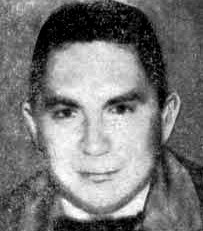 Francisco Paula Gonzales
Mass murderer · USA · 1964
Francisco Paula Gonzales was a passenger on Pacific Air Lines Flight 773. Gonza…
44 victims
Francisco Paula Gonzales
Mass murderer · USA · 1964
Francisco Paula Gonzales was a passenger on Pacific Air Lines Flight 773. Gonza…
44 victims
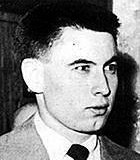 John Gilbert Graham
Mass murderer · USA · 1955
John “Jack” Gilbert Graham was born on January 23, 1932, at Denver, Colorado. H…
44 victims
John Gilbert Graham
Mass murderer · USA · 1955
John “Jack” Gilbert Graham was born on January 23, 1932, at Denver, Colorado. H…
44 victims
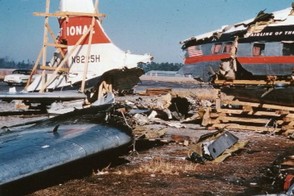 Julian Andrew Frank
Mass murderer · USA · 1960
6 January 1960 — National Airlines Flight 2511 exploded and crashed 1-1/2 miles…
33 victims
Julian Andrew Frank
Mass murderer · USA · 1960
6 January 1960 — National Airlines Flight 2511 exploded and crashed 1-1/2 miles…
33 victims
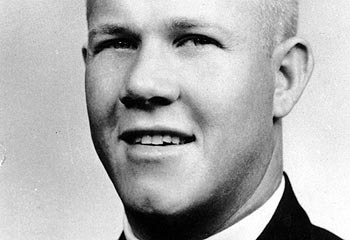 Charles Whitman
Mass murderer · USA · 1966
Charles Joseph Whitman (June 24, 1941 – August 1, 1966) shot and killed 14 peop…
15 victims
Charles Whitman
Mass murderer · USA · 1966
Charles Joseph Whitman (June 24, 1941 – August 1, 1966) shot and killed 14 peop…
15 victims
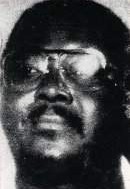 James Edward Pough
Mass murderer · USA · 1971
James Edward Pough (1948 – 18 June 1990) was an American mass murderer. On 18 J…
12 victims
James Edward Pough
Mass murderer · USA · 1971
James Edward Pough (1948 – 18 June 1990) was an American mass murderer. On 18 J…
12 victims
 Richard Speck
Mass murderer · USA · 1966
Richard Speck (December 6, 1941–December 5, 1991) was a mass murderer who syste…
8 victims
Richard Speck
Mass murderer · USA · 1966
Richard Speck (December 6, 1941–December 5, 1991) was a mass murderer who syste…
8 victims
 Edwin Snelgrove
Murderer · USA · 1983
Edwin “Ned” Snelgrove was born Edwin Fales Snelgrove, Jr. on August 9, 1960. He…
2 victims
Edwin Snelgrove
Murderer · USA · 1983
Edwin “Ned” Snelgrove was born Edwin Fales Snelgrove, Jr. on August 9, 1960. He…
2 victims
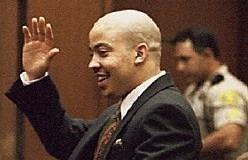 Damian Monroe Williams
Murderer · USA · 2000
Damian Monroe Williams (also known as Football) was born March 17, 1973. Willia…
1 victim
Damian Monroe Williams
Murderer · USA · 2000
Damian Monroe Williams (also known as Football) was born March 17, 1973. Willia…
1 victim
 Lashaun Harris
Homicide · USA · 2005
Oct. 19, 2005 — A jury trial later concerned the drownings of three young sons…
3 victims
Lashaun Harris
Homicide · USA · 2005
Oct. 19, 2005 — A jury trial later concerned the drownings of three young sons…
3 victims
 John Earl Baughman
Murderer · Antigua and Barbuda · 1995
John Earl Baughman was tried and convicted in Antigua and Barbuda for the murde…
1 victim
John Earl Baughman
Murderer · Antigua and Barbuda · 1995
John Earl Baughman was tried and convicted in Antigua and Barbuda for the murde…
1 victim
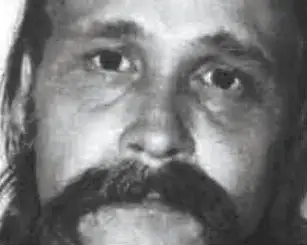 Everett Mueller
Murderer · USA · 1990
Everett Lee Mueller abducted, raped and killed Charity Powers, a 10-year-old gi…
1 victim
Everett Mueller
Murderer · USA · 1990
Everett Lee Mueller abducted, raped and killed Charity Powers, a 10-year-old gi…
1 victim
- Gender
- male
- Country
- USA
- Location
- Putnam County, Missouri, USA
- Date of birth
- ???
- Characteristics
- —
- Victim profile
- 8 crews and 36 passengers
- Method of murder
- Disintegrating force of a dynamite explosion resulting in destruction of the aircraft
- Date(s) of murder
- May 22, 1962
- Years active
- 1962
- Date of arrest
- —
- Status
-
Died in custody
Passenger crash killed all crew and passengers on board; one passenger, 27-year old Takehiko Nakano of Evanston, Illinois, survived the initial crash but died of internal injuries at Saint Joseph Mercy Hospital in Centerville, Iowa, about 1-1/2 hours after being rescued, and the Civil Aeronautics Board determined the probable cause was the disintegrating force of a dynamite explosion in the right rear lavatory resulting in destruction of the aircraft
Case record: Thomas Doty — Continental Airlines Flight 11 bombing (Civil Aeronautics Board aircraft accident report)
Background
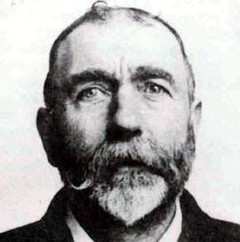
Thomas G. Doty was a passenger on Continental Airlines Flight 11. He was a married man with a five-year-old daughter. Doty purchased a life insurance policy from Mutual of Omaha for $150,000, the maximum available, and his death would also bring in another $150,000 in additional insurance, including death benefits (some purchased at the airport). Doty had recently been arrested for armed robbery and was to soon face a preliminary hearing in the matter.
Author Arthur Hailey based a subplot of his 1968 novel Airport on the Flight 11 bombing.
The offence
Investigators determined that Doty purchased six sticks of dynamite for 29 cents each shortly before the crash. A bomb was placed in the used towel bin of the right rear lavatory. The Civil Aeronautics Board concluded that a dynamite device was placed in the used towel bin of the right rear lavatory with the express intent to destroy the aircraft.
Timeline
- May 22, 1962 — Continental Airlines Flight 11, Boeing 707-124, N70775, exploded in the right rear lavatory in the vicinity of Centerville, Iowa, and crashed about six miles north-northwest of Unionville, Missouri.
- 8:35 p.m. — Flight 11 departed O'Hare Airport, Chicago, Illinois.
- 2035 — Flight 11 reported off O'Hare Airport.
- 2052 — Flight 11 reported over Bradford at 39,000 feet on Jet Route 26 Victor.
- Just east of the Mississippi River (~2101) — Flight 11 asked Chicago Air Route Traffic Control Center if it had a radar picture of the squall line just ahead of the flight.
- One minute later (~2102) — the center handed the flight over to the Flight Following Radar Site at Waverly, Iowa.
- ~2114 — Flight 11 made what was believed to be its last transmission.
- ~2115 — the Waverly controller observed the aircraft's transponder return and subsequently the primary target begin to fade from the radar scope.
- ~2117 — an explosion occurred in the right rear lavatory.
- 2121:15 — two flight deck clocks stopped at 2121:15.
- 2121:45 — two flight deck clocks stopped at 2121:45.
- ~2122 — a B-47 pilot estimated the flash occurred at 2122.
- about 1-1/2 hours after being rescued — one passenger survived the initial crash but died of internal injuries at Saint Joseph Mercy Hospital in Centerville, Iowa.
Investigation
A few minutes after Flight 11 made a northerly deviation from course to circumnavigate a thunderstorm, the radar image of the aircraft disappeared from the scope of the Waverly, Iowa, Flight Following Service.
Witnesses in and around both Cincinnati, Iowa and Unionville reported hearing loud and unusual noises at around 9:20 p.m., and two more saw a big flash or ball of fire in the sky. Times were estimated by witnesses as between 9:10 p.m. and 9:30 p.m., and all witnesses stated that the weather was clear at the time.
A B-47 Stratojet bomber out of Forbes Air Force Base in Topeka, Kansas, was flying at approximately 26,500 feet in the vicinity of Kirksville, Missouri. The aircraft commander saw a bright flash in the sky forward of and above his aircraft's position and estimated the flash to have occurred at 9:22 p.m. near the location where the last radar target of Flight 11 had been seen.
The foil magazine removed from N70775’s flight recorder showed little damage, while the recorder case had extensive denting, severe distortion of the mounting bracket, and considerable damage to the internal mechanism. All parameter values recorded on the foil were readable and showed normal operation until, about 42 minutes later, when the vertical acceleration trace indicated extremely large excursions and all other traces became unreliable. The recorder indicated that the aircraft had encountered moderate turbulence at several intervals, but that for about five minutes prior to the last normal trace the air was smooth.
The pressure altitude trace showed a normal descent begun at approximately 2115 from 39,000 feet and continuing at a fairly constant rate of 1,000 feet per minute for 2 minutes 7 seconds to an altitude of 36,800 feet. The indicated airspeed trace during this same interval showed an unsteady increase from 250 to 274 knots. The acceleration trace for this period varied little from 1.0 g except for a five-second interval at about 2116 when it jumped slightly between 0.78 and 1.23 g. Approximately one minute later, about 42 minutes after liftoff, at approximately 2117, the flight recorder traces became extremely active.
Examination of the wreckage found no evidence of metal fatigue, structural or systems failure or malfunction, fire in flight, or collision with another aircraft or foreign object. The condition and pattern of breakup indicated a high-altitude breakup and disintegration of the aircraft in flight. During initial stages of the investigation, about 20 feet of the fuselage between stations 1220 and 1440 could not be found; an intensified search consolidated all scattered wreckage, including pieces of the missing section, at one location, and two mockups of the aft fuselage area were constructed.
As interior and exterior pieces of the fuselage were refitted into their original positions on the two mockups, the pieces became progressively smaller from all directions toward a focal point inside the right rear lavatory. Localized bulges and deformations of aircraft skin, jagged perforations from objects propelled at high velocity, concentrations of gray-black deposits applied under heavy force, aircraft skin pushed straight out over rivet heads, and other evidence indicated a high-order detonating force emanating from the lavatory. The physical evidence showed the force originated in the waste towel bin underneath the washbasin counter of the right rear lavatory and acted in all directions from that point.
Thirty-six bodies were recovered from the main wreckage and eight were found at various points from three-tenths of a mile to almost two miles back along the flightpath. One passenger in the main wreckage survived the accident but succumbed to fatal injuries about 1-1/2 hours after rescue, which occurred several hours after the accident.
Toxicological and pathological examinations of the flight crew bodies disclosed no abnormalities. No indication of burns was found on any of the bodies.
A review of the maintenance records of N70775 revealed no significant irregularities prior to the aircraft’s departure from O'Hare Airport on the night of May 22, 1962. The Civil Aeronautics Board concluded that weather was not a factor in the accident, based on controller statements, flight recorder traces, witness statements about local weather conditions, and evidence that the flight had safely circumnavigated thunderstorms and was in clear weather conditions with no significant turbulence when the disaster occurred.
The Board determined that the aircraft started disintegrating at an appreciable altitude in the vicinity of Centerville, Iowa, at a time determined to be approximately 2117, with support from the Waverly radar controller’s observation that the transponder and primary radar target began to fade at approximately 2115 and with witness estimates of unusual noises and flashes between 2110 and 2130, including a B-47 estimate of 2122. The Board considered 2117 the most reliable time of the explosion.
The physical evidence showed the landing gear was down and locked, and the flight crew was wearing smoke masks at the time of impact. An emergency checklist was found between the captain’s yoke and his instrument panel. This evidence led to the belief that upon experiencing an explosion, the crew initiated required emergency descent procedures, and that the crew donned smoke masks due to the dense fog that forms in the cabin immediately after explosive decompression.
The FBI laboratory analyses of residues collected on material from the right rear lavatory and surrounding structure established that the explosive used was dynamite. The FBI was apprised of criminal aspects during early investigation and immediately initiated a full-scale investigation.
Arrest
Trial
No trial proceedings were described.
Sentencing
No sentencing outcome was described for Doty.
Appeals
No appeals were described.
Outcome
The Civil Aeronautics Board determined that the probable cause of the accident was the disintegrating force of a dynamite explosion which occurred in the right rear lavatory resulting in destruction of the aircraft.
Continental Airlines Flight 11 crashed on May 22nd 1962. The aircraft was a Boeing 707-124, N70775, and was totally destroyed.
Flight 11 was flying en route from O'Hare Airport, Chicago, Illinois, to Kansas City, Missouri, and crashed in a clover field near Unionville, in Putnam County, Missouri. Flight 11 departed O'Hare at 8:35 p.m. All 45 crew and passengers were killed on board. Of the 45 individuals on board, 44 were dead when rescuers reached the crash site, and one passenger, 27-year old Takehiko Nakano of Evanston, Illinois, died of internal injuries at Saint Joseph Mercy Hospital in Centerville, Iowa, about an hour and a half after being rescued.
Another victim was passenger Fred P. Herman, a recipient of the United States Medal of Freedom.
The case narrative also described that one passenger, Thomas G. Doty, had purchased life insurance and dynamite shortly before the crash.
Aftermath
Effective October 25, 2009, Flight 11 was replaced on the Paris-Houston route by flight 33. A memorial was erected near the crash site in Unionville, Missouri in July 2010 on the anniversary of the crash.
The Civil Aeronautics Board aircraft accident report was adopted July 26, 1962 and released August 1, 1962.
The report listed: ALAN S. BOYD Chairman, ROBERT T. MURPHY Vice Chairman, CHAN GURNEY Member, G. JOSEPH MINETTI Member, WHITNEY GILLILLAND Member.

Spotted an error, or have more information about this case?