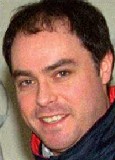
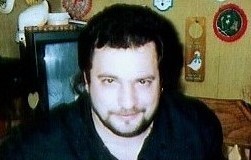
Graham Coutts
Murderer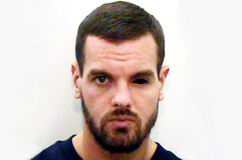 Dale Cregan
Murderer · United Kingdom · 2012
Dale Christopher Cregan (born 6 June 1983) was convicted in the United Kingdom…
4 victims
Dale Cregan
Murderer · United Kingdom · 2012
Dale Christopher Cregan (born 6 June 1983) was convicted in the United Kingdom…
4 victims
 Rahan Arshad
Murderer · United Kingdom · 2006
Rahan Arshad (born 1970) was a taxi driver. He lived at Turves Road, Cheadle Hu…
4 victims
Rahan Arshad
Murderer · United Kingdom · 2006
Rahan Arshad (born 1970) was a taxi driver. He lived at Turves Road, Cheadle Hu…
4 victims
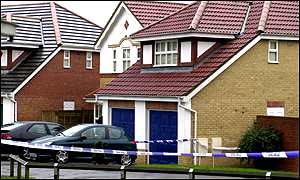 Anthony Smith
Murderer · United Kingdom · 2001
Anthony Smith was a former sergeant in the Coldstream Guards. He had left the C…
3 victims
Anthony Smith
Murderer · United Kingdom · 2001
Anthony Smith was a former sergeant in the Coldstream Guards. He had left the C…
3 victims
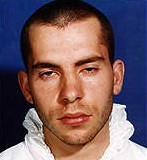 David John Copeland
Murderer · United Kingdom · 1999
David John Copeland was born in Isleworth, in the London Borough of Hounslow, a…
3 victims
David John Copeland
Murderer · United Kingdom · 1999
David John Copeland was born in Isleworth, in the London Borough of Hounslow, a…
3 victims
 Karl Bluestone
Murderer · United Kingdom · 2001
Karl Bluestone was a Gravesend police officer. · 28 August 2001 — Karl Blueston…
3 victims
Karl Bluestone
Murderer · United Kingdom · 2001
Karl Bluestone was a Gravesend police officer. · 28 August 2001 — Karl Blueston…
3 victims
 Hendrik Jut
Murderer · Netherlands · 1872
Hendrik Jut (July 19, 1851 – June 12, 1878) was a murderer from The Hague. He k…
2 victims
Hendrik Jut
Murderer · Netherlands · 1872
Hendrik Jut (July 19, 1851 – June 12, 1878) was a murderer from The Hague. He k…
2 victims
 Madumetsa Jack Mogale
Serial killer · South Africa · 2008
Madumetsa Jack Mogale (born 1968/9) was a South African serial killer dubbed th…
16 victims
Madumetsa Jack Mogale
Serial killer · South Africa · 2008
Madumetsa Jack Mogale (born 1968/9) was a South African serial killer dubbed th…
16 victims
 Richard Allen Jensen
Murderer · USA · 1990
Name: Richard Allen Jensen Sex: M Race: W Type: T Richard Allen Jensen was sent…
3 victims
Richard Allen Jensen
Murderer · USA · 1990
Name: Richard Allen Jensen Sex: M Race: W Type: T Richard Allen Jensen was sent…
3 victims
 Taiana Matheny
Murderer · USA · 2005
Taiana Matheny was a Tucson woman accused of luring two Omaha, Neb., men to the…
2 victims
Taiana Matheny
Murderer · USA · 2005
Taiana Matheny was a Tucson woman accused of luring two Omaha, Neb., men to the…
2 victims
 David Junior Ward
Murderer · USA · 1991
David Junior Ward was the defendant. He was tried in connection with the robber…
1 victim
David Junior Ward
Murderer · USA · 1991
David Junior Ward was the defendant. He was tried in connection with the robber…
1 victim
 Jack Owen Spillman
Murderer · USA · 1994
Jack Owen Spillman III was known as “The Werewolf Butcher.” Crimes evidence dev…
3 victims
Jack Owen Spillman
Murderer · USA · 1994
Jack Owen Spillman III was known as “The Werewolf Butcher.” Crimes evidence dev…
3 victims
- Gender
- male
- Country
- United Kingdom
- Location
- Brighton, East Sussex, England, United Kingdom
- Date of birth
- 1968
- Age at first offence
- 35
- Characteristics
- rape, drug dealer
- Victim profile
- Jane Longhurst, 31
- Method of murder
- Strangulation with a pair of tights
- Date(s) of murder
- March 14, 2003
- Years active
- 2003
- Date of arrest
- April 29, 2003
- Status
-
Life imprisonment
Sentenced to a life term (serving a minimum of 26 years) on July 5, 2007
Case record: Graham Coutts
Background
Graham Coutts was the man convicted of murdering school teacher Jane Longhurst on 14 March 2003. At the time, he was a guitarist and part-time salesman living in Brighton, UK. Coutts claimed that Longhurst had died accidentally during consensual erotic asphyxiation, although the prosecution maintained that there was nothing to suggest that Coutts and Longhurst had ever been lovers.
Coutts confessed to a long-standing neck fetish and obsession with strangulation. He testified that he had engaged in breath control play with several consenting partners on many occasions without incident over several years.
Coutts was born in 1968 in Leven, in the Fife area of Scotland. He went to Glenrothes School before his family moved south to Cheltenham. There he went to Westwoods Grammar School before studying at the South Cheshire College of Further Education in Crewe. He never excelled academically and worked in a string of dead-end jobs in the North West, and later Brighton, including work with double-glazing firm Storm Seal and cleaning firm Kleeneze. During the trial he said he began playing the guitar at the age of 14, and in 1998 he was forced to take up work on a self-employed basis as a door-to-door salesman for Kleeneze to make ends meet.
Coutts was well known in pubs and clubs in Brighton and elsewhere in Sussex for playing in a Who cover band called Substitute, and in other groups called 17 Black and Big Bang. During the trial, Coutts was also described as an arrogant drifter and a dangerous sexual deviant.
The offence
Jane Longhurst was born November 6, 1971 and died March 14, 2003. She had been a special needs teacher and musician living in Brighton, England. Her partly decomposed body was found burning in woodland in West Sussex on 19 April.
At Coutts’s murder trial, he confessed to having wrapped a pair of nylon tights around Longhurst’s neck as part of a consensual sexual practice known as erotic asphyxia, which he said he had undertaken on numerous previous occasions with several different partners. According to the prosecution, he invited Longhurst to his flat under false pretences, then attacked her.
The jury at Lewes Crown Court found Coutts guilty on 3 February 2004.
At the later retrial, jurors at the Old Bailey found Coutts guilty by an 11 to one majority after 13 hours of deliberations. The man was described as having strangled Longhurst, kept her body in a commercial storage unit for a thrill, and then burned her body.
Investigation and arrest
When arrested, Coutts, who was her best friend’s partner, admitted causing her death.
Coutts admitted hiding Longhurst’s body first in a shed, then in an empty flat, and finally in a storage centre, where he had visited it nine times in a three-week period. The court also heard that Coutts kept Longhurst in a car boot, then a garden shed, and finally at a storage unit before burning her body on a secluded common.
Coutts had used the Internet to download and view violent pornography, including simulated strangulation, rape and necrophilia. He had downloaded a collection of strangulation images the day before Jane’s death.
During the time he was visiting Longhurst’s naked body at the Big Yellow Storage Company in Brighton, records taken from his computer showed his use of the net to visit sites such as “necrobabes”, “deathbyasphyxia”, “hangingbitches” and “rapepleasure” came to a halt. It was implied to the jury that he was taking some form of sexual pleasure from his “trophy”, only resuming his use of the net once he had been forced to dispose of the corpse.
Trial
Murder trial (Lewes Crown Court)
At his murder trial, Coutts claimed the death was an accident that occurred during consensual sex. Prosecution witnesses testified that Longhurst was in a stable relationship with her long term partner and that she and her partner were happy together. No evidence was put forward to suggest a previous sexual relationship between Longhurst and Coutts, and Coutts’s account stated that the claimed sexual act was the first sexual act between them.
During the trial, Coutts testified that he was masturbating while pulling the ligature around her neck, and that when he reached orgasm he found that Longhurst was lying dead across him, with a quantity of blood produced.
The prosecution case that a murder took place rested on three key issues:
- Was it certain that Coutts would have known that a serious injury was being incurred in sufficient time to be able to stop and prevent the death?
- Did Coutts have a motive for causing injury or death?
- Could he be trusted to produce a reliable account of what had happened?
Pathologists’ expert testimony
Home Office pathologist Dr. Vesna Djurovic testified that Coutts must have been aware of the medical emergency for 2–3 minutes before death became inevitable. Djurovic gave the view that had Coutts acted on this emergency as soon as he became aware of it, Longhurst would definitely have survived, and that by continuing to constrict Longhurst’s neck long after becoming aware of the emergency, Coutts showed the necessary mens rea for murder.
This was contested by defence pathologist Dr. Richard Shepherd. Shepherd’s expert opinion was that death could have occurred very quickly by a mechanism known as vagal inhibition, taking as little as 1–2 seconds. The trial testimony also described other possible mechanisms including interference with baroreceptors that sense blood pressure, as well as brain or other haemorrhage, with deaths occurring suddenly and without warning. It was stated that other mechanisms may result in death minutes or even hours later.
The material stated that, in spite of being at the core of the trial, no expert in the field of erotic asphyxia presented testimony. It also stated that Djurovic’s expert testimony was based on experience analysing strangulation victims, combined with an understanding of the physiology behind death by strangulation.
Critics of Djurovic’s testimony claimed that the epidemiology of death from erotic asphyxia is completely different from that of murder, since the participants try to prevent medical emergency or death, not to cause it. It also stated that the statistical distribution of the exact mechanism of death becomes skewed towards rarer causes which do not manifest themselves by obvious symptoms of emergency before the point of irrevocability.
The material also stated that neither expert’s prior assumptions were challenged, and that the pathologists’ testimonies were described as fully compatible in that death would have taken 2–3 minutes if it were murder (according to Djurovic) and could have been very sudden (1–2 seconds) if accidental (according to Shepherd). It further stated that neither shed any light on which situation actually occurred.
Possible role of violent pornography
The prosecution placed great weight on the presence of “extreme pornography” in Coutts’s possession at the time of the death. The prosecution argued this was the triggering factor for murderous intent.
A total of 699 violent pornographic images were found on Coutts’s computer. The material stated that much of the same violent pornography is possessed by many other persons interested and active in violent sexual practice, including erotic asphyxia, making possession uninformative as to intent on the night of the death.
It was stated that Coutts’s pattern of erotic asphyxia had begun by the early nineties, about five years before he encountered extreme pornography depicting such activity (1996). The argument that the pornography caused such practices was described as untenable.
The material stated that the prosecution also relied on the point that possession showed an interest in such activities, and that Coutts enjoyed erotic thoughts of killing women through violent strangulation. It further stated that there was also no evidence supporting whether Longhurst had informed her partner about such topics, and that the lack of such material supported the prosecution’s claim that she may have not in fact been interested in the topic.
Relationship and sexual claims
Prosecution witnesses testified that Longhurst and her partner were happy together and that no evidence suggested Longhurst had a previous sexual relationship with Coutts. According to Coutts’s account, the claimed sexual act was the first sexual act between them.
Evidence was given by a defence witness that several years ago, Longhurst had whispered to a work colleague that a sexual encounter the previous night had “involved some kind of stopping breathing”.
Coutts’s partner and a previous boyfriend stated they had not indulged in erotic asphyxia during their relations.
Manslaughter possibility and appeal issues
The jury in the trial was not offered the possibility of manslaughter as a lesser offence, because the prosecution case was that it could not have been manslaughter. It was stated that if the jury believed a serious offence had been proved but it was not murder, the only correct possibility would have been to acquit.
Sentencing
On 3 February 2004, Coutts was found guilty of murder at Lewes Crown Court. He was sentenced to a life term serving a minimum of 30 years, reduced to 26 years on appeal on 26 January 2005.
Appeals
Coutts maintained his innocence and pursued appeals on a variety of grounds.
On 19 July 2006, the Law Lords overturned the murder conviction, ruling that the jury should have been presented with a possible manslaughter verdict.
On 19 October 2006 his conviction was quashed and a re-trial ordered, beginning on 11 June 2007.
It was stated that the issue of manslaughter charges was brought to the appeals court in December 2004 and was upheld in January 2005. Coutts then took his case to the House of Lords, and on 19 July 2006 the case was referred back to the lower court who were invited to quash it. On 19 October 2006 the decision was confirmed by the Court of Appeal and the original conviction was formally quashed.
A new trial took place in June 2007, and Coutts was convicted on 4 July 2007 by an 11 to 1 majority verdict. He was sentenced once again to a life term serving a minimum of 26 years on 5 July 2007.
Outcome
Graham Coutts was convicted of murdering Jane Longhurst and received a life term with a minimum term of 26 years after a retrial.
Aftermath and related legal context
Calls to ban “extreme pornography”
The possible link with what the Government termed “extreme pornography” led to calls from Longhurst’s mother Liz, the police, MP Martin Salter and Home Secretary David Blunkett to ban such websites.
A campaign by the Government and Liz Longhurst collected a petition of over 50,000 signatures calling for a ban on “extreme internet sites promoting violence against women in the name of sexual gratification” after the original murder conviction of Graham Coutts.
The material stated that, unable to shut down websites legally hosted in the UK and US, the Home Office was motivated to consult on criminalising possession of “extreme pornographic material”, including images of consenting adults, and staged “realistic depictions” of such acts.
It stated that although the consultation found 63% of responses opposed strengthening the law to address “the challenges of the Internet”, the UK government announced on 30 August 2006 that it intended to introduce new laws governing the possession of “extreme pornography”. The material stated that possession of such material would be punishable by up to three years’ imprisonment.
The SM group Unfettered created a campaign, Backlash, in opposition to such changes. Proponents of the new laws called them a way of protecting women from similar tragedies, while critics said the reverse may be true, citing evidence from Japan, the United States, Denmark and elsewhere about sexually motivated crime negatively correlating with pornography availability, or that the laws would criminalize those who are not violent.
Sentencing remarks and court observations
Sentencing on Thursday, Judge Richard Hone said he had “not the slightest doubt” that Ms Longhurst, who used to go swimming with Coutts, did not consent to have sex with him.
The judge said rather than attempting to revive her, Coutts had kept her in a car boot, then a garden shed, and finally at a storage unit before burning her body on a secluded common. The judge said: “Your meticulous attempts to cover up what you did are the keys to your true intentions,” and stated: “This retrial must have been a difficult and traumatic experience for Malcolm Sentance [Ms Longhurst’s boyfriend] and Jane Longhurst’s family.”
Coverage of Coutts’s claims and rejected warning
The material included that the jury accepted that Coutts acted out his life-long fantasy of strangling, raping and killing a woman.
It stated that a warning was given to former lover Sandra Gates in the 1980s and that it was ruled inadmissible during legal argument before the trial began. It was stated that Judge Richard Brown decided the chilling remarks were too old to be properly relied upon, and that other dark secrets were also out of date.
Sandra Gates, one of Coutts’s sexual partners, was quoted as saying he told police: “I get the most awful feelings that I am going to strangle, kill and rape a woman.”
Other details
Known individuals and relationships
Jane Longhurst’s long term partner was Malcolm Sentance. Malcolm Sentance was described as an education welfare officer with West Sussex County Council and as 34 years old.
Coutts’s girlfriend Lisa Stephens was mentioned as someone through whom Longhurst met Coutts.
Ellie Blackshaw met Coutts at a surprise 30th birthday party for Longhurst in Brighton at which Coutts and Lisa Stephens were guests. Blackshaw was quoted:
- “Jane was very close to Lisa. She even talked to me about Lisa. ”
- “They were the best of friends. When Lisa got pregnant, Jane was bouncing around the room. She was thrilled as they had had some problems conceiving. ”
- “But she was sometimes concerned about Lisa being with Graham. She thought he was unstable and would quite often express concerns about it.”
About Coutts, Blackshaw said: “He was a bit aloof, may be slightly arrogant, that was my first impression. ”
Blackshaw described the weekend he was arrested and was quoted:
- “When he was arrested we were all very shocked. The weekend he was arrested a whole group of us were working on some music together to do some recording which Jane was booked for. ”
- “None of us could quite get our heads around it. We had all met Graham at that party. We thought it could not be him. How could someone who knows Jane have done something like this?”
Blackshaw paid tribute to Longhurst, saying:
- “For me, to have that taken away was a huge loss. ”
- “She was very passionate and enthusiastic about music. When we were flagging, she would carry everyone along with her enthusiasm. ”
- “She was terrific fun, someone you could be totally and unashamedly childish and outrageous with. We used to have gin and trumpet evenings, when she would play my trumpet. She managed to play a few notes, particularly after some gin.”
Nicola Stainthorpe was mentioned as one of Coutts’s former lovers. Nicola Stainthorpe was quoted:
- “He would tie me up with a stocking, or the cord of a dressing gown. He would like to stroke my neck. He wanted me to put my hands around his neck and press harder and harder so when it got near the end it would make him pass out. ”
- “He put his hands around my neck, and he wanted to make me black out but I never let him. He would put pressure on my wind pipe. He would use a stocking. He would tie it around my neck and pull at either end.”
Stainthorpe was also quoted explaining her reason: “I was in love with him. I wanted to make him happy.”
Sandra Gates was also described as a sexual partner who consented to asphyxial sex in the name of love. The material stated that during their relationship Coutts told Gates the warning quoted above.
Places
Coutts lived in Brighton, UK at the time of the offence. Longhurst lived in Brighton, England.
Coutts was arrested after admitting causing Longhurst’s death. The body was found burning in woodland in West Sussex on 19 April. The material also stated that Coutts burned the body on Wiggonholt Common, near Pulborough, West Sussex.
Coutts was described as living at Waterloo Street, Hove.
The material stated that Coutts strangled Longhurst at his flat in Waterloo Street in Hove, where Coutts and Ms Stephens’s flat was located. It also stated that Coutts visited the storage centre nine times in a three-week period, and it named the Big Yellow Storage Company in Brighton.
Jury and trial figures
The retrial conviction was by an 11 to 1 majority verdict. Jurors at the Old Bailey deliberated for 13 hours.
Body handling and disposal
Coutts hid Longhurst’s body in a shed, then in an empty flat, and finally in a storage centre. He kept her body in a commercial storage unit for a thrill and then burned her body on a secluded common/Wiggonholt Common.
Computer and pornography details
Coutts downloaded a collection of strangulation images the day before Jane’s death.
The material stated that his computer contained 699 violent pornographic images. It also referred to “extreme pornography” and to sites named “necrobabes”, “deathbyasphyxia”, “hangingbitches” and “rapepleasure”.
Spotted an error, or have more information about this case?