
Robert Courchesne
Murderer Russell Ellwood
Murderer · USA · 1991
Russell Ellwood was a former taxi driver. Authorities suspected him of killing…
20 victims
Russell Ellwood
Murderer · USA · 1991
Russell Ellwood was a former taxi driver. Authorities suspected him of killing…
20 victims
 Robert Martines Perez
Murderer · USA · 1994
Name: Robert Martines Perez · Other name used in proceedings: Robert Martinez P…
15 victims
Robert Martines Perez
Murderer · USA · 1994
Name: Robert Martines Perez · Other name used in proceedings: Robert Martinez P…
15 victims
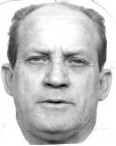 Billy Frank Vickers
Murderer · USA · 1993
Billy Frank Vickers Vickers was executed by lethal injection in Texas on Januar…
14 victims
Billy Frank Vickers
Murderer · USA · 1993
Billy Frank Vickers Vickers was executed by lethal injection in Texas on Januar…
14 victims
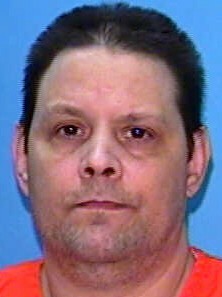 Glen James Ocha
Murderer · USA · 1999
Defendant: Glen James Ocha (also called himself “Raven Raven”) Victim: Carol Sk…
1 victim
Glen James Ocha
Murderer · USA · 1999
Defendant: Glen James Ocha (also called himself “Raven Raven”) Victim: Carol Sk…
1 victim
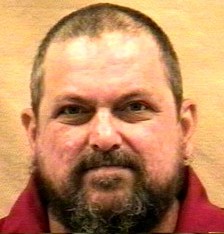 Allen Holman
Murderer · USA · 1997
Allen R. Holman, Sr. (born March 29, 1959) was sentenced to death for the first…
1 victim
Allen Holman
Murderer · USA · 1997
Allen R. Holman, Sr. (born March 29, 1959) was sentenced to death for the first…
1 victim
 Steven Smith
Murderer · USA · 1998
Steven Smith was an Ohio inmate sentenced to death for raping and murdering a s…
1 victim
Steven Smith
Murderer · USA · 1998
Steven Smith was an Ohio inmate sentenced to death for raping and murdering a s…
1 victim
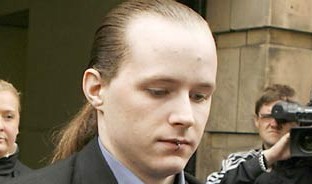 Luke Mitchell
Homicide · United Kingdom · 2003
Luke Muir Mitchell (born July 24th 1988) was a Scottish teenager convicted of m…
1 victim
Luke Mitchell
Homicide · United Kingdom · 2003
Luke Muir Mitchell (born July 24th 1988) was a Scottish teenager convicted of m…
1 victim
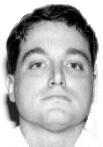 Stanley Allison Baker
Murderer · USA · 1994
Sept. 28, 1994 — Stanley Allison Baker, Jr., killed Wayne Walters during the co…
1 victim
Stanley Allison Baker
Murderer · USA · 1994
Sept. 28, 1994 — Stanley Allison Baker, Jr., killed Wayne Walters during the co…
1 victim
- Gender
- male
- Country
- USA
- Location
- Waterbury County, Connecticut, USA
- Date of birth
- 19 63
- Characteristics
- drugs, rapist, attempted rape, abuse
- Victim profile
- Demetris Rodgers (8 months pregnant - the baby died 42 days later)
- Method of murder
- St abbing with knife
- Date(s) of murder
- September 15, 1998
- Years active
- 1998
- Date of arrest
- —
- Status
-
Sentenced to death
Sentenced to death on December 17, 2003
Case overview
Robert Courchesne was sentenced to death for killing Demetris Rodgers and her baby, Antonia, during an incident in Waterbury, Connecticut. Courchesne was convicted of capital felony murder in the Sept. 15, 1998 deaths of Demetris Rodgers and her baby.
Timeline
- Sept. 15, 1998 — Demetris Rodgers and her baby, Antonia, were killed.
- 2003 — Courchesne was convicted of capital felony by a three-judge panel; justices upheld the lower court’s guilty verdict.
- December 17, 2003 — Superior Court Judge Frank M. D’Addabbo sentenced 46-year-old Robert Courchesne to death, acting on a recommendation made by a jury.
The offence
Demetris Rodgers was pregnant at the time of her death. The source stated that Rodgers was eight months pregnant when she was stabbed over a $410 drug debt. The source also stated that Rogers was nine months pregnant—the baby was surgically delivered and survived for 42 days before succumbing due to lack of oxygen during the time her mother was dying.
Antonia was delivered by emergency Caesarean section minutes after Demetris Rodgers’ death. The baby died 42 days later after being placed on life support and being removed from life support.
Police said Courchesne owed Rodgers the money for crack cocaine. Courchesne lured Rodgers to a Waterbury, Connecticut bank under the guise of getting cash. Instead, Courchesne stabbed Rodgers and left her bloody body in the middle of the street.
Investigation
The source described the stabbing and that Courchesne left Rodgers’ bloody body in the middle of the street.
Trial
Courchesne read a statement in court on December 17, 2003. He spoke in a slow, staccato voice, blaming his actions on his crack cocaine habit.
“When you're high it changes you into a nasty, greedy monster,” Courchesne said.
“Now I have to pay for being that monster.”
“It was never my intention for this to happen,” Courchesne said.
“If I could turn back the clock or take their place, I would.”
Superior Court Judge Frank M. D’Addabbo sentenced Courchesne on December 17, 2003, acting on a recommendation made by a jury the prior month.
Courchesne was convicted of capital felony by a three-judge panel two years earlier in the Sept.
In the penalty phase, the trial court ruled that, to impose the death penalty, the state had to prove the aggravating factor that it indicated it would rely on—whether the defendant committed the offense in an especially heinous, cruel or depraved manner—as to the murders of both victims. In an interlocutory appeal by the state, the Supreme Court held that the state was required only to prove that the defendant killed one of the victims in an especially heinous, cruel or depraved manner.
At the penalty phase hearing, a jury of twelve found that the defendant had committed the murder of the mother in an especially heinous, cruel or depraved manner.
Courchesne was thereupon sentenced to death for her murder and to life imprisonment without the possibility of release for the murder of the child.
The source also described the issues raised on appeal, including:
- whether the trial court should have dismissed counts alleging murder of an unborn child because an unborn fetus was not legally a “person,” and whether the defendant lacked the requisite intent to kill her;
- whether the trial court correctly ruled that someone who injures an unborn fetus can be prosecuted for murder if the fetus is subsequently born alive and then dies, and whether there was sufficient evidence presented to show that the child was alive when the cesarean section was performed;
- whether the trial court should have granted a motion to impose a life sentence without release, including arguments that Connecticut’s capital punishment scheme gives prosecutors unfettered and standardless discretion to seek a sentence of death and that such discretion was unconstitutional under federal and state constitutions, including a claim that it violated General Statutes § 53a-46b (b) (1);
- whether the trial court should have instructed the jury that for the death penalty to be imposed for the capital felony of murder of two or more persons in the course of a single transaction—where the state alleged that the aggravating factor of the offense’s being “especially heinous, cruel or depraved” under General Statutes § 53a-46a (i) (4)—the state must prove that factor as to both victims.
With regard to the latter issue, the defendant claimed that by enacting General Statutes § 1-2z (the “plain meaning rule”), the legislature overruled State v. Courchesne in its entirety, entitling him to a new penalty phase hearing with jury instructions that the state must prove the aggravating factor as to both victims.
Sentencing
Superior Court Judge Frank M. D’Addabbo sentenced Courchesne to death on December 17, 2003. The judge set an execution date of May 14. The source also stated that Courchesne was expected to have an automatic stay of execution when his lawyer filed his mandatory appeal and that the case would likely be tied up in courts for years.
The defense did not contest guilt but argued that Courchesne had lived a good life before he developed his drug habit and argued that the victim had in part provoked the attack through her illegal drug dealing.
At the sentencing hearing, Demetris Rodgers’ cousin Beulah Gardner spoke for the family.
“Your death will be nothing compared to the death sentence you handed down on Demetris and Antonia,” Gardner said.
“Your death will be painless and short. Demetris' death was painful and long.”
The source described that when Courchesne spoke, Rodgers’ mother, Margie, stared at him with a seemingly impenetrable gaze as he turned to face her, and it included a quote attributed to Margie.
“I didn't want him looking at me,” she said.
Appeals
Courchesne appealed to the state Supreme Court a decade after the murder. The source said his attorneys claimed that mistakes made at trial should force a new penalty hearing.
The source described that Wednesday’s arguments in the state Supreme Court centered on whether jurors were improperly affected by prosecution statements at trial, particularly that life in prison might not be a tough enough sentence.
Defense attorney John Holdridge argued that the death sentence should be overturned because of errors made by prosecutors and the judge.
“We feel that there was a reasonable chance that the trial court's errors impacted the jury and this court should reverse,” said defense attorney John Holdridge.
The source stated that Holdridge also said:
“Court after court has held that this is improper evidence and it should not be considered during deliberations,” Holdridge said.
Assistant State’s Attorney Robert Scheinblum argued:
“Not only did he intend to murder her, but he intended to inflict excruciating pain beyond that needed to kill,” said Assistant State's Attorney Robert Scheinblum.
The source stated that the second time the case went before the Supreme Court occurred after a first Supreme Court review, and it said: “In 2003, justices upheld the lower court's guilty verdict.”
The source also included a procedural description about appeals and motions at the time of the December 17, 2003 sentencing hearing: before the hearing began, Public Defenders Ronald Gold and Kenneth Simon tried unsuccessfully to get Courchesne a new trial or a life sentence, filing five motions on Monday in an attempt to spare Courchesne the death penalty. It said all requests were denied on Thursday and that the requests would form the basis of Courchesne’s mandatory appeal. The source stated Gold would file the appeal before the state Supreme Court within the next 20 days.
The source described arguments made by the defense at that time:
- Gold and Simon argued that D’Addabbo should set aside the jury’s verdict and impose a life sentence because there was insufficient evidence of aggravating factors that led jurors to recommend death.
- They cited about a dozen trial court errors and asked for a new penalty trial.
- They argued that the death penalty was being arbitrarily imposed on Courchesne and drew on another murder case involving a pregnant woman.
The source referenced another case: Michael Latour, a Danielson man convicted of murder in the shooting death of his pregnant ex-girlfriend, Jenny McMechen, who was described as dying about a month shy of her due date; her baby died in her womb. The source stated that Latour faced 60 years in prison and that it was compared to Courchesne’s death sentence.
The source quoted Gold on the alleged arbitrariness:
“We have two defendants who did basically the same thing,” Gold said.
“One is getting a death sentence and the other isn't exposed to a death sentence. I can't think of something more arbitrary than that.”
The source quoted Assistant State’s Attorney John Connelly’s response:
“The fact is that the reason Mr. Courchesne was charged, convicted of capital felony murder and sentenced to die this morning was because he murdered two people. He murdered Demetris Rodgers and he murdered Antonia Rodgers.”
Outcome
Courchesne was sentenced to death by lethal injection on December 17, 2003. The execution date was set for May 14. The source stated that Connecticut had not executed anyone since 1960, when Joseph “Mad Dog” Taborsky went to the electric chair for a murder and robbery spree.
The source stated that Courchesne would be granted an automatic stay of execution when his lawyer filed his mandatory appeal.
The source stated that in 2003, justices upheld the lower court’s guilty verdict. The source also included the state Supreme Court docket-like framing: STATE v. Robert Courchesne, SC 17174, Judicial District of Waterbury, Criminal; Death Penalty; and listed multiple legal issues presented on appeal, including whether an unborn child was a “person,” whether the defendant intended to murder an unborn child, whether common law “born alive” rule applied, whether child was born “alive,” and whether the capital punishment scheme gave unfettered discretion to prosecutors to seek a sentence of death.
The source described that the defendant was convicted of murder and capital felony murder in connection with the stabbing of a mother and her unborn child; the mother died shortly after being stabbed; the child was born by emergency cesarean section and placed on life support; and she died forty-two days later when removed from life support.
Other details
The source identified the prosecutor as John Connelly and defense counsel as Ronald Gold and Kenneth Simon.
The source stated that Connecticut has eight death row inmates and that Courchesne became the eighth person on Connecticut's death row. It also stated that six of the state's eight death row inmates were prosecuted in Waterbury, Connecticut, and that the last to receive a death sentence was Ivo Colon, who brutally beat 2-year-old Keriana Tellado to death in 1998.
The source described execution planning and that the case likely would be tied up in courts for years.
The source included the statement that Antonia Rodgers was delivered and that the fact that Antonia was born enabled the state to charge Courchesne with capital felony murder for killing two people.
The source also contained narrative about the defense’s view that the victim had in part provoked the attack through her illegal drug dealing, and it contained the statement that the unusual case involved “a white defendant” receiving a death sentence for killing black victims.

Spotted an error, or have more information about this case?