
Robert Vannoy Black
Murderer Brian Kevin Rosenfeld
Murderer · USA · 1985
Brian Kevin Rosenfeld Brian Kevin Rosenfeld was sentenced to three concurrent l…
23 victims
Brian Kevin Rosenfeld
Murderer · USA · 1985
Brian Kevin Rosenfeld Brian Kevin Rosenfeld was sentenced to three concurrent l…
23 victims
 Marvin Gray
Murderer · USA · 1975
Marvin Gray was convicted killer who claimed responsibility for 23 slayings and…
23 victims
Marvin Gray
Murderer · USA · 1975
Marvin Gray was convicted killer who claimed responsibility for 23 slayings and…
23 victims
 Yahweh ben Yahweh
Murderer · USA · 1980
Yahweh ben Yahweh was born and legally named Hulon Mitchell Jr. (October 27, 19…
23 victims
Yahweh ben Yahweh
Murderer · USA · 1980
Yahweh ben Yahweh was born and legally named Hulon Mitchell Jr. (October 27, 19…
23 victims
 Russell Ellwood
Murderer · USA · 1991
Russell Ellwood was a former taxi driver. Authorities suspected him of killing…
20 victims
Russell Ellwood
Murderer · USA · 1991
Russell Ellwood was a former taxi driver. Authorities suspected him of killing…
20 victims
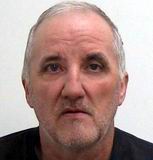 Camille Cleroux
Serial killer · Canada · 1990
Camille Cleroux, 58, pleaded guilty in an Ottawa court to the first-degree murd…
3 victims
Camille Cleroux
Serial killer · Canada · 1990
Camille Cleroux, 58, pleaded guilty in an Ottawa court to the first-degree murd…
3 victims
 Huan Yun Xiang
Homicide · Australia · 2002
Huan Yun “Allen” Xiang was a commerce student at Monash University. He opened f…
2 victims
Huan Yun Xiang
Homicide · Australia · 2002
Huan Yun “Allen” Xiang was a commerce student at Monash University. He opened f…
2 victims
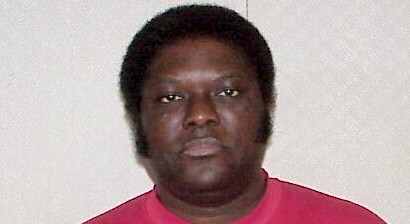 Beoria Simmons
Serial killer · USA · 1981
Beoria Simmons (DOB 5-17-54) was convicted of three counts of murder and rape a…
3 victims
Beoria Simmons
Serial killer · USA · 1981
Beoria Simmons (DOB 5-17-54) was convicted of three counts of murder and rape a…
3 victims
 Susan Grund
Murderer · USA · 1992
Susan Grund was convicted of murdering her husband, James Grund, and the trial…
1 victim
Susan Grund
Murderer · USA · 1992
Susan Grund was convicted of murdering her husband, James Grund, and the trial…
1 victim
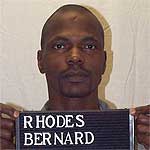 Bernard Rhodes
Murderer · USA · 1997
Bernard Rhodes was convicted of first degree murder and first degree robbery. T…
1 victim
Bernard Rhodes
Murderer · USA · 1997
Bernard Rhodes was convicted of first degree murder and first degree robbery. T…
1 victim
- Gender
- male
- Country
- USA
- Location
- Brazos County, Texas, USA
- Date of birth
- 1947
- Age at first offence
- 38
- Characteristics
- parricide, murder for hire, to collect insurance money
- Victim profile
- Sandra Kay Eimann (his wife)
- Method of murder
- Shooting
- Date(s) of murder
- February 20, 1985
- Years active
- 1985
- Date of arrest
- —
- Status
-
Executed
Executed by lethal injection in Texas on May 22, 1992
Case details
Robert Vannoy Black, Jr. was convicted in a Texas court of hiring a man to kill his wife, Sandra Black, and was sentenced to death.
Timeline
- in the fall of 1984 — Black became acquainted with John Wayne Hearn after answering an advertisement Hearn placed in Soldier of Fortune magazine.
- early 1985 — Hearn and Black met in Texas to discuss the purchase of Black’s gun collection.
- February 20, 1985 — Hearn returned to Bryan, Texas.
- February 21, 1985 — Hearn and Black ransacked the house to give the appearance of a burglary; Black and his son, Gary, ran errands while Hearn waited for Sandra to return home; when Sandra returned, Hearn shot her twice in the head, killing her.
- eight days before the killing — Black took out a $100,000 insurance policy on Sandra.
- February 1986 — the jury found Black guilty of capital murder.
- one day before his scheduled execution — Black applied for a stay of execution and a writ of habeas corpus in the state trial court and the Texas Court of Criminal Appeals; the Court of Criminal Appeals granted a stay.
- March 18-19, 1992 — the trial court held an evidentiary hearing.
- April 7, 1992 — the trial court entered findings of fact and conclusions of law and recommended that relief be denied; the trial court reset Black’s execution for May 22.
- May 12, 1992 — the Texas Court of Criminal Appeals denied relief.
- May 19, 1992 — the federal district court denied habeas relief and denied a certificate of probable cause to appeal.
- May 22, 1992 — Black was executed by lethal injection in Texas; the U.S. Court of Appeals, Fifth Circuit denied Black’s application for a certificate of probable cause and denied his motion for a stay of execution.
Background
Black became acquainted with John Wayne Hearn in the fall of 1984 after answering Hearn’s advertisement in Soldier of Fortune magazine. Hearn was involved in a group gathering weapons to send to the Nicaraguan contras and eventually became interested in purchasing Black’s gun collection. Hearn and Black met in Texas in early 1985 to discuss the purchase. During that meeting, Black told Hearn that he would have all the money he needed if he did not have a wife.
The evidence showed that Black had contemplated killing Sandra for several years before the murder and had attempted to enlist the assistance of several people. The evidence at trial also showed that Black obtained a $100,000 insurance policy on Sandra’s life eight days before the murder, thereby doubling the coverage on her life.
Black wanted to get rid of Sandra so that he could carry on a relationship with his first cousin, Teresa Hetherington. Black had discussions with David Huber, Mark’s brother, in which Black suggested that David assist in burning Sandra to death. Black also suggested that David steal a truck and run over Sandra while she was riding her motorcycle, hit her on the head with a baseball bat and dump her over a bridge, or fake a robbery or rape and shoot Sandra with one of Black’s guns. Black also discussed killing Sandra with Gordon Matheson. Matheson testified that Black hated Sandra and was obsessed with Teresa and asked him to assist in killing Sandra by driving a car into which Black would crawl after guiding Sandra’s car into a bridge embankment. Black offered both David Huber and Matheson monetary rewards for their help.
Other testimony established that Black had discussed killing his girlfriend’s husband.
In 1982 or 1983, Black gave Mark Huber a “downpayment” on his offer of $5,000 for Huber’s assistance. Black suggested that Huber help in shooting Sandra or running over her with a truck.
At trial, Sandra’s mother, Marjorie Eimann, testified that Black had thrown Sandra through a screen door during an argument approximately ten years earlier and had chased Eimann from Black’s home. At the punishment phase, a deputy sheriff from the Brazos County Jail testified that when Black was being held pending trial, a map of the jail and surrounding grounds and some wire were found during a shakedown. Grady Deckard, another inmate at the jail, testified that Black told him of an escape plot.
The offence
Black hired John Wayne Hearn to kill his wife, Sandra Black. The plan discussed with Hearn called for Hearn to kill Sandra with her own weapon in Black’s house, after Hearn traveled to Bryan, Texas. Black promised to pay Hearn $10,000 plus expenses.
According to the evidence at trial, on February 20, 1985, Hearn traveled to Bryan, Texas, and on the following day Hearn and Black ransacked the house to give the appearance of a burglary. Black and his son, Gary, ran errands while Hearn waited for Sandra to return home. When Sandra returned, Hearn shot her twice in the head, killing her.
After the shooting, Hearn fled the crime scene in Sandra’s van, left it in a grocery store parking lot, and picked up his rental car before heading to Houston, where he caught a plane home. For a downpayment, Black had given Hearn some of Sandra’s jewelry.
Investigation
The evidence showed that Black’s behavior in the weeks and months before Sandra’s death led investigators to Hearn and eventually to Black, implicating both men in the killing. In addition to the insurance policy taken out before the killing, investigators were led to Black by people connected to the couple who talked to police about how Black had approached them to help him kill his wife.
Arrest
No arrest facts were stated in the provided material.
Trial
After trial in February 1986, the jury found Black guilty of capital murder. Two special issues—“deliberateness” and “future dangerousness”—were submitted for the punishment phase under the former version of the Texas Code of Criminal Procedure, article 37.071(b).
The jury was asked to determine:
- “Was the conduct of the defendant that caused the death of the deceased committed deliberately and with the reasonable expectation that the death of the deceased would result?”
- “Is there a probability that the defendant would commit criminal acts of violence that would constitute a continuing threat to society?”
Black offered a great deal of evidence at the punishment phase. Witnesses testified that Black had not been a mean or vicious child and had won numerous honors in scouting as a young man, including the award of Eagle Scout. After studying chemical engineering at Texas A & M University for two years, Black dropped out to join the Marines. He received a Blues Award for being the distinguished Marine in his platoon, and he flew on over 100 combat missions in Vietnam. After his discharge, Black returned to Bryan, where he worked sporadically. Testimony from coworkers at an electrical company described him as a good electrician and a good worker. Witnesses also testified that Black was involved with the Boy Scouts with his son and had been helpful to a friend of his son who suffered from physical and emotional problems.
The State’s evidence at the punishment phase consisted of:
- testimony of Mark Huber as described above,
- testimony of David Huber regarding Black’s mention of wanting to kill Sandra and his girlfriend’s husband,
- testimony of two other witnesses that Black expressed a desire to kill Sandra or his girlfriend’s husband,
- Sandra’s mother Marjorie Eimann’s testimony about the screen door incident and the chase from Black’s home,
- deputy sheriff testimony from the Brazos County Jail about the map and wire found in a shakedown, and
- Grady Deckard’s testimony about an escape plot.
The jury answered both special issues in the affirmative and sentenced Black to death.
Black’s conviction and sentence were affirmed by the Texas Court of Criminal Appeals in Black v. State, 816 S.W.2d 350 (Tex. Crim. App. 1991). Black did not seek certiorari review in the U.S. Supreme Court.
Sentencing
Black was sentenced to death after the jury answered the special issues in the affirmative during the punishment phase under article 37.071(b).
Appeals
State habeas and execution stay
One day before his scheduled execution, Black applied for a stay of execution and a writ of habeas corpus in the state trial court and the Texas Court of Criminal Appeals. The Court of Criminal Appeals granted a stay. After Black amended his petition, the trial court held an evidentiary hearing on March 18-19, 1992. On April 7, the court entered findings of fact and conclusions of law and recommended relief be denied, and the trial court reset Black’s execution for May 22. Black filed objections with the Court of Criminal Appeals and sought a stay, but the Court of Criminal Appeals adopted the trial court’s findings and conclusions and denied relief in Ex parte Black, No. 22,919-02 (Tex. Crim. App. May 12, 1992).
Federal habeas
After exhausting state remedies, Black filed a petition for a writ of habeas corpus in federal court. The district court denied relief on all claims and refused to grant a certificate of probable cause to appeal, and Black then applied to the U.S. Court of Appeals for a certificate of probable cause and moved for a stay of execution scheduled for May 22, 1992.
Black raised the following grounds for relief in his federal habeas petition:
- His trial attorneys rendered constitutionally ineffective assistance by failing to investigate and offer for purposes of mitigation evidence that Black suffered from Post-Traumatic Stress Disorder at the time of the offense.
- The Texas capital sentencing statute as applied violated the Eighth Amendment because it precluded the jury from giving full consideration to mitigating evidence of good acts and positive character traits.
- His Sixth Amendment right to counsel was violated when evidence of a conversation he had out of the presence of counsel with jailhouse informant Grady Deckard was admitted at trial.
- The prosecution failed to reveal that Grady Deckard testified for the State in return for a promise of leniency, in violation of the Fourteenth Amendment.
- Grady Deckard’s testimony was false, thereby violating Black’s rights under the Fourteenth Amendment.
- The Texas capital sentencing statute as applied violated his Sixth Amendment right to effective assistance of counsel because it prevented his counsel from presenting relevant and probative mitigating evidence.
- Admission of evidence of unadjudicated offenses at the penalty phase violated his rights under the Eighth and Fourteenth Amendments.
- The State presented inflammatory evidence and argument concerning the character and worth of the victim, in violation of the Fourteenth Amendment.
- The trial court’s failure to grant a motion to change venue violated his rights under the Fourteenth Amendment.
Black also moved for an evidentiary hearing on claims 1, 3 and 4, asserting that factual findings underlying those claims made in the state habeas proceeding were not entitled to the presumption of correctness under 28 U.S.C. 2254(d). The district court denied all relief, denied the motion for an evidentiary hearing, and denied a certificate of probable cause to appeal (Black v. Collins, No. H-92-1507 (S.D. Tex. May 19, 1992)).
U.S. Court of Appeals, Fifth Circuit
The U.S. Court of Appeals for the Fifth Circuit denied Black’s application for a certificate of probable cause and denied the motion for a stay of execution.
The Fifth Circuit addressed, among other issues, Black’s claims related to ineffective assistance of counsel. Black alleged that his appointed attorneys, Robert Scott and Keith Swim, unreasonably failed to investigate complex mental disorders and that they unreasonably failed to present highly probative mitigating evidence at the penalty phase. The Fifth Circuit described state-court findings including that James Leitner, a Houston attorney retained by Black’s parents who represented Black before formal charges were filed, arranged for Dr. John Walker to conduct a psychiatric examination; Leitner withdrew, and Scott and Swim were appointed. The Fifth Circuit stated that Scott was aware from his discussions with Leitner that a psychiatric examination had been conducted and that Black had been diagnosed as suffering from PTSD, but Leitner told Scott the disorder did not fit the facts and circumstances of the case because of the contractual arrangements for the murder and discussions about hiring someone to murder Sandra Black. The Fifth Circuit also described findings that Scott was aware of employment and marital troubles since returning from Vietnam, and that Scott learned Black had been hospitalized following his return from Vietnam and diagnosed on those occasions as suffering from depression and PTSD. The Fifth Circuit stated that Scott decided to limit any investigation and restrict punishment-phase evidence to good character evidence, and that evidence of PTSD would have indicated a likelihood of violent outbursts in the future, which might negatively impact the “future dangerousness” special issue.
The Fifth Circuit also rejected Black’s contention that the Texas capital sentencing statute prevented the jury from giving full mitigating effect to his good character evidence, stating that the jury had before it testimony about good character after his return from Vietnam and that there was no evidence that Black suffered from a permanent emotional or mental impairment arising from his military service in Vietnam.
Regarding Black’s Sixth Amendment right to counsel claim related to Grady Deckard, the Fifth Circuit described that at trial Deckard testified that Black discussed escape plans and that Deckard reported this to Ron Huddleston. The Fifth Circuit described that at the state evidentiary hearing Deckard testified that his earlier testimony had been false and that Huddleston had asked Deckard to obtain incriminating statements from Black before Black discussed the escape. The Fifth Circuit stated that the district court held the claim failed because Deckard’s testimony was cumulative of Huddleston’s testimony that a map of the jail had been found in Black’s cell, and the Fifth Circuit concluded that Black failed to show the factual predicate for a Sixth Amendment violation because Huddleston’s testimony about Deckard voluntarily telling him of the escape plans was consistent with Deckard’s testimony at trial and because Deckard’s recantation was not credited.
Regarding the Giglio claim, the Fifth Circuit described Black’s argument that the prosecution failed to reveal a deal with Deckard in exchange for testimony, including an asserted reduced plea agreement tied to Deckard’s attempted murder charges. The Fifth Circuit concluded that Black failed to establish the factual predicate for a Giglio claim based on state-court findings that the information given by Deckard to his attorney Brooks Cofer “was not used in the plea negotiations,” and that negotiations regarding the disposition of Deckard’s cases began after Black’s trial concluded.
Regarding Black’s claim that Deckard’s testimony was false, the Fifth Circuit noted that for use of perjured testimony to constitute constitutional error, the prosecution must have knowingly used the testimony to obtain a conviction, and Black had not suggested that the prosecution knew the testimony was false.
On the claim that the structure of the Texas capital sentencing scheme interfered with counsel’s ability to present evidence, the Fifth Circuit concluded the claim could not succeed.
Regarding the claim about admission of unadjudicated extraneous offenses at the penalty phase, the Fifth Circuit stated the Texas Court of Criminal Appeals relied on a procedural bar, and the Fifth Circuit concluded that Black did not avoid that procedural bar.
On victim impact evidence, the Fifth Circuit reviewed whether victim impact evidence rendered the trial fundamentally unfair and concluded that the record did not demonstrate that the evidence or the prosecutor’s statements were so inflammatory as to deprive Black of a fundamentally fair proceeding. The Fifth Circuit described that the evidence bore upon the effect of Sandra Black’s death on her son and mother and sought to “remind[ ] the sentencer that just as the murderer should be considered as an individual, so too the victim is an individual whose death represents a unique death to society and in particular to [her] family.”
On the change of venue claim, the Fifth Circuit concluded Black did not sustain his burden that the trial atmosphere was “utterly corrupted by press coverage,” despite arguments about media coverage in Brazos County.
Last statement before execution
As his final statement before he was executed on May 22, 1992, Black read the poem “High Flight,” which begins: “Oh! I have slipped the surly bonds of earth…”
Black’s final statement was also described as including: “Love You to Death.”
Outcome
The U.S. Court of Appeals, Fifth Circuit denied Black’s application for a certificate of probable cause and denied Black’s motion for a stay of execution, and Black was executed by lethal injection in Texas on May 22, 1992.
Other details
Black was described as an Eagle Scout and later as having studied chemical engineering at Texas A & M University, then joining the Marines. After basic training, Black was honored as the finest Marine in the battalion, and in six years of enlistment he rose from private to captain.
A witness whose son participated in the Boy Scouts under Black’s leadership testified that as an Assistant Scout Master, Black was particularly supportive of a boy who suffered from chronic depression.
The Fifth Circuit noted that for a juror to consider mitigating evidence in the manner Black suggested would require speculation that Black’s experience in Vietnam led him to suffer some permanent emotional or mental disability, and the court would not consider such a claim.

Spotted an error, or have more information about this case?