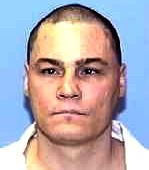
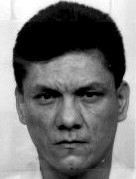
Richard Allen Masterson
Murderer Russell Ellwood
Murderer · USA · 1991
Russell Ellwood was a former taxi driver. Authorities suspected him of killing…
20 victims
Russell Ellwood
Murderer · USA · 1991
Russell Ellwood was a former taxi driver. Authorities suspected him of killing…
20 victims
 Robert Martines Perez
Murderer · USA · 1994
Name: Robert Martines Perez · Other name used in proceedings: Robert Martinez P…
15 victims
Robert Martines Perez
Murderer · USA · 1994
Name: Robert Martines Perez · Other name used in proceedings: Robert Martinez P…
15 victims
 Billy Frank Vickers
Murderer · USA · 1993
Billy Frank Vickers Vickers was executed by lethal injection in Texas on Januar…
14 victims
Billy Frank Vickers
Murderer · USA · 1993
Billy Frank Vickers Vickers was executed by lethal injection in Texas on Januar…
14 victims
 Danny Joe Bradley
Murderer · USA · 1983
Danny Joe Bradley was tried in Alabama and convicted of capital murder in conne…
1 victim
Danny Joe Bradley
Murderer · USA · 1983
Danny Joe Bradley was tried in Alabama and convicted of capital murder in conne…
1 victim
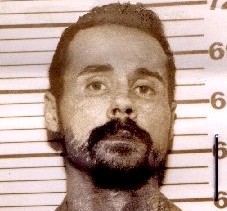 Wilford Lee Berry
Murderer · USA · 1989
Wilford Lee Berry, Jr. was executed by lethal injection in Ohio on February 19,…
1 victim
Wilford Lee Berry
Murderer · USA · 1989
Wilford Lee Berry, Jr. was executed by lethal injection in Ohio on February 19,…
1 victim
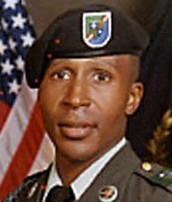 Louis Jones
Murderer · USA · 1995
Louis Jones Jr. — defendant; a decorated Army veteran and airborne ranger Louis…
1 victim
Louis Jones
Murderer · USA · 1995
Louis Jones Jr. — defendant; a decorated Army veteran and airborne ranger Louis…
1 victim
 Marybeth Davis
Murderer · USA · 1981
Marybeth Davis (born c. 1952) was an American nurse convicted in 1997 of the mu…
2 victims
Marybeth Davis
Murderer · USA · 1981
Marybeth Davis (born c. 1952) was an American nurse convicted in 1997 of the mu…
2 victims
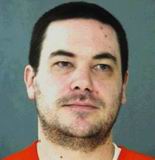 Robert Jackson
Murderer · USA · 1992
Robert W. Jackson, III — defendant; male; white · Elizabeth Girardi — victim ·…
1 victim
Robert Jackson
Murderer · USA · 1992
Robert W. Jackson, III — defendant; male; white · Elizabeth Girardi — victim ·…
1 victim
 Eddie Albert Crawford
Murderer · USA · 1983
Eddie Albert Crawford was a white male, born 02/09/1947, with hair color brown,…
1 victim
Eddie Albert Crawford
Murderer · USA · 1983
Eddie Albert Crawford was a white male, born 02/09/1947, with hair color brown,…
1 victim
- Gender
- male
- Country
- USA
- Location
- Harris County, Texas, USA
- Date of birth
- March 5, 1972
- Age at first offence
- 29
- Characteristics
- robbery
- Victim profile
- Gay man
- Method of murder
- Strangulation
- Date(s) of murder
- February 9, 2001
- Years active
- 2001
- Date of arrest
- —
- Status
-
Sentenced to death
Sentenced to death on May 15, 2002
Case information
- Name: Richard Allen Masterson
- TDCJ Number: 999414
- Date of Birth: 03/05/1972
- Gender: male
- Race: Harris (county) and Texas welder, carpenter, laborer indicated as prior occupation; victim described separately as white male
- Hair color: brown
- Eye color: brown
- Height: 5 ft 11 in
- Weight: 233
- Native County: Harris
- Native State: Texas
- Prior occupation: welder, carpenter, laborer
Timeline
- 01/27/2001 — The appellant was convicted of a capital murder (1) committed on January 27, 2001.
- 02/09/2001 — On 02/09/2001 in Houston, Masterson choked the victim, an adult white male, resulting in the victim's death; Masterson also took the victim's vehicle after the murder.
- 02/09/2001 — Masterson drove the victim's car to Georgia, left that car with relatives, and continued on to Florida, where he was arrested after stealing another car.
- 03/05/1972 — Richard Allen Masterson was born.
- 05/15/2002 — The trial judge sentenced appellant to death after the jury’s answers to the special issues.
- 02/02/2005 — Date delivered: February 2, 2005 (Court opinion date).
Prior record and status before the capital murder
- Prior prison record:
- 4-year adult probation, Walker County, Georgia, 1991 for Burglary (revoked to 1 year time served in Georgia Department of Corrections)
- X/Tennessee Department of Corrections, Brushy Mountain Correctional Complex, Petros, Tennessee
- X/Georgia Department of Corrections, Bostick Correctional Institute, Hardwick, Georgia
- released on probation on 04/07/1992
- X/TDCJ on a 2 year sentence from Harris County for 1 count of burglary of a building with intent to commit theft
- released on parole in absentia to Harris County on 10/19/1992
- received parole discharge on 09/29/1994
The offence
- Appellant was convicted of a capital murder (1) committed on January 27, 2001.
- Summary of incident:
- On 02/09/2001 in Houston, Masterson choked the victim, an adult white male, resulting in the victim's death.
- Masterson also took the victim's vehicle after the murder.
- Vehicle and travel after the murder:
- After the victim was murdered, appellant drove the victim's car to Georgia.
- He left that car with relatives and continued on to Florida.
- In Florida, he was arrested after stealing another car.
Victim
- Victim: adult white male
Co-defendants
- Co-defendants: None
Investigation and confession in Florida jail
- Texas police officer: David Null (Houston police officer)
- Interview location: Marion County, Florida jail
- Officer Null’s testimony and warnings:
- Officer David Null testified that he advised appellant of all the warnings required by Article 38.22.
- After each warning, Null asked whether appellant understood the warning, and appellant answered affirmatively each time.
- Null then asked whether appellant wished to give up those rights, and appellant stated that “he wanted to clear things up.”
- Officer Null’s account of promises, threats, and inducements:
- Null testified that he never made any promises to appellant.
- Null testified that he never offered appellant anything in exchange for talking about the murder case.
- Null testified that he never threatened appellant or any member of appellant's family.
- Nephew and drugs statements:
- Null testified that he was aware that appellant’s nephew had been caught in a stolen car, but Null did not offer anything to the nephew in exchange for a statement in the case.
- Null said that appellant did say that there had been dope in the car and that the dope belonged to appellant and not to the nephew.
- Statement about helping the nephew:
- When asked whether he offered to help the nephew in any way, Null testified:
- “I told him [appellant] that if the dope was his and he wanted to admit the dope was his that I would let the people know that he was admitting that the dope, it was his dope.”
- When asked whether he offered to help the nephew in any way, Null testified:
- Right to counsel testimony:
- Null also testified that appellant never asked for an attorney.
- Appellant testified that, when Null said he wanted to ask some questions:
- “I asked him if I needed a lawyer.”
- Appellant testified that Null ignored his question.
- Appellant also testified that he had earlier asked a magistrate at extradition proceedings:
- “if I could get a lawyer.”
- Appellant’s account of request for help regarding nephew:
- Appellant testified that he told Null about his nephew's situation and asked:
- “if they could get that took care of.”
- Appellant testified that Null replied:
- “he'd see what he could do.”
- Appellant testified that he understood Null’s answer to mean:
- “[t]hat he, if I cooperated with him, he would help me out.”
- Appellant testified that he told Null about his nephew's situation and asked:
Suppression hearing findings
At the end of the suppression hearing, the trial court found:
“There is no credible evidence to indicate that the defendant was ever promised anything to make this statement. The credible evidence shows that the defendant never asked for a lawyer, that he waived his rights and freely and voluntarily gave the statement to Officer Null.”
Trial
- Court: In the Court of Criminal Appeals of Texas
- Docket No.: AP- 74,344
- Title: RICHARD ALLEN MASTERSON, Appellant v. THE STATE OF TEXAS
- Judge authoring opinion: Keller, P.J., delivered the opinion of the unanimous Court.
- Procedural posture:
- Direct appeal to the Court was automatic.
- Appellant raised eight points of error.
- The Court affirmed.
Guilt phase: issues on appeal
Admission of tape-recorded confession
- Points of error two and three complained about admission of a tape-recorded confession taken in Florida while appellant was in custody.
- Point of error two: appellant claimed confession was induced by a promise of leniency for his nephew.
- Point of error three: appellant claimed confession was taken after he invoked his right to counsel.
- The Court held the trial court did not err and overruled points of error two and three.
Lesser-included offense instruction
- Point of error one: appellant contended trial court erred in refusing a requested instruction regarding lesser-included offense of criminally negligent homicide.
- Appellant’s trial testimony regarding conduct:
- Appellant testified that he met the victim at a “hustler bar,” went home with him, and engaged in consensual sexual conduct.
- Appellant testified that the victim requested that appellant perform a “sleeper hold” to enhance the quality of the victim’s sexual experience.
- Appellant testified that the “sleeper hold” resulted in the victim’s death, and appellant testified that this result was unintended.
- The jury instruction:
- The jury was instructed on the lesser-included offense of manslaughter.
- The Court concluded any error was harmless and overruled point of error one.
Punishment phase: issues on appeal
Sufficiency of evidence—future dangerousness
- Point of error five: appellant contended evidence was legally insufficient to support the jury’s answer to the “future dangerousness” special issue.
- The special issue asked:
- Appellant’s testimony during punishment:
- During direct examination at the punishment phase of trial, appellant testified:
[L]ike [the prosecutor] told 'em from the beginning when they were picking the jury, they have to answer two questions, am I going to be a future danger? Am I going to protect myself by any means necessary? Yes I am. That makes me a future danger, yes, I am. Second issue, is there any mitigating circumstance. I don't think so. Everybody lives and dies by the choices that they make. None of my family out there could control what I did. I did what I did because I wanted to do it, not because they made me do it, or because I got my ass whooped. I got my ass whooped because I deserved it a lot of times. Sometimes I got my ass whooped because I didn't deserve it but most of the time I - I did something wrong, I got punished for it. So whatever your decision is, I accept that. You found me guilty, you must believe I'm guilty. And if you send me to prison, for life, the chances are, in the Texas Department of Corrections the chances are I'm going to have to defend myself, and like I said, I will defend myself, whether it's against a guard or inmate or anybody else by any means necessary. If that means a guard puts his hands on me I'm going to put my hands on him. If a[n] inmate comes up to me with a knife and tries to stab me, I'm going to stab him or do whatever it takes to save my life from him.
- During direct examination at the punishment phase of trial, appellant testified:
- Appellant’s cross-examination testimony:
- The record includes:
- Q. You mentioned that you wanted - you think the jury should answer the special issues in such a way that you get the death penalty, right?
- A. If they're following the law, yes.
- Q. They have to, right?
- A. Yes, if they're following the law, yes.
- Q. Because it's clear you're a future danger, right?
- A. If it's - if me protecting myself or my property, yes, I'm a future danger.
- Q. And you would do whatever it takes, be it hurt another inmate, hurt another guard, to prove that, right?
- A. Not necessarily, but if that arises, yes I will, and I'm sure within 40 years, it will arise sometimes.
- Q. You're positive there's no way you could stay in prison probably even for a year without getting violent again, right?
- A. Probably not. Probably not even a month.
- The record includes:
- Appellant’s argument as presented in the opinion (brief excerpt):
From the evidence of the primary offense against Shane Honeycutt, the offense against Steven and evidence at punishment about Appellant's commission of threats and violence against others in the free world, the jury must have drawn the conclusion that Appellant presented a real danger, a threat to people in free society.
The testimony of jail personnel about Appellant's violent conduct toward others in the county jail, including fighting with other inmates and including verbal threats to one deputy, about his membership in the Aryan Brotherhood gang (a gang which was also present in the Texas prison system, according to a deputy witness) and his readiness to defend the Brotherhood against "disrespect" with violence. Together with Appellant's own testimony that he would continue to commit criminal acts of violence in prison whenever he deemed it necessary (which he told the prosecutor he believed would probably occur "within a month") was certainly evidence relevant to the jury's decision about the likelihood of Appellant's being a continuing threat to prison society.
Appellant's feelings of remorse, or even regret, for any of his violence toward others were remarkable for their absence; for example, Officer Null, who took Appellant's tape recorded statement, testified at guilt that Appellant told him that Honeycutt's death "didn't really matter to him, he wasn't upset about it because he didn't know him - and it just didn't matter."
At punishment, Deputy Urick said when he told Appellant in the jail that he would write him up for refusal to follow Urick's order to pick up his food tray, Appellant told him he would "choke you like I choke my victims."
In short, the evidence was strongly suggestive that Appellant would be, and would strive to be a continuing threat both in prison and in free society, were he ever to get there.
Appellant argues that, given the obvious threat he poses, prison officials would place him in lockdown to protect guards and other inmates from him. In addition, appellant argues that the parole authorities would never parole such a dangerous person. He concludes that he does not in fact constitute a future danger because the authorities will act to neutralize his ability to threaten others.
Appellant's argument appears to be that he is so dangerous that he is not dangerous. His contention is ingenious but unpersuasive. If accepted, it would stand the capital punishment scheme on its head, giving relief to the most dangerous offenders. We will not speculate, for legal sufficiency purposes, about the effectiveness of the prison and parole authorities' methods of protecting society from those who are intent on committing future criminal acts of violence. - The Court overruled point of error five.
“whether there is a probability that the defendant would commit criminal acts of violence that would constitute a continuing threat to society.”
Order of closing argument on mitigation issue
- Point of error four: appellant argued trial court erred in refusing his request to give concluding argument in punishment on the mitigation special issue.
- Appellant’s arguments included claims about:
- Article 36.07 not governing capital cases
- discretion of the trial court to change order of arguments
- constitutional rights allegedly violated by “psychological advantage” the State had “in making the last impression on the jury” in a death penalty case
- Statutory text quoted:
- The Court overruled point of error four.
“The order of argument may be regulated by the presiding judge; but the State's counsel shall have the right to make the concluding address to the jury.”
Constitutionality of death penalty issues
Future dangerousness issue constitutionality
- Point of error six: appellant contended future dangerousness issue was unconstitutional.
- The Court rejected the claim and overruled point of error six.
Hung jury “12-10” rule
- Points of error seven and eight: appellant contended the Eighth Amendment right against cruel and unusual punishments was violated because the trial court refused to inform jurors that failure to arrive at a unanimous verdict for the State on the punishment issues would result in a life sentence.
- The Court overruled points of error seven and eight.
Verdict and sentencing
- Trial conviction:
- Appellant was convicted of a capital murder (1).
- Jury findings and sentence:
- Pursuant to the jury’s answers to the special issues under Texas Code of Criminal Procedure, Article 37.071, Article 37.071, ??2(b) and 2(e), the trial judge sentenced appellant to death.
- Affirmance:
- The judgment of the trial court was affirmed.
Outcome
- The Court affirmed the judgment of the trial court after appellant’s direct appeal.
- Keller, Presiding Judge delivered the opinion of the unanimous Court.
- Date delivered: February 2, 2005.
Aftermath
- Sentencing status:
- Sentenced to death on May 15, 2002.

Spotted an error, or have more information about this case?