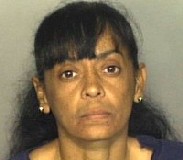
Ana Maria Cardona
Murderer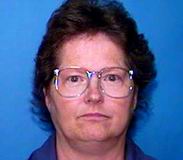 Bobbie Sue Terrell
Murderer · USA · 1984
Bobbie Sue Dudley Terrell was a Pinellas County nurse and worked as the night s…
12 victims
Bobbie Sue Terrell
Murderer · USA · 1984
Bobbie Sue Dudley Terrell was a Pinellas County nurse and worked as the night s…
12 victims
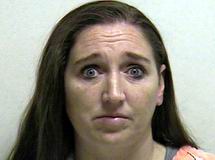 Megan Huntsman
Murderer · USA · 1996
Megan Huntsman was 40 at sentencing. She was a mother of three children who wer…
6 victims
Megan Huntsman
Murderer · USA · 1996
Megan Huntsman was 40 at sentencing. She was a mother of three children who wer…
6 victims
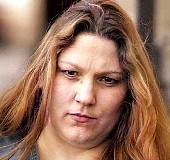 Angela Johnson
Murderer · USA · 1993
Angela Jane Johnson was convicted in federal court of aiding and abetting the m…
5 victims
Angela Johnson
Murderer · USA · 1993
Angela Jane Johnson was convicted in federal court of aiding and abetting the m…
5 victims
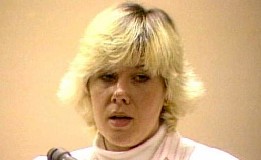 Catherine May Wood
Murderer · USA · 1987
Catherine May Wood was an American caregiver who worked at the Alpine Manor Nur…
5 victims
Catherine May Wood
Murderer · USA · 1987
Catherine May Wood was an American caregiver who worked at the Alpine Manor Nur…
5 victims
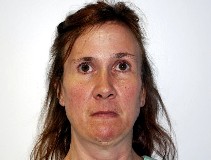 Michele Kalina
Murderer · USA · 1996
Michele Kalina pleaded guilty to murder for one of five infants she initially w…
5 victims
Michele Kalina
Murderer · USA · 1996
Michele Kalina pleaded guilty to murder for one of five infants she initially w…
5 victims
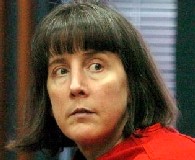 Amy Bishop
Murderer · USA · 1986
Amy Bishop — biology professor and perpetrator · James Anderson — Bishop’s husb…
4 victims
Amy Bishop
Murderer · USA · 1986
Amy Bishop — biology professor and perpetrator · James Anderson — Bishop’s husb…
4 victims
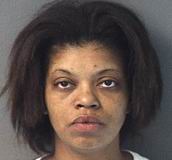 Tina Brown
Murderer · USA · 2010
Tina Lasonya Brown was convicted of first-degree murder in the beating and burn…
1 victim
Tina Brown
Murderer · USA · 2010
Tina Lasonya Brown was convicted of first-degree murder in the beating and burn…
1 victim
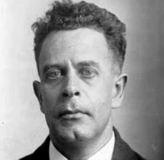 Henry Judd Gray
Murderer · USA · 1927
Henry Judd Gray Henry Judd Gray was executed by electrocution in New York on Ja…
1 victim
Henry Judd Gray
Murderer · USA · 1927
Henry Judd Gray Henry Judd Gray was executed by electrocution in New York on Ja…
1 victim
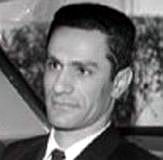 George Nassar
Murderer · USA · 1948
George Nassar (born June 1932) was an American murderer. Nassar was incarcerate…
2 victims
George Nassar
Murderer · USA · 1948
George Nassar (born June 1932) was an American murderer. Nassar was incarcerate…
2 victims
 Richard Lewis Brimage
Murderer · USA · 1987
Richard Lewis Brimage, Jr. Mary Beth Kunkel, 19-year-old Texas A&M University b…
1 victim
Richard Lewis Brimage
Murderer · USA · 1987
Richard Lewis Brimage, Jr. Mary Beth Kunkel, 19-year-old Texas A&M University b…
1 victim
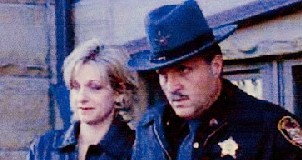 Kimberly Anderson
Homicide · USA · 2001
Kimberly Anderson was acquitted in criminal trial on October 17, 2002. In a civ…
1 victim
Kimberly Anderson
Homicide · USA · 2001
Kimberly Anderson was acquitted in criminal trial on October 17, 2002. In a civ…
1 victim
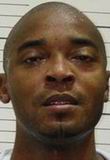 Andrew Thomas
Murderer · USA · 1997
Andrew Thomas and his co-defendant, Anthony Bond, were indicted for the felony…
1 victim
Andrew Thomas
Murderer · USA · 1997
Andrew Thomas and his co-defendant, Anthony Bond, were indicted for the felony…
1 victim
- Gender
- female
- Country
- USA
- Location
- Miami-Dade County, Florida, USA
- Date of birth
- November 26, 1961
- Age at first offence
- 29
- Characteristics
- abuse, child abuse, torture, convicted rapist, drugs
- Victim profile
- Her three-year-old son Lazaro Figueroa
- Method of murder
- Beating with a baseball bat
- Date(s) of murder
- October 31, 1990
- Years active
- 1990
- Date of arrest
- December 6, 1990
- Status
-
Sentenced to death
Sentenced to death on April 1, 1992; resentenced to death on June 10, 2011
Case record: Ana Maria Cardona
Status and procedural posture
Ana Maria Cardona was sentenced to death on April 1, 1992. She was resentenced to death on June 10, 2011.
Timeline
- 04/01/92 — Ana Maria Cardona was sentenced to death.
- 06/02/94 — The Florida Supreme Court affirmed the convictions and sentence of death.
- 02/21/95 — A Petition for Writ of Certiorari in the United States Supreme Court was denied.
- 07/11/02 — The Florida Supreme Court reversed Cardona’s conviction and sentence and remanded for a new trial for a Brady violation.
- 04/16/10 — A new trial date was scheduled for May 10; the Florida Supreme Court had overturned the death sentence and ordered a new trial in 2002.
- 07/09/10 — A jury found Ana Maria Cardona guilty of first-degree murder and guilty of aggravated child abuse.
- 10/15/10 — A jury recommended the death penalty for Cardona.
- 06/10/11 — Judge Reemberto Diaz resentenced Ana Maria Cardona to death; Cardona was placed back on death row.
Background
Ana Maria Cardona was convicted of killing her three-year-old son in 1990. The child’s body had been found in Miami Beach but remained unidentified for several weeks.
Cardona lived in Miami, Florida, as a Cuban immigrant. The case drew strong local press attention. The child was dubbed “Baby Lollipops” because of the shirt he was wearing when found.
The child was greatly undernourished and had been beaten savagely over most of his life. He finally died from blows to the head from a baseball bat.
Cardona denied abusing her child. Her primary defense was that her lover, Olivia Gonzalez, had repeatedly beaten the child and finally killed him. Cardona claimed she lacked the courage to defend her child and took cocaine to escape the horror of the beatings.
Olivia Gonzalez was Cardona’s lesbian lover and testified against Cardona in return for a forty-year sentence for second degree murder. Gonzalez admitted helping to beat the boy and helping to dump the body in Miami Beach, but she apparently was able to place the primary blame for the homicide on Cardona.
The trial judge concluded that “the long period of time over which this baby was subject to torture, abuse, pain suffering separates this crime from all other crimes seen in the Dade County Courthouse within the memory of anyone working in this building.”
Cardona’s defense attorney stated: “As this case unfolded, it became clear that Ana Cardona was going to be held up to our community as a monster....”
At the penalty proceeding referenced in the case materials, Judge Diaz said: “Ana Maria Cardona, you have forfeited your right to live,” as he handed down the sentence. He added, “The weight of the aggravating factors is overwhelming. She knew what she was doing. Lazaro was tortured to death, he was mistreated his entire short life.”
The offence
Ana Maria Cardona was convicted of first-degree murder for the death of her three-year-old son, Lazaro Figueroa, known as “Baby Lollipops.” She was also convicted of aggravated child abuse.
The child’s body was found abandoned in the Miami Beach area on 11/02/90. Medical materials described the child as suffering severe torture and abuse over a long period.
The autopsy findings and medical descriptions included:
- two front teeth missing due to blunt trauma;
- skull fractures and underlying subdural and subarachnoid hematomas;
- an arm fracture and immobilization with muscles turned to bone as a result of multiple repeated trauma;
- facial injuries and a cheek burn;
- a “belly was sunken and the bones of his pelvis and individual ribs stuck out”;
- the frenulum “was torn torn to the point where the lips detached”;
- the left arm “was fixed at a ninety degree angle”;
- the right leg “was smaller than the left”;
- diaper soiling “to the extent that it almost formed a cast of excrement around the victim's pelvis”;
- pressure sores on the back and head;
- deep ligature marks in-between his toes;
- evidence that he had been restrained in a closet in their Miami home.
Medical examiner testimony included the statement: “This is child torture, in my opinion,” and prosecutors characterized the harm as “heinous, atrocious and cruel,” with the aggravating factor described as “severe torture, pain and abuse.”
Investigation
Cardona and her lover, Olivia Gonzalez-Mendoza, were arrested after police identified the child as Lazaro Figueroa and traced Cardona.
Cardona gave conflicting accounts of the toddler’s final days, including a tale that he had hit his head on a bed and they dumped his body hoping a wealthy person would find him and nurse him back to health.
The legal materials also addressed a Brady violation involving withheld investigation reports and contradictions in Gonzalez-Mendoza’s statements to investigators.
Arrest
Cardona was arrested in connection with the murder after the child’s body was found.
The case materials also state that Cardona fled with her two children and her lover to the Orlando area and were eventually apprehended in St. Cloud, Florida.
Trial
Charges and jury findings
Ana Maria Cardona was charged with:
- Count I: First-Degree Murder
- Count II: Aggravated Child Abuse
At the original trial, the jury found her guilty on both counts. On advisory sentencing, the jury recommended the death penalty by an 8-4 majority.
In the retrial, jurors found Cardona guilty of first-degree murder and guilty of aggravated child abuse.
A 12-member panel was asked to review the testimony of Gloria Pi, described in the materials as a mentally challenged 14-year-old who confessed to the murder in 1990 and later recanted.
Competing theories
Cardona’s defense argued that:
- Gonzalez repeatedly beat and killed the child;
- Cardona blamed Gonzalez and her own cocaine habit for failing to stop her lover’s child abuse;
- in the retrial, the defense claimed Cardona gave her son to a mysterious babysitter months before his death;
- the defense suggested the real culprit could have been Gloria Pi.
The prosecution’s theory, based on Gonzalez’s testimony, was that:
- Cardona participated in a greater amount of abuse than Olivia Gonzalez;
- the State brought Gonzalez as a witness to describe what happened;
- Gonzalez “went to bathe” while Cardona inflicted the fatal blow with the bat;
- Gonzalez participated at Cardona’s behest and was a “battered spouse.”
Quotes and trial statements
During closing arguments in the retrial described in the materials, prosecutor Kathleen Pautler said:
“It’s difficult to look at it. It hurts. It is outrageous that a child could be found in this condition,” prosecutor Kathleen Pautler said as she showed graphic autopsy photos of Lazaro Figueroa's emaciated body. “That's not felony child abuse. This is aggravated. This is starvation. This is malnutrition.”
Assistant public defender Edith Georgi countered:
“Emotion is not evidence. The sadness you feel in your heart is not the basis for a verdict. The prosecutors wants to convict Ana Cardona of first-degree murder based on no eyewitness testimony and no physical evidence.”
During a penalty-related evidentiary proceeding, Medical Examiner Bruce Hyma testified:
“This is child torture, in my opinion,” Medical Examiner Bruce Hyma testified.
In the penalty-phase argument quoted in the materials, the prosecutor stated:
“Where would you-where would we be without her? Where would we? What would be known about this case had Olivia Gonzalez not testified? There would have been a very large hole in the case that three months where this defendant, where this defendant binds and gags her child and puts him in this closet. If Olivia Gonzalez was not here to tell you where Lazaro Figueroa was there would be no way to show that this defendant bound and gagged her own child and left him in this closet.”
At trial, a defense-related claim about the “Abbott Avenue” defense appeared in the list of claims for appeal.
Brady issue and appellate reversal
The Florida Supreme Court held that a Brady violation occurred because the State committed a Brady violation by failing to disclose material criminal investigation reports of the State’s extensive interviews with Olivia Gonzalez-Mendoza, Cardona’s codefendant and the State’s key witness against Cardona.
The decision described interviews generated before Gonzalez’s plea agreement and explained that the withheld reports contradicted Gonzalez’s trial testimony in certain material points. The opinion stated that the jury found Cardona guilty and recommended death without knowing of the significant contradictions.
Sentencing
Original sentencing
On April 1, 1992, Cardona was sentenced to death.
The trial court’s sentencing findings included that:
- evidence showed the victim was subjected to approximately 18 months of torture;
- massive abuse occurred including an unhealed fracture of an arm and skull fractures;
- internal injuries after autopsy indicated blunt traumas going back many months;
- the medical evidence of child abuse was described as “the worst he had ever seen”;
- the child weighed 18 pounds at the time of death;
- photographs showed signs of abuse including bloody areas of the head and facial area and soiled diapers;
- the trial developed “a long, sordid, and wretched tale of a cruel, torturous, lingering murder act.”
A dissenting opinion quoted the sentencing order and described its findings, including that excruciating pain was inflicted “over a long period of time,” and that the child was alternatively bound, gagged and tortured and was starved to death.
The trial court used a “heinous, atrocious or cruel” (“HAC”) aggravator, and the court assigned it “overwhelming and enormous weight” due to the “long period of time over which this baby was subject to torture, abuse, pain, and suffering.”
Two years and later, the Florida Supreme Court initially affirmed the sentence.
Resentencing
On June 10, 2011, Judge Reemberto Diaz resentenced Ana Maria Cardona to death, placing her back on death row.
Appeals
Direct appeal
Cardona filed a direct appeal in the Florida Supreme Court on 05/04/92. The Florida Supreme Court affirmed the convictions and sentence of death on 06/02/94.
A Petition for Writ of Certiorari to the United States Supreme Court was filed on 11/29/94 and was denied on 02/21/95.
Postconviction and Brady
Cardona filed a Motion to Vacate Judgment and Sentence (3.850) in state circuit court on 03/24/97. When that motion was denied on 05/26/00, Cardona appealed on 06/26/00.
On 07/11/02, the Florida Supreme Court reversed Cardona’s conviction and sentence and remanded for a new trial citing a Brady violation committed by the State. The Florida Supreme Court held that the State withheld material criminal investigative reports of interviews with Olivia Gonzalez-Mendoza that contradicted her trial testimony, preventing the defense from impeaching Gonzalez’ credibility as the State’s key witness.
The opinion described the withheld materials as:
- three typed criminal investigation reports; and
- a proffer letter from Gonzalez’s attorney to the State outlining the substance of what Gonzalez was prepared to testify.
The typed criminal investigation reports were generated from interviews between State investigators and Gonzalez on September 19, 1991, September 24, and September 30, 1991.
The opinion also stated that Cardona’s conviction and sentence were reversed and remanded for a new trial.
A dissenting opinion in the appellate decision disagreed with reversing the conviction and sentence and stated that it believed there was not prejudice sufficient to require a new trial under Brady. The dissenting opinion included an extended discussion disagreeing that the withheld material would have made a significant difference, describing the record as supporting the sentencing findings.
Other appellate mentions
Cardona appealed multiple times on various grounds, including a plea to the US Supreme Court, but those were denied until the Florida Supreme Court appeal in 1997, which was rejected in 2000 before reversal in 2002.
Cardona filed a Petition for Writ of Habeas Corpus in the Florida Supreme Court on 05/22/01; it was denied as moot after the reversal on 07/11/02.
Outcome
Ana Maria Cardona’s death sentence was originally imposed on April 1, 1992. The Florida Supreme Court reversed her conviction and sentence on July 11, 2002 and ordered a new trial due to a Brady violation.
After the new trial, a jury recommended the death penalty again, and on June 10, 2011 Judge Diaz resentenced Cardona to death.
Other details
Victim and description
The victim was Lazaro Figueroa, a three-year-old child. His body was found in Miami Beach in 1990. He was undernourished and had extensive injuries described as severe torture and abuse. He weighed 18 pounds at death.
The materials included that he had two front teeth missing and multiple injuries including pressure sores and ligature marks.
People, relationships, and witnesses
- Ana Maria Cardona was the mother of Lazaro Figueroa.
- Olivia Gonzalez-Mendoza was Cardona’s codefendant, lover, and key witness for the State.
- Gonzalez pleaded guilty to second-degree murder and was sentenced to 40 years in prison; older sentencing rules resulted in her serving only 19 years and being free later as described in the materials.
- Gonzalez admitted helping to beat the boy and helping to dump the body.
- Cardona blamed Gonzalez and her cocaine habit for failing to stop child abuse.
- Gloria Pi was described as a mentally challenged 14-year-old who confessed and later recanted; jurors were asked to review her testimony.
- Teresa Enriquez appeared as a defense attorney in the materials.
- State attorney Katherine Fernández Rundle was named in the materials.
- Prosecutors Susan Dannelly and Kathleen Pautler were named in the materials.
- Assistant public defenders Edith Georgi and Liesbeth Boots were named in the materials.
- Medical Examiner Bruce Hyma testified.
Institutional and case identifiers
The materials included:
- DC #162180
- Case number: 90-48092
- Sentencing judge named as: The Honorable David L. Tobin
- Retrial counsel named: Edith Georgi – Assistant Public Defender
- Direct appeal counsel named: Lee Weissenborn – Special Public Defender Attorney
- Collateral appeals named: Maria Perez-Garcia – CCRC-S
The materials included a listing of:
- Date of Offense: 10/31/90
- Date of Sentence: 04/01/92
- Circumstances of Offense: Cardona was convicted and sentenced to death for the long-standing abuse and murder of her three-year-old son Lazaro Figueroa; the body of a severely beaten unidentified child was found in the Miami Beach area on 11/02/90; the boy was later determined to be Lazaro Figueroa.
Detainer and immigration status
Immigration and Naturalization Services in Miami placed a detainer on Ana Maria Cardona.
Motion and delay
The materials included that Cardona’s motion to vacate judgment and sentence (3.850) took over three years to reach a denial.
Drug use
The materials described Cardona regularly using cocaine and sometimes crack cocaine usage and included that she took cocaine to escape the horror of the beatings.

Spotted an error, or have more information about this case?