
Michael Anthony Taylor
Murderer Brian Kevin Rosenfeld
Murderer · USA · 1985
Brian Kevin Rosenfeld Brian Kevin Rosenfeld was sentenced to three concurrent l…
23 victims
Brian Kevin Rosenfeld
Murderer · USA · 1985
Brian Kevin Rosenfeld Brian Kevin Rosenfeld was sentenced to three concurrent l…
23 victims
 Russell Ellwood
Murderer · USA · 1991
Russell Ellwood was a former taxi driver. Authorities suspected him of killing…
20 victims
Russell Ellwood
Murderer · USA · 1991
Russell Ellwood was a former taxi driver. Authorities suspected him of killing…
20 victims
 Robert Martines Perez
Murderer · USA · 1994
Name: Robert Martines Perez · Other name used in proceedings: Robert Martinez P…
15 victims
Robert Martines Perez
Murderer · USA · 1994
Name: Robert Martines Perez · Other name used in proceedings: Robert Martinez P…
15 victims
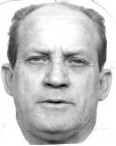 Billy Frank Vickers
Murderer · USA · 1993
Billy Frank Vickers Vickers was executed by lethal injection in Texas on Januar…
14 victims
Billy Frank Vickers
Murderer · USA · 1993
Billy Frank Vickers Vickers was executed by lethal injection in Texas on Januar…
14 victims
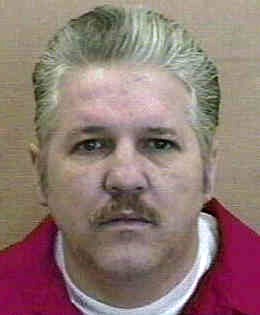 Ricky Lee Sanderson
Murderer · USA · 1985
March 14, 1985 — Hugh Holliman's sixteen-year-old daughter disappeared. · March…
1 victim
Ricky Lee Sanderson
Murderer · USA · 1985
March 14, 1985 — Hugh Holliman's sixteen-year-old daughter disappeared. · March…
1 victim
 Roy Allen Harich
Murderer · USA · 1981
Roy Allen Harich (appellant/petitioner), v. State of Florida (appellee/responde…
1 victim
Roy Allen Harich
Murderer · USA · 1981
Roy Allen Harich (appellant/petitioner), v. State of Florida (appellee/responde…
1 victim
 Hicham Raoui
Serial killer · M orocco · 2007
Hicham Raoui was born in 1976 in the region of Aïn Darbane, province of Settat.…
3 victims
Hicham Raoui
Serial killer · M orocco · 2007
Hicham Raoui was born in 1976 in the region of Aïn Darbane, province of Settat.…
3 victims
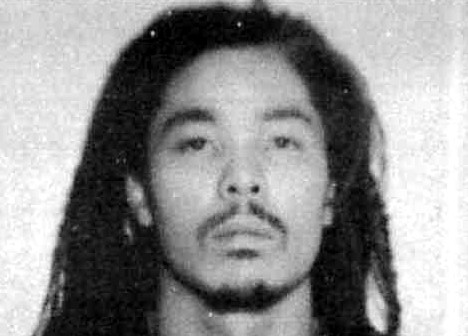 Timothy Blackburn
Murderer · USA · 1999
Timothy Blackburn escaped from the North Las Vegas jail with the help of his wi…
3 victims
Timothy Blackburn
Murderer · USA · 1999
Timothy Blackburn escaped from the North Las Vegas jail with the help of his wi…
3 victims
 John Wayne Conner
Homicide · USA · 1982
John Wayne Conner John Wayne Conner was sentenced to death in July 1982. · Janu…
1 victim
John Wayne Conner
Homicide · USA · 1982
John Wayne Conner John Wayne Conner was sentenced to death in July 1982. · Janu…
1 victim
 Eleazar Paula Mendez
Murderer · USA · 2006
Eleazar Paula Mendez pleaded guilty to three counts of capital murder. She was…
3 victims
Eleazar Paula Mendez
Murderer · USA · 2006
Eleazar Paula Mendez pleaded guilty to three counts of capital murder. She was…
3 victims
- Gender
- male
- Country
- USA
- Location
- Raytown, Jackson County, Missouri, USA
- Date of birth
- January 30, 1967
- Age at first offence
- 28
- Characteristics
- kidnapping, rape, crack addict
- Victim profile
- Ann Harrison, 15
- Method of murder
- Stabbing with knife
- Date(s) of murder
- January 24, 1995
- Years active
- 1995
- Date of arrest
- —
- Status
-
Executed
Executed by lethal injection on February 26, 2014 in Missouri
Case information
- Defendant: Michael Anthony Taylor
- Co-defendant: Roderick Nunley
- Victim: Ann Harrison, 15 years old
- Case type: Criminal proceedings in Missouri resulting in a death sentence
Timeline
- March 21, 1989 — Taylor and Roderick Nunley spent the night driving a stolen Chevrolet Monte Carlo, stealing “T-tops,” smoking marijuana and drinking wine coolers.
- March 22, 1989 — Taylor and Nunley kidnapped Ann Harrison, forced her into their stolen car, drove to Nunley’s mother’s home, forced Ann into the basement, raped her, and stabbed her after she was put in the trunk.
- March 23, 1989 — Ann Harrison’s body was discovered when police found the abandoned Monte Carlo and opened the trunk.
- February 8, 1991 — Taylor pleaded guilty to first-degree murder, armed criminal action, kidnapping, and forcible rape; a sentencing hearing followed and the trial court sentenced him to death for the murder with consecutive terms of imprisonment for the other counts.
- June 29, 1993 — The Supreme Court vacated the judgment and remanded for a new penalty hearing, imposition of sentence, and entry of new judgment.
- May and June 1994 — Evidence was received on sentencing in five days of hearings before resentencing.
- October 27, 1994 — Counsel was appointed for Taylor after he filed a pro se Rule 24.035 motion.
- March 21, 1995 — An evidentiary hearing was scheduled for Taylor’s Rule 24.035 proceeding.
- April 24, 1995 — The evidentiary hearing was scheduled after a continuance.
- May 18, 1995 — The evidentiary hearing was scheduled after a second continuance.
- May 19, 1995 — Taylor completed his presentation of evidence.
- February 26, 2014 — Michael Taylor was executed by lethal injection in Missouri.
- May 14, 1991 — Taylor was sentenced to death on this date.
Background
Taylor and Roderick Nunley abducted Ann Harrison while she waited for the school bus at the end of her driveway. Taylor and Nunley were in a car they had stolen after a night of binging on crack cocaine. One of the men jumped out of the car (both men claimed it was the other), grabbed Ann and forced her into the vehicle.
They drove to the home of Nunley’s mother. Ann was forced into the basement, where she was raped. DNA testing linked Taylor to the crime. After the rape, the men forced Ann into the trunk of the stolen car and drove to a nearby neighborhood where they abandoned the car, with Ann’s body in the trunk.
The crime went unsolved for about six months until a $10,000 reward led to a tip and to the arrest of Taylor and Nunley. Taylor confessed, and both men pled guilty and were sentenced to death. Nunley was awaiting execution.
The offence
Kidnapping and rape
At about 7:00 a.m., Taylor stopped the car when Nunley told Taylor to stop so Nunley could snatch Ann’s purse. Nunley got out, pretended to need directions, grabbed Ann, and put her in the front seat between Taylor and Nunley. Once in the car, Nunley blindfolded Ann with his sock and threatened to stab her with a screwdriver if she was not quiet. Taylor drove to Nunley’s house and took Ann to the basement. By that time, Ann’s hands were bound with cable wire.
Nunley removed Ann’s clothes and had forcible sexual intercourse with her. Taylor then had forcible intercourse with her. They untied Ann and allowed her to dress. Ann tried to persuade them to call her parents for ransom, and Nunley indicated he would take her to a telephone to call home. They put the blindfold back on her and tied her hands and led her to the trunk of the Monte Carlo. Ann resisted getting into the trunk until Nunley told her it was necessary so she would not be seen. Both men helped her into the trunk.
Stabbing and killing
Nunley returned to the house for two knives, a butcher knife and a smaller steak knife. Nunley argued with Taylor about whether to kill Ann. Nunley did not want Ann to be able to testify against him and emphasized he and Taylor were in this together.
Nunley then attempted to slash her throat but the knife was too dull. He stabbed her through the throat and told Taylor to “stick her.” Nunley continued to stab, and Taylor stabbed Ann “two or three times, probably four.” Taylor described how “her eyes rolled up in her head, and she was sort to like trying to catch her, her breath.” Nunley and Taylor argued about who would drive the Monte Carlo, and Nunley ended up driving it following Taylor who was driving another car. Taylor picked up Nunley after he abandoned the Monte Carlo with Ann Harrison in the trunk.
When the school bus arrived at the Harrison home to pick up Ann, the driver honked because she was not there. Mrs. Harrison looked out of the window and noticed Ann’s purse, gym clothes, books, and flute lying on the driveway. Police quickly mounted a ground and air search.
Evidence and medical findings
The State’s physical evidence included:
- hair matching Taylor’s collected from Ann Harrison’s body and the passenger side of the Monte Carlo
- hair matching Ann’s collected from Nunley’s basement
- sperm and semen belonging to Taylor found on Ann’s clothes and body
An autopsy revealed:
- a lacerated vagina
- six stab wounds to Ann’s chest, side, and back which penetrated her heart and lungs
- four stab wounds to her neck
The medical examiner testified Ann Harrison was alive when all the wounds were inflicted and could have remained conscious for ten minutes after the stabbing. She probably lived thirty minutes after the attack.
Investigation and arrest
A $10,000 reward led to a tip and to the arrest of Taylor and Nunley. Taylor and Nunley were arrested about six months after the crime.
Trial
Guilty plea
Taylor pleaded guilty to first-degree murder, armed criminal action, kidnapping, and forcible rape. He pleaded guilty to the four crimes on February 8, 1991. He testified he did not receive or expect a plea bargain and understood the State would seek the death penalty.
The trial court found aggravating circumstances outweighed mitigating circumstances and sentenced Taylor to death for the first degree murder, with consecutive sentences of ten years for armed criminal action, fifteen years for kidnapping, and life for aggravated rape.
Motions regarding plea withdrawal and sentencing
Taylor filed a Rule 24.035 motion alleging, among other things, that the trial court was under the influence of alcohol during sentencing and that counsel was ineffective for failing to learn of the trial court’s alcohol problem before advising Taylor to plead guilty. The trial court promptly recused and a special judge was appointed to conduct the Rule 24.035 proceeding.
After an evidentiary hearing, the special judge denied the Rule 24.035 motion. Taylor appealed the sentence and the denial of his Rule 24.035 motion.
Before the second sentencing hearing, the court denied Taylor’s Rule 29.07 motion to withdraw the guilty plea, his motion requesting a jury for sentencing, and his motion asking for disqualification of the entire sixteenth circuit.
Taylor filed a timely Rule 24.035 motion and amended motion after the second sentencing and also moved for disqualification of the judge. On the death of the judge who heard the most recent sentencing, the cause was transferred to another division of the sixteenth circuit. After a two-day hearing, the court overruled the Rule 24.035 motion.
Sentencing
First sentencing
After the initial guilty plea on February 8, 1991, the trial court sentenced Taylor to death for first-degree murder. He received consecutive terms for armed criminal action, kidnapping, and life for aggravated rape.
Remand and resentencing
In June 1993, the Supreme Court vacated the judgment and remanded for a new penalty hearing, imposition of sentence, and entry of new judgment. Taylor was resentenced after a sentencing process in five days of hearings during May and June 1994.
At resentencing, the court found beyond a reasonable doubt nine aggravating circumstances were not outweighed by the mitigating circumstance. Taylor was sentenced to death for first-degree murder and consecutive terms of fifty years for armed criminal action, fifteen years for kidnapping, and life for rape.
Independent review and aggravating circumstances
Pursuant to section 565.035.5, the Supreme Court performed independent review. It found:
- no evidence the death sentence was imposed under the influence of passion, prejudice, or any other arbitrary factor
- statutory aggravating circumstances supported by the evidence, including findings that:
- the murder was outrageously and wantonly vile, horrible, and inhuman
- the murder was committed by a person who escaped from a place of lawful confinement
- the murder was committed while the defendant was engaged in the perpetration of kidnapping, rape, and attempted armed robbery
- the victim was killed as a result of her status as a witness
The Supreme Court also noted that the trial court found:
- seven prior felony convictions
- Taylor escaped from the custody of the Jackson County Department of Corrections and after being apprehended threatened a corrections officer
- Taylor inflicted “inconceivable physical torture and emotional suffering” upon the victim
The Supreme Court compared similar cases in its proportionality review.
Appeals
Taylor’s direct appeal and post-conviction proceedings resulted in affirmances of his death sentence, including:
- State v. Taylor, 929 S.W.2d 209 (Mo. 1996) (Direct Appeal After Resentencing)
- State ex rel. Taylor v. Steele, 341 S.W.3d 634 (Mo. 2011) (PCR)
- Taylor v. Bowersox, 329 F.3d 963 (8th Cir. Mo. 2003) (Federal Habeas)
- Taylor v. Crawford, 487 F.3d 1072 (8th Cir. Mo. 2007) (§ 1983)
Supreme Court holdings described in the record
In State v. Taylor, 929 S.W.2d 209 (Mo. 1996), the Supreme Court affirmed. It described that Taylor pleaded guilty and that the court denied his motions, including a motion to withdraw the guilty plea, and affirmed the death sentence. It held, among other things, that:
- Taylor did not suffer manifest injustice from being sentenced by a different judge than one before whom he had pled guilty.
- Taylor was not entitled to withdraw his plea based on inadequate personal admonition.
- Taylor could not withdraw his plea on grounds that he was not advised that intent to kill was an element of first-degree murder.
- There was sufficient evidence to accept Taylor’s guilty plea.
- Taylor was not entitled to jury on resentencing following remand.
- Recusal of resentencing and postconviction judges was not required.
- Taylor failed to establish that the prosecutor had acted with racially discriminatory purpose in deciding to seek the death penalty.
- Postconviction judge properly found mitigation investigation was adequate.
- Defense counsel’s failure to make further mitigation investigation was not ineffective assistance of counsel.
In State ex rel. Taylor v. Steele, 341 S.W.3d 634 (Mo. 2011), the Supreme Court denied a petition for writ of habeas corpus and refused to vacate the death sentence. It held that:
- by pleading guilty, Taylor waived his right to jury sentencing
- the waiver remained valid despite later case law outlining a Sixth Amendment right to jury sentencing
- Ring v. Arizona did not apply retroactively to allow jury sentencing for Taylor
Statements and quotations
Missouri Governor Jay Nixon made a statement about the execution:
- “Our thoughts and prayers tonight are with Bob and Janel Harrison, and the other members of Ann Harrison's family, as they remember the 15-year-old child they lost to an act of senseless violence.”
Taylor made remarks before execution that were attributed to him:
- “I hurt for her family... No words can express the pain and anguish that they have lived with through the years. I can only wish them peace, and pray there will come a day when they can forgive me,” Taylor said.
Taylor also gave a letter content described in the reporting:
- “my sincerest apology and heartfelt remorse.”
Retired Kansas City homicide Sgt. Dave Bernard’s quote as included in the record:
- “Cruel and unusual punishment would be if we killed them the same way they killed Annie Harrison,” Edlund said.
- “Get a damn rope, string them up, put them in the gas chamber. Whatever it takes.”
Ann Harrison’s mother, Janel Harrison, made a statement:
- “Regarding Taylor spending the rest of his life in prison... when you commit the ultimate crime, which is murder, then there should be an ultimate penalty. If Ann had been allowed to live Taylor would have received a life sentence,” she said.
Taylor’s family issued a statement:
- “The family of Michael Anthony Taylor would like to express their gratitude to all of those who supported Michael over the years. It may be a small victory for the State of Missouri but Michael has won in the end. He has struggled for years with the guilt of not stopping a horrendous crime, and has dedicated much of his time in prison to the memory of Ann Harrison through his work with hospice, tutoring and mentoring inside and outside the prison walls. Those heartfelt accomplishments will accompany him into the gates of Heaven where he will be joined by his family and beloved angel.”
Outcome
Taylor was executed by lethal injection in Missouri on February 26, 2014.
The record describes that:
- Taylor died by lethal injection at a prison in Bonne Terre.
- Taylor did not use his right to request a specific last meal and was served potato soup and a sandwich.
- Taylor offered no final statement before his early-morning execution, though he mouthed silent words to his parents, clergymen and other relatives who witnessed his death.
- He was pronounced dead at 12:10 a.m. local time.
Nunley, his accomplice, was awaiting execution.
Other details
Crimes charged and statutory categories described in the record
Taylor pleaded guilty to and was sentenced based on:
- first-degree murder
- armed criminal action
- kidnapping
- forcible rape / aggravated rape (as referenced in sentencing descriptions)
Defense and procedural issues described in the record
Taylor’s appeals and post-conviction arguments included claims about:
- alcohol by the sentencing judge
- refusal to allow withdrawal of the guilty plea
- denial of jury sentencing on remand
- issues relating to recusal of judges
- equal protection challenges to the prosecutor’s decision to seek death
- proportionality review procedures
- adequacy of mitigation investigation and claims of ineffective assistance of counsel
- denial of a continuance in the post-conviction proceeding
- challenges under federal habeas and civil-rights litigation regarding lethal injection protocol and associated claims
Victim circumstances described in the record
Ann Harrison was a 15-year-old high school student waiting for the school bus with her flute, school books, and purse. Her body was found in the trunk of an abandoned car after about 36 hours. The record describes her as pleading for her life during the attack and offering money if they would let her live.


Spotted an error, or have more information about this case?