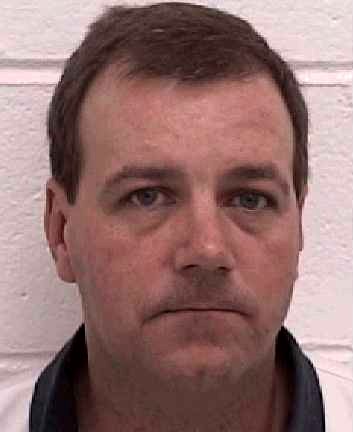
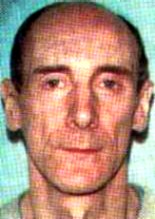
Samuel David Crowe
Murderer Brian Kevin Rosenfeld
Murderer · USA · 1985
Brian Kevin Rosenfeld Brian Kevin Rosenfeld was sentenced to three concurrent l…
23 victims
Brian Kevin Rosenfeld
Murderer · USA · 1985
Brian Kevin Rosenfeld Brian Kevin Rosenfeld was sentenced to three concurrent l…
23 victims
 Yahweh ben Yahweh
Murderer · USA · 1980
Yahweh ben Yahweh was born and legally named Hulon Mitchell Jr. (October 27, 19…
23 victims
Yahweh ben Yahweh
Murderer · USA · 1980
Yahweh ben Yahweh was born and legally named Hulon Mitchell Jr. (October 27, 19…
23 victims
 Russell Ellwood
Murderer · USA · 1991
Russell Ellwood was a former taxi driver. Authorities suspected him of killing…
20 victims
Russell Ellwood
Murderer · USA · 1991
Russell Ellwood was a former taxi driver. Authorities suspected him of killing…
20 victims
 Robert Martines Perez
Murderer · USA · 1994
Name: Robert Martines Perez · Other name used in proceedings: Robert Martinez P…
15 victims
Robert Martines Perez
Murderer · USA · 1994
Name: Robert Martines Perez · Other name used in proceedings: Robert Martinez P…
15 victims
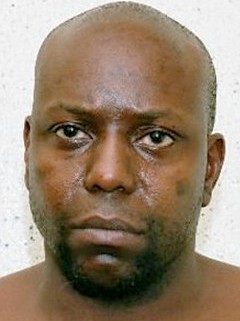 Peter Bryan
Homicide · United Kingdom · 1993
Peter Bryan was a schizophrenic cannibal who was sentenced to closed psychiatri…
3 victims
Peter Bryan
Homicide · United Kingdom · 1993
Peter Bryan was a schizophrenic cannibal who was sentenced to closed psychiatri…
3 victims
 Luka Magnotta
Murderer · Canada · 2012
Luka Rocco Magnotta was born as Eric Clinton Kirk Newman in July 24, 1982 in Sc…
1 victim
Luka Magnotta
Murderer · Canada · 2012
Luka Rocco Magnotta was born as Eric Clinton Kirk Newman in July 24, 1982 in Sc…
1 victim
 John Louis Evans
Murderer · USA · 1977
John Louis Evans III was born on January 4, 1950, in Beaumont, Texas. He was ex…
1 victim
John Louis Evans
Murderer · USA · 1977
John Louis Evans III was born on January 4, 1950, in Beaumont, Texas. He was ex…
1 victim
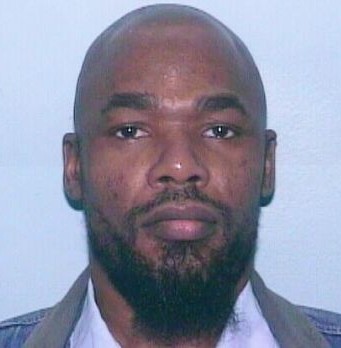 Gregory Clepper
Murderer · USA · 1996
1991 — The killings began. · April 24, 1996 — Patricia Scott was found in a tra…
1 victim
Gregory Clepper
Murderer · USA · 1996
1991 — The killings began. · April 24, 1996 — Patricia Scott was found in a tra…
1 victim
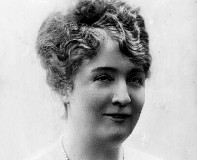 Henriette Caillaux
Murderer · France · 1914
Henriette Caillaux was the wife of France's minister of finance, Joseph Caillau…
1 victim
Henriette Caillaux
Murderer · France · 1914
Henriette Caillaux was the wife of France's minister of finance, Joseph Caillau…
1 victim
- Gender
- male
- Country
- USA
- Location
- Douglas County, Georgia, USA
- Date of birth
- 1960
- Age at first offence
- 28
- Characteristics
- robbery, history of mental illness
- Victim profile
- Joseph V. Pala , 39 (his former boss)
- Method of murder
- Shooting
- Date(s) of murder
- March 2, 1988
- Years active
- 1988
- Date of arrest
- Next day
- Status
-
Life imprisonment
Sentenced to death on November 22, 1989; commuted to life in prison without the possibility of parole on May 21, 2008
Case overview
Samuel David Crowe was sentenced to death in Douglas County in November 1989. He was convicted of the robbery and murder of his former boss, Joe Pala, 39. Crowe was knocked to the floor of Wickes Lumber Co., shot, hit with a paint can and crowbar, and covered in paint the night of March 2, 1988. Crowe admitted to the crime. Crowe had no criminal record before the killing.
Timeline
- March 2, 1988 — Joe Pala was murdered at Wickes Lumber Company.
- March 8, 1988 — Crowe was indicted for malice murder of Joe Pala and armed robbery.
- September 22, 1988 — The State filed notice of intent to seek the death penalty.
- November 5, 1989 — Voir dire commenced.
- November 14, 1989 — The trial of the case began.
- November 18, 1989 — The jury returned its verdict.
- November 20, 1989 — The trial court sentenced Crowe.
- November 22, 1989 — Crowe was sentenced to death.
- December 8, 1989 — Crowe filed his notice of appeal.
- April 16, 1990 — Crowe filed an extraordinary motion for new trial.
- April 20, 1990 — The trial court refused to hold a hearing on the motion and dismissed the motion.
- June 1, 1990 — Crowe filed a notice of appeal of that ruling.
- July 5, 1990 — This court remanded the case to the trial court and retained jurisdiction for a hearing on issues raised in Crowe’s extraordinary motion for new trial.
- May 13, 1994 — The trial court denied Crowe’s extraordinary motion for new trial.
- May 26, 1994 — Crowe filed his notice of appeal of the denial of the extraordinary motion for new trial.
- October 5, 1994 — This court consolidated Crowe’s direct appeal and the appeal of the denial of the extraordinary motion for new trial.
- January 20, 1995 — The case was orally argued.
- June 26, 1995 — The decision was made.
- July 17, 1995 — Reconsideration was denied.
- March 1996 — The U.S. Supreme Court rejected hearing the case on appeal.
- May 21, 2008 — The Georgia Board of Pardons and Paroles commuted the death sentence to life without the possibility of parole.
- Thursday, 7 p.m. ET — Crowe was scheduled to be executed by injection (two hours before the scheduled execution, the commutation occurred).
- First week in May — William Earl Lynd was executed by injection.
- September (year not specified) — The U.S. Supreme Court agreed to consider whether the three-drug combination represented cruel and unusual punishment.
The offence
The victim was a manager at Wickes Lumber Company in Douglasville, Georgia. Crowe was a former manager trainee at Wickes and his wife was a current Wickes employee. Crowe was acquainted with the victim and with the procedure for closing the store each evening.
Crowe experienced financial difficulties and, on the afternoon before the murder, he planned to rob Wickes to obtain money to pay his debts. While the victim was closing the store for the evening, Crowe knocked at the door of the store and was permitted to enter. Crowe then engaged the victim in conversation. While the victim’s back was turned, Crowe shot him, piercing his lung and causing him to bleed to death. Before his death, however, the victim attempted to escape and Crowe shot at him twice more but missed. Crowe then hit the victim several times with a paint can and poured paint over his face. Believing the victim to be clinging to life, Crowe beat in the victim’s skull with a crowbar and then stole $1,160.30 from the store.
Six months later, Crowe moved to suppress his earlier statements and claimed that he did not kill the victim, but that he arrived at the scene after the victim was already dead and that he took the money and several other pieces of evidence. At the suppression hearing, Crowe also testified that he had originally confessed due to a mistaken belief that his wife had been charged with the murder.
About a year after his arrest, Crowe contacted the sheriff and gave a third videotaped statement in which he confessed to killing the victim during an argument and thereafter taking the money to make it appear that the victim had been killed during a robbery.
Although Crowe’s guilty pleas rendered the general grounds moot as to his guilt of the murder and armed robbery, the appellate court found the evidence would have been sufficient to enable any rational trier of fact to find him guilty beyond a reasonable doubt.
Investigation and evidence
Police learned that a car matching the description of that belonging to Crowe’s wife was seen at Wickes at the approximate time of the murder. Officers questioned Crowe’s wife and learned that Crowe had driven her car on the evening of the murder and that, upon returning home, he had uncharacteristically undressed in the basement, claiming that he had thrown up on himself and that he would discard his clothes. Crowe’s wife informed police that she owned a .44 caliber handgun.
A .44 caliber lead bullet was recovered from the scene.
A Wickes employee told police that one week before the murder Crowe asked for a loan in the amount of $1,500 and seemed desperate for money.
Upon searching Crowe’s wife’s car, police discovered paint similar to that found on the victim.
Police searched Crowe’s home and car, finding the murder weapon, a paint can, a crowbar, the victim’s keys, and Crowe’s clothes stained with blood and paint. Among the clothes was a pair of Crowe’s tennis shoes with tread matching paint tracks at the scene.
Following his arrest the day after the murder, Crowe gave two consistent, tape-recorded statements to the sheriff. In those two statements, he admitted that he killed the victim and that he did so to obtain money.
Arrest
Crowe was arrested the day after the murder.
Trial
Charges and plea
After Crowe was indicted for the malice murder of Joe Pala and armed robbery, the State filed notice of its intent to seek the death penalty for the murder. Crowe offered to plead guilty as to the murder and to enter a guilty plea pursuant to North Carolina v. Alford as to the armed robbery. The trial court accepted the pleas and the case proceeded to a jury sentencing trial for the murder.
When the trial court entered judgments of conviction on the guilty pleas and sentences of death for the murder and life imprisonment for the armed robbery, Crowe filed a direct appeal to the Court. He then filed an extraordinary motion for new trial. When that motion was denied, he filed another direct appeal from that ruling. The two cases were consolidated for appellate disposition in a single opinion.
Aggravating circumstances found
The jury returned a verdict imposing the death sentence, finding three aggravating circumstances:
- Crowe committed the murder in the course of another capital felony, armed robbery, OCGA 17-10-30 (b) (2)
- Crowe committed the murder for the purpose of receiving money, OCGA 17-10-30 (b) (4)
- The murder was outrageously and wantonly vile, horrible or inhuman in that it involved depravity of mind and an aggravated battery, OCGA 17-10-30 (b) (7)
Sentencing
Jury sentencing trial
The death sentence was imposed after the jury sentencing trial for the murder. Crowe’s armed robbery conviction resulted in a sentence of life imprisonment.
Photographs in aggravation
The trial court admitted photographs of the victim into evidence in aggravation of punishment. The appellate court concluded they facilitated expert testimony as to the cause of death, assisted the jury in understanding the nature and location of the victim’s wounds, and aided the jury in resolving contradictions between Crowe’s statements and physical evidence. The appellate court concluded there was no inadmissible alteration because paint obscuring the victim’s injuries had been removed from the victim’s face in autopsy-related photographs.
Victim impact evidence issue
Crowe contended that victim impact evidence was improperly admitted. The record showed that no victim impact evidence was admitted, only rebuttal evidence. The appellate court noted rebuttal evidence addressed Crowe’s contentions that the motive was not armed robbery but the victim’s threat to tell Crowe’s wife about a drug problem, and that the victim had agreed to lend Crowe $1,500.
Third videotaped statement
Crowe contended that his third videotaped statement was erroneously admitted because it was obtained by the sheriff’s interference with his right to counsel and promise that he would receive a life sentence. The appellate court noted Crowe did not object before or during the sentencing trial and relied on the statement as mitigation evidence. Crowe first raised the claim in an extraordinary motion for new trial months after sentencing. The appellate court upheld the denial, concluding the trial court was authorized to find Crowe had contemporaneous knowledge and lacked diligence, and that there was no factual basis for Crowe’s motion assertions. The appellate court also noted that Crowe initiated the interview that resulted in the third statement.
Indictment not sent out with the jury
The trial court did not err by refusing to allow the original indictment to go out with the jury.
Aggravating circumstance rulings
The appellate court concluded the trial court did not err by refusing to direct a verdict in favor of Crowe regarding armed robbery as an aggravating circumstance and regarding aggravated battery as an aggravating circumstance. The appellate court concluded properly admitted evidence showed Crowe confessed to planning and executing an armed robbery and killing the victim in the course of that armed robbery. For aggravated battery, the appellate court concluded evidence showed that after the victim was shot but before death, Crowe beat him with a paint can and crow bar, and that according to Crowe’s description the injuries preceded the victim’s death.
Appeals
State Supreme Court
Crowe filed a direct appeal, and thereafter filed an extraordinary motion for new trial. The trial court refused to hold a hearing on the motion and dismissed it, leading to another appeal. The case was remanded for a hearing on issues raised in the extraordinary motion for new trial. The trial court later denied the extraordinary motion for new trial, and Crowe appealed.
The appellate decision was made on June 26, 1995, and reconsideration was denied on July 17, 1995.
The appellate court addressed numerous enumerations of error, including challenges regarding:
- evidentiary sufficiency for guilt and aggravating circumstances,
- guilty pleas and Alford plea issues,
- suppression of tape-recorded statements and warrantless arrest,
- suppression of tangible evidence seized in warrantless searches based on consent,
- alleged Brady material withholding,
- juror challenges and juror selection decisions,
- admission of photographs,
- admission of suppression hearing testimony at sentencing,
- denial of recusal of the assistant district attorney.
The appellate court concluded that the evidence supported the jury’s findings of the aggravating circumstances:
- murder during the course of another capital felony, armed robbery, OCGA 17-10-30 (b) (2)
- murder for the purpose of receiving money, OCGA 17-10-30 (b) (4)
- murder was outrageously and wantonly vile, horrible or inhuman in that it involved depravity of mind and an aggravated battery, OCGA 17-10-30 (b) (7)
The appellate court also concluded the death sentence was not imposed under the influence of passion, prejudice or other arbitrary factor, and it found the death sentence was not excessive or disproportionate to penalties imposed in similar cases, based on similar cases listed in the appendix.
U.S. Supreme Court
The U.S. Supreme Court rejected hearing the case on appeal in March 1996.
Outcome
Crowe’s death sentence was commuted on May 21, 2008 by the Georgia Board of Pardons and Paroles to life in prison without the possibility of parole. Crowe was scheduled to be executed by injection at 7 p.m. ET at Georgia Diagnostic and Classification Prison in Jackson, 45 minutes south of Atlanta, but the commutation occurred about two hours before the scheduled execution.
A lawyer stated: "He was really shocked and relieved but very somber about it. He takes very seriously the deep harm that he caused when he committed this crime," she said.
The Board’s ruling meant Crowe’s sentence would be changed to life without the possibility of parole. The Board did not give a reason for its decision. The Pala family was described as devastated, and Pala’s widow, Fran Pala, and daughter, Lisa Pala-Hansen, were too upset to address the parole board, but a representative spoke to the board on their behalf.
Other details
Death penalty administration context described
Crowe would have been the 19th inmate in Georgia executed by injection. William Earl Lynd was executed by injection in the first week in May. The U.S. Supreme Court had effectively halted all executions in the country last September when it agreed to consider whether the three-drug combination represented cruel and unusual punishment. Death penalty opponents argued that if inmates were not given enough anesthetic, they could be conscious enough to suffer excruciating pain without being able to express it because of the paralyzer, and the claims were supported by medical studies.
Of the 24 death sentences the Georgia board had considered, Crowe’s was the third it commuted.
Also described was Mississippi executing murderer Earl Wesley Berry by lethal injection. Berry confessed to abducting Mary Bounds in 1987, beating her to death, and then dumping her body in a rural road. The courts rejected Berry’s attorneys’ arguments that he should be spared because he was mentally retarded.
Procedural and legal references included in the appellate opinion
The appellate opinion included references to:
- Crowe’s case name and citation format: "CROWE v. THE STATE. S95P0108. ( 265 Ga. 582 ) ( 458 SE2d 799 ) (1995)"
- The opinion author: "CARLEY, Justice."
- The trial court details: "Murder. Douglas Superior Court. Before Judge James."
- Legal authorities discussed in relation to suppression, pleas, jury standards, and sentencing review, including Hall v. State; Brady v. Maryland; North Carolina v. Alford; Jackson v. Virginia; and Wainwright v. Witt.
Counsel and party listing
Michael Mears was listed for appellant.
Reported later prison conduct and substance history
Crowe had a cocaine habit, which his attorney said he kicked in prison. He spent his time behind bars counseling other inmates, teaching some of them to read, and writing to people outside of prison who had drug habits. His attorney said: "He didn't want them to go down the path he did," Fort said.
Spotted an error, or have more information about this case?