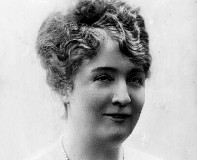
Henriette Caillaux
Murderer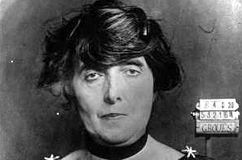 Madame Bessarabo
Murderer · France · 1920
Madame Bessarabo was tried for murder after the death of Paul Jacques and later…
1 victim
Madame Bessarabo
Murderer · France · 1920
Madame Bessarabo was tried for murder after the death of Paul Jacques and later…
1 victim
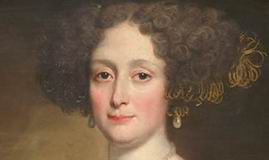 The Marquise de Brinvilliers
Murderer · France · 1664
Marie-Madeleine-Marguerite d'Aubray, Marquise de Brinvilliers (c. 1630–1676) wa…
54 victims
The Marquise de Brinvilliers
Murderer · France · 1664
Marie-Madeleine-Marguerite d'Aubray, Marquise de Brinvilliers (c. 1630–1676) wa…
54 victims
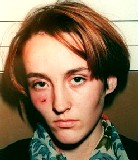 Florence Rey
Murderer · France · 1994
Florence Rey was born August 25, 1975. She was 19 years old at the time of the…
4 victims
Florence Rey
Murderer · France · 1994
Florence Rey was born August 25, 1975. She was 19 years old at the time of the…
4 victims
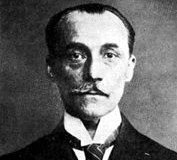 Henri Girard
Murderer · France · 1912
Henri Girard Henri Girard was a French killer-for-profit. He insured his victim…
2 victims
Henri Girard
Murderer · France · 1912
Henri Girard Henri Girard was a French killer-for-profit. He insured his victim…
2 victims
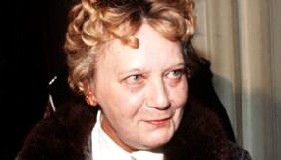 Simone Weber
Murderer · France · 1980
Simone Weber was 60 years old at trial. She was described as “round and dowdy”…
2 victims
Simone Weber
Murderer · France · 1980
Simone Weber was 60 years old at trial. She was described as “round and dowdy”…
2 victims
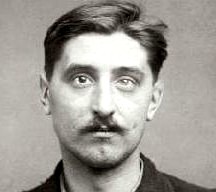 Albert Soleilland
Murderer · France · 1907
Albert Soleilland was sentenced to death on July 24, 1907 for a homicide involv…
1 victim
Albert Soleilland
Murderer · France · 1907
Albert Soleilland was sentenced to death on July 24, 1907 for a homicide involv…
1 victim
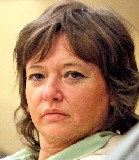 Shawna Forde
Murderer · USA · 2009
Shawna Forde was sentenced to death on February 22, 2011. She was convicted of…
2 victims
Shawna Forde
Murderer · USA · 2009
Shawna Forde was sentenced to death on February 22, 2011. She was convicted of…
2 victims
 Tamara Samsonova
Serial killer · Russia · 1995
Tamara Samsonova (Russian: Тамара Самсонова; born 5 February 1947) was a Russia…
11 victims
Tamara Samsonova
Serial killer · Russia · 1995
Tamara Samsonova (Russian: Тамара Самсонова; born 5 February 1947) was a Russia…
11 victims
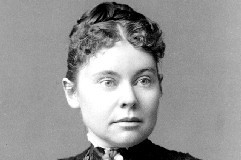 Lizzie Borden
Murderer? · USA · 1892
Lizzie Andrew Borden (July 19, 1860 – June 1, 1927) was an American woman who w…
2 victims
Lizzie Borden
Murderer? · USA · 1892
Lizzie Andrew Borden (July 19, 1860 – June 1, 1927) was an American woman who w…
2 victims
 Paul Culshaw
Murderer · United Kingdom · 2004
Paul Culshaw (born 1969) was a British convicted murderer and sex offender. He…
1 victim
Paul Culshaw
Murderer · United Kingdom · 2004
Paul Culshaw (born 1969) was a British convicted murderer and sex offender. He…
1 victim
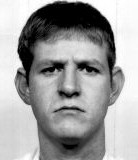 William Kitchens
Murderer · USA · 1986
William Joseph Kitchens was convicted of the capital murder of Patricia Webb an…
1 victim
William Kitchens
Murderer · USA · 1986
William Joseph Kitchens was convicted of the capital murder of Patricia Webb an…
1 victim
 Crystal Wagner
Murderer · USA · 2005
Crystal Mae Wagner (also referred to as Crystal Wagner), 29, was accused of kil…
1 victim
Crystal Wagner
Murderer · USA · 2005
Crystal Mae Wagner (also referred to as Crystal Wagner), 29, was accused of kil…
1 victim
- Gender
- female
- Country
- France
- Location
- Paris, France
- Date of birth
- December 6, 1874
- Age at first offence
- 40
- Characteristics
- murder for hire, rape, rapist, convicted rapist, attempted rape, arson, arsonist, bank robbery, burglary, robbery, kidnapping, kidnappings, torture, domestic violence, domestic dispute, disputes, argument, arguments, drunken rage, drug addict, drugs, drug dealer, heroin addict, hate crime, escape, escape attempt, abduction, abuse, abuser, serial rapist, spree killer, child abuse, child killer, child molester, necrophilia, sex with corpse, cannibalism, decapitation, dismemberment, evisceration, mutilation, mutilator, beheading, carjacking, truck driver, taxi driver, homeless, fugitive, former mental patient, mentally ill, mentally retarded, love triangle, inheritance, jealousy, jealous rage, retaliation, revenge, stalker, angel of death, paedophile, pedophile, incest, infanticide, parricide, financial gain, attempt to collect insurance money, to avoid arrest, to collect insurance money, to inherit
- Victim profile
- Gaston Calmette, 55 (editor of Le Figaro)
- Method of murder
- Shooting
- Date(s) of murder
- March 16, 1914
- Years active
- 1914
- Date of arrest
- Same day
- Status
-
Acquitted / overturned
Acquitted on July 28, 1914
Case record: Henriette Caillaux
Henriette Caillaux was the wife of France's minister of finance, Joseph Caillaux.
Background
Henriette Caillaux (1874-1943) was a Parisian socialite. She had been born Henriette Raynouard.
Henriette Caillaux had an affair with Joseph Caillaux while he was still married. Joseph Caillaux later divorced and Henriette Caillaux and Joseph Caillaux married.
While Joseph Caillaux served as Minister of Finance in France, he came under bitter attack from political foes. During this period, newspapers took political sides. Gaston Calmette (1858-1914), the editor of the Le Figaro newspaper, had been a severe critic.
A letter that belonged to Joseph Caillaux was received by Calmette. Journalistic etiquette at the time dictated that the letter should not be published. The letter appeared to suggest that improprieties had been committed by Caillaux. In it, Caillaux appeared to admit that he had orchestrated the rejection of a tax bill while publicly pretending to support its passage.
Calmette proceeded to publish the letter while Joseph Caillaux, in his capacity as Minister of Finance, was trying to get an income tax bill passed by the French Senate.
The publication tarnished Joseph Caillaux's reputation, caused political upheaval, and led to public attention.
Madame Caillaux believed that defending Joseph Caillaux's reputation required challenging Calmette to a duel. She believed that doing so would destroy her and Joseph Caillaux.
The offence
On March 16, 1914, Henriette Caillaux walked to the newspaper's offices where she confronted the editor, Gaston Calmette.
After a few words, she pulled out a pistol and fired several shots point-blank into Calmette's chest, killing him instantly.
Investigation
Late in the evening on March 16, 1914, six shots rang out from the office of Gaston Calmette, editor of Le Figaro.
Adrien Cirac, an office aide, was the first to rush into the editor's office. He found Henriette Caillaux, the wife of France's minister of finance, Joseph Caillaux, standing in front of a bookcase with her right hand still raised holding a Browning 6 mm aimed at the slumped figure of Gaston Calmette.
Moments earlier, Adrien Cirac had led Henriette Caillaux into the office. Calmette received her, saying, "it's a woman…I cannot refuse to receive a woman."
Calmette had reached the apex of a three month long slanderous campaign leveled against Mme. Caillaux's husband three days prior to her visit. On March 13, Calmette had printed an embarrassingly intimate letter Joseph Caillaux had written thirteen years earlier to Berthe Gueydan, the mistress who later became his first wife.
The publication of the letter, nicknamed Ton Jo for the sentimental valediction, publicized an affair and exposed Caillaux's suspect political dealings.
Henriette Caillaux later claimed that the personal attack and the perceived threat of the publication of her own scandalous lettres intimes from Joseph drove her to Calmette's offices, where she committed the murder.
As the police arrived to take Mme. Caillaux to the Saint-Lazare Women's Prison, she calmly explained, "since there is no more justice in France…I resolved that I alone would be able to stop this campaign." The campaign referred to the alleged slander published by Calmette.
Arrest
Mme. Caillaux was taken to the Saint-Lazare Women's Prison by police arriving after Calmette's death.
Trial
Henriette Caillaux appeared in the cour d'assises in Paris on July 21, 1914, after a three month long pre-trial investigation.
Her trial occurred just three weeks after the assassination of Archduke Franz Ferdinand and his wife, Sophie, in Sarajevo.
The trial dominated Paris newspapers. It spanned nine days, during which Paris newspapers printed little other than news of the unfolding drama in court.
The accused were Henriette Caillaux, Joseph Caillaux, and the case included testimony from Berthe Gueydan, Joseph Caillaux's first wife.
The trial was conducted by two of France's leading lawyers. Fernand Labori represented the defense, and Charles Chenu represented the prosecution. Both lawyers had served as counsel in the trial of Captain Alfred Dreyfus.
The trial included testimony by Berthe Gueydan, who exposed private details of the scandalous start to the Caillaux couple's adulterous relationship.
Throughout the nine day trial, these participants took center stage in a court case dominated by emotion, romance, hot-tempers, and secret political dealings.
A violent altercation occurred between the Calmette-supporter Henry Bernstein, the famed playwright, and Joseph Caillaux. It resulted in the trial's temporary suspension.
Henriette Caillaux took the stand for the judge's inquiry. The judge began by asking Mme. Caillaux about the circumstances surrounding her divorce.
In response, Henriette Caillaux stated: "I was raised like all the other young girls of my time… I never left my parents until the day of my marriage."
She then stated that soon after her first marriage, which took place when she was only nineteen years old, "bad feelings unexpectedly arose…our characters did not complement one another; on several occasions, I was at the point of breaking off the union, but I had two children, two girls, and for them I waited."
On the witness stand, Joseph Caillaux's first wife, Berthe Gueydan, was a major witness. Her testimony and custody of lettres intimes affected Labori's decisions during the trial.
On the sixth day of the trial, M. Labori stood before the courtroom overflowing with reporters and spectators and began to read aloud the notorious lettres intimes. Le Matin described Henriette as she entered the court that morning as "more pale than ever and, already, giving signs of extreme distress."
Despite an effort "almost super human effort…not to give vent to her feelings and scream," Mme. Caillaux fainted as M. Labori finished his readings, having experienced what Le Petit Parisian termed, "an attack of nerves." The trial was suspended until Henriette Caillaux could return, and reports said she was "frightfully pale," and "a helpless, semi-inanimate form" for the remainder of the hearings.
Le Figaro dismissed the hype surrounding the letters, claiming that they contained "nothing. Absolutely nothing" and asserting that "the letters were an alibi for her."
Le Figaro implied that Henriette hid behind a feminine disguise to appear as an adherent of social rules that permitted women to have private love affairs when trapped in an unhappy marriage, as long as they guarded against their public exposure.
Letters and theatre-like coverage
On March 16, 1914, the trial and coverage were framed by publication details and media attention.
The episode was described as a crime of passion. Henriette Caillaux did not deny that she committed the deed.
The narrative also included a depiction of Henriette Caillaux being ushered into the office of Gaston Calmette on March 16, 1914, at 6 o'clock in the evening. In that description, she wore a fur coat over a gown and had a Browning automatic in her fist. The account stated: "Before Calmette could speak she asked, 'You know why I have come?' 'Not at all, Madame,' responded the editor, charming to the end. Without another word, Henriette pulled her right hand from the mass of fur protecting it. In her fist was a small weapon, a Browning automatic. Six shots went off in rapid succession, and Calmette fell to the floor clutching his abdomen. Figaro workers from the surrounding offices rushed in and seized Mme. Caillaux. . . . 'Do not touch me,' she ordered her captors. 'Je suis une dame!'"
The account further described her as having walked out free after a seven-day trial in the Cour d'Assises in Paris and that the all-male jury decided the homicide was committed without premeditation or criminal intent in less than an hour of deliberations.
Verdict
The jury returned a verdict of not guilty after less than an hour of deliberation.
Sentencing
No sentencing details were recorded because the jury returned not guilty.
Outcome
Henriette Caillaux was acquitted on July 28, 1914.
Other details
Henriette Caillaux's defense was associated with prominent attorney Fernand-Gustave-Gaston Labori (1860-1917). It was argued that her crime was not a premeditated act but a crime of passion.
A 1985 made-for French television movie called "L'Affaire Caillaux" recounted the event.
A 1992 book titled The Trial of Madame Caillaux by American history professor Edward Berenson recounted the event.
The narrative also included further contextual material about divorce, feminism, nationalism, and press coverage, including multiple quotations from Henriette Caillaux and reported press characterizations, but these did not alter the acquittal status.
The trial coverage included headlines and section titles that quoted Henriette Caillaux, including:
- "I feared the publication of the lettres intimes, I feared for my husband, for myself, for my daughter."
- "it was all flaunted, my intimacy, my most dear secret, but also the most hidden, my womanly honor was made bare."
The trial coverage included a section title: "The 'Ton Jo' letter was a private letter" and the quotation: "it is well evident that in publishing the 'Ton Jo' letter, M. Calmette entered into the private life of the Minister, but in short he also entered into the private life of a woman, the recipient of this letter."
The narrative included the claim that Le Figaro captioned Henriette Caillaux's testimony with: "I did not yet know if I would be going to a tea or to Le Figaro ."
It also included the quotation used in a caption: "my father put me in the habit of always carrying a little revolver in delicate situations."
The narrative included reported descriptions of headlines and characterizations, including references to Henriette Caillaux fainting and the trial being suspended, as well as descriptions of journalistic coverage and competing newspaper biases.
Other named participants included Joseph Caillaux, Gaston Calmette, Adrien Cirac, Fernand Labori, Charles Chenu, Henry Bernstein, and Berthe Gueydan.
Other named publications included Le Figaro, Le Matin, Le Petit Journal, Le Petit Parisien, L'Echo de Paris, and The New York Herald.

Spotted an error, or have more information about this case?