
John Louis Evans
Murderer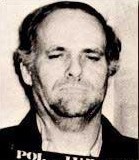 Ervil LeBaron
Murderer · USA · 1972
Ervil Morrell LeBaron (1925 to August 16, 1981) was the leader of a polygamous…
35 victims
Ervil LeBaron
Murderer · USA · 1972
Ervil Morrell LeBaron (1925 to August 16, 1981) was the leader of a polygamous…
35 victims
 Brian Kevin Rosenfeld
Murderer · USA · 1985
Brian Kevin Rosenfeld Brian Kevin Rosenfeld was sentenced to three concurrent l…
23 victims
Brian Kevin Rosenfeld
Murderer · USA · 1985
Brian Kevin Rosenfeld Brian Kevin Rosenfeld was sentenced to three concurrent l…
23 victims
 Marvin Gray
Murderer · USA · 1975
Marvin Gray was convicted killer who claimed responsibility for 23 slayings and…
23 victims
Marvin Gray
Murderer · USA · 1975
Marvin Gray was convicted killer who claimed responsibility for 23 slayings and…
23 victims
 Yahweh ben Yahweh
Murderer · USA · 1980
Yahweh ben Yahweh was born and legally named Hulon Mitchell Jr. (October 27, 19…
23 victims
Yahweh ben Yahweh
Murderer · USA · 1980
Yahweh ben Yahweh was born and legally named Hulon Mitchell Jr. (October 27, 19…
23 victims
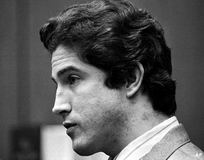 Kenneth Bianchi
Serial killer · USA · 1977
Kenneth Alessio Bianchi (born May 22, 1951) was an American serial killer. He a…
12 victims
Kenneth Bianchi
Serial killer · USA · 1977
Kenneth Alessio Bianchi (born May 22, 1951) was an American serial killer. He a…
12 victims
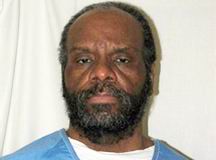 Albert G. Brown
Murderer · USA · 1980
Albert Greenwood Brown, Jr. (born August 18, 1954) Albert Greenwood Brown, Jr.…
1 victim
Albert G. Brown
Murderer · USA · 1980
Albert Greenwood Brown, Jr. (born August 18, 1954) Albert Greenwood Brown, Jr.…
1 victim
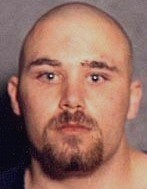 Zane Michael Floyd
Mass murderer · USA · 1999
Zane Michael Floyd (born 1976) had attended high school, enlisted in the United…
4 victims
Zane Michael Floyd
Mass murderer · USA · 1999
Zane Michael Floyd (born 1976) had attended high school, enlisted in the United…
4 victims
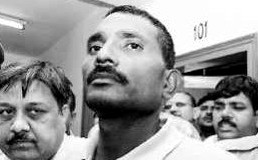 Chandrakant Jha
Serial killer · India · 1998
Chandrakant Jha functioned as a serial killer. He was said to help young men—us…
7 victims
Chandrakant Jha
Serial killer · India · 1998
Chandrakant Jha functioned as a serial killer. He was said to help young men—us…
7 victims
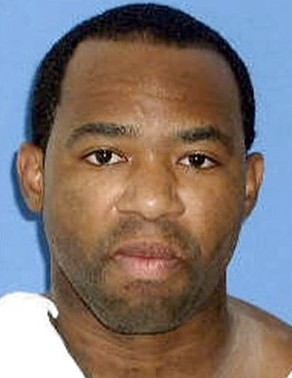 Tommie Collins Hughes
Murderer · USA · 1997
Tommie Collins Hughes was convicted of capital murder for the robbery-related s…
2 victims
Tommie Collins Hughes
Murderer · USA · 1997
Tommie Collins Hughes was convicted of capital murder for the robbery-related s…
2 victims
 Shajia Ayobi
Murderer · USA · 2011
Shajia Ayobi was married to Ghulam Ayobi in an arranged marriage in 1993. She s…
1 victim
Shajia Ayobi
Murderer · USA · 2011
Shajia Ayobi was married to Ghulam Ayobi in an arranged marriage in 1993. She s…
1 victim
- Gender
- male
- Country
- USA
- Location
- Mobile County, Alabama, USA
- Date of birth
- January 4, 1950
- Age at first offence
- 27
- Characteristics
- armed robbery, kidnappings, rape, torture
- Victim profile
- Edward Nassar ( pawn shop owner )
- Method of murder
- Shooting
- Date(s) of murder
- January 5, 1977
- Years active
- 1977
- Date of arrest
- March 7, 1977
- Status
-
Executed
Executed by electrocution in Alabama on April 22, 1983
Case details
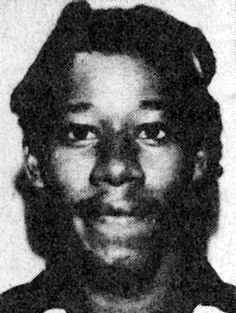
John Louis Evans III was born on January 4, 1950, in Beaumont, Texas. He was executed by electrocution in Alabama on April 22, 1983.
Timeline
- April 26, 1977 — John Louis Evans III was tried in State Circuit Court in Mobile, Alabama for first-degree murder committed during commission of a robbery; he was sentenced to death.
- November 1978 — A petition for a writ of certiorari seeking review of the sentence imposed was filed in the United States Supreme Court.
- February 3, 1979 — Evans’ counsel filed a formal request for withdrawal of the petition for writ of certiorari.
- February 21, 1979 — Both the petition for withdrawal and the petition for writ of certiorari were denied by the United States Supreme Court; the Supreme Court of Alabama set an execution date of April 6, 1979.
- April 2, 1979 — Evans’s mother, Betty Evans, acting as “next friend,” filed a petition for a writ of habeas corpus in the United States District Court for the Southern District of Alabama.
- April 3, 1979 — The District Court heard oral argument and dismissed the habeas corpus petition, dismissing the action and denying a stay.
- April 4, 1979 — Betty Evans moved for a stay of execution in the Court of Appeals for the Fifth Circuit.
- April 5, 1979 — Justice REHNQUIST issued an opinion as Circuit Justice addressing the application for stay; the application for a stay was granted on specified terms pending further consideration.
- April 6, 1979 — The execution was ordered to proceed at 12:01 a.m. Central Standard Time pursuant to the stay terms, pending further consideration.
- April 21, 1983 — Justice POWELL issued an order as Circuit Justice addressing an application for a stay of execution; a petition for a writ of certiorari to the Alabama Supreme Court had been filed on April 19, 1983.
- April 22, 1983 — Evans was executed by electrocution.
Background
Evans was described as the first inmate executed by the State of Alabama after the United States reinstituted the death penalty in 1976. His execution manner was frequently cited by opponents of capital punishment.
After his 1976 parole from an Indiana prison, Evans and fellow convict Wayne Ritter embarked on a two-month long crime spree. By Evans’s own admission, the spree involved over thirty armed robberies, nine kidnappings, and two extortion schemes across seven states.
The offence
On January 5, 1977, Evans and Ritter robbed and killed Edward Nassar, a pawn shop owner in Mobile, Alabama, while his two young daughters were in the store.
During the trial in Mobile, Alabama, Evans admitted his crime. He stated that he did not feel remorse and that under the same circumstances he would kill again. Evans threatened that if the jury did not sentence him to death, he would escape and murder each of them.
Investigation and evidence
FBI agents captured the perpetrators on March 7 in Little Rock, Arkansas. Evidence recovered included the gun used to shoot Nassar in the back and another gun stolen from the pawn shop.
Trial
Evans was tried in State Circuit Court in Mobile, Alabama on April 26, 1977 for first-degree murder committed during commission of a robbery.
Evans again admitted his crime during trial testimony. He requested that the jury find him guilty so he could receive the death penalty. He did not contest his guilt at trial. He also made statements that he did not feel remorse and that he would kill again under the same circumstances.
During the trial, the jury was instructed to consider all the evidence and to return a verdict of guilty only if the prosecutors had left no reasonable doubt.
The jury convicted Evans of the capital offense charged and imposed the death penalty after less than fifteen minutes of deliberation.
Sentencing
The trial court sentenced Evans to death.
Under Alabama law, all capital sentences had to be affirmed by review in higher court. Evans’s death sentence was confirmed by the Alabama Court of Criminal Appeals and by the Alabama State Supreme Court.
The Alabama State Supreme Court set an execution date of April 6, 1979.
Appeals
Alabama appellate review
Evans’s conviction and sentence were affirmed by the Alabama Court of Criminal Appeals and by the Alabama Supreme Court. Rehearing was denied by the Alabama Supreme Court.
U.S. Supreme Court certiorari and related decisions
With approval, a petition for writ of certiorari seeking review of the sentence imposed was filed in the United States Supreme Court in November 1978. On February 21, 1979, the United States Supreme Court denied the petition for withdrawal and the petition for writ of certiorari.
In 1982, the United States Supreme Court granted the State’s petition for a writ of certiorari, reversing the judgment of the Court of Appeals and returning the matter for consideration of the constitutionality of Evans’s sentence. This was accompanied by an opinion “concurring in part and dissenting in part” by William J. Brennan and Thurgood Marshall, who accepted the argument of the State of Alabama on the matter in question while holding that capital punishment itself was “cruel and unusual punishment” prohibited by the 8th and 14th amendments.
In July 1982, Evans fired his lawyers and filed a motion to dismiss all further appeals. The Court of Appeals accepted the motion on October 19, 1982.
In April 1983, Justice POWELL described that Evans’s conviction and sentence had been reviewed through multiple state and federal proceedings, including a Fifth Circuit decision and subsequent United States Supreme Court action that reinstated his conviction while leaving decisions on capital-sentencing procedures to be decided on remand.
Habeas corpus proceedings (Betty Evans as “next friend”)
On April 2, 1979, Betty Evans filed a petition for a writ of habeas corpus in the United States District Court for the Southern District of Alabama. The petition sought a finding that Evans’s conviction was unconstitutional because consideration of lesser included offenses was not offered to the jury.
The District Court dismissed the petition on the grounds that Betty Evans was not entitled to act as “next friend” and that the court lacked jurisdiction; it dismissed the action and denied a stay. A certificate of probable cause was issued after a timely notice of appeal.
The Court of Appeals for the Fifth Circuit denied a stay, stating: “A majority of the Court concludes that a factual issue justifying standing in a next friend has not been made. Judge Hill would grant the stay in order to ascertain whether or not a mental deficiency short of incompetency would authorize proceedings by a next friend.”
Justice REHNQUIST, acting as Circuit Justice, granted a stay of the execution ordered by the Supreme Court of Alabama to be carried out at 12:01 a.m. on April 6, 1979, pending further consideration. Justice REHNQUIST ordered submissions by 12 noon, e.s.t., on Tuesday, April 10, 1979, with the stay expiring at 5 p.m., e.s.t., on Friday, April 13, 1979 unless otherwise ordered.
Justice REHNQUIST described the District Court’s language as follows: “Having concluded that next friend applications are permissible in habeas corpus cases, it remains for the Court to determine whether this is such a case that a next friend petition ought to be allowed. Both Funaro [United States ex rel. Funaro v. Watchorn, 164 F.152 (CA2 1908)] and Preiser [United States ex rel. Sero v. Preiser, 506 F.2d 1115 (CA2 1974)] limited the use of such applications to incidents of infancy, incompetency, or lack of time, and the Court is unpersuaded that any other grounds are permissible. In the instant case the inmate is over the age of majority and adequate time exists for him to verify his own petition, so the petitioner must fail unless the inmate is incompetent. The only evidence presented to the Court in support of John Evans' incompetency is a sworn affidavit of a staff psychiatrist at the Mobile Mental Health Center. The psychiatrist, who has not personally interviewed or otherwise examined John Evans, concludes from conversations with other individuals that John Evans is 'not able to deal rationally with his situation and . . . probably need[ s] someone else to make legal decisions affecting his life for him.' The affidavit further reveals that the doctor tried to arrange an interview between John Evans, himself, and a psychologist, but Evans refused to be evaluated. The evidence in rebuttal to the allegation of incompetency is quite strong. John Evans was evaluated prior to his murder trial and was determined fit to stand trial, and there is no indication of any intervening physical or mental disability arising between the time of trial and the filing of the petition in the instant case. Clearly one who is competent to stand trial is competent to make decisions as to the course of his future. At no time prior to the filing of this petition, as far as the Court can ascertain, has John Evans' competency been questioned. The fact that Evans has elected not to pursue postconviction remedies that would serve to forestall the impending execution is not controlling, since it may well be, as the media has advertised, that John Evans has confronted his option of life imprisonment or death by execution and has elected to place his debts on a new existence in some world beyond this. The Court finds no evidence of irrationality in this; indeed, in view of the allegations in the case of Jacobs v. Locke, the death row conditions of confinement case presently pending in this Court, it may well be that John Evans has made the more rational choice. In any event, this Court is not persuaded that John Evans is incompetent merely from a professional opinion rendered on hearsay information.”
Justice REHNQUIST also described the District Court’s discussion of the argument about hearsay and Evans refusing evaluation: “The criticism of the trial judge that the affidavit is based on hearsay is due solely to the fact that John Louis Evans refused to see the psychiatrist. Clearly Evans should not be allowed to control his mother's standing to raise issues on his behalf.”
Justice REHNQUIST included discussion of a dissent and referenced Gilmore v. Utah, including:
- “The most closely analogous case to come before us in this posture is that of Gilmore v. Utah”
- “Were this a case involving an issue other than the death penalty, I think I would be justified in concluding that because the Alabama Court of Criminal Appeals and the Alabama Supreme Court have fully reviewed Evans' conviction and sentence, the same considerations which led four Members of this Court to disagree with our denial of a stay of execution in Gilmore's case would not necessarily lead all of them to do so here.”
Execution
Evans was executed at Holman Prison, near Atmore, Alabama, on April 22, 1983.
The means of carrying out the sentence was an electric chair constructed by an inmate in 1927. The chair was nicknamed “Yellow Mama” because of its traffic-yellow coat of paint. It had not been used since 1965.
A description of the electrocution was sworn by Russell F. Canan on June 22, 1983. Russell F. Canan’s description stated: “At 8:30 p.m. the first jolt of 1900 volts of electricity passed through Mr. Evans's body. It lasted thirty seconds. Sparks and flames erupted from the electrode tied to Mr. Evans's left leg. His body slammed against the straps holding him in the electric chair and his fist clenched permanently. The electrode apparently burst from the strap holding it in place. A large puff of greyish smoke and sparks poured out from under the hood that covered Mr. Evans's face. An overpowering stench of burnt flesh and clothing began pervading the witness room. Two doctors examined Mr. Evans and declared that he was not dead. " “The electrode on the left leg was refastened. At 8:30 p.m. [ sic ] Mr. Evans was administered a second thirty second jolt of electricity. The stench of burning flesh was nauseating. More smoke emanated from his leg and head. Again, the doctors examined Mr. Evans. The doctors reported that his heart was still beating, and that he was still alive. " “At that time, I asked the prison commissioner, who was communicating on an open telephone line to Governor George Wallace to grant clemency on the grounds that Mr. Evans was being subjected to cruel and unusual punishment. The request for clemency was denied. " “At 8:40 p.m., a third charge of electricity, thirty seconds in duration, was passed through Mr. Evans's body. At 8:44, the doctors pronounced him dead. The execution of John Evans took fourteen minutes.”
Other legal proceedings and references included in the record
The record included citations to U.S. Supreme Court references: EVANS v. BENNETT , 440 U.S. 1301 (1979), and EVANS v. ALABAMA , 461 U.S. 1301 (1983). It also referenced Glass v. Louisiana, 471 U.S. 1080, 1091-92 (1985).
The record included references to United States Supreme Court and U.S. Court of Appeals matters involving Evans, including discussion of Beck v. Alabama, including an analysis that “Obviously we cannot conclude that Evans' trial under an unconstitutional statute was harmless beyond a reasonable doubt. Chapman v. California, 386 U.S. 18, 24, 87 S.Ct. 824, 828, 17 L.Ed.2d 705 (1967).”
The record also included U.S. Supreme Court proceedings describing a denial of an application for stay and a vacating of a temporary stay, including:
- “the application of the State of Alabama to dissolve and vacate the stay ordered by the United States District Court is granted”
- and dissents referencing “human lives to be snuffed out” and the need to be “sure—emphatically sure—that we act within the law.”
Other details
Evans’s execution was described as notable for its imprecision.
Evans’s accomplice Wayne Ritter was executed on August 28, 1987.
Shortly before his execution, Evans was featured in an After School Special called “Dead Wrong” in which he shared his life story with young people and pleaded for them not to make the mistakes he did that led to the electric chair.
Evans was described as refusing to undertake further appeals after dismissing his lawyers and filing a motion to dismiss all further appeals.
A jury convicted Evans of first-degree murder committed during the commission of a robbery after less than fifteen minutes of deliberation. The jury instruction required conviction only if prosecutors had left no reasonable doubt.
The trial court found that Evans “knowingly created a great risk of death to many persons,” and the trial court referenced Evans’s testimony involving “thirty armed robberies and nine kidnappings with [co-defendant] Mr. Ritter” and claims of involvement “in approximately 250 armed robberies prior to associating with Mr. Ritter.”
People
- John Louis Evans III — defendant; convicted of capital murder; sentenced to death; executed.
- Wayne Ritter — fellow convict and accomplice; executed on August 28, 1987; involved in the crime spree; codefendant in Evans’s case.
- Edward Nassar — victim; pawn shop owner in Mobile, Alabama; killed on January 5, 1977.
- Betty Evans — mother of John Louis Evans III; filed habeas corpus as “next friend.”
- Russell F. Canan — witness who gave a sworn description of the electrocution on June 22, 1983.
- Governor George Wallace — person connected by open telephone line referenced during the execution clemency request.
- Larry Bennett — referenced in proceedings as Commissioner, Alabama Correctional System.
- Joseph Oliver — referenced in proceedings as Warden, Holman Unit / Holman Prison.
Spotted an error, or have more information about this case?