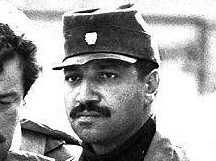
George Emil Banks
Mass murderer Julio Gonzalez
Mass murderer · USA · 1990
Julio Gonzalez was sentenced to 174 twenty-five-year sentences (a total of 4,35…
87 victims
Julio Gonzalez
Mass murderer · USA · 1990
Julio Gonzalez was sentenced to 174 twenty-five-year sentences (a total of 4,35…
87 victims
 David Burke
Mass murderer · USA · 1987
David Augustus Burke (May 18, 1952–December 7, 1987) was an employee of USAir,…
43 victims
David Burke
Mass murderer · USA · 1987
David Augustus Burke (May 18, 1952–December 7, 1987) was an employee of USAir,…
43 victims
 George Jo Hennard
Mass murderer · USA · 1991
George Jo Hennard carried out a mass killing at a Luby’s Cafeteria in Killeen,…
23 victims
George Jo Hennard
Mass murderer · USA · 1991
George Jo Hennard carried out a mass killing at a Luby’s Cafeteria in Killeen,…
23 victims
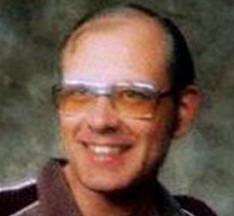 James Huberty
Mass murderer · USA · 1984
James Oliver Huberty was a 41-year-old unemployed security guard. He was born i…
21 victims
James Huberty
Mass murderer · USA · 1984
James Oliver Huberty was a 41-year-old unemployed security guard. He was born i…
21 victims
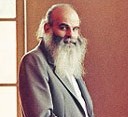 Ronald Gene Simmons
Mass murderer · USA · 1987
Ronald Gene Simmons was a retired United States Air Force sergeant. Over the Ch…
16 victims
Ronald Gene Simmons
Mass murderer · USA · 1987
Ronald Gene Simmons was a retired United States Air Force sergeant. Over the Ch…
16 victims
 Diego Santoy
Murderer · Mexico · 2006
Diego Santoy Riveroll was a Mexican university student who was accused of stabb…
2 victims
Diego Santoy
Murderer · Mexico · 2006
Diego Santoy Riveroll was a Mexican university student who was accused of stabb…
2 victims
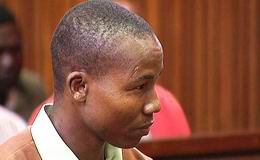 Petrus Madiba
Spree killer · South Africa · 2012
Petrus Madiba was a 29-year-old farmworker who was described as a serial killer…
9 victims
Petrus Madiba
Spree killer · South Africa · 2012
Petrus Madiba was a 29-year-old farmworker who was described as a serial killer…
9 victims
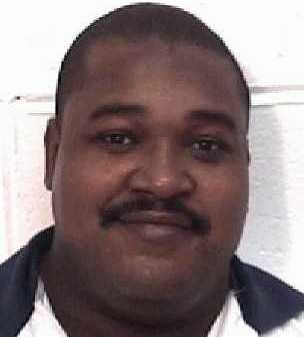 Daniel Greene
Murderer · USA · 1991
Daniel Greene was sentenced to death on December 14, 1992. He committed a viole…
1 victim
Daniel Greene
Murderer · USA · 1991
Daniel Greene was sentenced to death on December 14, 1992. He committed a viole…
1 victim
 James Daniel Simpson
Mass murderer · USA · 1995
James Daniel Simpson was a former employee of the Walter Rossler Company, a ref…
5 victims
James Daniel Simpson
Mass murderer · USA · 1995
James Daniel Simpson was a former employee of the Walter Rossler Company, a ref…
5 victims
- Gender
- male
- Country
- USA
- Location
- Wilkes-Barre City and Jenkins Township, Pennsylvania, USA
- Date of birth
- J une 22, 1942
- Age at first offence
- 40
- Characteristics
- former mental patient, abuse, alcohol, white supremacist
- Victim profile
- Sharon Mazzillo (24) / Kissmayu Banks (5) / Scott Mazzillo (7) / Alice Mazzillo (47) / Regina Clemens (29) / Montanzima Banks (6) / Susan Yuhas (23) / Boende Banks (4) / Mauritania Banks (20 months) / Dorothy Lyons (29) / Nancy Lyons (11) / Foraroude Banks (1) / Raymond F. Hall Jr. (24)
- Method of murder
- Shooting (AR-15 semi-automatic rifle)
- Date(s) of murder
- September 25, 1982
- Years active
- 1982
- Date of arrest
- Same day
- Status
-
Executed
Sentenced to 12 death sentences and one life sentence on June 22, 1983; Declared incompetent to be executed on May 12, 2010
Case details
George Emil Banks was an American mass murderer and a former Camp Hill prison guard. He was sentenced to 12 death sentences and one life sentence on June 22, 1983. He was later declared incompetent to be executed on May 12, 2010.
Banks killed 13 people in the Wilkes-Barre area, including five of his own children, in Jenkins Township and Wilkes-Barre, Pennsylvania. He surrendered to police who had surrounded him in a vacant house.
Banks used an AR-15 semiautomatic rifle during the killings. After his conviction, Banks tried to kill himself four times and went on hunger strikes that required him to be force fed. A psychiatric report said Banks believed he was in a spiritual fight with an Antichrist in New York, believed Pennsylvania was controlled by the Islamic religion, and believed he had engaged in a “private war with President Clinton and Monica Lewinsky”. Banks also threatened suicide repeatedly and was described as having developed a persecution complex with paranoid delusions.
Banks said he killed his children because he felt they would be tormented by the cruelty of racial views against mixed race children.
Timeline
- September 25, 1982 — Banks killed 13 people, including five of his children, in Wilkes-Barre City and Jenkins Township, Pennsylvania.
- December 9, 1982 — Banks pleaded not guilty to 13 counts of criminal homicide.
- March 1983 — A three-day hearing resulted in Banks being ruled mentally competent to stand trial.
- June 6, 1983 — Trial began at the Luzerne County Courthouse in Wilkes-Barre, Pennsylvania.
- June 21, 1983 — Closing arguments took place.
- June 22, 1983 — Banks received 12 death sentences and one life sentence; the jury recommended the death penalty on Banks’ 41st birthday.
- November 1985 — After Banks’ county-level appeals were exhausted, a judge formally imposed the death penalties.
- February 1987 — State Supreme Court upholds the verdicts.
- October 1987 — U.S. Supreme Court declines to take up the case.
- February 1996 — Gov. Tom Ridge signed Banks’ death warrant; a stay later followed.
- August 1997 — An appeal was argued before the U.S. Court of Appeals for the Third Circuit.
- March 1999 — Gov. Tom Ridge signed another death warrant for Banks, and a federal judge issued another stay.
- October 2001 — The Third Circuit reversed the death sentences based on wording of jury instructions.
- May 2002 — Prison officials obtained a court order to force-feed Banks.
- June 2002 — U.S. Supreme Court sent the case back to the Third Circuit, which later upholds its previous ruling in Banks’ favor.
- June 2004 — U.S. Supreme Court rules against Banks.
- October 2004 — Gov. Rendell signs Banks’ death warrant.
- Dec. 1, 2004 — State Supreme Court halts the execution and orders a county judge to determine whether Banks is mentally competent.
- May 12, 2010 — Banks was declared incompetent to be executed by Luzerne County Judge Joseph Augello.
The offence
Early in the morning on September 25, 1982, Banks donned military-style fatigues and packed an AR-15 automatic weapon and killed 13 people in the Jenkins Township and Wilkes-Barre area.
Banks’ victims included women he lived with or had relationships with, their family members and children, and a bystander. The dead included seven children and six adults, and the killings occurred at two houses and at a mobile home in Jenkins Township.
A survivor, Keith Mazzillo (13), hid in a closet while he watched his grandmother Alice die due to a gun shot wound to the head. Another survivor, Angelo Mazzillo (10), hid under the bed where his grandmother Alice died. James Olsen (22) survived a gunshot wound to the chest. There was also an unidentified man whom Banks car jacked at gun point.
Banks’ conduct included a carjacking and the use of multiple clips and rounds of ammunition. During the standoff with police, Banks barricaded doors with furniture and kicked out a first floor bedroom window of the two-story home, and he threatened to shoot when he noticed officers’ positions.
Investigation and arrest
After the shootings, Banks changed vehicles to elude police and carjacked a motorist at gun point. He drove the motorist’s vehicle and then abandoned it.
Police coordinated a search and surrounded a vacant rental house where Banks barricaded himself. The standoff involved attempts to secure Banks’ surrender, including bringing Banks’ mother to speak to him, attempting to lure him with a false radio broadcast, and using Robert Brunson, a former co-worker and resident of Wilkes-Barre, to talk with Banks.
A fake news report was played over WILK radio that the children were alive and needed blood to survive, and this ruse convinced Banks to surrender without further incident.
During the standoff, Banks demanded that he be given a transistor radio to listen to news reports. Police brought his mother to the scene and used loudspeakers to attempt negotiation.
Verbatim exchanges during the standoff included:
“George, you’ve got to care about your kids. They need your blood to survive. Come out, George, you’ve got to take care of your children.”
Banks replied: “Banks replied that he might consider coming out but that he doubted any of the children were still alive. Just before slamming the receiver down, Banks informed Zardecki that he wanted a transistor radio so he could listen to news reports regarding the events.”
“Come out for my sake Georgie. I love you. Please son, please. None of your children is dead. Believe me.”
Banks: “I want them to kill me!”
Yelland: “No, you’ve been taking that medicine.”
Banks: “I’m tired. I want them to kill me.”
Following a radio broadcast, Dale Minnick attempted to talk Banks out of the house:
“You heard the broadcast over the radio,” Minnick conveyed to Banks over a bullhorn. “Throw out your gun and come out. We wouldn't lie to you. You can go down to the hospital and see your kids. It’s been a long day for you and us. Throw your gun out the window. You heard it on the radio, what more do you want from us?”
Robert Brunson talked to Banks near the home:
Brunson: “George, can I talk to you before you die? If you came here to die, so be it. But let me talk to you before you do it.”
Banks: “It’s a good day to die!”
Brunson: “No, there are people that care. I cared enough to come down here to talk to you.”
Banks: “No, man, they are using you.”
Brunson: “No, I want to be here. If you fire one shot, the police will shoot you, just like you or I would do if we were in the (prison) tower. Take the first step, man. I’ll be there to walk every step with you.”
Banks: “I have problems I can’t deal with. I want to be treated with dignity.”
Brunson: “George, listen man. Everybody needs a crutch sometimes. I’ll be yours. I’ll put my body between you and these men with guns. But you have to trust the man (police).”
Banks remained silent and then agreed to come out four hours after the standoff began. He smashed out a rear window and asked officers to hold their fire. He then surrendered by handing his weapon to Patrolman Donald Smith through the broken window and surrendering out the front door.
During an earlier sequence of events, Banks told his mother:
Banks: “Mom, if you don’t take me where I want to go, there will be a shootout here and you will be hurt.”
Yelland: “George, what’s wrong?”
Banks: “It’s all over, Mom. It’s all over. I did it. I killed everyone.”
Yelland: “Who did you kill, Georgie? Who did you kill?”
Banks: “I killed them all, Mom. I killed all the kids and girls. Regina, Sharon, them all.”
Yelland: “Georgie, no!”
Banks: “It’s all over, Mom. It’s all over.”
Banks also spoke by phone to Chief County Detective Jim Zardecki:
Zardecki: “They are alive, George”
Banks: “You’re lying, I know I killed them!”
Trial
Pretrial mental competency proceedings
On September 25, 1982, Banks was accused of multiple counts including murder and other offenses. A March 1983 three-day hearing resulted in Banks being ruled mentally competent to stand trial.
At trial, the defense presented mental-health evidence and raised issues concerning Banks’ competency and possible insanity. The trial court permitted an insanity defense to be asserted, and it also permitted Banks, over his counsel’s objections, to personally cross-examine and direct cross-examination, and to introduce photographs of deceased victims.
Conflicting psychiatric testimony was presented. One psychiatrist, Dr. Michael J. Spodak, testified that Banks was “terminally paranoid” and incompetent to stand trial, and described Banks as “completely irrational” and having lost touch with reality. Judge Patrick Toole ruled Banks legally competent after conflicting testimony by Dr. Robert Sadoff, who said Banks understood the nature of the charges and acted bizarrely but comprehended the charge.
Verdicts
The jury found Banks guilty of:
- 12 counts of first-degree murder
- 1 count of third-degree murder
- attempted murder
- aggravated assault
- one count each of robbery, theft, and endangering the life of another person
Banks pleaded not guilty.
Sentencing
On June 22, 1983, the jury recommended the death penalty for Banks on Banks’ 41st birthday. The sentencing resulted in:
- 12 death sentences
- one life sentence
During sentencing proceedings, the jury foreman read the verdict that Banks was to die by execution. After the jury poll, Banks blurted:
“It’s not your fault, ma’am. You were lied to. A two-hour exhumation would clear me.”
Judge Toole told Banks:
“I sincerely hope that God has touched you and hopefully God will forgive you for what you have done. From this moment on, your life is in the hands of God and the appellate courts.”
Judge Toole also stated:
“The legal journey that you embarked upon has ended. I am sure everyone present, hopefully, understands the pressure and awesome responsibility you have all shouldered.” and thanked: “Thank you.”
Appeals and execution litigation
After conviction, Banks continued to appeal his case from 1987 to 2000. The U.S. Supreme Court refused to hear the argument regarding mental competency. Pennsylvania Governor Tom Ridge twice signed the death warrant; appellate courts stayed his execution both times. In 2001, 2006 and 2008 there were hearings about Banks’ psychological state and whether he could be executed.
Events in the appellate and execution process included:
- The Third Circuit reversed the death sentences based on wording of jury instructions (October 2001).
- Prison officials obtained a court order to force-feed Banks after he went more than 16 days on inadequate food and water (May 2002).
- The U.S. Supreme Court sent the case back to the Third Circuit, which later upholds its previous ruling in Banks’ favor (June 2002).
- The U.S. Supreme Court rules against Banks (June 2004).
- Gov. Rendell signed Banks’ death warrant (October 2004).
- The State Supreme Court halted the execution and ordered a county judge to determine whether Banks was mentally competent (Dec. 1, 2004).
A Luzerne County judge declared Banks incompetent to be executed on May 12, 2010 after a week-long competency hearing held the previous month, and the judge was Joseph Augello.
Outcome
Banks remained on death row in Pennsylvania. His execution was halted and later he was declared incompetent to be executed.
Victims
Killed
- Sharon Mazzillo (24) — former girlfriend of George Banks; engaged in a custody dispute over their son Kissmayu Banks; gunshot wound to the chest.
- Kissmayu Banks (5) — son of Sharon Mazzillo and George Banks; gunshot wound to the face.
- Scott Mazzillo (7) — nephew of Sharon Mazzillo; kicked and hit with the rifle butt; killed with a gunshot wound to the face.
- Alice Mazzillo (47) — Sharon Mazzillo’s mother; shot in the face while on the phone with police.
- Regina Clemens (29) — girlfriend of George Banks; gunshot wound to the face.
- Montanzima Banks (6) — daughter of Regina Clemens and George Banks; gunshot wound to the heart.
- Susan Yuhas (23) — girlfriend of George Banks; sister of Regina Clemens; gunshot wound to the head.
- Boende Banks (4) — son of Susan Yuhas and George Banks; gunshot wound to the face.
- Mauritania Banks (20 months) — daughter of Susan Yuhas and George Banks; gunshot wound to the face.
- Dorothy Lyons (29) — girlfriend of George Banks; gunshot wound to the neck.
- Nancy Lyons (11) — daughter of Dorothy Lyons; gunshot wound to the head.
- Foraroude Banks (1) — son of Dorothy Lyons and George Banks; gunshot wound to the head.
- Raymond F. Hall Jr. (24) — bystander who had been attending a party across the street; gunshot wound to the liver and kidney.
Survived
- Keith Mazzillo (13) — hid in a closet while he watched his grandmother Alice die due to a gun shot wound to the head.
- Angelo Mazzillo (10) — hid under the bed where his grandmother Alice died.
- James Olsen (22) — survived a gun shot wound to the chest.
Other
- Unidentified man — Banks car jacked at gun point.
Other details
Prior criminal and prison background
Banks had served seven and a half years in prison for attempted robbery and later worked as a prison guard. He was employed at a state prison at Camp Hill and had not worked since Sept. 2, according to a prison spokesman.
Banks was relieved of duty as a Camp Hill State Prison guard after a conflict with a supervisor and was evaluated at a Harrisburg-area hospital for mental-health issues. A later evaluation in Luzerne County characterized Banks as “filled with hate and anger at the world in general.”
Mental health and competency issues
Banks had a history of mental-health evaluations before trial, including an evaluation by Dr. Michael J. Spodak and an opposing evaluation by Dr. Robert Sadoff.
A psychiatric report filed in the case stated:
- Banks believed he was in a spiritual fight with an Antichrist in New York.
- Banks believed Pennsylvania was controlled by the Islamic religion.
- Banks believed he engaged in a “private war with President Clinton and Monica Lewinsky”.
The decision history included the State Supreme Court ordering a hearing to determine whether Banks was competent to be executed, based on a 1986 U.S. Supreme Court decision stating it was unconstitutional to execute defendants who did not understand the proceedings. On May 12, 2010, Banks was declared incompetent to be executed by Luzerne County Judge Joseph Augello.
Self-harm and hunger strikes
Since his conviction, Banks tried to kill himself four times and went on hunger strikes that required him to be force fed. Prison officials sought a court order to force-feed him in May 2002 after he went more than 16 days on inadequate food and water.
Clothing and weapon details
Banks donned military-style fatigues. The weapon used was an AR-15 semiautomatic rifle. Officers found ammunition, including three 30-round clips and approximately 300 rounds of ammunition during an initial search of the house where Banks surrendered.
Additional quotations
“I swear on the souls of my dead children I am not responsible for the damage you see in these photographs.” — George Banks, during testimony at trial.
“My people died because I loved them,”
“It’s like something out of a horror movie,” — Robert Gillespie, Luzerne County District Attorney.
“He has graduated now. He no longer assaults with intent to kill. He kills 13 times.” — District Attorney Robert Gillespie (closing argument as described).
“He doesn’t understand he’s going to be executed,” — Michael Wiseman, a lawyer with the Defender Association of Philadelphia.
“This is what really has me mad -- I mean, it’s enough, you know? How far can they take it? These courts. I’m sort of sickened,” — Ray Hall (as quoted), whose son Raymond F. Hall Jr. was killed.
Spotted an error, or have more information about this case?