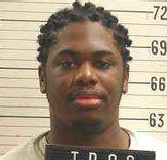
Devin Earl Banks
Murderer Robert Martines Perez
Murderer · USA · 1994
Name: Robert Martines Perez · Other name used in proceedings: Robert Martinez P…
15 victims
Robert Martines Perez
Murderer · USA · 1994
Name: Robert Martines Perez · Other name used in proceedings: Robert Martinez P…
15 victims
 Billy Frank Vickers
Murderer · USA · 1993
Billy Frank Vickers Vickers was executed by lethal injection in Texas on Januar…
14 victims
Billy Frank Vickers
Murderer · USA · 1993
Billy Frank Vickers Vickers was executed by lethal injection in Texas on Januar…
14 victims
 Timothy Titsworth
Murderer · USA · 1993
Timothy Titsworth was executed by lethal injection in Texas on June 6, 2006. ·…
1 victim
Timothy Titsworth
Murderer · USA · 1993
Timothy Titsworth was executed by lethal injection in Texas on June 6, 2006. ·…
1 victim
 Mary Winkler
Murderer · USA · 2006
Mary Carol Winkler (Mary Carol Freeman; born December 10, 1973) was an American…
1 victim
Mary Winkler
Murderer · USA · 2006
Mary Carol Winkler (Mary Carol Freeman; born December 10, 1973) was an American…
1 victim
 Gerald Albert Gallego
Murderer · USA · 1954
Gerald Albert Gallego was a cop-hating father of Gerald Armand Gallego. He murd…
2 victims
Gerald Albert Gallego
Murderer · USA · 1954
Gerald Albert Gallego was a cop-hating father of Gerald Armand Gallego. He murd…
2 victims
 Johnny Ray Conner
Murderer · USA · 1998
Johnny Ray Conner was convicted in Texas state court and sentenced to death for…
1 victim
Johnny Ray Conner
Murderer · USA · 1998
Johnny Ray Conner was convicted in Texas state court and sentenced to death for…
1 victim
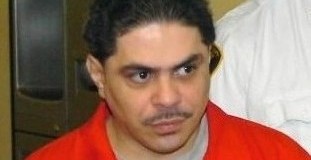 Anthony Santos
Homicide · USA · 2006
Anthony J. Santos was convicted of stabbing another man to death inside a Bethl…
1 victim
Anthony Santos
Homicide · USA · 2006
Anthony J. Santos was convicted of stabbing another man to death inside a Bethl…
1 victim
 Paul Bernardo
Serial killer · Canada · 1990
Paul Kenneth Bernardo (born August 27, 1964 in Toronto, Ontario) was a Canadian…
3 victims
Paul Bernardo
Serial killer · Canada · 1990
Paul Kenneth Bernardo (born August 27, 1964 in Toronto, Ontario) was a Canadian…
3 victims
- Gender
- male
- Country
- USA
- Location
- Shelby County, Tennessee, USA
- Date of birth
- August 2, 1983
- Age at first offence
- 19
- Characteristics
- bank robbery, robbery, abuse, domestic violence
- Victim profile
- Kadhem Al-Maily, 39
- Method of murder
- Shooting (.22 caliber pistol)
- Date(s) of murder
- September 16, 2002
- Years active
- 2002
- Date of arrest
- Same day
- Status
-
Sentenced to death
Sentenced to death on April 11, 2005
Case overview
Devin Earl Banks killed Kadhem Al-Maily and permanently disabled Hussain Altilebawi. Banks and his co-defendant, Michael Hilliard, took cash, clothing, stereo equipment, and two vehicles from the victims.
Banks shot Altilebawi four times, including three times after Altilebawi was lying in the driveway. Banks forced Al-Maily to lie face down on the bedroom floor while Banks and Hilliard loaded stolen items into cars belonging to Atilebawi. Banks then shot Al-Maily in the head execution style.
Both victims immigrated from Iraq and lived and worked in Memphis, Tennessee. They were acquainted with each other in Iraq, and became close friends in Memphis. The opinion described Al-Maily as widely known and respected among the Iraqi community in Memphis for helping persons in need and making everyone happy.
Banks and Hilliard left in the stolen cars. Altilebawi survived his wounds and was able to call for help; he told officers what had happened.
Banks was arrested driving one of the stolen vehicles. After being advised of his Miranda rights, Banks gave two confessions. In his second confession, Banks admitted shooting both victims and provided details of the crime.
The Tennessee Supreme Court upheld Banks’s convictions and death sentence on direct appeal.
Timeline
- September 12, 2002 — Banks told Michael Hilliard that he “wanted to pay [Mr. Atilebawi] back,” asked Hilliard to obtain a handgun and assist him in killing Atilebawi, and they discussed dumping Atilebawi’s body in the Wolf River to avoid detection.
- September 15, 2002 (around 11:00 p.m.) — Banks drove his white Ford Explorer to Sherry Tomason’s house to drop off her son; he later met Hilliard and proceeded to Atilebawi’s house.
- September 16, 2002 (between midnight and 2:00 a.m.) — Banks arrived at Atilebawi’s front door; Atilebawi welcomed Banks into his home. Banks stepped outside to call Hilliard using Atilebawi’s cordless telephone. As Atilebawi walked down his driveway, Banks shot him with a .22 caliber pistol; after Atilebawi fell, Banks shot him three more times.
- September 16, 2002 (around 7:00 a.m.) — Banks arranged for purchases during an early morning shopping spree after leaving the scene; he later drove the red Jeep to Ms. Tomason’s house and talked with Tomason. After dropping off Tomason’s son, Banks drove to Maco Tires and Auto Care and purchased custom rims and new tires for the Jeep for approximately $1,500.
- September 16, 2002 (approximately 7:00 a.m.) — Officer Steven Jones arrived and found Atilebawi lying in blood in the living room; Jones later discovered Al-Maily dead in the bedroom.
- September 16, 2002 (approximately 9:30 a.m.) — Sergeant Mark Miller placed Banks under arrest after locating a Jeep matching the stolen vehicle descriptions and confirming Banks was driving it.
- September 16, 2002 (1:42 p.m.) — Sergeant Miller and Lieutenant Michael Williams advised Banks of his Miranda rights; Banks signed a written waiver and gave the first of two confessions.
- September 17, 2002 — Sergeant Miller talked by phone with Winters’s girlfriend and Hilliard while confirming Winters’s alibi; Hilliard came to the police station and gave a statement regarding Winters’s whereabouts. After Banks told authorities he wanted to recant portions of his confession, Sergeant James L. Fitzpatrick obtained a second confession from Banks.
- September 17, 2002 (4:05 p.m. to 5:06 p.m.) — Fitzpatrick again informed Banks of his Miranda rights, obtained a signed written waiver, and Banks gave the second confession reduced to writing; Banks initialed each page and signed it at 5:06 p.m.
- March 2003 — A Shelby County grand jury returned a four-count indictment against Banks.
- April 7, 2003 — Banks filed a motion to require the State of Tennessee to announce whether it intended to seek the death penalty or another enhanced punishment.
- April 10, 2003 — The State announced its intention to seek the death penalty and notified Banks it intended to rely upon two aggravating circumstances.
- April 4, 2005 — Banks’s trial began.
- April 8, 2005 — The jury began its deliberations.
- April 9, 2005 — The jury returned verdicts finding Banks guilty on all four counts; the penalty phase began.
- April 11, 2005 — The jury returned its verdict; the jury sentenced Banks to death.
- July 6, 2007 — The Court of Criminal Appeals affirmed Banks’s convictions and the resulting death sentence.
- November 07, 2008 — William C. Koch, Jr., J., delivered the Tennessee Supreme Court opinion in State of Tennessee v. Devin Banks (No. W2005-02213-SC-DDT-DD).
- December 9, 2009 — The opinion stated Banks’s sentence of death shall be carried out on December 9, 2009, unless otherwise ordered by the Court or other proper authority.
- April 11, 2005 — The jury returned its verdict sentencing Banks to death (as reflected in the sentencing outcome provided).
Background
Kadhem Al-Maily and Hussain Altilebawi immigrated to the United States from Iraq and eventually settled in Memphis, Tennessee.
The opinion described:
- Al-Maily was widely known and respected among the Iraqi community in Memphis because he had a reputation of helping persons in need and of making everyone happy.
- Atilebawi worked in a grocery store after moving to Memphis and later operated a body shop and ran other businesses out of his home, including selling used automobiles and men’s clothing.
- After they moved to Memphis, both men befriended Devin Banks, whose nickname was “Boo.” The opinion described Banks as much younger than Al-Maily and Atilebawi.
- Atilebawi hired Banks to perform “odd jobs,” including constructing a fence around his house, and sold used cars to Banks on favorable terms.
- Banks was welcome in Atilebawi’s home and occasionally spent the night there.
From Banks’s point of view, the friendship soured by September 2002, involving an incident involving a former girlfriend and Banks’s belief that Atilebawi had cheated him out of a large sum of money.
The opinion described Ms. Thompson as Banks’s former girlfriend. It stated Banks was dating Sondra Thompson in September 2001. The opinion also described an incident in which Banks, Thompson, and Al-Maily fell asleep in Al-Maily’s living room, Thompson later discovered her shorts had been cut while she slept, and she believed Al-Maily had cut them; the police were never called and Banks did not confront Al-Maily. The opinion also stated Thompson broke up with Banks in December 2001 because of verbal and physical abuse she received from Banks.
Banks asked friend Michael Hilliard to obtain a handgun and assist him in killing Atilebawi. The opinion also identified Hilliard as the person who provided a .22 caliber semi-automatic pistol to Banks.
The offence
Attack on Hussain Altilebawi
Banks arrived at Atilebawi’s house between midnight and 2:00 a.m. on the morning of September 16, 2002. Atilebawi welcomed Banks into his home. Banks and Atilebawi talked, and the opinion described that Banks’s general conversation included Banks’s belief that Atilebawi owed him money and Banks’s relationship with Ms. Thompson.
At some point during the conversation, Banks asked permission to use Atilebawi’s cordless telephone and stepped outside to call Hilliard. Atilebawi joined Banks outside because he wanted to check on used vehicles parked in front of his house.
As Atilebawi walked down his driveway to inspect the vehicles and then turned around to walk back toward the house, Banks shot Atilebawi with the .22 caliber pistol. After Atilebawi fell to the driveway, Banks shot him three more times. Two bullets struck Atilebawi in the head, one in the shoulder, and one in the leg.
The opinion described Atilebawi’s profuse bleeding and that his eyes were covered with blood, making it difficult for him to see. Banks tried to drag Atilebawi’s body but was unable to move him because he was too heavy.
Banks later confessed:
“I was scared and didn't want nobody to see him,” and “I tried to pull him away but he was too heavy for me to move.”
Banks left Atilebawi in the driveway.
Robbery and killing of Kadhem Al-Maily
After Banks returned to the house, he confronted Al-Maily. Al-Maily turned over three hundred dollars in cash to Banks. Banks ordered Al-Maily into Atilebawi’s bedroom and commanded him to lie face down on the floor.
Banks and Hilliard rummaged through the bedroom and living room to steal items. They decided to steal a red Jeep Cherokee and a Chevrolet Caprice from among the cars in the front yard. They loaded audio speakers and many shirts and hats in their original packaging into the Jeep.
The opinion described that Banks pocketed several thousand dollars in cash, characterized as proceeds from the sale of one of Atilebawi’s used cars.
After loading stolen property into the Jeep, Banks re-entered the house, walked to the bedroom where Al-Maily was lying face down, drew his .22 caliber pistol and placed it not more than twenty-four inches from Al-Maily’s head. Banks shot Al-Maily behind the right ear. The bullet ricocheted into the left portion of Al-Maily’s brain. Banks walked out of the house and returned the pistol to Hilliard.
Banks then fled from the scene in the stolen cars. The opinion described that Hilliard joined Banks before both men left and that the Chevrolet Caprice was later abandoned at an apartment complex.
Shopping spree and purchase of rims and tires
After dropping off Hilliard, Banks picked up his brother in the stolen red Jeep and went on an early morning shopping spree with the money taken from Atilebawi and Al-Maily. The opinion stated Banks purchased:
- men’s clothing at a nearby K-Mart store,
- a camera and some hair products at a nearby Walgreens drug store,
- brake pads and an air freshener for the white Ford Explorer at an Auto Zone store.
The opinion further stated the shopping spree included a breakfast stop at a Waffle House and that Banks picked up an employment application at Walgreens.
The opinion described Banks’s purchase of custom rims and new tires for the Jeep for approximately $1,500 at Maco Tires and Auto Care, and stated that the manager remembered Banks “pulled out quite a bit of money and ․ started peeling off one hundred dollar bills.” The opinion also stated the manager noticed significant amounts of matching shirts and hats in their original packaging and Banks told the manager he sold clothing and had just returned from St. Louis. The opinion stated Banks sold the manager two sets of matching shirts and hats for ten dollars each.
Victim impact and resulting injuries
The opinion stated that Atilebawi continued to lie bleeding in the driveway after Banks and Hilliard entered the house, and that he did not dare move because he feared Banks would shoot him again. It also stated Atilebawi managed to drag himself to the telephone in his house and connect with a friend in Detroit, Michigan, prompting friends in Tennessee, including Mohammed Al-Burkart and Aadel Alkhafaji, to drive to Atilebawi’s house and telephone the police.
Atilebawi was later found and treated. The opinion described the head wounds as devastating and serious. It stated surgeons removed bullet and bone fragments from Atilebawi’s brain and required removal of a portion of the temporal lobe controlling speech, memory, and personality. It also stated Atilebawi became susceptible to seizures and was left with cognitive problems including speech and memory difficulties.
The opinion stated Atilebawi was hospitalized for approximately one month. It also stated that when he returned home, he discovered that property with an estimated value of forty thousand dollars had been stolen, including furniture, a stereo, and a big screen television.
Investigation and arrest
Victim reports at the scene
The opinion described a telephone call that prompted friends in Tennessee to respond. Officer Steven Jones arrived at about 7:00 a.m. and found Atilebawi lying in blood on a sofa in the living room, observing blood all over the living room.
Atilebawi told Jones what had happened and identified “Boo” as the person who had shot him. Atilebawi also told Jones that “Uncle” was in the other room.
Officer Jones then discovered Al-Maily dead in the bedroom. Jones summoned medical assistance, crime scene investigators, and homicide detectives.
Search leading to arrest
Officers interviewed neighbors and learned that “Boo” was Banks’s nickname and they should look for a red Jeep.
Sergeant Mark Miller was following up on leads when he saw a Jeep matching the description of the stolen Jeep traveling in his direction. When the Jeep made an abrupt turn and headed down another street, Miller gave chase and stopped the Jeep. When Miller ascertained Banks was driving, Miller placed Banks under arrest at approximately 9:30 a.m.
During search of Banks and the Jeep, Miller found:
- $1,253 in cash (including ten one hundred dollar bills),
- stolen clothing and audio speakers,
- receipts for purchases Banks had made during the shopping spree with his brother.
The opinion stated Banks did not appear injured when arrested and acted in a lackadaisical manner and said nothing at the scene.
The opinion stated Banks was transported to the Homicide Office of the Memphis Police Department, and the Jeep was impounded.
Confessions
Miranda and first confession
At 1:42 p.m., Sergeant Miller and Lieutenant Michael Williams advised Banks of his Miranda rights, and Banks signed a written waiver. Banks gave the first confession.
In the first confession, Banks admitted he was present at Atilebawi’s house when Atilebawi was shot, but claimed a man named Brian Winters had shot Atilebawi. Banks confessed that he had stolen the red Jeep, clothing, and audio speakers, and that he had tried to hide Atilebawi’s body.
The opinion further stated Banks’s first confession included a claim that he and Atilebawi had discussed Banks’s belief that Atilebawi owed him money and Banks’s belief that Atilebawi had molested Ms. Thompson in September 2001.
After the first confession, authorities arrested Winters at his house and recovered a .25 caliber pistol and a .22 caliber pistol that later proved to be the pistol that shot both Atilebawi and Al-Maily. The opinion stated that Hilliard happened to be at Winters’s residence when Winters was arrested, but authorities considered Hilliard not a person of interest at that time.
Recantation and second confession
After Banks told authorities he wanted to recant portions of the confession, Sergeant James L. Fitzpatrick obtained a second confession.
The opinion stated Fitzpatrick informed Banks of Miranda rights again, obtained a signed written waiver on September 17, 2002 at 4:05 p.m., and Banks provided a second confession reduced to writing. Banks was given an opportunity to review and correct his written confession; he made no changes and initialed each page and signed at 5:06 p.m.
In the second confession, Banks admitted he shot Al-Maily and Atilebawi with a black .22 or .25 caliber automatic pistol belonging to Hilliard. The opinion stated Banks said he obtained the pistol from Hilliard on Sunday night before he went to Atilebawi’s house.
Banks told Fitzpatrick he shot Atilebawi in revenge for Atilebawi cheating him out of a large sum of money and because of the September 2001 incident involving Ms. Thompson. Banks admitted that he explained to Hilliard three days before the shooting why he wanted the pistol and that they discussed disposing of Atilebawi’s body in the Wolf River.
The opinion stated Banks provided details of the crime, including that he arrived at Atilebawi’s house alone early on the morning of September 16, 2002, engaged Atilebawi in conversation, called Hilliard to come to the house, shot Atilebawi, robbed Al-Maily and Atilebawi and took more than three thousand dollars in cash, two automobiles, men’s clothing, and audio speakers, and returned to execute Al-Maily after filling the Jeep with stolen property.
The opinion stated Fitzpatrick asked Banks about the shopping spree and why Banks purchased new rims and tires. The opinion reported Banks replied, “I figured that I would keep the Jeep.” The opinion also stated Banks offered no explanation for picking up the job application at Walgreens.
Charges and indictment
In March 2003, a Shelby County grand jury returned a four-count indictment against Banks. The indictment charged Banks with:
- premeditated and intentional killing of Al-Maily,
- killing of Al-Maily in the perpetration of robbery,
- attempted first degree murder of Atilebawi,
- especially aggravated armed robbery of property over the value of ten thousand dollars from Atilebawi.
In April 2003, the State announced its intention to seek the death penalty and notified Banks that it intended to rely upon two aggravating circumstances:
- that the murder was committed for the purpose of avoiding, interfering with, or preventing a lawful arrest or prosecution,
- that the murder was committed while Banks was engaging in committing a first degree murder or robbery.
Trial
Guilt phase and verdict
Banks’s trial began on April 4, 2005. After three days of voir dire, the State presented witnesses including Atilebawi, the neurologist who treated Atilebawi, neighbors and friends, police officers and forensic witnesses, the pathologist who performed Al-Maily’s autopsy, and the store manager from whom Banks purchased the rims and tires.
The opinion stated that after Banks indicated he did not desire to testify, the defense rested without presenting any evidence.
The jury began deliberations on Friday, April 8, 2005, and on Saturday, April 9, 2005 returned verdicts finding Banks guilty on all four counts.
Penalty phase evidence
The penalty phase began on Saturday, April 9, 2005. The State called Atilebawi and his partner, Mary Hughes, to testify regarding the impact of Banks’s crimes on the victims.
Banks did not testify during the punishment phase but called eleven mitigation witnesses. The opinion described that the mitigation witnesses presented a positive and sympathetic image of Banks, including testimony that Banks was nineteen years old when he murdered Al-Maily. The opinion further stated that five employees of the Office of the Shelby County Sheriff testified about Banks’s conduct in prison and his efforts to rehabilitate himself, describing him as a model prisoner with two minor blemishes on his disciplinary record and involvement in programs involving religious studies, anger management, drug and alcohol abuse, and other skills programs.
Three members of Leewood Baptist Church testified about Banks’s commitment to the church and church-related activities, including expressions of disbelief that Banks could have committed the crimes.
Three members of Banks’s immediate family (his mother, an older sister, and his oldest brother) testified about Banks’s home life, being one of ten children, and his mother being in and out of prison due to forgery convictions with fathers generally absent. The opinion described the family portrayal of Banks as gentle and enjoying cooking, playing with cars, writing poetry, and drawing pictures. It also described difficulties Banks experienced when he learned at age sixteen that he was HIV positive, and stated family members loved and missed Banks and planned to correspond with and visit him while incarcerated.
The State cross-examined and established that Banks had been assigned to a prison unit affording special privileges and that his disciplinary history compared favorably to general inmates but that his number of disciplinary offenses was high compared with other prisoners on the unit.
The State also presented evidence that Banks’s criminal record included assault, battery, and domestic violence. The State called Ms. Thompson as a rebuttal witness. The opinion stated Thompson testified that Banks never told her he was HIV-positive and that she learned from another former girlfriend. Thompson also testified that Banks regularly abused her physically and verbally, and described an incident in which Banks pointed a gun to her stomach when she was eight months pregnant.
Jury findings and death sentence
The jury returned its verdict on Monday, April 11, 2005. It concluded the State proved both aggravating circumstances beyond a reasonable doubt and that the aggravating circumstances outweighed the mitigating circumstances. The opinion states the jury unanimously sentenced Banks to death.
Sentencing hearings and consolidation
At a later sentencing hearing, the trial court merged the first two counts (capital convictions) and sentenced Banks to death. It imposed a twenty-five year sentence for the attempted first degree murder conviction and a twenty-five year sentence for the especially aggravated robbery conviction. The court ordered these sentences to be served consecutively to each other and to the merged capital conviction.
Appeals
Court of Criminal Appeals
Banks appealed his convictions and sentences to the Court of Criminal Appeals. The Court of Criminal Appeals affirmed the convictions and the death sentence in an opinion dated July 6, 2007 (State v. Banks, No. W2005-02213-CCA-R3-DD, 2007 WL 1966039). The opinion stated that the Court of Criminal Appeals affirmed the first degree murder convictions and the resulting sentence of death.
The Court of Criminal Appeals also affirmed Banks’s convictions for especially aggravated robbery and criminal attempt to commit premeditated murder and the resulting sentences.
Tennessee Supreme Court
The Tennessee Supreme Court considered Banks’s arguments on direct appeal. It affirmed the judgment of the Court of Criminal Appeals in all respects, including rejecting challenges to evidentiary rulings and constitutional claims.
The Tennessee Supreme Court stated it concluded the Court of Criminal Appeals erred by holding that evidence did not support submitting Tenn. Code Ann. § 39-13-204(i)(6) to the jury, and the Supreme Court reversed that portion while affirming in other respects. It concluded Banks’s death sentence was not arbitrarily imposed and was neither excessive nor disproportionate.
The opinion also addressed additional issues raised by Banks, including:
- failure to include aggravating circumstances in the indictment,
- admission of a photograph of Atilebawi’s injuries,
- admission of Banks’s statements before ruling on his motion to suppress,
- admission of Atilebawi’s statements to Officer Jones as an excited utterance,
- Confrontation Clause challenges to admission of Atilebawi’s statements,
- use of an Arabic language interpreter,
- handling of a juror excused before penalty deliberations,
- jury instructions on lesser-included offenses,
- the jury instruction regarding victim impact evidence,
- prosecutors’ closing arguments,
- sufficiency of evidence for convictions and statutory aggravating circumstances,
- constitutionality challenges to Tennessee’s death penalty scheme including lethal injection protocol,
- proportionality review under Tenn. Code Ann. § 39-13-206.
The opinion ended by stating the judgment was affirmed, reversing only the Court of Criminal Appeals’s conclusion on the sufficiency of evidence for Tenn. Code Ann. § 39-13-204(i)(6), and that Banks’s death sentence shall be carried out on December 9, 2009 unless otherwise ordered.
Evidence issues and quoted testimony
Excited utterance and Confrontation Clause
The opinion included a dispute over whether Atilebawi’s statements to Officer Jones were admissible as an excited utterance.
The opinion listed testimony with verbatim excerpts from the trial:
PROSECUTOR: Officer Jones, when you asked Mr. Atilebawi what happened, what did he tell you?
OFFICER JONES: He told me that a person that he knew as Boo asked to use his phone. As he was talking on the phone he was acting very suspicious. And at that time he walked out. He felt a very sharp pain to his head and to his shoulder and heard a couple pops and he ran back inside the house.
PROSECUTOR: ․ Who ran back inside the house?
OFFICER JONES: The ․ suspect did․ They were outside talking because he walked back outside with the phone. And as they ran back inside the house, he felt another-he heard another pop and he felt a sharp pain to his shoulder.
The Tennessee Supreme Court affirmed the decision that this statement was admissible as an excited utterance. It also affirmed there was no Confrontation Clause violation because Atilebawi testified and Banks cross-examined him face to face.
Jury instructions and victim impact instruction
The Court of Criminal Appeals summarized that Banks challenged a victim impact instruction as coercive. The opinion quoted the victim impact instruction given to the jury:
The prosecution has introduced what is known as victim impact evidence. This evidence has been introduced to show the financial, emotional, psychological or physical effects of the victim's death on the members of the victim's immediate family and close friends. You may consider this evidence in determining an appropriate punishment. However, your consideration must be limited to a rational inquiry into the culpability of the [Appellant], not an emotional response to the evidence. Victim impact evidence is not the same as an aggravating circumstance. Proof of an adverse impact on the victim's family or close friends is not proof of an aggravating circumstance. Introduction of victim impact evidence in no way relieves the State of its burden to prove beyond a reasonable doubt to you at least one aggravating circumstance which has been alleged. You may consider this victim impact evidence in determining the appropriateness of the death penalty only if you first find the existence of one or more aggravating circumstances has been proven beyond a reasonable doubt by evidence independent from the victim impact evidence and find that the aggravating circumstance or circumstances found outweigh the finding of one or more mitigating circumstances beyond a reasonable doubt.
Outcome
The Tennessee Supreme Court affirmed Banks’s death sentence and convictions after review of the arguments raised on direct appeal. The Supreme Court reversed only the Court of Criminal Appeals’s conclusion regarding the sufficiency of evidence for the aggravating circumstance found under Tenn. Code Ann. § 39-13-204(i)(6), and affirmed the judgment in all other respects.
Banks was sentenced to death on April 11, 2005, with additional consecutive sentences of twenty-five years for attempted first degree murder and twenty-five years for especially aggravated robbery, consecutive to each other and to the merged death sentence. The opinion stated the death sentence was to be carried out on December 9, 2009 unless otherwise ordered by the Court or other proper authority.
Other details
Co-defendant and related testimony
The opinion described Banks’s co-defendant, Michael Hilliard, who provided the handgun and was involved with the robbery and shootings. The opinion also described Brian Winters, who was initially pursued after Banks’s first confession that a man named Brian Winters had shot Atilebawi; authorities later arrested Winters and recovered pistols that later proved to be the pistol that shot both victims, and Hilliard was present at Winters’s residence at the time of Winters’s arrest.
The opinion also included a later discussion of a testimony at trial where Hilliard stated a detailed confession attributed to him was coerced by police, quoting Hilliard’s statement:
“Police never touched me,” Hilliard told a Criminal Court jury, “but they yelled at me, screamed at me and beat on the table.”
The opinion further described that Hilliard testified about instructions from Banks, the use of a .22-cal. pistol in the murder of Al-Maily and critical wounding of Atilebawi, and that Hilliard said he was not at the scene on Sept. 16, 2002, at 1191 N. Graham.
Purchase receipts and seized items at arrest
At arrest, officers found Banks had $1,253 in cash (including ten one hundred dollar bills), stolen clothing and audio speakers, and receipts for the purchases made during the shopping spree with his brother.
Photographic evidence dispute (Court of Criminal Appeals appendix)
In the Court of Criminal Appeals section addressing admission of a photograph, the opinion described that the photograph depicted the right side of Atilebawi’s head and showed a large scar. It described:
- the prosecutor moved to admit the photograph,
- the prosecutor stated introduction was relevant to show elements of the criminal attempt murder in the first degree,
- the prosecutor stated no photographs were taken at the crime scene or hospital because they were trying to save his life,
- Banks objected and argued the photograph failed to prove any element of the crime.
The trial court allowed the photograph, reasoning that it was relevant to show the severe injury and not gory or bloody, and that a photograph would corroborate testimony and document injuries for the jury.
The Court of Criminal Appeals affirmed the admission, concluding the probative value was not outweighed by prejudicial effect and noting the photograph was not particularly gruesome.
Spotted an error, or have more information about this case?