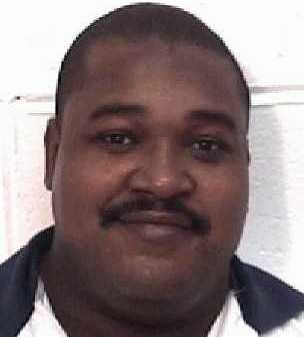
Daniel Greene
Murderer Brian Kevin Rosenfeld
Murderer · USA · 1985
Brian Kevin Rosenfeld Brian Kevin Rosenfeld was sentenced to three concurrent l…
23 victims
Brian Kevin Rosenfeld
Murderer · USA · 1985
Brian Kevin Rosenfeld Brian Kevin Rosenfeld was sentenced to three concurrent l…
23 victims
 Russell Ellwood
Murderer · USA · 1991
Russell Ellwood was a former taxi driver. Authorities suspected him of killing…
20 victims
Russell Ellwood
Murderer · USA · 1991
Russell Ellwood was a former taxi driver. Authorities suspected him of killing…
20 victims
 Robert Martines Perez
Murderer · USA · 1994
Name: Robert Martines Perez · Other name used in proceedings: Robert Martinez P…
15 victims
Robert Martines Perez
Murderer · USA · 1994
Name: Robert Martines Perez · Other name used in proceedings: Robert Martinez P…
15 victims
 Billy Frank Vickers
Murderer · USA · 1993
Billy Frank Vickers Vickers was executed by lethal injection in Texas on Januar…
14 victims
Billy Frank Vickers
Murderer · USA · 1993
Billy Frank Vickers Vickers was executed by lethal injection in Texas on Januar…
14 victims
 Alice Njoki
Murderer · Kenya · 2009
Alice Njoki was 27 years old at the time of the sentencing. She had been marrie…
1 victim
Alice Njoki
Murderer · Kenya · 2009
Alice Njoki was 27 years old at the time of the sentencing. She had been marrie…
1 victim
 Deidra Lane
Murderer · USA · 2000
Deidra Lane pleaded guilty to voluntary manslaughter in 2003 after her estrange…
1 victim
Deidra Lane
Murderer · USA · 2000
Deidra Lane pleaded guilty to voluntary manslaughter in 2003 after her estrange…
1 victim
 James Canham Read
Murderer · United Kingdom · 1894
James Canham Read was a middle-aged married bookkeeper at the London Docks. He…
1 victim
James Canham Read
Murderer · United Kingdom · 1894
James Canham Read was a middle-aged married bookkeeper at the London Docks. He…
1 victim
 Miguel Richardson
Murderer · USA · 1979
Miguel Richardson was sentenced to death for the intentional murder of John Ebb…
2 victims
Miguel Richardson
Murderer · USA · 1979
Miguel Richardson was sentenced to death for the intentional murder of John Ebb…
2 victims
 Herbert John Bennett
Murderer · United Kingdom · 1900
Herbert John Bennett was convicted of murdering his wife, Mrs Bennett. · 22 Jul…
1 victim
Herbert John Bennett
Murderer · United Kingdom · 1900
Herbert John Bennett was convicted of murdering his wife, Mrs Bennett. · 22 Jul…
1 victim
- Gender
- male
- Country
- USA
- Location
- Clayton County, Georgia, USA
- Date of birth
- 1967
- Age at first offence
- 24
- Characteristics
- crime spree, drugs
- Victim profile
- Bernard Walker, 20 (store customer)
- Method of murder
- St abbing with knife
- Date(s) of murder
- September 27, 1991
- Years active
- 1991
- Date of arrest
- Same day
- Status
-
Sentenced to death
Sentenced to death on December 14, 1992
Case overview
Daniel Greene was sentenced to death on December 14, 1992. He committed a violent crime spree on the night of September 27, 1991, when he walked into a Reynolds convenience store and pulled a clerk into the back room, demanded money, and stabbed her. He stabbed customer Bernard Walker, 20, in the heart, killing him. A short time later, he forced his way into the home of an elderly couple he knew and stabbed both and stole their car. He then went to a convenience store in Warner Robins where he robbed and stabbed the clerk. In May 1997, the state Supreme Court let the conviction and sentence stand.
Greene was convicted of murder of a customer in a convenience store in Taylor County. He was also convicted of armed robbery and committing an aggravated assault against the store clerk. The jury found as an aggravating circumstance that the murder had been committed during the course of the armed robbery, and Greene was sentenced to death under OCGA 17-10-30 (b) (2). For the armed robbery, he received a life sentence; for the aggravated assault, he received a 20-year sentence.
Timeline
- September 27, 1991 — Greene committed a series of trips to the Suwanee Swifty, a convenience store and gasoline station in Reynolds, Taylor County, Georgia, including grabbing store clerk Virginia Wise, demanding money, and stabbing her, then stabbing customer Bernard Walker, 20, in the heart and leaving the store.
- September 27, 1991 — Greene went to the home of Willie and Donice Montgomery, an elderly couple in rural Macon County where Greene had worked as a farm laborer for about two months, burst through their kitchen door wielding a knife, demanded their car keys, and stabbed both.
- September 27, 1991 — Greene drove the Montgomerys’ car to a convenience store in Warner Robins, Houston County, Georgia, held a butcher knife to the cashier Bonnie Roberts, forced her to give him the money from the cash register, and attempted to stab her in the chest, stabbing her in the back of her shoulder.
- September 28, 1991 (early morning) — Greene was apprehended after driving the Montgomerys’ car to the home of an acquaintance in Warner Robins.
- October 14, 1991 — Greene was indicted.
- December 5, 1992 — Trial began.
- December 7, 1992 — The jury returned its verdict finding Greene guilty of the crimes charged.
- December 8, 1992 — The jury returned its sentencing phase verdict.
- December 9, 1992 — The trial court sentenced Greene.
- December 14, 1992 — Greene was sentenced to death.
- March 22, 1993 — Greene filed a motion for new trial.
- May 4, 1994 — Greene amended the motion.
- March 24, 1995 — The trial court denied the motion.
- April 25, 1995 — Greene filed his notice of appeal.
- May 22, 1995 — The case was docketed.
- September 18, 1995 — The case was orally argued.
- March 15, 1996 — The decision was issued.
- March 28, 1996 — Reconsideration was denied.
- May 1997 — The state Supreme Court let the conviction and sentence stand.
Background
Daniel Greene was 30 years old at the time he was sentenced to death. The venue was changed from Taylor County to Clayton County. The trial from which the appeal was taken concerned Greene’s indictment for the crimes committed in Taylor County.
Before trial, Greene confessed to the crimes in a videotaped interview, explaining that he committed them to obtain money for crack cocaine. At trial, Greene testified that he could not remember committing the crimes or confessing. He stated he only recalled experiencing a severe headache inside the Suwanee Swifty after having smoked a cigarette given to him earlier by an acquaintance. He theorized that his criminal behavior might have been induced by the cigarette, which he said must have been laced with a powerful, mind-altering drug.
The evidence presented at trial authorized the jury to find the crimes beyond a reasonable doubt.
The offence
On the evening of September 27, 1991, Greene made a series of trips to the Suwanee Swifty, a convenience store and gasoline station in Reynolds, Taylor County, Georgia. During his final visit, he grabbed the store clerk, Virginia Wise, held a knife to her throat, and told her to give him the money from the cash register. After obtaining the money, $142.55, Greene continued to hold the knife to Wise’s throat. He pulled her to the back room and cut her across three fingers and stabbed her through the lung and liver.
After hearing the automatic doorbell ring as Bernard Walker, 20, entered the store, Greene placed Wise against the bathroom wall and told her that if she left the room he would have to kill her. Greene then reentered the public area of the store and encountered Walker waiting at the counter to make a purchase. He stabbed Walker in the heart, threw down the knife, left the store, and drove away. After attempting to get help, Walker fell dead in the parking lot.
Later that evening, Greene went to the home of Willie and Donice Montgomery, an elderly couple in rural Macon County for whom Greene had worked as a farm laborer for about two months. Greene burst through the Montgomerys’ kitchen door wielding a knife and asked for their car keys. Mr. Montgomery gave Greene the keys, and Greene proceeded to stab each victim multiple times in the head.
After leaving the Montgomerys’ home, Greene drove their car to a convenience store in Warner Robins, Houston County, Georgia. Once there, he held a butcher knife to the cashier, Bonnie Roberts, forced her to give him the money from the cash register, walked toward her, and attempted to stab her in the chest. Roberts bent down, and Greene drove the knife into the back of her shoulder.
Greene then drove the Montgomerys’ car to the home of an acquaintance in Warner Robins, where he was apprehended.
Greene was tried separately and convicted of the Macon and Houston County crimes, but the trial giving rise to the appeal concerned only the Taylor County indictment.
Investigation and arrest
Greene was apprehended after driving the Montgomerys’ car to the home of an acquaintance in Warner Robins.
Trial
Pre-trial rulings
The trial court denied Greene’s motion for funds for investigative assistance because Greene failed to show an investigator was necessary to his defense or that his trial was rendered unfair because he was denied funds for investigative assistance. Greene also failed to make a threshold showing that his mental health would be an issue in either phase of trial. The trial court denied Greene’s request for funds for a mental health evaluation because Greene’s attorneys made conclusory statements without evidence or testimony to support them.
Jury selection
Greene argued the trial court erred in excusing five prospective jurors for cause based upon their opposition to the death penalty. The trial court’s rulings were reviewed under the standard for death-penalty qualification of prospective jurors, including whether views would prevent or substantially impair performance of duties in accordance with instructions and oath.
Greene also urged error regarding the failure to disqualify a prospective juror based upon her purported bias in favor of the death penalty. The trial court was authorized to find that the “final distillation” of the prospective juror’s thoughts demonstrated her qualification.
Greene argued the trial court erred in its handling of peremptory strikes. The trial court properly required the prosecutor to articulate reasons for peremptory strikes after Greene established a prima facie case of discrimination against six African-American prospective jurors under Batson v. Kentucky. The trial court accepted racially-neutral, case-related, clear, and reasonably specific reasons for those strikes. Greene also argued about the trial court’s ruling that the State need not articulate reasons for the only prospective juror of Asian Indian descent, and Greene failed to establish a prima facie case for that juror.
Greene also challenged a prospective juror who initially indicated he would tend to believe a police officer over a defendant but later said he would judge a police officer’s credibility like any other witness. The trial court denied Greene’s challenge.
Guilt-innocence phase evidence and rulings
The trial court rejected claims that evidence was insufficient, and the court found the evidence authorized the jury to find Greene guilty beyond a reasonable doubt.
Greene argued improper statements in opening statement and closing argument about the murder victim’s popularity and sympathy for the victim’s family. Greene failed to object, and the comments did not change the result of trial.
When the murder victim’s mother began crying and was escorted from the courtroom, Greene moved for a mistrial. The trial court denied the motion but issued curative instructions. After the prosecutor referenced this incident during closing argument, Greene objected and the trial court instructed the jurors again. Greene did not seek a further mistrial or additional instructions.
Greene argued that his right against self-incrimination was violated by references to his decision not to testify; the record did not support the contention. Greene also argued improper references were made to his failure to testify at an earlier trial in another county; the record did not support that contention.
Greene argued the trial court erred in admitting evidence of crimes committed in Macon and Houston counties on the evening of September 27, 1991, and early morning of September 28, 1991, immediately following the Taylor County crimes. The court found those crimes admissible as elements of one crime spree and as evidence of Greene’s bent of mind and circumstances of his arrest.
Greene contended the jury was exhorted to convict as punishment for the Macon and Houston County crimes. The court found the prosecutor’s remarks conveyed that jurors should only consider those crimes for proper purposes.
The State indicated that various witnesses had testified in Macon or Houston County trials regarding the alleged crime spree. Greene failed to object, and the court found no change in outcome.
When Greene attempted to question the deputy sheriff about whether the victim’s cousin had ever been investigated for any crime, the trial court sustained the State’s relevance objection. The court found no error because Greene’s identity as the perpetrator was not contested.
During direct examination, Ms. Montgomery testified: “Don't come in here; don't come in here.” The trial court admitted the statement as part of the res gestae.
During direct examination of the Montgomerys’ son, the prosecutor asked, “Mr. Montgomery, is there anything you know, any reason you know why Daniel Greene would want to go in there and do that to your mom and dad?” The witness answered in the negative. The court assumed without deciding the question was improper and found no harm.
The trial court allowed the State to question two witnesses about prior inconsistent statements because OCGA 24-9-83 requirements were met. The trial court did not err by failing to instruct on impeachment because Greene admitted such an instruction was unnecessary.
Greene challenged prosecutorial closing argument in several respects. The court found no improper vouching for credibility beyond defending against impeachment, found the characterization of Greene as mean not improper as a legitimate inference, found one improper rhetorical question to have been harmless given overwhelming evidence, and addressed other claims including burden shifting, malice aforethought, references to extrajudicial knowledge, and improper expertise arguments. The court found the trial court’s admonitions following references to punishment sufficient to avoid juror confusion.
Sentencing phase
There was no issue as to Greene’s mental illness or retardation. When Greene testified, he conceded his sanity and lack of retardation. The prosecutor argued to the jury that mental illness or retardation was not an impediment to imposition of the death penalty. The court found no error in that pursuit.
Greene argued a witness was erroneously allowed to give an opinion as to sentencing. The court found no objection at trial and determined that the statutory aggravating circumstance was clearly supported by the record. The court found the crimes were gruesome and unprovoked and that Greene’s mitigation evidence was weak, and it concluded there was no reasonable probability the witness’s opinion would have changed the jury’s sentencing recommendation.
Greene argued that direct examination of his mitigation witnesses was erroneously curtailed; the trial court did not err by disallowing speculative questions or those calling for religious or philosophical attitudes about the death penalty.
Motions and claims involving parole and other sentencing issues
Greene relied on OCGA 17-8-76 (a) regarding references to parole. On one occasion, a comment could be construed as referring to escape rather than parole. The trial court issued curative instructions and found no error. Greene’s only motion for mistrial based on OCGA 17-8-76 was denied with no additional occasions of the prosecutor mentioning the word “parole.” The court held that even assuming other references violated the statute’s tenor, failure to move for a mistrial under OCGA 17-8-76 (b) resulted in waiver.
Greene argued the State used evidence of other criminal activities during cross-examination of mitigation witnesses in violation of OCGA 17-10-2. The court found a failure to object and that OCGA 17-10-2 was not applicable.
Greene objected to an out-of-court statement attributed to him and challenged testimony by the Sheriff of Taylor County as to that statement. The court held that the statement was hearsay only if offered to prove the truth of what was contained therein. The court concluded that the out-of-court statement was not offered to prove truth, but rather to explain Greene’s pre-sentencing conduct and, if relevant, the Sheriff’s pre-sentencing conduct. The court found that Greene’s own direct examination on “model prisoner” conduct rendered those topics relevant and prevented Greene from objecting once the issue was introduced. The court also held that Greene did not object to certain questions and answers regarding courtroom security measures, and it found no inadmissibility in a passing reference to extraordinary but unspecified security measures.
During closing argument in the sentencing phase, the prosecutor made references to Biblical teachings. The court held that religion may play a role in Georgia’s sentencing phase and that the prosecutor could allude to principles of divine law relating to transactions of men as appropriate to the case. The court found the prosecutor did not urge imposition of death based upon Greene’s religious beliefs or suggest that teachings of a particular religion mandated the death sentence. Even assuming impermissibility, the court concluded there was no reasonable probability that the argument changed the result.
Greene raised additional claims about other instances of alleged improper sentencing-phase argument. The court rejected each, including issues about deterrence, the bias and impeachment of Greene’s mother as a character witness, failure to produce witnesses as to certain contentions, and the prosecutor’s statement that Greene’s confession videotape had been in evidence for some time.
The court rejected Greene’s contention that the trial court erred by refusing several requested charges because the requests were improper or covered by the full and fair charge that was given. The court also found no error where requested charges were never requested.
The court found the death sentence was not imposed under passion, prejudice, or other arbitrary factor, that it was not excessive or disproportionate to penalties in similar cases, and that similar cases listed in an Appendix supported the imposition of the death sentence.
Outcome and appellate history
The state Supreme Court let the conviction and sentence stand. The appellate decision was issued as “GREENE v. THE STATE. S95P1366. ( 266 Ga. 439 ) ( 469 SE2d 129 ) (1996) CARLEY, Justice. Murder. Taylor Superior Court. Before Judge Whisnant.”
In the appellate opinion, the court affirmed the judgments entered by the trial court, including the death sentence.
Concurring and dissenting opinions
Presiding Justice Fletcher concurred specially in part.
Benham, Chief Justice, concurred in the affirmance of Greene’s convictions but dissented in part regarding the death sentence on multiple grounds. The dissent stated that the trial court erred in excusing prospective jurors for cause. The dissent also stated that the prosecutor improperly elicited testimony in the sentencing phase about extreme and unprecedented measures based on hearsay suggesting Greene might become violent at sentencing. The dissent also stated that the prosecutor improperly urged execution on religious grounds.
The dissent quoted and described testimony elicited by Sheriff Giles of Taylor County about an inmate reporting a statement allegedly made by Greene, including the claim that Greene would behave and there would be no trouble during trial “up to the moment the jury announced its sentencing phase verdict,” whereupon if Greene received a death sentence “the sheriffs would have to kill Greene in the courtroom, and "that would be the end of it."” The dissent argued such evidence was hearsay and highly prejudicial and that it warranted reversal of the death sentence.
Sears, Justice, joined in the partial concurrence and dissent and highlighted that cases interpreting Wainwright v. Witt required reversal because jurors should not be disqualified merely for expressing difficulty imposing death or leaning toward life. Sears also highlighted concerns about the use of Baptist and Biblical references in the death-penalty argument.
Other details
Greene’s counsel included:
- William L. Kirby II, Charlotta Norby, Stephen B. Bright, Herbert L. Wells, for appellant.
The prosecution and state counsel included:
- Douglas C. Pullen, District Attorney, J. Gray Conger, Lori L. Canfield, Assistant District Attorneys, Michael J. Bowers, Attorney General, Susan V. Boleyn, Senior Assistant Attorney General, for appellee.
The court noted the following procedural dates in the case:
- Voir dire commenced on November 30, 1992.
- The trial began on December 5, 1992.
- Greene was indicted on October 14, 1991.
- On June 15, 1992, the state filed its notice of intent to seek the death penalty.
- Greene filed his notice of appeal on April 25, 1995.
- The case was docketed on May 22, 1995, and orally argued on September 18, 1995.

Spotted an error, or have more information about this case?