Margaret Kastanis
Murderer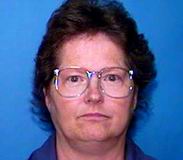 Bobbie Sue Terrell
Murderer · USA · 1984
Bobbie Sue Dudley Terrell was a Pinellas County nurse and worked as the night s…
12 victims
Bobbie Sue Terrell
Murderer · USA · 1984
Bobbie Sue Dudley Terrell was a Pinellas County nurse and worked as the night s…
12 victims
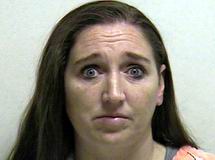 Megan Huntsman
Murderer · USA · 1996
Megan Huntsman was 40 at sentencing. She was a mother of three children who wer…
6 victims
Megan Huntsman
Murderer · USA · 1996
Megan Huntsman was 40 at sentencing. She was a mother of three children who wer…
6 victims
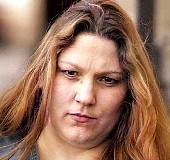 Angela Johnson
Murderer · USA · 1993
Angela Jane Johnson was convicted in federal court of aiding and abetting the m…
5 victims
Angela Johnson
Murderer · USA · 1993
Angela Jane Johnson was convicted in federal court of aiding and abetting the m…
5 victims
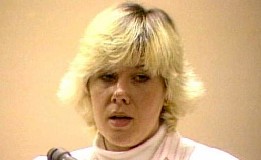 Catherine May Wood
Murderer · USA · 1987
Catherine May Wood was an American caregiver who worked at the Alpine Manor Nur…
5 victims
Catherine May Wood
Murderer · USA · 1987
Catherine May Wood was an American caregiver who worked at the Alpine Manor Nur…
5 victims
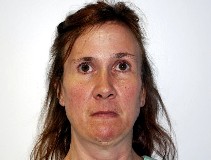 Michele Kalina
Murderer · USA · 1996
Michele Kalina pleaded guilty to murder for one of five infants she initially w…
5 victims
Michele Kalina
Murderer · USA · 1996
Michele Kalina pleaded guilty to murder for one of five infants she initially w…
5 victims
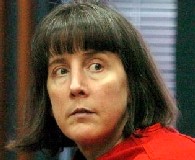 Amy Bishop
Murderer · USA · 1986
Amy Bishop — biology professor and perpetrator · James Anderson — Bishop’s husb…
4 victims
Amy Bishop
Murderer · USA · 1986
Amy Bishop — biology professor and perpetrator · James Anderson — Bishop’s husb…
4 victims
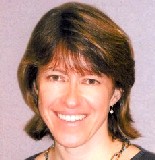 Mine An Ener
Murderer · USA · 2003
Mine An Ener was a Villanova University history professor specializing in Middl…
1 victim
Mine An Ener
Murderer · USA · 2003
Mine An Ener was a Villanova University history professor specializing in Middl…
1 victim
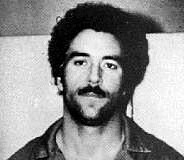 Randall Woodfield
Serial killer · USA · 1979
Randall Woodfield was an American serial killer dubbed The I-5 Killer or The I-…
18 victims
Randall Woodfield
Serial killer · USA · 1979
Randall Woodfield was an American serial killer dubbed The I-5 Killer or The I-…
18 victims
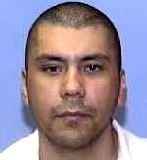 Jose Luis Villegas
Murderer · USA · 2001
January 22, 2001 — Lionicio Perez returned home and found his wife Alma Perez’s…
3 victims
Jose Luis Villegas
Murderer · USA · 2001
January 22, 2001 — Lionicio Perez returned home and found his wife Alma Perez’s…
3 victims
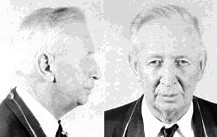 Carl Folk
Murderer · USA · 1953
Carl J. Folk was executed by asphyxiation-gas in Arizona on March 4, 1955. Carl…
1 victim
Carl Folk
Murderer · USA · 1953
Carl J. Folk was executed by asphyxiation-gas in Arizona on March 4, 1955. Carl…
1 victim
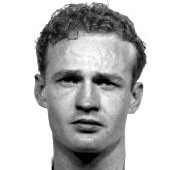 Charles William Bass
Murderer · USA · 1979
Name: Charles William Bass Case number: 662 Age: 29 · 1979 — Charles William Ba…
1 victim
Charles William Bass
Murderer · USA · 1979
Name: Charles William Bass Case number: 662 Age: 29 · 1979 — Charles William Ba…
1 victim
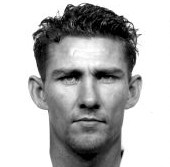 Billy Joe Woods
Murderer · USA · 1975
Billy Joe Woods, age 50 (28), was executed by lethal injection in Texas on Apri…
1 victim
Billy Joe Woods
Murderer · USA · 1975
Billy Joe Woods, age 50 (28), was executed by lethal injection in Texas on Apri…
1 victim
- Gender
- female
- Country
- USA
- Location
- West Jordan, Salt Lake County, Utah, USA
- Date of birth
- April 17, 1952
- Age at first offence
- 39
- Characteristics
- parricide
- Victim profile
- Her three children, Christine, 6, Clinton, 9, and Melissa, 11
- Method of murder
- Bludgeoned with a hammer - Stabbing with knife
- Date(s) of murder
- November 17, 1991
- Years active
- 1991
- Date of arrest
- —
- Status
-
Died in custody
Committed suicide by stabbing herself in the heart the same day November 17, 1991, using a knife and hammer, after extended Prozac treatment
Other details
Margaret Kastanis died on November 17, 1991, in West Jordan, Utah. She used a knife and hammer to kill her three children and then stabbed herself to death in the heart. She had been under extended Prozac treatment.
Margaret Kastanis had a history of mental problems and had received mental-health care. Evidence at trial described her as mentally ill, psychotic, and suicidal. A psychologist testified she had odd beliefs and odd thoughts, and she was later diagnosed as suffering from “schizo-typao disorder,” described as a mental illness that could be characterized as a precursor to schizophrenia. Testimony described her as paranoid, obsessive, and socially isolated, with beliefs that her house was bugged and that messages were being sent in Morse code. She was also described as feeling she was the cause of family difficulties and as expressing that she preferred not to go on living.
A psychiatric nurse testified that Margaret ultimately decided not to be admitted to University Hospital’s psychiatric unit because she was unwilling to use family funds to cover expenses that their insurance would not cover, and that she did not meet the criteria to be legally committed. The psychiatric nurse testified:
“Margaret said she thought about suicide, but Margaret did not have a specific plan or intent for suicide at that time,”
A psychologist testified she met with Margaret the next day after a push for involuntary admission. The psychologist testified:
“She was hearing what sounded like mocking, snoring noises.”
A psychologist testified that Margaret’s condition deteriorated to the point that she felt Margaret was actively suicidal and pushed for involuntary admission. The psychologist testified:
“I literally begged her not to drop out of treatment.”
A friend and Relief Society president in Margaret’s LDS ward testified about Margaret’s focus on “Heidi.” Pam Anderson testified:
“(Margaret) thought she'd broke a covenant and that meant she wasn't worthy to pray or read the scriptures . . .,” and: “She didn't know how she could go on. She didn't know how her children could live without her or how she could live without her children.”
Margaret’s parents and other family members testified about her statements and behavior leading up to the deaths, including that she discussed committing suicide and divorcing her husband because she felt inadequate as a mother and wife.
Margaret’s birth was recorded as Apr. 17, 1952. She was described as a 39-year-old West Jordan mother during testimony that occurred in 1993.
Margaret Kastanis was described as the only person not to have defensive wounds on her body, and as the only person with the blood of all three children on her T-shirt. Dr. Joseph Burton examined the bodies and determined that based on differences in wounds found on the children and cuts on Margaret’s hand, the most likely scenario was that Margaret killed her children (injuring herself with the knife in the process) and then committed suicide by stabbing herself in the heart.
In trial-related testimony, the defense argued that Margaret was mentally ill and suicidal, and that she killed the children and then herself. It was argued that she was holding her family back and had asked her husband for a divorce because she felt she was an unfit mother and wife. Defense attorney Ron Yengich argued:
“I'm not here to tell you Margaret Kastanis is a bad person or was. I'm here to tell you she lost it.” and: “People don't just flip out. This is not Hollywood.” Yengich encouraged the jury to send a message to the government by returning a verdict of not guilty on four counts of capital murder.
The prosecution presented a different theory, and it was described that a blood-spatter expert, Rod Englert, testified and supported an argument that Sam Kastanis killed the victims. Jurors later expressed criticism of the video re-enactment and of Englert’s presentation, and stated that they voted not guilty for Sam.
The deaths and immediate events
On the morning of November 17, 1991, Sam Kastanis placed a 911 call. Police arrived at the scene and discovered Margaret Kastanis and three children stabbed and bludgeoned to death. The accounts described that Margaret and her three children were murdered in their home.
Margaret Kastanis was described as having been stabbed to death, and her children were described as being beaten and stabbed to death. The record describes that she was found in a basement bedroom with the bodies of her daughters, Kristy and Melissa, and that her son Clint was found dead in an upstairs bathroom. The record also described that Margaret suffered deep cuts on her hands when she apparently tried to ward off the attacker’s blows.
The record described that she had cuts on her hands believed to be defensive wounds by an assistant medical examiner, and that she was not the one bludgeoned with a hammer. The record also described that she had four stab wounds in theory, and discussed a possible stabbing sequence in testimony.
Medical and forensic discussion at trial
Dr. Joseph Burton examined the bodies and concluded that the most likely scenario was that Margaret killed her children and then killed herself. Dr. Edward Leis testified that Margaret could have plunged a knife into her chest four different times and killed herself after bludgeoning her three children, but that such a theory was “not very likely.” Leis described certain cuts on Margaret’s hands as “defensive wounds,” and testified about the possible wound path mechanics that affected the likelihood of suicide. Defense counsel cross-examined on whether the cuts could be offensive wounds, and asked about a “hesitation wound.”
Outcome connected to Margaret’s death
Because of Dr. Joseph Burton’s findings, Sam Kastanis was acquitted.
Family relationships and living arrangements mentioned during proceedings
Margaret Kastanis was described as the daughter of Orrin L. and Francis May Jenkins. She was married to Sam George Kastanis. Family members described by name in connection with Margaret included her parents, Orrin Jenkins and Frances Jenkins, and her sister, Marian Griffiths.
Witnesses described Margaret’s husband Sam Kastanis as living in the home and helping rescue crews with the victims.
A neighbor described as Heidi was also referenced in testimony about Margaret’s beliefs and paranoia. Sam Kastanis was described as serving in Vietnam and as having repaired radios, and he was described as having been charged with four counts of capital murder during the trial.

Spotted an error, or have more information about this case?