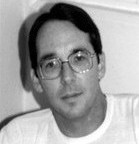
William Zeigler
Mass murderer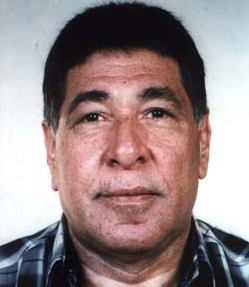 Gameel Al-Batouti
Mass murderer · USA · 1999
Gameel Al-Batouti (also rendered “Gamil ElBatouty” or “El Batouty” in U.S. offi…
216 victims
Gameel Al-Batouti
Mass murderer · USA · 1999
Gameel Al-Batouti (also rendered “Gamil ElBatouty” or “El Batouty” in U.S. offi…
216 victims
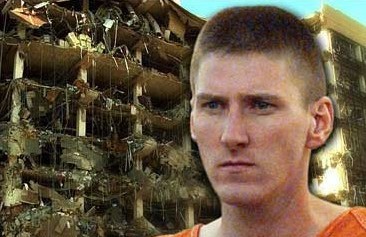 Timothy McVeigh
Mass murderer · USA · 1995
Timothy James McVeigh (April 23, 1968 – June 11, 2001) was a United States Army…
168 victims
Timothy McVeigh
Mass murderer · USA · 1995
Timothy James McVeigh (April 23, 1968 – June 11, 2001) was a United States Army…
168 victims
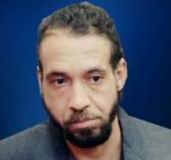 Julio Gonzalez
Mass murderer · USA · 1990
Julio Gonzalez was sentenced to 174 twenty-five-year sentences (a total of 4,35…
87 victims
Julio Gonzalez
Mass murderer · USA · 1990
Julio Gonzalez was sentenced to 174 twenty-five-year sentences (a total of 4,35…
87 victims
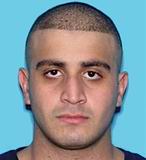 Omar Mateen
Mass murderer · USA · 2016
Omar Mir Seddique Mateen was an American mass murderer who killed 49 people and…
49 victims
Omar Mateen
Mass murderer · USA · 2016
Omar Mir Seddique Mateen was an American mass murderer who killed 49 people and…
49 victims
 Andrew Kehoe
Mass murderer · USA · 1927
Andrew P. Kehoe committed suicide the same day by killing himself in the explos…
44 victims
Andrew Kehoe
Mass murderer · USA · 1927
Andrew P. Kehoe committed suicide the same day by killing himself in the explos…
44 victims
 Francisco Paula Gonzales
Mass murderer · USA · 1964
Francisco Paula Gonzales was a passenger on Pacific Air Lines Flight 773. Gonza…
44 victims
Francisco Paula Gonzales
Mass murderer · USA · 1964
Francisco Paula Gonzales was a passenger on Pacific Air Lines Flight 773. Gonza…
44 victims
 Charles William Yukl
Murderer · USA · 1966
Charles William Yukl was a piano teacher in New York City and also worked in mu…
2 victims
Charles William Yukl
Murderer · USA · 1966
Charles William Yukl was a piano teacher in New York City and also worked in mu…
2 victims
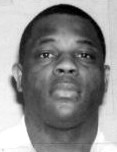 Marvin Lee Wilson
Murderer · USA · 1992
Marvin Lee Wilson was convicted of murdering Jerry Williams during the course o…
1 victim
Marvin Lee Wilson
Murderer · USA · 1992
Marvin Lee Wilson was convicted of murdering Jerry Williams during the course o…
1 victim
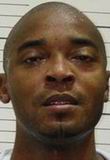 Andrew Thomas
Murderer · USA · 1997
Andrew Thomas and his co-defendant, Anthony Bond, were indicted for the felony…
1 victim
Andrew Thomas
Murderer · USA · 1997
Andrew Thomas and his co-defendant, Anthony Bond, were indicted for the felony…
1 victim
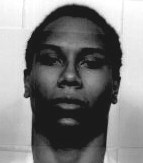 Arthur Lee Williams
Murderer · USA · 1982
Arthur Lee Williams was sentenced to death on June 5, 1983. The case characteri…
1 victim
Arthur Lee Williams
Murderer · USA · 1982
Arthur Lee Williams was sentenced to death on June 5, 1983. The case characteri…
1 victim
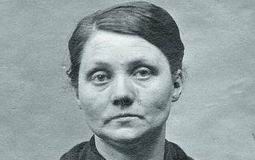 Hilda Nilsson
Serial killer · Sweden · 1915
Hilda Nilsson (1876 – 10 August 1917) was a Swedish serial killer from Helsingb…
8 victims
Hilda Nilsson
Serial killer · Sweden · 1915
Hilda Nilsson (1876 – 10 August 1917) was a Swedish serial killer from Helsingb…
8 victims
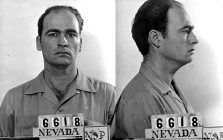 Leroy Linden
Murderer · USA · 1953
Leroy Linden was executed by asphyxiation-gas in Nevada on July 15, 1954, toget…
1 victim
Leroy Linden
Murderer · USA · 1953
Leroy Linden was executed by asphyxiation-gas in Nevada on July 15, 1954, toget…
1 victim
- Gender
- male
- Country
- USA
- Location
- Orange County, Florida, USA
- Date of birth
- July 24, 1945
- Characteristics
- parricide, financial gain
- Victim profile
- His wife Eunice, her parents Perry and Virginia Edwards, and Charles Mays Jr., an employee
- Method of murder
- Shooting
- Date(s) of murder
- —
- Years active
- —
- Date of arrest
- Same day (shot himself to look like a victim)
- Status
-
Sentenced to death
Sentenced to death on July 16, 1976
Case information
William Thomas Zeigler Jr. was prosecuted in Florida for the murders of four people at the W. T. Zeigler Furniture Store in Winter Garden, Florida.
The trial venue was changed to the Fourth Judicial Circuit. Circuit Court cases were numbered #76-1076 and 76-1082 in the Fourth Circuit and #CR88-5355 and CR88-5356 in the Ninth Circuit.
Zeigler’s date of birth was 07/24/45.
The trial judge was The Honorable Maurice M. Paul. Zeigler’s trial attorneys were Ralph V. Hadley III (Attorney) and direct appeal counsel was H. Vernon Davids (Attorney). Collateral appeals counsel was John Houston Pope.
Trial, offence, and sentencing dates
- Private date of offense: 12/24/75
- Date of sentence: 07/16/76
- Date of resentence: 08/17/89
The offence
Zeigler murdered four people in Winter Garden, Florida in an apparent insurance fraud scheme.
The State’s account described the following killings and assault:
- Zeigler shot to death his wife Eunice.
- Zeigler shot Perry Edwards and Virginia Edwards.
- Zeigler shot an employee, Charles Mays Jr., before beating him to death.
Edward Williams had known Zeigler and his wife for a number of years. Williams testified that in June 1975 Zeigler inquired about obtaining a “hot gun” and subsequently procured for Zeigler two revolvers.
During the latter part of 1975, Zeigler purchased a large amount of insurance on the life of his wife.
On Christmas Eve 1975, Zeigler took his wife to his furniture store in Winter Garden and arranged for his parents-in-law to go there. The State’s account described the shooting circumstances:
- Eunice was found with her hand in a coat pocket, shot from behind.
- Virginia was found with a bullet wound to her hand, indicating that she probably was huddled in a protective position when she was shot.
- Perry was described as having struggled with Zeigler for some time before being shot and killed.
Zeigler left the store and met with Mays, an employee of the store. The State’s account stated that Zeigler was probably surprised that Mays had arrived at the store with another man, Felton Thomas. Zeigler took Thomas and Mays to an orange grove to try the guns. The State stated that the purpose was to get the two to handle and fire the weapons.
The three returned to the store, and Zeigler was unsuccessful in getting Mays or Thomas to provide evidence of a break-in. They then returned to Zeigler’s home. The defendant directed Mays to reload the gun. They returned to the store again.
The defendant could not persuade Thomas to enter the store, and Thomas later disappeared. The State’s account described the killing of Mays:
- Zeigler killed Mays, who was later found shot twice and beaten upon the head with a blunt object.
The State’s account described the events involving Edward Williams:
- Zeigler returned to his home and picked up Edward Williams.
- Zeigler was successful in getting Williams partially inside the home.
- Zeigler put a gun to Williams’ chest and pulled the trigger three times, but the gun did not fire.
- When unable to get Williams into the store, the defendant became desperate and conceived the idea that he would appear uninvolved if he happened to be one of the victims of a robbery.
- Accordingly, Zeigler shot himself in the stomach and called a judge’s residence, where he knew police officers would be for a holiday gathering.
Background and other details
At the time of the offence, Zeigler was described as “at age 30” and a successful businessman, a leader in his community, and “by all appearances” a dedicated husband and son.
The materials described a party being in progress in Winter Garden, Florida on Christmas Eve 1975. Two invited guests, Tommy and Eunice Zeigler, were not present.
Don Ficke, described as the Winter Garden chief of police, and his wife Rita had arranged to drive to the party with Tommy and Eunice that night, but they could not find their friends at the meeting time and attended the party anyway.
Around 9:18 p.m., Zeigler phoned and asked to speak to Don Ficke. He said there had been a robbery at his store and he had been shot and was badly wounded and needed help. By 9:21, Zeigler was helped out of the store with his shirt covered in dried blood. By 9:23, he was checked into the hospital. Later, surgery revealed that a bullet had passed within a centimeter of his liver.
Inside the store there were four bodies later identified as Eunice Zeigler, Perry and Virginia Edwards (Eunice’s parents) and Charlie Mays, an African-American orange picker. The materials described Charlie Mays as having run a team of migrant workers and being known to the Zeiglers as a credit customer.
The materials described that all four had been shot, some with more than one gun, and that the two men had been beaten. The materials described pools of blood in various locations around the store, bloody footprints, many discarded guns, and a separate location for each body.
The materials described that a gun holster lay on top of some dried blood, and that spray patterns suggested two separate lettings of blood.
Det. Donald Frye of the Orange County Sheriff’s Office (OCSO) examined the scene and considered Zeigler a prime suspect. The materials described that Frye believed Zeigler shot himself in the abdomen after placing the call.
The materials included discussion of an evidentiary course pursued by Frye and later disputes about processing and handling of evidence.
A quote was included about later views:
- Leigh MacEachern was described as having made a 1989 statement during which he said, “not guilty,” in a statement about evidence that he said was not processed and felt OCSO believed they knew Zeigler was guilty.
Investigation
The materials described that Frye concluded that the events had involved a number of distinct and complicated episodes rather than a mere robbery.
The materials described evidence handling and later allegations about withheld or untimely evidence, including:
- Bullets not being labeled.
- A lift made from a bloody footprint being lost.
- FBI shredding partial prints taken from the store and the weapons.
- Charlie Mays’ van, found parked behind the furniture store on the other side of a 6-foot tall fence, never being processed for evidence.
- Bullets not being labeled; bullets and other evidence reportedly stored besides evidence sent to the FBI.
- The state failing to test certain blood and clothes and shoes, and issues described with gunpowder residue testing on Edward Williams’ trousers and on Zeigler’s trousers.
The materials described that Edward Williams’ trousers were not tested for gunpowder residue even though he claimed he put a gun in his pocket, with the gun described as the state-claimed weapon used to kill two people; the trousers were turned over to the defense just two weeks before trial, and testing showed no residue in the pockets but results came too late for trial.
The materials described that a gunshot residue test conducted on Zeigler’s trousers produced a negative finding, while the state said he had fired 28 shots from various guns; the negative report was said not to have been disclosed in discovery.
The materials described witness testimony issues:
- Felton Thomas told Frye that he never met Tommy Zeigler before the night of the murders.
- Zeigler maintained that they never met until his trial.
- The materials stated that Frye’s team never pressed Thomas for a full description beyond off-on points about what Zeigler was wearing and what car Zeigler was driving.
The materials described Edward Williams’ testimony being contradicted by other witnesses, including that witnesses reported seeing a black man use the phone at the restaurant after Zeigler was taken to the hospital.
The materials included mention of other items discovered later:
- A tooth lying on Charlie Mays’ parka being lost.
- At trial, a forensic dentist testifying from a photo that the tooth was not from Zeigler or any of the victims.
- An expended cartridge case found on the scene that did not match any of the guns on the scene.
- Blood not being sub-typed, with the claim that test results would have proven who did what to whom.
Arrest
No arrest details were included in the provided material beyond later procedural history about stays and petitions.
Trial
Trial outcome and verdict
Zeigler was found guilty of:
- two counts of first-degree murder as charged in the indictments, and
- two counts of second-degree murder.
Advisory sentencing and judge’s sentencing decision (07/16/76)
Upon advisory sentencing, the jury recommended by a majority vote a sentence of life imprisonment for each of the convictions.
The trial judge overruled the jury’s recommendations and sentenced Zeigler:
- to death for each of the two first-degree murder convictions, and
- to life in prison for each of the second-degree murder convictions.
Resentencing
Resentencing (08/17/89)
The resentencing judge overruled the jury’s recommendation of life imprisonment and resentenced Zeigler to death for each of the two first-degree murder convictions.
Appeals
Zeigler filed a direct appeal in the Florida Supreme Court in 1976.
While the case was pending, Zeigler petitioned the U.S. District Court, Middle District, for a writ of habeas corpus. In 1981, the Florida Supreme Court affirmed the convictions and sentences, and the district court denied the habeas petition. The U.S. Supreme Court denied certiorari on the direct appeal the following year.
The signing of Zeigler’s first death warrant in 1982 prompted the filing of a second habeas petition with the U.S. District Court and a habeas in the Florida Supreme Court. The Florida Supreme Court denied the habeas petition three days after filing. The district court stayed the execution and, in dismissing the case in 1986, directed Zeigler to initiate all available state appeals before approaching the court again.
In 1983, Zeigler filed his first 3.850 motion in the trial court, which was denied. On appeal, the Florida Supreme Court held that of the 19 points argued in the motion, all but two were, or could have been, raised at trial or on direct appeal and were not cognizable under rule 3.850. The Florida Supreme Court did consider two claims: that Zeigler did not receive effective counsel at trial, and that his right to due process and a fair trial was violated because the trial judge was actually or potentially biased. In 1984, the Florida Supreme Court remanded for an evidentiary hearing on possible bias of the trial judge. After the hearing, the trial court rejected the claim and the Florida Supreme Court affirmed in 1985.
Zeigler filed a third habeas petition in the U.S. District Court in January 1986. In May of that year a second death warrant was signed and a number of appeals followed. The defendant petitioned the district court to reopen his 1982 federal habeas case. The district court denied both requests and Zeigler appealed the two cases to the 11th Circuit U.S. Court of Appeals. The 11th Circuit granted a stay of execution, vacated the district court’s judgments and remanded.
Also in 1986, Zeigler filed his second 3.850 motion with the trial court, which ordered an evidentiary hearing on one of his claims concerning restrictions on the presentation of nonstatutory mitigating factors. The state appealed, and in a consolidated opinion the Florida Supreme Court reversed the trial court’s decision, denied all 3.850 relief and denied the defendant’s petition for a writ of error coram nobis.
In 1987, Zeigler amended his 1986 federal habeas petition and filed with the district court. The court dismissed the case without prejudice.
Zeigler filed his second state habeas petition in the Florida Supreme Court in 1987. He claimed he was entitled to relief under Hitchcock v. Dugger. In 1988, the Florida Supreme Court agreed, vacated the sentence and remanded for an evidentiary hearing directed to occur only before a judge.
In 1988, a third 3.850 motion to address issues arising out of the conviction phase was filed, and the trial court venue was moved from the Fourth Circuit back to the Ninth Circuit with new case numbers. While the motion was pending, Zeigler was resentenced to death in 1989.
Zeigler filed a direct appeal, and the state cross-appealed the trial judge’s failure to find an aggravating circumstance during resentencing. In 1991, the state supreme court affirmed the trial court’s decision, and the U.S. Supreme Court denied the defendant’s petition for certiorari.
In the 3.850 motion pending during resentencing, Zeigler made five claims alleging misconduct by the state and the trial judge. In 1992, the trial court ruled all claims were procedurally barred and denied the motion. The Florida Supreme Court affirmed in 1993 and the U.S. Supreme Court denied certiorari review.
Zeigler filed his fourth 3.850 motion with the trial court, which was denied, and the Florida Supreme Court affirmed the decision in 1995.
Zeigler filed his third habeas petition in the State Supreme Court in 1994. He claimed the high court erred by not conducting a meaningful review of the resentencing judge’s override of the jury recommendation of life imprisonment, erred in applying the “avoiding lawful arrest” aggravating circumstance, erred in affirming the doubling of aggravating circumstances in the Mays murder, erred in relying on a precedent rejected in Espinoza v. Florida to uphold the “heinous, atrocious and cruel” aggravating circumstance, and that the death sentence should be set aside because the jury recommendation of life imprisonment was based on the panel’s residual doubt about Zeigler’s guilt. The court denied the petition in 1994 without comment.
Zeigler petitioned U.S. District Court to reopen his federal habeas cases. In 1996, the court vacated its previous opinions and reopened the cases. Zeigler filed amended habeas petitions in 1995 and 1996. The court denied both in July 2000 and Zeigler appealed to the 11th Circuit U.S. Court of Appeals. That appeal was denied on 09/19/03 and rehearing was denied 12/31/03.
Zeigler filed a 3.850 motion in the State Circuit Court on 1/15/03, which was denied on 04/19/05.
Zeigler filed a Petition for Writ of Certiorari in the United States Supreme Court on 05/28/04, which was denied on 10/04/04.
Outcome
Zeigler’s death sentence was confirmed and later resentenced to death for each of the two first-degree murder convictions.
As of the information provided, a Florida Supreme Court 3.850 appeal filed on 08/01/05 was pending.
Timeline
- 12/24/75 — Private date of offense.
- 07/16/76 — Trial sentencing: death for two first-degree murder convictions and life in prison for each of two second-degree murder convictions; jury advisory recommendation of life imprisonment was overruled.
- 08/17/89 — Resentenced to death for each of the two first-degree murder convictions.
- 09/19/03 — 11th Circuit U.S. Court of Appeals denied Zeigler’s appeal.
- 10/04/04 — United States Supreme Court denied Zeigler’s petition for certiorari.
- 12/31/03 — Rehearing was denied in the 11th Circuit matter.
- 04/19/05 — 3.850 motion in State Circuit Court denied.
- 05/28/04 — Petition for Writ of Certiorari filed in the United States Supreme Court.
- 08/01/05 — 3.850 appeal filed in the Florida Supreme Court; pending.
Other details
Names and roles mentioned in the materials
- Eunice Zeigler — victim (wife).
- Perry Edwards — victim (Eunice’s parent).
- Virginia Edwards — victim (Eunice’s parent).
- Charles Mays Jr. / Charlie Mays — victim (employee and orange picker).
- Felton Thomas — described as a man involved in the State’s account of events at the store and later disappearance.
- Edward Williams — witness; testified about inquiries and events.
- Don Ficke — Winter Garden chief of police; received a phone call from Zeigler requesting help.
- Rita Ficke — wife of Don Ficke.
- Det. Donald Frye — investigator described as examining the first major crime scene.
- Dr. Theodore Machler — interviewed Zeigler in a clinic under sodium brevital.
- Judge Maurice M. Paul — trial judge.
- Ralph V. Hadley III — attorney.
- H. Vernon Davids — direct appeal attorney.
- John Houston Pope — collateral appeals attorney.
- Terry Hadley — defense attorney referenced in the materials.
- Leigh MacEachern — referenced in a statement from 1989 about evidentiary processing and belief about guilt.
- Ken and Linda Roach — described as having contacted the OCSO and later contacted the defense.
- Barbara Skipper — described as providing information later about a gas cylinder sale to Charlie Mays.
- John Palmatier, Ph.D. — described as a polygraph expert who supported Zeigler’s truth-telling about what happened the night of the murders.
- Marion Goldin and Gail Freedman — described as producers who researched the case; Gail Freedman wrote a letter to Florida’s governor on Zeigler’s behalf.
- Phillip Finch — described as author of the book “Fatal Flaw.”
Crimes and methods mentioned
The materials described an apparent insurance fraud scheme and included that Zeigler purchased life insurance on his wife and then killed four people and shot himself in the stomach.
The materials described that Mays’ cause of death was being beaten upon the head with a linoleum crank.
Verbatim quotation included
Zeigler’s quote as relayed from a 1980s statement by Leigh MacEachern: “not guilty.” (as quoted in the materials).
“Mays has been hit; we'll have to get rid of him.”
The quoted statement above was attributed in the materials to a white man whose voice Zeigler recalled during the sodium brevital interview.
Jury deliberations described
The materials described that the jurors’ first vote was six to convict and six to acquit. The eventual acquit-leaning jurors were swayed except for Irma Brickle, who held out, passed out twice from pressure, sent Judge Paul notes, and was prescribed Valium by her doctor. After taking Valium, Irma Brickle voted guilty. The materials stated she later appeared on national television to say she still did not believe Zeigler is guilty, and another juror was described as admitting to also taking Valium during deliberations.
Evidence and other allegations of withheld or late disclosure
The materials described that evidence was withheld or turned over too late to be processed for trial, including bullets not labeled, a lift lost, FBI shredding partial prints, and other forensics issues. The materials also described additional later-discovered witness statements and affidavits, including a grocery manager Ed Rowe affidavit signed in 1982 quoting Ernie Mays.
The quote included in the materials:
- “My father wasn't supposed to die that night. Tommy Zeigler was supposed to die.”
Spotted an error, or have more information about this case?