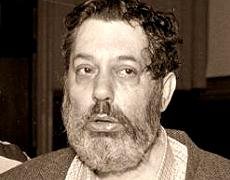
Joseph Kallinger
Murderer Ervil LeBaron
Murderer · USA · 1972
Ervil Morrell LeBaron (1925 to August 16, 1981) was the leader of a polygamous…
35 victims
Ervil LeBaron
Murderer · USA · 1972
Ervil Morrell LeBaron (1925 to August 16, 1981) was the leader of a polygamous…
35 victims
 Marvin Gray
Murderer · USA · 1975
Marvin Gray was convicted killer who claimed responsibility for 23 slayings and…
23 victims
Marvin Gray
Murderer · USA · 1975
Marvin Gray was convicted killer who claimed responsibility for 23 slayings and…
23 victims
 Yahweh ben Yahweh
Murderer · USA · 1980
Yahweh ben Yahweh was born and legally named Hulon Mitchell Jr. (October 27, 19…
23 victims
Yahweh ben Yahweh
Murderer · USA · 1980
Yahweh ben Yahweh was born and legally named Hulon Mitchell Jr. (October 27, 19…
23 victims
 Charles Manson
Murderer · USA · 1969
Charles Milles Manson (born November 12, 1934) was an American criminal and mus…
9 victims
Charles Manson
Murderer · USA · 1969
Charles Milles Manson (born November 12, 1934) was an American criminal and mus…
9 victims
 Jerry Lynn McCracken
Mass murderer · USA · 1990
Jerry Lynn McCracken was an Oklahoma death row inmate executed by lethal inject…
4 victims
Jerry Lynn McCracken
Mass murderer · USA · 1990
Jerry Lynn McCracken was an Oklahoma death row inmate executed by lethal inject…
4 victims
 Susan Eberhart
Murderer · USA · 1872
Susan Eberhart was a white woman aged between 17 and 21. She served as the hous…
1 victim
Susan Eberhart
Murderer · USA · 1872
Susan Eberhart was a white woman aged between 17 and 21. She served as the hous…
1 victim
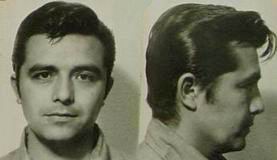 Perry Edward Smith
Mass murderer · USA · 1959
Perry Edward Smith (October 27, 1928 – April 14, 1965) was one of two ex-convic…
4 victims
Perry Edward Smith
Mass murderer · USA · 1959
Perry Edward Smith (October 27, 1928 – April 14, 1965) was one of two ex-convic…
4 victims
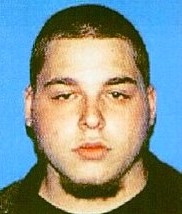 Jacob Robida
Murderer · USA · 2006
Jacob D. Robida (June 13, 1987 – February 5, 2006) was a Massachusetts teenager…
2 victims
Jacob Robida
Murderer · USA · 2006
Jacob D. Robida (June 13, 1987 – February 5, 2006) was a Massachusetts teenager…
2 victims
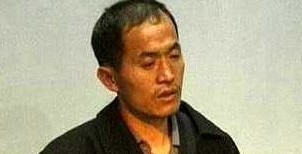 Yang Xinhai
Serial killer · China · 2000
Yang Xinhai (simplified Chinese: 杨新海; pinyin: Yáng Xīnhǎi; 17 July 1968–14 Febr…
67 victims
Yang Xinhai
Serial killer · China · 2000
Yang Xinhai (simplified Chinese: 杨新海; pinyin: Yáng Xīnhǎi; 17 July 1968–14 Febr…
67 victims
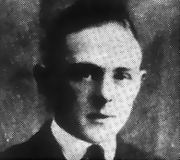 Ernest Brown
Murderer · 1933
Ernest Brown was executed by hanging at Armley prison in Leeds on February 6, 1…
1 victim
Ernest Brown
Murderer · 1933
Ernest Brown was executed by hanging at Armley prison in Leeds on February 6, 1…
1 victim
- Gender
- male
- Country
- USA
- Location
- Pennsylvania/New Jersey, USA
- Date of birth
- December 11, 1936
- Age at first offence
- 38
- Characteristics
- child abuse, serial rapist, mutilation
- Victim profile
- Jose Collazo, a Puerto Rican youth / Joseph, Jr., his son / Maria Fasching, 21-year-old nurse
- Method of murder
- St abbing with knife / Drowning
- Date(s) of murder
- 1974 - 1975
- Years active
- 1974–1975
- Date of arrest
- January 17, 1975
- Status
-
Died in custody
Sentenced to life in prison on October 14, 1976; died in prison March 26, 1996
Case record: Joseph Kallinger
Background
Joseph Kallinger was an American serial killer who murdered three people and tortured four families. He was born Joseph Lee Brenner III on December 11, 1935, at the Northern Liberties Hospital in Philadelphia, Pennsylvania, to Joseph Lee Brenner, Jr. and Judith. In December 1937, he was placed in a foster home after his father had abandoned his mother. On October 15, 1939, he was adopted by Stephen and Anna Kallinger.
Stephen and Anna Kallinger abused Joseph Kallinger severely. At age six, he suffered a hernia inflicted by his foster father. The punishments included kneeling on jagged rocks, being locked inside closets, consuming excrement, committing self-injury, being burned with irons, being whipped with belts, and being starved. When he was nine, he was sexually assaulted by a group of neighborhood boys. As a child, he often rebelled against teachers and his foster parents. He dreamed of becoming a playwright and directed his school’s performance of "A Christmas Carol" in the ninth grade.
When he was 15, he began a sexual relationship with a schoolmate named Hilda Bergman. His parents told him not to see her, but he married her and had two children with her. She left him after suffering domestic violence from him. He remarried in 1958 after being released from a mental hospital and had five children with his second wife. He was extremely abusive toward his wife and children, and often inflicted the same punishments on them that he had suffered from his foster parents.
Kallinger committed these crimes with his 13-year-old son Michael.
Kallinger also had a history of mental illness. During the investigation after the Leonia offences, he was described as having been diagnosed as paranoid and schizophrenic by psychiatrists. The children later recanted their allegations about child abuse, but the case still contributed to his criminal attention.
He attempted suicide multiple times, including attempting to set himself on fire. Because of his suicidal and violent behavior, he was transferred to a mental hospital in Trenton, New Jersey, and later transferred to a mental hospital in Philadelphia on May 18, 1979.
The offence
From July 1974, Joseph Kallinger and his 13-year-old son Michael went on a crime spree spanning Philadelphia, Baltimore, Maryland, and New Jersey. Over the next six weeks, they robbed, assaulted, and sexually abused four families and murdered three people. They gained entrance to each house by pretending to be salesmen.
On January 8, 1975, they invaded a home in Leonia, New Jersey, holding eight captives at gunpoint while they ransacked the house. Nurse Maria Fasching entered the house to check on a bed-ridden family member and was stabbed to death after refusing Kallinger’s order. During the incident, a bloodstained shirt discarded during the getaway was later traced to Kallinger. Maria Fasching was murdered by multiple stab wounds to the chest and deep slashing wounds to the neck, and the wounds in her chest were later matched with the blade dimensions of a knife found by detectives. In addition to the killing, the victims were bound and terrorized, and the women and men held hostage were described as being stripped or partially naked, with sexual assaults involving Kallinger forcing women to perform fellatio.
Earlier murders included the death of Joseph Jr., who was drowned by Joseph Sr. and Michael. The body was recovered by authorities on August 9, 1974. Another earlier murder described was the killing of Jose Collazo, a nine-year-old Puerto Rican youth, who was tortured and had his penis cut off. Another killing described was connected to an arson run and involved a 21-year-old nurse named Maria Fasching.
Additional incidents described in the spree included:
- A November 22 burglary in Lindenwold, New Jersey, where no one was home.
- Sexual abuse of victim Joan Carty after she was tied to her bed.
- In Susquehanna Township, Pennsylvania, five hostages were bound and robbed at knifepoint, with $20,000 in cash and jewelry stolen after slashing one victim’s breast.
- In Homeland, Maryland, Pamela Jaske was held captive in her home, and Joseph was forced to fellate Joseph at gunpoint.
- In Dumont, New Jersey, an assault with victim Mary Rudolph on January 6.
- A second stop in Susquehanna Township two days after January 6 and additional hostage episodes during the broader spree.
During the Leonia incident, the victims included Didi Romaine Wiseman, her daughters Wendy and Andrea, and her sisters Randi Romaine and Retta Romaine, plus Retta’s boyfriend Frank Welby, and Maria Fasching. Maria Fasching was heard protesting during an attack in the basement, with Frank Welby hearing screams and a gurgling sound while Maria’s death was later confirmed. Frank Welby was bound, gagged, and held in the basement while a knife blade was held against the base of his penis. Frank was unharmed at the time police arrived.
Investigation
Police began investigating Kallinger after gathering physical evidence including a blood-stained t-shirt and eyewitness testimony that he and his son had been seen in the area. Investigators found out about his history of domestic violence, Joseph Jr.’s death, and a series of arsons targeted against buildings he owned.
During the Leonia incident investigation, detectives circulated descriptions of the Kallingers and placed the Leonia police department on alert. Reports of alleged sightings followed, including:
- Salvatore Tufo, who saw Joseph and Michael walking and holding hands.
- Lucy Bevacqua, who described seeing them and using the phrase "offensively effeminate."
- A bus driver who reported seeing Joseph and Michael get on a bus heading out of Leonia to George Washington Bridge via Fort Lee during the afternoon of January 8.
- Eva Rumi, who saw the pair in Sylvan Park and later saw them wash hands near discarded clothing.
Searches found items discarded during the escape, including:
- A man’s watch with a distinctive blue face hidden in shrubbery by Lieutenant Paul Dittmar.
- A brown leather knife sheath.
- A knife with a round black handle and a four-and-a-half inch blade, razor sharp and stained with blood.
- A chrome plated .32-caliber revolver dumped in a hedge and found fully loaded.
- Edwina Romaine’s Timex watch and a garnet ring belonging to her daughter Didi.
- Additional jewelry found in the same area.
The knife had no obvious markings or brand name, and the serial number on the gun had been filed off. The shirt’s shirt tracing efforts initially failed when the shirt could not be traced to an owner.
Prosecutor McClure took over the investigation and ordered a full search of streets used as an escape. Lieutenant Paul Dittmar searched Park Avenue, part of the escape route, and found the watch, sheath, and knife, and later other discarded items.
Fingerprints were collected. In all, fifty-three matching fingerprints were taken from the Romaine house and the homes of other victims and sent to the FBI for identification, but no matches were found. Further examination yielded a complete name, "KALINGER". A search of criminal records for the name produced no match, and police later traced the shirt through a production run sold through a retail outlet, Berg Brothers department store in Philadelphia, sold during the autumn of 1973 to an unknown customer. The shirt had a laundry mark "KAL."
A detective named Robert Roseman contacted Philadelphia police after interviewing staff at Berg Brothers. His spelling-related match was made because the Philadelphia officer recognized the sound of the name, and Kallinger’s correct name was Joseph M. Kallinger, a resident of Philadelphia with a police record. The file included his address and photographs matching victim descriptions.
Police confirmed Joseph Kallinger’s ownership of the bloodstained shirt by visiting Joseph Felcher, owner of "Bright Sun Cleaners." Felcher said: "That’s Joe Kallinger’s, he runs the shoe repair place down the block!" When asked how he could be so sure, he replied: "The smell, his shirts always smell like that." Felcher explained that a glue used to repair shoes caused the smell and that the marking machine was only capable of printing eight letters, so one letter was left off.
Police also connected Kallinger’s shoe repair business from his address at 2723 North Front Street in the Kensington district of Philadelphia, near the department store where the shirt was purchased.
The Philadelphia homicide squad laid plans to arrest Joseph and Michael at home. Federal and state authorities were involved, and a joint raiding party arrested them on January 17.
Arrest and imprisonment
The Philadelphia homicide squad laid plans to arrest Joseph and Michael Kallinger at home at 9:30pm on January 17. Contingent officers entered the house, arrested Michael and James, and searched for Joseph. A hole cut through a wall connected the house to his mother’s home next door, and police found Joseph Kallinger talking to his lawyer. Kallinger surrendered without incident and told police: "I would not talk without an attorney present." (The statement appears as a refusal to talk without attorney present.)
During the period in custody and questioning, police uncovered numerous items allegedly stolen from victims’ homes during a search of his house. At police headquarters in Philadelphia, Kallinger was formally charged with the murder of Maria Fasching, armed robbery, wounding, kidnapping, theft and rape.
Michael Kallinger was questioned in the hope he would implicate his father. When Michael passed his father in a hallway, he was told: "If you tell them anything I’ll kill you." Michael did not provide an incriminating word relating to charges against his father.
Kallinger’s behavior changed after custody. He spoke about ordering his wife and daughter out of bed to make him tea, and he claimed to build a bowling alley next to his bed. Police later dismissed these claims.
Kallinger told psychologists that God had sent him on a divine mission. He said it consisted of helping people whose brains had malfunctioned because they wore badly designed shoes. He also claimed he had been alive for a thousand years and was often in the form of a butterfly, and that he was pursued by the devil. He blocked up a toilet in his cell with books and papers to cause flooding and put red fruit juice in samples of his urine to prove he had a medical condition.
Trial
Kallinger underwent a first trial in Pennsylvania that ended with a hung jury in June 1975. Three months later, at his retrial, he was convicted on nine felony counts and sentenced to prison for 30 to 80 years. The judge called him: "an evil man... utterly vile and depraved."
His New Jersey trial followed for the Leonia offences, including the murder of Maria Fasching. Kallinger pleaded insanity and claimed God had told him to kill. He was found sane, and sentencing followed.
During the New Jersey trial, Kallinger was disruptive at times and was removed from court by Judge Thomas Dalton. Present were most of his Leonia victims and others who had seen him in and around Leonia. The defense produced documentary evidence that suggested Kallinger had inhaled fumes from a leather treatment containing Toluene, described as a dangerous chemical substance that can numb the senses and damage the brain.
On October 14, 1976, after two hours of deliberation, a jury found Joseph Kallinger responsible for his actions and guilty of the murder of Maria Fasching and all other charges. He was sentenced to life imprisonment.
Michael Kallinger was deemed under the control and influence of his father at the time of the offences. He was sent to a reformatory, released into the care of foster parents, and placed on probation until his twenty-fifth birthday.
Sentencing
Joseph Kallinger received multiple sentences described in the record:
- After conviction on the Pennsylvania retrial, he was sentenced to prison for 30 to 80 years.
- After conviction in New Jersey for the murder of Maria Fasching, he received a mandatory life sentence on October 14, 1976. The life sentence ran consecutively with his time in Pennsylvania according to one account.
Appeals
No appeals were described in the provided text.
Outcome
Joseph Kallinger died in prison on March 26, 1996. The record described the cause as an epileptic seizure. He was 59 years old and had spent the last 11 years of his life on suicide watch.
Michael Kallinger later moved to another state, changed his name, and was described as free. In the Leonia case and the earlier spree, Michael had been placed on probation until his twenty-fifth birthday, and a later narrative described murder charges dismissed in exchange for guilty plea on two counts of robbery, but the provided text also states the reformatory and probation.
Aftermath
After his first conviction and while awaiting extradition, Kallinger set fire to his prison cell in March 1977. The attempt did not kill him. He was moved to a psychiatric hospital in Trenton, New Jersey, and later a more strict asylum. He attempted to suffocate himself by stripping the plastic cover from a mattress and attempting to suffocate himself. Another suicide attempt led to further transfers.
He was transferred to Pennsylvania’s Fairview State Hospital for the Criminally Insane on May 18, 1978 in one part of the text and described as May 18, 1979 in another part of the text. While at Fairview, he slashed the throat of a fellow inmate, and his victim survived.
In prison, he had violent outbursts including stabbing and trying to strangle another inmate. The record also described hunger strikes and being transferred to Philadelphia’s Farview Psychiatric Hospital after deterioration including speaking in a strange tongue.
In 1981, two psychiatrists, Drs. Arieti and Robbins, examined Kallinger. The latter wrote in his report: "I can only concur with Dr. Ariete’s finding and that of the Farview doctors that Mr. Joseph Kallinger chronically suffers from paranoid schizophrenia and that his criminal behavior is a manifestation of his illness."
For six years after his transfer to Farview, Kallinger was visited and interviewed by author Flora Rheta Schreiber. During the interviews, Kallinger described visions that controlled him and made him perform evil tasks including the drowning of his son Joey and the mutilation murder of a child named Jose Collazo. Schreiber attempted to contact Michael Kallinger to confirm his father’s story but was told by his foster parents: "Michael will never talk to you – ever."
Other details
Kallinger’s adoption and family background included Stephen Kallinger (an Austrian immigrant who died in 1965 aged seventy-two) and Anna Kallinger. The record also described that Joseph was born December 11, 1936 in one passage, and December 11, 1935 in another passage; both appear in the provided text.
During his childhood and adolescence, the record included multiple mental-health examinations and diagnoses, including "psychophysiological nervous disorder" and "major mental illness in the form of schizophrenia of the paranoid type." He was prescribed Thorazine. The record also described incidents in 1959 involving him being found confused and suffering apparent amnesia, and a sexual anxiety diagnosis linked to a hernia operation when he was six.
In January 1972, the record described Joseph branding his oldest daughter for running away. He was arrested for child abuse and found incompetent to stand trial. Later in 1972 he was found guilty of child abuse charges, sentenced to eleven months’ imprisonment with four months probation after already serving seven months. The record also described affidavits submitted in February 1973 by Joey, Michael and Mary Jo stating the charges had been fabricated, and that the conviction was quashed and his record cleared.
The record described the death of Joey: in July 1974 Kallinger took out a $45,000 triple indemnity insurance policy on Joey’s life, and later Joey’s body was found in the basement of an abandoned building near the Kallinger home. The body was partially crushed by demolition machinery, and an autopsy later failed to find an official cause of death. Philadelphia homicide squad detectives were convinced Kallinger was involved, but the provided text also included that an insurance company refused to honor the claim and that court action resulted in the police being ordered to drop the case after Joey’s death.
Spotted an error, or have more information about this case?