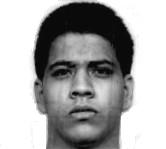
Andrew Cantu
Murderer Brian Kevin Rosenfeld
Murderer · USA · 1985
Brian Kevin Rosenfeld Brian Kevin Rosenfeld was sentenced to three concurrent l…
23 victims
Brian Kevin Rosenfeld
Murderer · USA · 1985
Brian Kevin Rosenfeld Brian Kevin Rosenfeld was sentenced to three concurrent l…
23 victims
 Yahweh ben Yahweh
Murderer · USA · 1980
Yahweh ben Yahweh was born and legally named Hulon Mitchell Jr. (October 27, 19…
23 victims
Yahweh ben Yahweh
Murderer · USA · 1980
Yahweh ben Yahweh was born and legally named Hulon Mitchell Jr. (October 27, 19…
23 victims
 Russell Ellwood
Murderer · USA · 1991
Russell Ellwood was a former taxi driver. Authorities suspected him of killing…
20 victims
Russell Ellwood
Murderer · USA · 1991
Russell Ellwood was a former taxi driver. Authorities suspected him of killing…
20 victims
 Robert Martines Perez
Murderer · USA · 1994
Name: Robert Martines Perez · Other name used in proceedings: Robert Martinez P…
15 victims
Robert Martines Perez
Murderer · USA · 1994
Name: Robert Martines Perez · Other name used in proceedings: Robert Martinez P…
15 victims
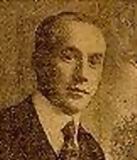 Carl Otto Wanderer
Murderer · USA · 1920
Carl Otto Wanderer (1887–1921) was described as a murderer known for what becam…
2 victims
Carl Otto Wanderer
Murderer · USA · 1920
Carl Otto Wanderer (1887–1921) was described as a murderer known for what becam…
2 victims
 Kiana Barker
Murderer · USA · 2010
Kiana Barker was a foster mother who tried to adopt Viola Vanclief in 2010. Bar…
1 victim
Kiana Barker
Murderer · USA · 2010
Kiana Barker was a foster mother who tried to adopt Viola Vanclief in 2010. Bar…
1 victim
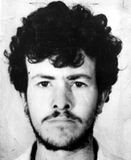 Allan Baker
Murderer · Australia · 1973
Allan Baker was convicted with Kevin Crump for the murder of Ian James Lamb and…
2 victims
Allan Baker
Murderer · Australia · 1973
Allan Baker was convicted with Kevin Crump for the murder of Ian James Lamb and…
2 victims
 John Patler
Murderer · USA · 1967
John Patler (formerly Yanacki Patsalos) John Patler, formerly Yanacki Patsalos,…
1 victim
John Patler
Murderer · USA · 1967
John Patler (formerly Yanacki Patsalos) John Patler, formerly Yanacki Patsalos,…
1 victim
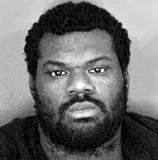 Donta Page
Murderer · USA · 1999
Donta Page came to Colorado from Maryland as part of a court order to participa…
1 victim
Donta Page
Murderer · USA · 1999
Donta Page came to Colorado from Maryland as part of a court order to participa…
1 victim
 Arthur Thomas
Murderer · USA · 1953
Arthur Thomas was convicted by a trial jury in Arizona of first-degree murder a…
1 victim
Arthur Thomas
Murderer · USA · 1953
Arthur Thomas was convicted by a trial jury in Arizona of first-degree murder a…
1 victim
- Gender
- male
- Country
- USA
- Location
- Taylor County, Texas, USA
- Date of birth
- December 5, 1967
- Age at first offence
- 23
- Characteristics
- murder for hire, arson, burglary, robbery
- Victim profile
- Mandell Eugene "Gene" Summers. 64, Helen Summers, 64, and Billy Mack Summers, 60
- Method of murder
- St abbing with knife
- Date(s) of murder
- June 11, 1990
- Years active
- 1990
- Date of arrest
- —
- Status
-
Executed
Executed by lethal injection in Texas on February 16, 1999
Overview
Andrew Cantu was convicted for the capital offense of murdering Mandell Eugene "Gene" Summers, Helen Summers, and Billy Mack Summers on June 11, 1990, during the same criminal transaction, in the course of committing burglary of a habitation, in the course of committing robbery, in the course of committing arson, and for remuneration and the promise of remuneration from Gregory Lynn Summers, alleged in a single count in the alternative. After a separate punishment hearing, the jury answered affirmatively two special sentencing issues, and the trial court assessed punishment at death. Cantu was executed by lethal injection in Texas on February 16, 1999.
Timeline
- June 11, 1990 — Mandell Eugene "Gene" Summers, Helen Summers, and Billy Mack Summers were murdered at an Abilene home during a burglary of a habitation, robbery, and arson.
- January 16, 1991 — Cantu was indicted in the 104th Judicial District Court of Taylor County, Texas, for the capital offense of murdering Mandell Eugene "Gene" Summers, Helen Summers, and Billy Mack Summers on June 11, 1990.
- May 29, 1991 — A jury found Cantu guilty as charged.
- May 31, 1991 — After a separate punishment hearing, the jury answered affirmatively two special sentencing issues.
- May 25, 1994 — The Texas Court of Criminal Appeals affirmed the conviction.
- September 21, 1994 — Rehearing was denied by the Texas Court of Criminal Appeals.
- February 21, 1995 — The United States Supreme Court denied certiorari review.
- April 18, 1995 — The 104th Judicial District Court of Taylor County scheduled Cantu's execution for this date.
- September 22, 1995 — A federal court dismissed federal habeas action without prejudice to allow pursuit of a state application for writ of habeas corpus.
- August 19, 1996 — The Court of Criminal Appeals appointed a fifth counsel and allowed 180 days to file a writ application in the state habeas trial court.
- September 12, 1996 — A sixth attorney was appointed but was permitted to withdraw due to a conflict with Cantu.
- March 13, 1997 — A seventh attorney was appointed for Cantu.
- July 1, 1997 — Cantu moved to dismiss this counsel and to proceed pro se; after a hearing, Cantu was granted permission to proceed pro se on his application for state writ of habeas corpus.
- October 14, 1998 — The 104th District court entered an order scheduling Cantu's execution for December 3, 1998.
- November 3, 1998 — Cantu filed a motion for appointment of counsel and stay of execution with the United States District Court for the Northern District of Texas, Abilene Division.
- November 16, 1998 — The district court entered an order denying the appointment of counsel and stay of execution.
- November 25, 1998 — Cantu filed notice of appeal.
- December 2, 1998 — The Fifth Circuit affirmed.
- January 11, 1999 — The Supreme Court denied a petition for writ of certiorari.
- February 12, 1999 — Cantu simultaneously filed motions for a stay of execution in state and federal courts claiming that Paul Flores had recanted his incriminating statements; the federal district court denied the requested stay that same day.
- February 16, 1999 — The lethal injection execution occurred in Texas.
The offence
Authorities convicted Andrew Cantu for the capital offense of murdering Mandell Eugene "Gene" Summers, Helen Summers, and Billy Mack Summers on June 11, 1990. The murders occurred during the same criminal transaction, in the course of committing burglary of a habitation, in the course of committing robbery, in the course of committing arson, and for remuneration and the promise of remuneration from Gregory Lynn Summers, alleged in a single count in the alternative.
Planned killings and recruitment
Andrew Cantu told an individual named Aguirre that he had a job to do and that he wanted Aguirre’s assistance to kill three old people, described as Summers' parents. Aguirre declined to help, citing probation status.
Later that same night, Cantu borrowed his brother's black sweat pants and sweat shirt and paced in and out of the house as if waiting for someone, but no one arrived.
Early on June 11, 1990, Summers and Cantu were riding in Summers' truck and approached Aguirre and asked Aguirre to contact his cousin, Ramon Gonzales. Aguirre could not contact him, and Gonzales came from Haskell to Abilene with a friend, Paul Flores. Gonzales had previously only briefly met Cantu, and Flores met him that day.
While riding with Gonzales, Flores, and Aguirre, Cantu asked if they would “waste” three old people whose adopted son wanted them killed. Cantu stated he would be paid with money, jewelry, and guns in the house and from insurance policies collected later. When the others refused, Cantu changed the subject to burglary of a house. Gonzales and Flores agreed to join in the burglary, while Aguirre declined to become involved because of his probation status.
Gonzales dropped Cantu off at his house and took Aguirre home. Aguirre attempted to dissuade the others from assisting Cantu and believed they were homebound when last he saw them. Gonzales and Flores returned to pick up Cantu, who had again borrowed his brother's black sweat pants and shirt. Cantu explained to his brother that he was going to pull a "heist."
Purchases and actions before the burglary
Cantu, Gonzales, and Flores went to a grocery store where Cantu purchased lighter fluid, gloves, pantyhose, and a cap. A cashier later identified Cantu and remembered some of the items he purchased. Cantu had bought a knife earlier that day from Flores.
The three rode around before setting out for the house to be burglarized. Near midnight, they drove through an alley behind the Summers' residence. Cantu was dropped off in the alley behind the house and cut the telephone line. Gonzales picked up Cantu, drove to a nearby street and parked. They then got out and walked toward the alley behind the Summers’ home. Cantu carried the knife and lighter fluid.
A neighbor seated on her unlit porch saw three men and remembered that one was carrying a knife which shone in the streetlamp's light. The men entered the Summers' yard through a back gate. Cantu cut a hole in a back window screen and crawled into the house.
Stabbings and threats during the attack
By the time Gonzales and Flores had crawled inside, Cantu was already stabbing Gene Summers, who was lying in his bed. Cantu threatened to "waste" Gonzales and Flores if they attempted to leave, and then proceeded to the living room where he repeatedly stabbed Helen Summers as she sat sleeping in a recliner.
Cantu ordered Flores and Gonzales to search the house for the promised money before proceeding to a front bedroom where he murdered Billy Mack Summers.
Cantu ransacked the house looking for the money himself after Gonzales and Flores had not found it. No promised money was found. Before leaving the scene, Cantu doused the bedroom with lighter fluid and set it on fire. As they drove from the scene, ambulance and fire truck sirens could be heard heading in the direction of the Summers' home.
Knife disposal and aftermath at Cantu's uncle’s home
After leaving, Cantu ordered Flores to "get rid" of the knife. Flores called "slow poke" for his mental prowess and threw the knife out the car window. This infuriated Cantu.
The bloody knife was found by a woman mowing her lawn.
The three went to the home of Cantu's uncle. Cantu chided Gonzales and Flores for their failure to find the promised money and searched them for it, accusing them of theft. Cantu threatened to kill Flores and Gonzales if they had the money or talked about the incident. Flores and Gonzales returned to Haskell.
Investigation and confession
The following morning, June 12, 1990, Cantu asked his brother if he had seen the news. His brother watched the midday news and learned about the triple murders. Because he knew Cantu and that the victims were Greg Summers' parents, he asked Cantu whether he had been involved in the murders. Cantu denied involvement.
Later that week, his brother asked Cantu again if he had any part in the murders. Disgusted by the answer, he called the police and made a statement on June 19, 1990.
Aguirre also asked Cantu about the murders. Cantu confessed that he had committed them and complained about not having been paid.
On June 15, 1990, Keenan Wilcox contacted the police. Wilcox, described as an acquaintance of Summers, reported that Summers had approached him in the recent past attempting to hire him to murder his parents and uncle and to burn their house down. Wilcox stated Summers offered to pay him from insurance money and case in the house. Wilcox’s suspicions were aroused upon reading the details of the murders and the victims’ identities in the newspaper.
Procedural history
Indictment and trial
On January 16, 1991, Cantu was indicted in the 104th Judicial District Court of Taylor County, Texas, for the capital offense of murdering Mandell Eugene "Gene" Summers, Helen Summers, and Billy Mack Summers on June 11, 1990, during the same criminal transaction, in the course of committing burglary of a habitation, in the course of committing robbery, in the course of committing arson, and for remuneration and the promise of remuneration from Gregory Lynn Summers, alleged in a single count in the alternative.
Cantu was tried by a jury, which on May 29, 1991, found him guilty as charged.
On May 31, 1991, following a separate punishment hearing, the jury answered affirmatively the two special sentencing issues submitted pursuant to TEX. CODE CRIM. PROC. ANN. art. 37.071(b) (Vernon Supp. 1990). In accordance with state law, the trial court assessed punishment at death.
Direct appeal and certiorari
Cantu’s conviction and sentence were automatically appealed to the Texas Court of Criminal Appeals. Counsel was appointed to represent Cantu on direct appeal. Cantu moved the district court to dismiss his counsel and to proceed pro se, but before the request was ruled on, counsel filed a brief and Cantu filed a brief as well. The trial court held a hearing and found that Cantu made a "competent, intelligent" choice to proceed pro se.
The Court of Criminal Appeals affirmed the conviction on May 25, 1994, and denied rehearing on September 21, 1994.
A third attorney filed a petition for a writ of certiorari to the United States Supreme Court on Cantu's behalf. Cantu moved to dismiss this attorney and the Texas Resource Center from all involvement in his case. The Supreme Court denied certiorari review on February 21, 1995.
Scheduling of execution and federal habeas proceedings
On March 1, 1995, the 104th Judicial District Court of Taylor County scheduled Cantu's execution for April 18, 1995. After a federal court granted Cantu a stay of execution, Cantu was appointed a fourth counsel for preparation of a federal petition for writ of habeas corpus.
On September 22, 1995, the federal court dismissed the federal action without prejudice in order for Cantu to pursue a state application for writ of habeas corpus.
On August 19, 1996, the Court of Criminal Appeals appointed a fifth counsel and allowed him 180 days to file a writ application in the state habeas trial court, but this counsel withdrew after it was learned he had represented Summers on direct appeal.
A sixth attorney was appointed on September 12, 1996 but was permitted to withdraw due to a conflict with Cantu.
On March 13, 1997, a seventh attorney was appointed. On July 1, 1997, Cantu moved to dismiss this counsel and proceed pro se. After a hearing, the court granted permission to proceed pro se on his application for state writ of habeas corpus.
On September 19, 1997, an eighth attorney requested permission to represent Cantu, and Cantu requested that the motion be granted. On October 7, 1997, the Court of Criminal Appeals denied Cantu's motion and denied reconsideration on November 19, 1997. Cantu never filed a state application for writ of habeas corpus.
State and federal stay motions and appeal
On October 14, 1998, the 104th District court entered an order scheduling Cantu's execution for December 3, 1998.
On November 3, 1998, Cantu filed a motion for appointment of counsel and stay of execution with the United States District Court for the Northern District of Texas, Abilene Division. The state opposed the stay of execution and appointment of counsel for preparation of a federal petition for writ of habeas corpus and requested that any attempt at federal habeas review be found barred by limitations. The state did not oppose appointment of counsel to assist Cantu in resolving the statute of limitations issue.
On November 16, 1998, the district court entered an order denying the appointment of counsel and stay of execution. On November 25, 1998, Cantu filed notice of appeal. On December 2, 1998, the Fifth Circuit affirmed.
Later, the Supreme Court granted a stay of execution, then denied a petition for writ of certiorari on January 11, 1999.
On February 12, 1999, Cantu simultaneously filed motions for a stay of execution in state and federal courts, claiming that Paul Flores had recanted his incriminating statements against Cantu. The federal district court denied the requested stay that same day. Later that day, Cantu withdrew an appeal in the Fifth Circuit from the denial of the motion for stay. The motion for stay, and now accompanied by an application for state writ of habeas corpus, were pending in state court.
Sentencing
After the jury found Cantu guilty as charged and answered affirmatively the two special sentencing issues under TEX. CODE CRIM. PROC. ANN. art. 37.071(b) (Vernon Supp. 1990), the trial court assessed punishment at death.
Prior criminal history and punishment-phase testimony
During the punishment phase, the state presented “prison packets” showing Cantu had been convicted of burglary of a habitation committed in January 1988. The judgment in that case reflected a sentence of five years that was to run concurrently with another five-year conviction on a plea of guilty in a separate cause reflecting the same date.
Police officers from Jones County, Merkel, and Callahan County testified that Cantu had confessed to committing various burglaries within their respective jurisdictions. A deputy sheriff testified that Cantu had been assaultive and disruptive on several occasions while he was pending trial on the instant capital murder charge. Another officer testified that Cantu had a reputation for being violent and dangerous.
Max Aguirre testified that he had known Cantu about one and a half or two years and that Cantu often made his living selling "crank." Aguirre described Cantu’s propensity for violence, including offering Aguirre fifty dollars to shoot a man, carrying a gun "when necessary," carrying an Uzi to a fight, bragging that he shot up a car with three people inside and laughing at how they had them "kissing the floorboard," and giving Aguirre a gun and telling him to shoot a man he did not know or trust if "anything went down."
James Rogers testified that he was present when Cantu made a purchase of cocaine at a party in Dallas. Rogers stated that while en route to another location, Cantu pulled a shotgun and laid it on his lap, told Rogers that if they were stopped by the cops he was going to kill them, became angry with Rogers, and told him that if he ever saw him in Abilene he would probably blow his head off.
Against the advice of his attorneys, Cantu elected to testify at the punishment phase. Cantu claimed he was not guilty and gave an alibi story for his whereabouts on the night of the murders, claiming that he had gone to Fort Worth to buy drugs. He claimed his confessions to the 1988 burglaries were not voluntarily made. Cantu said other persons were "hitting" houses for him and that he never entered any of the houses himself. He claimed he was wrongfully charged in Fort Worth with attempted murder.
In rebuttal, a deputy sheriff testified that he was present when statements were taken from Cantu regarding the 1988 burglaries and that Cantu was not threatened into signing the confessions. Another officer testified that he took a statement regarding Cantu’s whereabouts on the night of the murders and that Cantu did not tell him he had gone to Fort Worth; instead, Cantu told him he had gone riding and visiting with some friends.
Drugs and alcohol
Cantu had a history related to drug activity, but there was was no evidence of drug use in connection with the instant offense.
At the time of the murders, Cantu was on parole after serving seven weeks of a five-year term for burglary.
Execution
Cantu declined to make a last statement. He was pronounced dead at 9:39 p.m., seven minutes after the lethal injection began flowing into his arms. The lethal injection had been delayed by more than three hours as the U.S. Supreme Court considered an 11th-hour appeal on Cantu’s behalf, and the nation’s high court refused the request an hour before Cantu was put to death.
Five relatives of Cantu's victims attended the execution.
Victims and relationships mentioned
Mandell Eugene "Gene" Summers and Helen Summers were described as being 64 years old, and Billy Mack Summers was described as a mentally retarded 60-year-old brother who lived with them at their Abilene home. Gregory Lynn Summers was alleged to be the source of remuneration and the promise of remuneration. Greg Summers, the adopted son referred to in the killing scheme, was convicted of capital murder in their deaths and was awaiting execution.


Spotted an error, or have more information about this case?