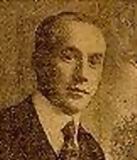
Carl Otto Wanderer
Murderer William Hale
Murderer · USA · 1921
Name: William Hale · Known as: the so-called "King of the Osage Hills" · Occupa…
24 victims
William Hale
Murderer · USA · 1921
Name: William Hale · Known as: the so-called "King of the Osage Hills" · Occupa…
24 victims
 Paul Jaworski
Murderer · USA · 1926
Paul Jaworski was born in Poland as Paul Poluszynski in 1900. He later immigrat…
20 victims
Paul Jaworski
Murderer · USA · 1926
Paul Jaworski was born in Poland as Paul Poluszynski in 1900. He later immigrat…
20 victims
 John S. Williams
Murderer · USA · 1910
John S. Williams was convicted of murder and sentenced to life imprisonment on…
18 victims
John S. Williams
Murderer · USA · 1910
John S. Williams was convicted of murder and sentenced to life imprisonment on…
18 victims
 Edward Adams
Murderer · USA · 1920
Edward J. "Eddie" Adams was born in 1887 on a farm in Hutchinson, Kansas as W.J…
7 victims
Edward Adams
Murderer · USA · 1920
Edward J. "Eddie" Adams was born in 1887 on a farm in Hutchinson, Kansas as W.J…
7 victims
 William Kenneth Wagner
Murderer · USA · 1924
William Kenneth (Kinnie) Wagner (born February 18, 1903 in Scott County, VA) wa…
6 victims
William Kenneth Wagner
Murderer · USA · 1924
William Kenneth (Kinnie) Wagner (born February 18, 1903 in Scott County, VA) wa…
6 victims
 Floyd Allen
Murderer · USA · 1912
Floyd Allen (July 5, 1856 – March 28, 1913) was an American landowner and patri…
5 victims
Floyd Allen
Murderer · USA · 1912
Floyd Allen (July 5, 1856 – March 28, 1913) was an American landowner and patri…
5 victims
 Stephen Anthony Mobley
Murderer · USA · 1991
Stephen Anthony Mobley · Sex: Male · Race: White · Age: 39 at execution · Date…
1 victim
Stephen Anthony Mobley
Murderer · USA · 1991
Stephen Anthony Mobley · Sex: Male · Race: White · Age: 39 at execution · Date…
1 victim
 Dorothy Williams
Murderer · USA · 1987
Dorothy Williams was tried and convicted under her birth name, Dorothy Williams…
3 victims
Dorothy Williams
Murderer · USA · 1987
Dorothy Williams was tried and convicted under her birth name, Dorothy Williams…
3 victims
 Ronald Baquiran Bae
Mass murderer · Philippines · 2013
Ronald Baquiran Bae was born on November 9, 1971. He was a former member of the…
8 victims
Ronald Baquiran Bae
Mass murderer · Philippines · 2013
Ronald Baquiran Bae was born on November 9, 1971. He was a former member of the…
8 victims
 Ahmad Suradji
Serial killer · Indonesia · 1986
Ahmad Suradji (born 10 January 1949) was a serial killer in Indonesia. He was a…
42 victims
Ahmad Suradji
Serial killer · Indonesia · 1986
Ahmad Suradji (born 10 January 1949) was a serial killer in Indonesia. He was a…
42 victims
 Neah Verma
Murderer · India · 2011
Name: Neah Verma Age: 23 Occupation: beautician / salesgirl for beauty products…
3 victims
Neah Verma
Murderer · India · 2011
Name: Neah Verma Age: 23 Occupation: beautician / salesgirl for beauty products…
3 victims
- Gender
- male
- Country
- USA
- Location
- Chicago, Illinois, USA
- Date of birth
- 1887
- Age at first offence
- 33
- Characteristics
- parricide, rape?
- Victim profile
- Ruth Wanderer (his pregnant wife) and Al Watson (a drifter)
- Method of murder
- Shooting ( Colt M1911)
- Date(s) of murder
- June 21, 1920
- Years active
- 1920
- Date of arrest
- —
- Status
-
Executed
Executed by hanging on September 30, 1921
Background
Carl Otto Wanderer (1887–1921) was described as a murderer known for what became “The Case of the Ragged Stranger”.
The case involved the murder of his wife, Ruth Johnson, and a drifter named Al Watson, in a plot described as being connected to Wanderer’s homosexual lover known only as “James”.
Wanderer was born in Chicago in 1887 as the son of German immigrants. He dropped out of school before he reached high school, and he was described as a hard-worker who began saving up money. By his twenties, he and his father were running a successful butcher’s shop.
Wanderer enlisted in the Illinois Cavalry and served under John Pershing in the latter’s Punitive Expedition against Villa in 1916. He served with distinction and became a lieutenant in the regular Army, seeing heavy action on the Western Front in World War I. He was described as heavily decorated and as one of America’s most prestigious war heroes when he returned home to Illinois.
In late 1919, Wanderer married twenty-year-old Ruth Johnson. They moved in with Ruth’s parents.
Ruth became pregnant, and it was described that Wanderer reportedly became despondent upon hearing the news and became distant towards his family.
The offence
On June 21, 1920, Wanderer and his wife were returning home from a movie. Shots rang out in the hallway of the Johnson apartment building. Ruth’s mother heard the shots and rushed to the scene.
Ruth’s mother found Wanderer pummelling the body of a man in ragged clothing with his gun. Ruth lay dying with several shots in her chest. Ruth reportedly said, “My baby is dead” before dying.
Wanderer’s account was that the man had been lying in wait in their apartment, presumably to rob them. Wanderer drew his service pistol—a Colt M1911—and exchanged fire with the intruder. Wanderer killed the assailant, but his wife was killed by the shooter, who was not immediately identified.
A further account described that Carl and Ruth were returning from a movie when they did not notice the man who followed them into the dark vestibule of their apartment building. When the stranger fired several shots at the couple, Carl pulled out his service automatic and emptied the clip in the direction of the intruder. It described that fourteen bullets were fired in a space of a few seconds. Ruth fell to the floor with two bullets in her. It described Carl going berserk with rage, smashing his gun and fists against a man dressed in rags who was also on the floor, shot full of holes. It added that Ruth lived just long enough to whisper, “My baby . . . my baby is dead.”
In the later summary of events, it was stated that the stranger later died in Ravenswood Hospital, and that he had just $3.80 in his pocket.
Investigation
The case became a cause célèbre, with extensive press coverage.
Two reporters, Ben Hecht of the Chicago Daily News and Charles MacArthur of the Chicago Examiner, were described as unraveling Wanderer’s story within weeks, initially working independently.
Hecht’s first clue was described as being a police photograph of the two weapons used in the shooting, which were said to be virtually identical Colt M1911 pistols. It was described as seeming odd that a man who appeared to be a penniless vagrant—having less than $5 on his person when found—would carry such an expensive weapon that was not widely available to the public at the time, rather than selling it.
MacArthur came to a similar conclusion and found that the stranger’s weapon had been sold to Wanderer’s cousin Fred several years earlier.
Hecht had interviewed Wanderer several times before and had become friendly with him. Hecht went to talk to Wanderer, presumably to clear up confusion about the guns, but Hecht was struck by Wanderer’s happy and seemingly impassive manner just days after his wife’s murder.
While visiting Wanderer’s restroom, Hecht found articles of women’s clothing in a bathrobe and stumbled across several love letters written by Wanderer to a man called “James”.
Along with MacArthur, Hecht took their suspicions to the police, and Wanderer was called in for questioning.
Wanderer initially denied the charge, saying that the stranger’s gun was not his, but one that had been part of a mass arms shipment by the Army to a training camp he’d been in during the war.
During police interrogation, it was described that Hecht learned that Ruth Wanderer had withdrawn $1500 from her bank account the morning of the killing, and that the money was found later at Wanderer’s house.
Arrest
Wanderer was called in for questioning after the police were approached with suspicions based on the weapons and the letters.
When confronted with the evidence of the gun and letters, Wanderer was described as breaking down and confessing to both killings.
Trial
Wanderer continued to deny the charge until Hecht told him that “James” was coming down to the station to meet him.
After that, Wanderer confessed that he had committed the crime. It was stated that he told the police that he was indeed a closeted homosexual and had married his wife only for money.
After Wanderer’s confession, the described scheme involved Wanderer hiring a vagrant named Al Watson. It was described that Wanderer told Watson that his relationship with his wife was deteriorating and he wanted to stage a fight with Watson to prove himself a hero to Ruth.
When Watson showed up at the apartment, Wanderer shot both Watson and his wife with the two Colts and staged it so that Ruth’s mother would think Watson had killed Ruth.
It was stated that Wanderer was convicted after two trials and was sentenced to death by hanging.
Sentencing
Wanderer was sentenced to death by hanging.
As Wanderer stood on the gallows on March 19, 1921, he threw back his head and began to sing “Dear Old Pal O’Mine.” It was described that Carl was singing when the hangman placed the black shroud on his head and lowered the rope to his neck, and his voice continued behind the mask until the trap door opened and he died.
MacArthur turned to Hecht and said, “That son-of-a-bitch should have been a song plugger.”
Another witness, humorist Alexander Woolcott, was heard to say, “Wanderer deserved hanging for his voice alone.”
Appeals
No appeals were described.
Outcome
Wanderer was executed by hanging on September 30, 1921.
Aftermath
The public expressed outrage that Wanderer—a war hero expecting a child—would be set upon and have his pregnant wife killed. Wanderer was praised for his bravery in defending his wife at first, before the case became a cause célèbre with extensive press coverage.
Other details
Wanderer’s marriage was described as occurring in September 1919, and he and Ruth moved to an address described as 4732 N. Campbell, where they lived with her parents.
It was described that Wanderer’s happy and seemingly impassive manner just days after his wife’s murder contributed to attention by Hecht.
A check of the stranger’s gun, as described, revealed that it had been purchased by a Peter Hoffman. Hoffman told MacArthur that he sold the gun several years before to a man named Fred Wanderer, who was Carl Wanderer’s cousin.
A separate description stated that reporter Ben Hecht sat at his desk looking at a picture of the two guns used in the shooting. One was said to be Carl’s army-issued gun and the other belonged to the dead stranger. It stated that both guns were identical.
It was described that Hecht later interviewed Carl in his apartment on Campbell while Carl left the room. It described that Hecht found incriminating letters Wanderer had written “to a man,” and it added that after Hecht realized the letters showed a homosexual relationship, Hecht and MacArthur went to the police with the letters and their suspicions.
It was described that Wanderer told police that he had always been a homosexual and married Ruth for her money.
It was stated that when Ruth began to doubt his war record, he went to skid row and met a drifter named Al Watson.
A later description of Watson’s agreement stated that Watson thought it was a harmless way to make a few dollars, and agreed.
The described staged sequence in the vestibule was that Wanderer would hand a gun to Watson when the couple entered the vestibule, and when Ruth turned on the light, he would floor him with a punch. It was described that Watson would run away and that Wanderer would once again be a hero to his wife. The narrative then described that Wanderer did not hand the gun to Watson, instead keeping both guns and firing at both his wife and Watson, and then firing several more shots into them to make sure they were dead.
A final line stated: “Carl Wanderer and Ruth Wanderer - whom he murdered home last updates contact”.

Spotted an error, or have more information about this case?