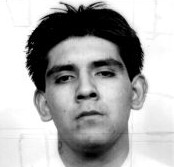
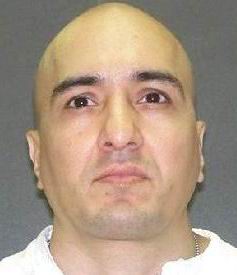
Domingo Cantu
Murderer Brian Kevin Rosenfeld
Murderer · USA · 1985
Brian Kevin Rosenfeld Brian Kevin Rosenfeld was sentenced to three concurrent l…
23 victims
Brian Kevin Rosenfeld
Murderer · USA · 1985
Brian Kevin Rosenfeld Brian Kevin Rosenfeld was sentenced to three concurrent l…
23 victims
 Yahweh ben Yahweh
Murderer · USA · 1980
Yahweh ben Yahweh was born and legally named Hulon Mitchell Jr. (October 27, 19…
23 victims
Yahweh ben Yahweh
Murderer · USA · 1980
Yahweh ben Yahweh was born and legally named Hulon Mitchell Jr. (October 27, 19…
23 victims
 Russell Ellwood
Murderer · USA · 1991
Russell Ellwood was a former taxi driver. Authorities suspected him of killing…
20 victims
Russell Ellwood
Murderer · USA · 1991
Russell Ellwood was a former taxi driver. Authorities suspected him of killing…
20 victims
 Robert Martines Perez
Murderer · USA · 1994
Name: Robert Martines Perez · Other name used in proceedings: Robert Martinez P…
15 victims
Robert Martines Perez
Murderer · USA · 1994
Name: Robert Martines Perez · Other name used in proceedings: Robert Martinez P…
15 victims
 Brandy Lee Rose Devine
Murderer · USA · 2012
Brandy Lee Rose Devine was a 25-year-old mother accused in connection with the…
1 victim
Brandy Lee Rose Devine
Murderer · USA · 2012
Brandy Lee Rose Devine was a 25-year-old mother accused in connection with the…
1 victim
 Anthony Hardy
Serial killer · United Kingdom · 2002
Anthony John Hardy (born May 31, 1951) was an English serial killer who was con…
3 victims
Anthony Hardy
Serial killer · United Kingdom · 2002
Anthony John Hardy (born May 31, 1951) was an English serial killer who was con…
3 victims
 David Junior Brown
Murderer · USA · 1980
David Junior Brown changed his name in prison after his conversion to Islam. Du…
2 victims
David Junior Brown
Murderer · USA · 1980
David Junior Brown changed his name in prison after his conversion to Islam. Du…
2 victims
 Amber Richardson
Murderer · USA · 2013
Amber Richardson was an Alderson woman convicted of conspiring to kill her husb…
1 victim
Amber Richardson
Murderer · USA · 2013
Amber Richardson was an Alderson woman convicted of conspiring to kill her husb…
1 victim
 Bruce Burrell
Murderer · Australia · 1995
Bruce Allan Burrell was an Australian convicted double murderer who was sentenc…
2 victims
Bruce Burrell
Murderer · Australia · 1995
Bruce Allan Burrell was an Australian convicted double murderer who was sentenc…
2 victims
 Jack Roland Murphy
Murderer · USA · 1967
Jack Roland Murphy (also known as “Murph the Surf”) was born in 1938 in Los Ang…
1 victim
Jack Roland Murphy
Murderer · USA · 1967
Jack Roland Murphy (also known as “Murph the Surf”) was born in 1938 in Los Ang…
1 victim
- Gender
- male
- Country
- USA
- Location
- Dallas County, Texas, USA
- Date of birth
- J une 7, 1968
- Age at first offence
- 20
- Characteristics
- rape, mentally ill, drug addict
- Victim profile
- Suda Eller Jones (94-year-old widow)
- Method of murder
- Beating her head against a concrete sidewalk
- Date(s) of murder
- June 25, 1988
- Years active
- 1988
- Date of arrest
- Same day
- Status
-
Executed
Executed by lethal injection in Texas on October 28, 1999
Case record: Domingo Cantu
Background
Domingo Cantu was identified as the offender in a capital case involving the rape and murder of Suda Eller Jones.
Brigitte Cantu, Cantu’s wife, and a son were among Cantu’s survivors. Cantu’s sister and wife witnessed the execution. During his final statements, Cantu spoke in German and Spanish to his wife and brother-in-law.
Cantu’s last statement included:
- English: "I love you. I will be waiting for you on the other side. Son be strong no matter what happens, know that God is looking over you. Jesus mercy, Jesus mercy, Jesus mercy!"
- Spanish: "Brother-in-law, take care of the family and let it be united. Yoli."
- German: "Menic schone prizessin. Du list all mine herz and seele, rind ich liele dich so sehm!" (Translation: My beautiful princess. You are all my heart and soul and I love you so much.)
A Texas Attorney General media advisory stated that Domingo Cantu, Jr. was scheduled to be executed after 6 p.m. on Thursday, October 28.
Cantu had written letters from death row asserting innocence and describing his arrest and questioning in his own words, including:
- "a detective ... questioned me about a murder I knew nothing about,"
- "asked me to sign to pieces of paper, so I could be released. Being that I was practically illiterate at the time, I asked what were the pieces of paper and he told me they were my statements to what we talked about, so I signed them without having him read them to me."
Cantu also wrote that he was an "an American Indian warrior held hostage in my homeland" and stated:
"I cannot and will not lay down systematically for this barbarity' and madness' called justice,"
The offence
In 1988, 94-year-old widow Suda Eller Jones lived at her home in the Oak Cliff section of Dallas, Texas, and had a morning routine of walking around the yard of her home.
On Saturday morning, June 25, 1988, at approximately 8:00 a.m., Fred Oakes, a neighbor, heard screams of "help." Oakes recognized the screams as Ms. Jones’ and, when he turned toward her yard, he saw Domingo Cantu dragging Ms. Jones from her front yard, down her driveway, and into her backyard.
Oakes observed a slipper, a cane, and a hairnet lying on the ground and telephoned the police after receiving no reply and not seeing Ms. Jones.
After police located Ms. Jones, she was lying face down in a pool of blood. Her upper torso and buttocks were exposed. A paramedic observed massive head injuries, including large gashes protruding several inches into her head. The injuries included extensive head, neck, trunk, and extremities injuries.
Serology and forensic findings included:
- Serology tests indicated that Ms. Jones’ blood type was on Cantu’s shirt and underwear and the piece of wire.
- A hair consistent with Ms. Jones’ hair was recovered from the zipper of Cantu’s pants.
- Seminal fluids were not detected, but vaginal injuries were consistent with having been caused by a penis or some other object (including the large piece of wire with blood on it recovered near Ms. Jones’ body).
- An anal assault could not be ruled out.
A medical examiner opined that the cause of Ms. Jones’ death was "multiple blunt impact injuries to head, neck, trunk, and extremities." The injuries to her head alone were fatal.
Investigation
Two Dallas police officers arrived at the scene at approximately 8:08 a.m. They spoke with Fred Oakes, who provided a description of the man he had seen dragging Ms. Jones into her backyard.
The officers called for additional support, drove around the block, and entered an alley behind the row of homes on Ms. Jones’ side of the street. As the officers entered the alley, they observed Cantu jump from some bushes and run away from them. The officers then observed that Cantu was not wearing a shirt, matched the description, and had blood on the shirt he was holding in his hand and on his face, hands, legs, and shoes, and what appeared to be feces on his pants, legs, and shoes.
Cantu stopped when ordered to do so. As officers approached him, they noticed he had a faint smell of alcohol on his breath. Cantu did not appear to be intoxicated by drugs; he was coherent and rational and appeared to understand everything being said to him.
Cantu was handcuffed, read his rights, and placed in the police car while officers searched for Ms. Jones.
Cane and hairnet were found in the front yard of Ms. Jones’ home, and Ms. Jones was then located in the backyard of an adjoining property separated by a four-foot-tall chain link fence.
A crime scene technician collected one shoe and a torn and bloody nightgown on the side of the fence where Ms. Jones was located. Drag marks leading from where the cane was found to the fence in the backyard were observed and photographed. A large piece of wire with blood on it was also found near Ms. Jones.
The injuries and measurements included:
- Ms. Jones was 63 inches tall and weighed 97 and a half pounds at the time of her death.
- Lacerations and bruising on the head and face included lacerations on both sides of the forehead, bruising around both eyes, abrasions above the right eye and below the left eye, abrasions on the right side of the nose and the left side of the chin, a laceration on the inside of the lower lip, and fractures of the cheek bones and nasal bridge.
- Internal examination revealed multiple hemorrhaging under the head injuries, lacerations on the brain, and a skull fracture caused by a "marked force" like that commonly seen with car accident victims.
- Ms. Jones’ trunk injuries included bruising on the left breast, abrasions over the left clavicle, abrasions on the back, and fractures of the rib cage on both sides (eight ribs on each side broken). The sternum was broken in two places. Ms. Jones was alive when her ribs and sternum were broken.
- Injuries to Ms. Jones’ extremities included bruising and abrasions on her arms, thighs, and heels. Injuries to her back, thighs, and heels were consistent with her having been dragged across the ground and over a fence.
- Injuries to her vagina included a laceration of the posterior wall extending to the rectal area.
Arrest
After being arrested, Cantu remained in the police car at the scene for approximately two hours, then was transported to the county jail.
At the jail, Cantu was given a change of clothing and his clothes were collected as evidence. He was then transported to the lead detective’s office, arriving at approximately 10:45 a.m.
At approximately 11:25 a.m., the lead detective returned to the office, went to an interview room, and spoke with Cantu. Cantu was again warned of his rights. By 11:55 a.m., Cantu had given two written statements confessing to the rape and murder of Ms. Jones.
Cantu did not appear to be intoxicated by drugs or alcohol at the time of the statements.
Cantu later attempted suicide by hanging: approximately two weeks after being arrested, a detention officer with the Dallas County Sheriff’s Department checked Cantu’s cell and found him hanging from a beam. Cantu had apparently tied a sheet to the vent and attempted to hang himself. A nurse was called, and Cantu, who was unconscious, was sent to a nearby hospital. Cantu later told the officer that he did not remember the incident.
During jury selection at the murder trial, Cantu attempted to escape by running to the back door of the courtroom and was knocked down because the door he slammed into was locked. At the time, Cantu had a leg brace on one leg that held the leg straight. An officer overheard Cantu say to other inmates that he would try again.
Trial
Cantu was indicted by a Dallas County grand jury on August 26, 1988, for the intentional murder of Suda Eller Jones in the course of committing and attempting to commit the offense of aggravated sexual assault on Suda Eller Jones, a capital offense.
Cantu was tried before a jury upon a plea of not guilty. On October 26, 1988, the jury found him guilty of the capital offense.
A separate punishment hearing occurred. On November 1, 1988, the jury answered affirmatively the two special sentencing issues. The trial court, the 195th District Court of Dallas County, Texas, sentenced Cantu to death.
During the trial, Cantu’s prior conduct was introduced. The state introduced evidence reflecting juvenile and adult offenses at the punishment phase, including multiple juvenile burglary-related conduct and later adult burglary-related conduct.
Cantu testified at the punishment phase that his life of crime was attributable to alcohol, marijuana, and cocaine abuse, as well as the use of inhalants such as paint thinner. Regarding the instant offense, Cantu testified he was "coming down" from an all-night cocaine binge and had no recollection of committing this offense.
At the trial, a neighbor account described Cantu’s assault and dragging of Jones from her front yard into the backyard, and the police described observing blood and feces consistent with physical involvement at the scene.
Forensics technicians testified that a pubic hair recovered from Cantu’s zipper belonged to Jones. Her blood was on Cantu’s shirt and underwear.
At some point during the trial, testimony described that hours before Ms. Jones’ murder, Cantu assaulted a woman at a bus stop, tried to pull down her pants, and stole her purse. The woman identified Cantu as her assailant from the distinctive scorpion tattoo on his neck. Cantu confessed to this assault in court.
Sentencing
After the punishment hearing and special sentencing issues were answered affirmatively, the trial court sentenced Cantu to death on November 1, 1988.
Appeals
Cantu’s conviction and sentence of death were automatically appealed to the Texas Court of Criminal Appeals. The Texas Court of Criminal Appeals affirmed the conviction and sentence on June 3, 1992, and denied rehearing on September 30, 1992.
The United States Supreme Court denied Cantu’s petition for certiorari review on June 28, 1993, and denied rehearing on August 9, 1993.
Cantu filed an application for state writ of habeas corpus in the convicting court on April 7, 1994. On June 6, 1994, the convicting court entered an order adopting findings of fact and conclusions of law set forth in the state’s response and recommending that the application be denied. On June 22, 1994, the Court of Criminal Appeals denied relief upon the basis that the findings and conclusions of the convicting court were supported by the record.
Cantu did not seek certiorari review to the United States Supreme Court.
Cantu proceeded into federal court by filing a federal habeas petition in the United States District Court for the Northern District of Texas on July 1, 1994. On July 28, 1997, the district court entered an order adopting findings of a magistrate judge and denying habeas relief. The district court also denied Cantu permission to appeal.
After briefing and oral argument, the United States Court of Appeals for the Fifth Circuit similarly denied permission to appeal on August 18, 1999, affirming the district court’s denial of habeas relief.
Cantu filed a petition for writ of certiorari with the United States Supreme Court, and the matter was pending before the Court.
Recently in October 1999, the state trial court granted Cantu permission to have DNA testing conducted on his t-shirt and underwear. The victim’s DNA was positively matched to the blood on Cantu’s t-shirt (a 1 in more than 4 billion match). Additionally, the victim’s DNA matched several genetic profiles of the blood found on Cantu’s underwear and she could not, therefore, be excluded as the donor of that blood.
A Dallas judge approved DNA tests for Cantu in a separate proceeding, with the aim of analyzing his bloody clothing that could not be analyzed for DNA in 1988 because the technology was not advanced enough.
A Dallas judge’s order involved ordering DNA tests on bloody clothing and allowed results expected within 10 days; prosecutors opposed the request because there was uncontroverted evidence of guilt, while defense counsel argued that if the blood on the clothing was proved not to be Mrs. Jones’, the conviction would be thrown into doubt and Cantu should get a new trial.
Outcome
Domingo Cantu Jr. was executed on October 28, 1999, by lethal injection in Texas. Cantu was pronounced dead at 6:23 p.m. on October 28, 1999.
His execution included a final statement sequence. He spoke in German and Spanish to his wife and brother-in-law, then spoke in English: "I love you. Jesus mercy, Jesus mercy, Jesus mercy!" He then said "Jesus mercy" three times before losing consciousness.
Aftermath
Cantu wrote letters to anti-death penalty groups from death row, claiming innocence. He wrote that he did not understand the questioning and asserted that he signed statements without them being read to him.
Cantu also described a pen-pal request, stating: "Hello to everybody reading this! I am very interested in seeking pen-pals and making 'new friends' to help keep my mind busy." He said he was not looking for romance and wanted friendship.
Cantu stated his age as 31, described himself as a 31 year old Native American Indian from the 'White Mountain Apache tribe,' and wrote that he had a daughter who he did not know and had only met a few times since his imprisonment; she was now 11 years old. He described hobbies including writing, playing chess, exercising, drawing, and reading. He provided a list of favorite authors including John Grisham, Dean Koontz, Stephen King, Patricia Cornwell, and Jackie Collins.
Cantu’s pen-pal request included his contact address and identifier: "Mr. Domingo Cantu #000924 Terrell Unit 12-F-D-49 12002 F.M. 350 South Domingo Cantu Jr. home last updates contact"
Other details
Victim
Suda Eller Jones was described as:
- 94-year-old widow
- residing in the Oak Cliff section of Dallas, Texas since 1928
- 63 inches tall and weighed 97 and a half pounds at the time of her death
Police found Ms. Jones lying face down in a pool of blood with injuries to her head, neck, trunk, and extremities, and her vagina injured with a laceration extending to the rectal area.
Jurisdiction and procedural court names
- 195th District Court of Dallas County, Texas sentenced Cantu to death.
- Texas Court of Criminal Appeals affirmed on June 3, 1992 and denied rehearing on September 30, 1992.
- United States Supreme Court denied certiorari review on June 28, 1993 and denied rehearing on August 9, 1993.
- Federal habeas in the United States District Court for the Northern District of Texas denied on July 28, 1997.
- Fifth Circuit denied permission to appeal on August 18, 1999.
Prior criminal history and conduct
At the punishment phase, the state introduced evidence of juvenile and adult offenses:
Juvenile offenses included:
- In May 1981, Cantu admitted to stealing money from a teacher’s assistant’s purse and money from a desk drawer that the teacher’s assistant had collected from other students for their lunch tickets.
- On November 8, 1983, Cantu was arrested after fleeing from police for burglary of a building (a car wash).
- On July 10, 1983, at 1 a.m., Dallas police officer Judith Skibinski arrested Cantu in front of a grocery store after observing him burglarize a newspaper vending machine. During transport, Cantu told an accomplice not to worry because he had been there before and nothing would happen because they were juveniles.
- In February 1984, Cantu was convicted as a juvenile for the car wash burglary and placed on probation for one year.
- On May 13, 1984, Officer Skibinski arrested Cantu for another burglary of a coin operated vending machine. Cantu remarked he had gotten away with the burglaries so many times that the few times he had been caught were worth it.
- On July 16, 1984, Cantu was convicted as a juvenile for the May 13, 1984 burglary and probation was extended for another year.
Adult offenses included:
- On October 16, 1985, Cantu was arrested after fleeing from, then struggling with, police for burglary of a motor vehicle and resisting arrest.
- On November 15, 1985, in cause no. F85-91107-PV, Cantu pled guilty and was convicted of felony burglary of a vehicle, placed on three years probation by the 292nd District Court of Dallas County, Texas.
- On November 19, 1985, in cause no. MA85-60353, Cantu pled guilty and was convicted of misdemeanor resisting arrest, and was placed on probation for one year by the County Criminal Court No. 8 of Dallas County, Texas.
- Cantu committed probation violations and had felony probation conditions modified to require admission to a halfway house type facility for six to twelve months; he absconded on March 10, 1987, resulting in a warrant issued for his arrest.
- On July 3, 1987, Cantu was a passenger in the back seat of a vehicle stopped for failing to signal. Officers observed Cantu had an open container of paint thinner between his legs. Cantu refused to identify himself and struggled while being removed from the vehicle, was subdued, and placed in handcuffs and leg restraints. Cantu threatened officers: "When I get loose, I'm going to blow your fucking brains out. If I ever see you in West Dallas again, I'm going to kick your ass."
- Cantu became increasingly violent while being transported to jail and was physically uncooperative once they arrived, requiring loading onto a flat dolly and wheeling into the jail.
- On July 8, 1987, Cantu’s felony probation in cause no. F85-91107-PV was revoked, and Cantu was sentenced to two years in the Texas Department of Corrections.
- Cantu was released onto parole on October 6, 1987.
During jury selection at his murder trial, Cantu attempted to escape by running to a back door of the courtroom.
Prison conduct and hospital transport
At around two weeks after arrest, Cantu attempted to hang himself in his cell by tying a sheet to the vent, resulting in unconsciousness and transportation to a nearby hospital.
DNA testing detail
When the state trial court granted permission for DNA testing in October 1999, the victim’s DNA positively matched the blood on Cantu’s t-shirt and matched genetic profiles of blood found on Cantu’s underwear.
Execution witnesses and last moments
Cantu was executed on Thursday night, and his family members witnessed the execution, including his wife and sister.
Cantu’s final statements included the multilingual statements and the repeated "Jesus mercy." He lost consciousness after speaking and was pronounced dead at 6:23 p.m. on October 28, 1999.
Spotted an error, or have more information about this case?