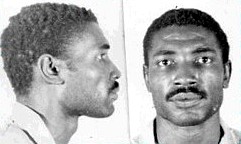
Arthur Thomas
Murderer Gary Duane Rardon
Murderer · USA · 1962
Gary Duane Rardon killed a man in 1962 and later served 4 years for manslaughte…
4 victims
Gary Duane Rardon
Murderer · USA · 1962
Gary Duane Rardon killed a man in 1962 and later served 4 years for manslaughte…
4 victims
 Frank Lee Smith
Murderer · USA · 1960
Frank Lee Smith died in prison on January 30, 2000. He was exonerated on Decemb…
3 victims
Frank Lee Smith
Murderer · USA · 1960
Frank Lee Smith died in prison on January 30, 2000. He was exonerated on Decemb…
3 victims
 George Sitts
Murderer · USA · 1945
George Sitts was executed by the State of South Dakota on April 8, 1947 for the…
3 victims
George Sitts
Murderer · USA · 1945
George Sitts was executed by the State of South Dakota on April 8, 1947 for the…
3 victims
 Simon Gonzales
Murderer · USA · 1999
Simon Gonzales Simon J. Gonzales had suicidal tendencies, and his estranged wif…
3 victims
Simon Gonzales
Murderer · USA · 1999
Simon Gonzales Simon J. Gonzales had suicidal tendencies, and his estranged wif…
3 victims
 Justin Dickens
Homicide · USA · 1994
Justin Wiley Dickens (often referred to as “Chicken”) was convicted in the Marc…
1 victim
Justin Dickens
Homicide · USA · 1994
Justin Wiley Dickens (often referred to as “Chicken”) was convicted in the Marc…
1 victim
 Velma Ogden-Whitehead
Murderer · USA · 2005
Velma Ogden-Whitehead pleaded guilty to first-degree murder in the 2005 killing…
1 victim
Velma Ogden-Whitehead
Murderer · USA · 2005
Velma Ogden-Whitehead pleaded guilty to first-degree murder in the 2005 killing…
1 victim
 Edwin Debrow
Homicide · USA · 1991
Edwin Debrow Jr. was convicted in 1992, at age 12, of a fatal shooting during a…
1 victim
Edwin Debrow
Homicide · USA · 1991
Edwin Debrow Jr. was convicted in 1992, at age 12, of a fatal shooting during a…
1 victim
- Gender
- male
- Country
- USA
- Location
- Cochise County, Arizona, USA
- Date of birth
- 1925
- Age at first offence
- 28
- Characteristics
- robbery
- Victim profile
- Janie Miskovich
- Method of murder
- St abbing with knife
- Date(s) of murder
- March 17, 1953
- Years active
- 1953
- Date of arrest
- —
- Status
-
Executed
Executed by asphyxiation-gas in Arizona on November 17, 1958
Overview
Arthur Thomas was convicted by a trial jury in Arizona of first-degree murder and was sentenced to death by the Superior Court of the State of Arizona in and for the County of Cochise.
The offence
Arthur Thomas was charged with the murder of one Janie Miskovich. The County Attorney’s statement set out that, on or about the 17th day of March, 1953, Arthur Thomas “did then and there willfully, unlawfully, feloniously, deliberately, premeditatedly and with malice aforethought, kill and murder one Janie Miskovich, a human being.” The statement further set out that Arthur Thomas “did kill and murder one Janie Miskovich, a human being, in the perpetration of the crime of robbery.”
Background
Arthur Thomas came to this area from the State of Texas and was employed as a day laborer in the Kansas Settlement near Willcox, Arizona.
Investigation
On or about the 17th day of March, 1953, Janie Miskovich was murdered in Cochise County, Arizona. Thereafter, on March 17, 1953, her body was found and an investigation was made. Arthur Thomas was arrested in Cochise County by Jack Howard, sheriff of that county.
Arrest
On March 17, 1953, Arthur Thomas was arrested in Cochise County by Jack Howard, sheriff. On March 18, 1953, the sheriff took Arthur Thomas before a magistrate, L. T. Frazier, a justice of the peace in Cochise County, for preliminary examination. Arthur Thomas waived such examination. The magistrate held Arthur Thomas to answer to the Superior Court of the State of Arizona in and for Cochise County and fixed his bail at $25,000. Because Arthur Thomas failed to furnish bail, the magistrate committed him to the custody of the sheriff.
Trial
In the Superior Court, an information was filed charging Arthur Thomas with the murder. Arthur Thomas was arraigned, pleaded not guilty, and had a jury trial. The trial began on June 1, 1953, and ended on June 19, 1953. The jury returned a verdict finding Arthur Thomas guilty of first-degree murder and fixing his punishment at death. Arthur Thomas moved for a new trial; the motion was denied on June 26, 1952. On June 26, 1953, the Superior Court rendered judgment on the verdict, sentenced Arthur Thomas to death, and issued a warrant directing the sheriff to deliver Arthur Thomas to the superintendent of the State prison of Arizona for execution. The sheriff delivered Arthur Thomas on or before July 6, 1953, and thereafter Arthur Thomas was a prisoner in the superintendent’s custody pursuant to the Superior Court’s judgment.
Confession and voluntariness issue
Before the admission of the quoted testimony of the magistrate, evidence was presented in the absence of the jury on the issue of the voluntariness of the confession. The Superior Court held that the confession was voluntary. Evidence on the issue of voluntariness was then presented to the jury. The magistrate’s testimony was admitted and the issue of voluntariness was submitted to the jury with appropriate instructions.
The confession admitted into evidence at Arthur Thomas’s trial was an oral statement made by him on March 18, 1953, when he was taken before the magistrate, L. T. Frazier, for preliminary examination. The magistrate’s testimony included the following exchange:
“He (appellant) was there on the charge of murder. I read the complaint to him and told him that he had a right to a preliminary hearing in the justice court, 24 or he might waive that right and have his hearing in the Superior Court. I told him he had the right to employ an attorney to assist him in preparing his case, and that he would be allowed a reasonable length of time for the preliminary hearing, and he said, 'I don't need any lawyer. I am guilty. I killed the woman."
On cross-examination by Arthur Thomas’s counsel, the magistrate testified:
“After I read the complaint to him and he stated that he was guilty, that he did kill the woman, I asked him if he killed her with an ax. He said, 'No. I killed her with a knife."
The jury instructions on the issue stated:
“The State has introduced in evidence before you certain statements claimed to have been made by the defendant (appellant) after his arrest and while he was in the custody of the officers of the law, which statements are relied on in part by the State to establish the guilt of the defendant of the offense charged, and you are instructed, ladies and gentlemen of the jury, that confessions and statements made by one charged with an offense must be carefully scrutinized and received with great caution, yet, when they are made voluntarily and deliberately, such confessions and statements may be considered as evidence for and against the person making them, the same as any other evidence, but if a confession or statement is made by one in custody under such circumstances as show he was induced to make the same by punishment, intimidation or threats on the part of the persons who had him in charge, or that show that the confessions and statements were not freely and voluntarily made, then they cannot be considered as evidence against the person making them.
“In this case if you do not find that the confessions and statements by the defendant while in custody were freely and voluntarily made and made without punishment, intimidation or threats on the part of the persons having the defendant in custody, then you must disregard such statements or confessions as affording any evidence against the defendant whatsoever.
“I further instruct you that you may consider prior acts of intimidation, threats or punishment to the defendant, if made, in considering whether or not a confession made at a later time is voluntary or involuntary.”
Appeals
Arthur Thomas appealed from the Superior Court’s judgment to the Supreme Court of the State of Arizona. The Arizona Supreme Court affirmed the Superior Court’s judgment on October 18, 1954. Arthur Thomas moved the Arizona Supreme Court for a rehearing. The Arizona Supreme Court denied that motion on November 16, 1954.
Arthur Thomas filed, in the Superior Court, a second motion for a new trial on December 2, 1954. The Superior Court denied that motion on December 18, 1954. Arthur Thomas appealed that denial to the Arizona Supreme Court. The Arizona Supreme Court affirmed on June 28, 1955.
Arthur Thomas petitioned for certiorari to review both decisions of the Arizona Supreme Court. Certiorari was denied on January 16, 1956.
United States Court of Appeals (habeas corpus proceedings)
After certiorari was denied, W. Edward Morgan, acting on behalf of Arthur Thomas, filed two applications for a writ of habeas corpus directed to Frank Eyman, superintendent of the State prison of Arizona. The applications were filed March 1, 1956, and March 9, 1956. The District Court did not grant a writ of habeas corpus, issue an order directing appellee to show cause, or hold a plenary hearing. On March 9, 1956, appellee’s counsel filed with the District Court a transcript of all proceedings and all testimony taken in the Superior Court and copies of all briefs filed in the Arizona Supreme Court. The District Court entered an order denying the applications on March 13, 1956. Arthur Thomas appealed from that order. The United States Court of Appeals for the Ninth Circuit decided the matter.
The opinion included the following procedural summary of events:
- On March 17, 1953, Janie Miskovich was found dead after being murdered in Cochise County, Arizona.
- Thereafter, on March 17, 1953, an investigation was made and Arthur Thomas was arrested in Cochise County by Jack Howard.
- On March 18, 1953, Arthur Thomas was taken before L. T. Frazier for preliminary examination, waived the examination, and was held to answer to the Superior Court.
- Bail was fixed at $25,000 and was not furnished, leading to commitment to the custody of the sheriff.
- An information charging murder was filed in the Superior Court; Arthur Thomas pleaded not guilty and was tried.
- The jury trial began June 1, 1953, and ended June 19, 1953, with a guilty verdict for first-degree murder and the setting of punishment at death.
- The Superior Court sentenced Arthur Thomas to death and ordered delivery to the Arizona State prison superintendent for execution.
- The Arizona Supreme Court affirmed the conviction and later denied rehearing; a second new trial motion was denied and affirmed on appeal.
- Habeas corpus applications were denied by the District Court on March 13, 1956.
Federal constitutional argument about confession voluntariness
Arthur Thomas contended that the District Court erred by denying the applications without granting habeas corpus, issuing an order to show cause, or holding a plenary hearing.
The first application filed March 1, 1956 stated:
- “on the date of apprehension, (appellant) was roped and putitively lynched in the presence of Jack Howard, the then sheriff of (Cochise County);”
- “subsequent to said roping, and while under fear and coercion, (appellant) made * * * confessions of commission of the crime;”
- “one of said confessions, over the objection of counsel, was admitted into evidence, * * * in violation of the Fourteenth Amendment to the United States Constitution.”
The opinion characterized the oral statement made on March 18, 1953 as the only confession admitted into evidence at trial, and it quoted the magistrate’s testimony containing Arthur Thomas’s admission. The opinion stated that, in Arizona, there was no such thing as an arraignment or a plea of guilty or not guilty in a preliminary examination, and it held that the confession was properly admitted and that voluntariness was properly submitted to the jury.
The opinion concluded that the Arizona Supreme Court determined adversely to Arthur Thomas the only federal constitutional issue raised in the habeas corpus proceeding, and that the District Court accepted that determination as correct. It held that the District Court was not required to grant a writ of habeas corpus, issue a show cause order, or hold a plenary hearing. It affirmed the order.
The decision was authored by MATHEWS, Circuit Judge, and it included a concurrence by POPE, Circuit Judge. The concurrence described “unsavory incidents” attending apprehension and arrest and discussed the trial judge’s handling of admissibility of confessions allegedly affected by coercion. The concurrence included a reference to trial judge rulings that excluded “a confession taken from Thomas the following day by the county attorney, and a confession taken two days later at the county attorney's office” as coerced and involuntary. The concurrence also discussed that it was “prior to the taking of either of these rejected confessions that Thomas was taken before the magistrate where he admitted his guilt.”
Sentencing
The Superior Court sentenced Arthur Thomas to death on June 26, 1953, after the jury fixed his punishment at death on June 19, 1953. A warrant directed the sheriff to deliver Arthur Thomas to the superintendent of the State prison of Arizona for execution.
Outcome
Arthur Thomas was executed by asphyxiation-gas in Arizona on November 17, 1958.
Aftermath
In a letter dated October 29, 1958, addressed to Walter Hofman, Chairman Board of Pardons and Paroles (Phoenix, Arizona), M. Jack D. H. Hays, United States Attorney, relayed allegations made by Mrs. Lorraine Woodard to officers of the Federal Bureau of Investigation. The allegation described Sheriff Jack Howard showing Mrs. Woodard a photograph of Arthur Thomas with a rope around his neck, and that Mrs. Woodard indicated that Sheriff Howard testified during the trial that a rope had not been placed around the neck of Arthur Thomas.
Lloyd C. Helm, Cochise County Attorney, responded to the board by stating: “Mrs. Woodard's recollection is erroneous.” He stated that an examination of the transcript showed that Sheriff Jack Howard did testify concerning the roping incident and that references to the roping incident appeared throughout the section of the sheriff’s testimony. He stated that Sheriff Jack Howard testified that “a rope was placed around the neck of Arthur Thomas at the time of his arrest.” He stated that on Page 1967, line 15, Sheriff Howard again referred to this and stated that he took the rope off the neck of Arthur Thomas. He stated that on Page 1976 commencing at line 16, Sheriff Howard testified that Arthur Thomas together with Ross Lee Cooper was again roped, that the two men stumbled and fell to the ground, and that the sheriff immediately took the rope off the men. He concluded that “All of the testimony of the Sheriff shows that such a roping did occur” and that “the Sheriff did not participate in such ropings and immediately took the ropes off before any harm was done and in each instance expressly informed those present that ropes were not to be used.”
The letter stated “Very truly yours, LLOYD C. HELM, Cochise County Attorney.”
Other details
Arthur Thomas’s habeas corpus proceedings described counsel names: W. Edward Morgan acted in behalf of Arthur Thomas. The opinion’s footnote indicated that Hayzel B. Daniels and I. B. Tomlinson were counsel for Arthur Thomas in the Superior Court and in the Arizona Supreme Court along with W. Edward Morgan. The applications each consisted of an affidavit made and signed by Morgan; Arthur Thomas did not sign or verify either of them. The first application was entitled “Petition for writ of habeas corpus,” and the second application was entitled “Amended petition for writ of habeas corpus.” The first application stated that the roping and alleged lynching occurred “in the presence of Jack Howard.” The magistrate in Arthur Thomas’s preliminary examination was L. T. Frazier, a justice of the peace in Cochise County.


Spotted an error, or have more information about this case?