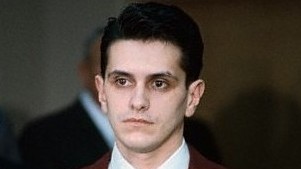
John Patler
Murderer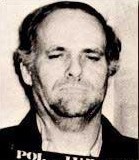 Ervil LeBaron
Murderer · USA · 1972
Ervil Morrell LeBaron (1925 to August 16, 1981) was the leader of a polygamous…
35 victims
Ervil LeBaron
Murderer · USA · 1972
Ervil Morrell LeBaron (1925 to August 16, 1981) was the leader of a polygamous…
35 victims
 Marvin Gray
Murderer · USA · 1975
Marvin Gray was convicted killer who claimed responsibility for 23 slayings and…
23 victims
Marvin Gray
Murderer · USA · 1975
Marvin Gray was convicted killer who claimed responsibility for 23 slayings and…
23 victims
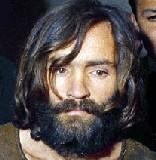 Charles Manson
Murderer · USA · 1969
Charles Milles Manson (born November 12, 1934) was an American criminal and mus…
9 victims
Charles Manson
Murderer · USA · 1969
Charles Milles Manson (born November 12, 1934) was an American criminal and mus…
9 victims
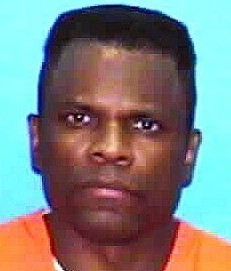 John Errol Ferguson
Murderer · USA · 1977
John Errol Ferguson was sentenced to death and was executed by lethal injection…
8 victims
John Errol Ferguson
Murderer · USA · 1977
John Errol Ferguson was sentenced to death and was executed by lethal injection…
8 victims
 Robert Reldan
Murderer · USA · 1974
Name: Robert Reldan Robert Reldan was sentenced to life in prison on two counts…
8 victims
Robert Reldan
Murderer · USA · 1974
Name: Robert Reldan Robert Reldan was sentenced to life in prison on two counts…
8 victims
 Jordan Criado
Mass murderer · USA · 2011
Jordan Adam Criado was a 53-year-old man from Medford, Oregon, who was sentence…
5 victims
Jordan Criado
Mass murderer · USA · 2011
Jordan Adam Criado was a 53-year-old man from Medford, Oregon, who was sentence…
5 victims
 Joji Obara
Murderer · Japan · 1992
Joji Obara (織原城二; Obara Jōji) was born in 1952 in Osaka, Japan. He was a convic…
1 victim
Joji Obara
Murderer · Japan · 1992
Joji Obara (織原城二; Obara Jōji) was born in 1952 in Osaka, Japan. He was a convic…
1 victim
 Troy Clark
Murderer · USA · 1998
Troy Clark was a defendant in a capital murder case in the United States Distri…
1 victim
Troy Clark
Murderer · USA · 1998
Troy Clark was a defendant in a capital murder case in the United States Distri…
1 victim
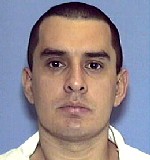 George Rivas
Murderer · USA · 2000
George Rivas was convicted of capital murder and was sentenced to death. He was…
1 victim
George Rivas
Murderer · USA · 2000
George Rivas was convicted of capital murder and was sentenced to death. He was…
1 victim
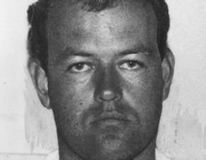 Colin Pitchfork
Murderer · United Kingdom · 1983
Colin Pitchfork was born in 1961 in Bristol, England. He was described as a loc…
2 victims
Colin Pitchfork
Murderer · United Kingdom · 1983
Colin Pitchfork was born in 1961 in Bristol, England. He was described as a loc…
2 victims
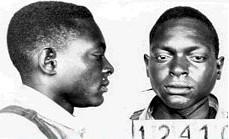 Charles Sanders
Murderer · USA · 1942
Charles Sanders was one of the defendants in a case involving Coy Collier Quall…
1 victim
Charles Sanders
Murderer · USA · 1942
Charles Sanders was one of the defendants in a case involving Coy Collier Quall…
1 victim
- Gender
- male
- Country
- USA
- Location
- Arlington, Virginia, USA
- Date of birth
- January 6, 1938
- Age at first offence
- 29
- Characteristics
- revenge, history of mental illness
- Victim profile
- George Lincoln Rockwell, 49 ( American Nazi Party leader )
- Method of murder
- Shooting (Mauser semi-automatic pistol)
- Date(s) of murder
- August 25, 1967
- Years active
- 1967
- Date of arrest
- Same day
- Status
-
Released
Sentenced to 20 years in prison in December 1967; paroled in 1975; violated parole and served an additional six years; released in 1983
Case name
John Patler (formerly Yanacki Patsalos)
Background
John Patler, formerly Yanacki Patsalos, was born circa 1938.
Patler grew up in New York City in a poor immigrant Greek family. During adolescence, Patler became a member of a street gang. It was alleged that Patler had murdered a childhood friend at age 16.
Patler had a history of mental illness. He changed his name to John Patler to make his surname sound like Hitler.
Patler was formerly a captain in the American Nazi Party. He was the editor and cartoonist for the party magazine Stormtrooper.
Patler attempted to organize a party coup among the dark-eyed members of the party against the “blue-eyed devils.” Patler developed Marxist leanings, which caused friction among fellow party members. He was expelled from the American Nazi Party in April 1967 for “Bolshevik leanings.” Another version of the expulsion described him as expelled in March 1967.
Other details: family history and youth
Patler was born Yanacki Christos Patsalos in New York City, the son of poor Greek immigrants. He had a younger brother named George, born in 1939.
When Patler was five, his mother left her husband and took her sons with her; they stayed with their grandmother in Harlem. Patler’s father murdered his mother on October 7, 1943 by exacting revenge for leaving him. Patler’s father was convicted of manslaughter and sentenced to ten years in prison at Sing Sing Prison.
After his mother’s death, Patler and his brother and grandmother moved into a tenement in upper Manhattan. When Patler was 15, his grandmother died and Patler and his brother were sent to live in the Bronx with their father, who had been released from prison on parole. Shortly after, Patler and his brother were placed in the Youth House while their father was facing child abuse charges. Patler and his brother spent two weeks in the Youth House and were returned into the custody of their father.
After a brief stint in the U.S. Marine Corps, Patler joined the American Nazi Party in 1960 and legally changed his name to John Patler.
After serving the remainder of his sentence, John Patsalos returned to the New York City area. On December 30, 1977, Patler petitioned the Henry County Circuit Court to change his surname back to its original form, Patsalos.
The offence
John Patler assassinated American Nazi Party leader George Lincoln Rockwell.
On August 25, 1967, Patler fired two shots from the rooftop of a beauty salon in the Dominion Hills shopping center in Arlington, Virginia into Rockwell’s car. Two bullets went through the windshield, hitting Rockwell fatally in the head and chest.
Rockwell struggled out of the passenger side of his automobile and died on the pavement.
Related incident before the killing
On June 28, 1967, an initial attempt was made on Rockwell’s life. Rockwell drove into the party barracks’ driveway on Wilson Boulevard and found it blocked by a felled tree and brush. After a young boy cleared the obstruction, two shots were fired at Rockwell from behind one of the swastika-embossed brick driveway pillars. One of the shots ricocheted off the car right next to his head.
On June 30, 1967, Rockwell petitioned the Arlington County Circuit Court for a gun permit; no action was ever taken on his request.
Investigation
After Rockwell’s death, a coroner pronounced Rockwell dead at the scene.
A passage described internal bleeding as heavy and Rockwell dying in two minutes, with the one bullet having ripped through several major arteries just above his heart.
A half hour after the homicide, Patler was arrested as the suspected murderer by a passing patrolman familiar with the Arlington Nazis.
The narrative further stated that Rockwell’s car apparently crashed into another vehicle after Rockwell dived onto the passenger seat in an attempt to escape.
Arrest
Minutes after the shooting, Patler was arrested and charged with his murder. Patler was arrested about one-half hour after the homicide less than a mile from the scene of the crime.
Trial
Following psychiatric evaluation, Patler was judged competent to stand trial. At his preliminary hearing, Patler pleaded not guilty.
On September 29, 1967, Patler was bound over by a grand jury on the charge of first degree homicide.
Patler’s trial began on November 27 at the Arlington County Courthouse amid tight security.
Trial: key procedural event and contested identification testimony
Mrs. Alma Kilpatrick was backing her car from a parking space at a small shopping center in Arlington, Virginia when she saw a man appear on the brick wall in front of her. He jumped down, ran behind her car, looked toward the area of the parking lot where Rockwell’s body was later found, turned, and ran back over the wall.
At trial, when asked if she could describe the person whom she saw, Mrs. Kilpatrick said:
A. I believe that he was dark haired and he had either a brownish or a dark brown coat on, and he looked something like what Mr. Patler looks like.
Q. Where did you see Mr. Patler?
A. I saw Mr. Patler again in the courtroom. Transcript 523.
Mrs. Kilpatrick talked with police on the day after the shooting. Shown two different photographic spreads containing Patler’s picture, she was unable to make a positive identification. It was suggested that she attend Patler’s preliminary hearing to obtain a view of the suspect. Failing to gain an unobstructed view of Patler, Mrs. Kilpatrick came to a second hearing. She at first declined to make a positive identification after the hearing, then changed her mind and informed the police that she could identify Patler, and finally concluded that she could not.
On voir dire examination Mrs. Kilpatrick stated:
'I have decided to say I can't positively because I know that would be a crime, that would be terrible. I can't do that.' Transcript 543.
Mrs. Nancy Thoburn returned from Bon Air Park with her three children. As she walked up Liberty Street toward the shopping center, she saw a man running down the opposite side of the street toward the park, which she noticed because of his hurry. She described him to a detective who interviewed her that same day as having “dark hair,” “a dark complexion,” and “was of medium build and height.” Transcript 628.
Mrs. Thoburn described his clothing:
He was wearing a long coat of some type, although I can't exactly identify it in every detail, but it appeared to be a neutral color. Also, his pants impressed me as being a dark gray, and he wore a hat; and I noticed one thing that stood out was that his pants' legs were wet. Transcript 628.
Later that same day Mrs. Thoburn went to the police station. She was seated on a bench together with three other potential witnesses outside of the room in which Patler was confined. Patler was handcuffed and escorted by several policemen, and was led by the bench as he was transferred from one room to another.
The state trial judge described the show-up as “the worst possible kind” and refused to allow Mrs. Thoburn to testify as to “any identification subsequent to that made at the police station.”
During trial testimony about what Mrs. Thoburn told police, the following exchange occurred:
Mr. Hassan: (Commonwealth's Attorney) Did there come a time when you made any statement to the police officers concerning what you have just described and its relationship to any picture or live viewing of Mr. Patler?
Mr. Harrigan: (Patler's Attorney) Objection, Your Honor.
The Court: The objection is overruled.
Mr. Harrigan: Exception.
The Witness: I had an opportunity to see Mr. Patler at the police station the same day, August 25th.
Mr. Harrigan: I object to that, Your Honor.
Mr. Hassan: What she told the police.
The Court: We just want to know what you told the police officer about your impressions of Mr. Patler.
The Witness: At that time I recall seeing-- when I say seeing-- when I was asked if I could make an identification, I said that there wasn't any conflict in his appearance to the man I had seen, that there was nothing about him that conflicted my mental picture of what I had seen earlier that day. Transcript 630-31.
On voir dire examination, Mrs. Thoburn described being kept waiting and not being allowed to look at Patler until they were positioned at a bench beside an elevator. Mrs. Thoburn said:
Q. Did you go down to the police station on the 25th?
A. Yes.
Q. How many other people were down there?
A. There were three other witnesses there.
Q. Did you know what you were going down there for?
A. To give a description. I thought I was going down there to see if I could identify the man that I saw running.
Q. Where did you go in the police station?
A. To the detective's office.
Q. That is the third floor?
A. I guess it is; I couldn't say right now.
Q. Were you in the hall there?
A. We were in the office, and Mr. Patler's lawyer would not let us look at him.
Q. Who was that lawyer?
A. Mrs. Lane, I guess.
Q. She would not let you look at him?
A. That was the reason we were given for sitting so long in the office.
Q. Who gave you that reason?
A. The detectives. I don't know; that was what I heard. I did not see Mrs. Lane that day, period. This is the reason that I was given why we were kept waiting because his lawyer, whoever it was, would not let us see him.
Q. All right. Did they come out and finally tell you okay?
A. No, they did not.
Q. What happened?
A. They put a bench for us beside the elevator so that when he was changed from one room to another and brought down the hall that we would catch a glimpse of him then.
Q. Was he brought down the hall?
Q. How many detectives were holding onto him?
A. I know there were at least two escorts.
Q. Was he handcuffed?
Q. Was it pretty obvious who the defendant was and who the detectives were?
A. Yes, indeed. Transcript 604-05.
The Commonwealth argued that because the testimony was inconclusive and did not rise to positive identification and because counsel was present at the show-ups, the exclusionary rule did not apply and the testimony should be tested under the “totality of the circumstances” described in Stovall v. Denno and Neil v. Biggers.
Trial: verdict and bond
On December 15, 1967, Patler was found guilty and released on bond to await sentencing.
Sentencing
On February 23, 1968, Patler was sentenced to 20 years in prison for Rockwell’s murder.
The Virginia Circuit Court postponed imprisonment pending his appeal.
Appeals and post-conviction proceedings
Virginia Supreme Court
On November 30, 1970, the Virginia Supreme Court upheld Patler’s conviction and 20-year sentence for slaying Rockwell, and ordered him to begin serving his sentence.
U.S. Supreme Court
On May 16, 1972, the U.S. Supreme Court unanimously rejected Patler’s appeal based on claims of witness contamination.
The U.S. Supreme Court denied a petition for certiorari on June 12, 1972.
Habeas corpus and federal circuit proceedings
On October 9, 1972, Patler sought a writ of habeas corpus from the United States District Court for the Eastern District of Virginia under 28 U.S.C. 2254.
He alleged three constitutional errors:
- That the identification testimony of two witnesses at the state trial was tainted by their presence at illegal show-ups and should have been excluded under United States v. Wade and Gilbert v. California.
- That the seizure of certain inculpatory evidence from a farm owned by Patler’s father-in-law constituted an illegal seizure in violation of his fourth amendment rights.
- That the state’s failure to release the results of tests on physical evidence introduced at trial until late in the proceedings, where the evidence tended to exculpate him, was prejudicial to his defense and contrary to due process requirements of Brady v. Maryland.
The district court, without a hearing, granted summary judgment for the respondent in Patler v. Slayton, 353 F.Supp. 376 (E.D.Va.1973).
The federal appellate proceeding was styled: John Patler, Appellant, v. A. E. Slayton, Jr., Superintendent of the Virginia State Penitentiary, Appellee. Docket number: 73-1169. Federal Circuits, 4th Cir. August 28, 1974. Before BOREMAN, Senior Circuit Judge, and CRAVEN and WIDENER, Circuit judges. CRAVEN, Circuit Judge: (opinion text followed)
The court affirmed and wrote:
We affirm.
The judgment of the district court was affirmed.
Discussion in the federal opinion: show-ups
The federal opinion addressed the state trial judge’s handling of the show-ups described as “the worst possible kind” and discussed informed presence of counsel under Wade and Gilbert, including the idea that both Wade and Gilbert speak in terms of informed presence.
It also discussed a thin line between “resemblance” and “identification” testimony and stated that testimony admitted as limited in this manner was less dangerous than positive identification testimony.
Physical evidence and search of a farm
Evidence described in the opinion
The federal opinion described that spent bullets and shell casings matching the murder weapon were seized from the pasture of a farm owned by Patler’s father-in-law, Sam Ervin.
Testimony at trial tended to show that the area from which inculpatory evidence was recovered was occasionally used by the two families as a picnic area and as a play area for their children. It was located 250 feet from the dwelling house and about 200 feet outside a fence enclosing the house and outbuildings. The area was also used by Patler for target shooting within a month prior to the shooting.
The trial court found the search warrant invalid on its face but did not suppress evidence because the area searched was considered outside the curtilage. The Supreme Court of Appeals affirmed, relying on the “open fields” doctrine of Hester v. United States.
The district court agreed evidence should not have been suppressed, but found Hester inapplicable in light of Katz v. United States and concluded Patler could not “reasonably have expected privacy at the scene of the target shooting.” The district court also held that Patler lacked standing to raise his fourth amendment contention.
The federal appellate court addressed standing, including quoting and discussing Jones v. United States, and ultimately held that Patler lacked a reasonable expectation of privacy in the property actually searched.
Evidence and trial tests described in additional petition detail
In the petition for certiorari, Patler itemized evidence and test results, including:
- A cap and a reversible coat (brown on one side and black on the other) with “a mutilated woman's pantyhose stuffed in one pocket” found under a tree a few blocks from the scene (with transcript references).
- A 7.63 mm. Mauser pistol found in a park between two rocks in a creek in about six inches of water. The pistol was described as the murder weapon and identified as the property of Robert A. Lloyd, III, who testified he had loaned it to Patler in 1964.
- Testimony that Lloyd said Patler told him in 1965 the gun had been stolen or mislaid, and that the coat found under the tree “looked exactly like” one Patler had worn.
- Defense claims denying Lloyd had loaned him the gun and presenting witnesses that he saw the gun in Lloyd’s possession after 1964.
- The defense introduced a different black raincoat found in Patler’s home the day after the crime, which Patler identified as his own.
- Scientific tests on items including tests attempting to associate items with paint samples, footprints on the roof, soil on shoes, hairs on cap or coat, tar comparisons (“Tar is tar.”), and the absence of fingerprints on the murder weapon.
Outcome and legal status
Patler maintained his innocence despite being convicted. The case against him was described as largely circumstantial, with disputed evidence about whether he possessed the murder weapon at the time of the killing.
Aftermath: burial controversy and memorial details
After Rockwell’s death, Rockwell’s body and burial arrangements became a source of controversy.
Rockwell’s 78-year-old father commented “I am not surprised at all. I’ve expected it for quite some time.”
An NSWPP spokesman reported federal officials had given verbal approval to a planned military burial of Rockwell at Culpeper National Cemetery.
On August 29, several dozen NSWPP troopers and about 100 party supporters formed a procession and drove from Arlington to Culpeper. At the cemetery gates, they were met by General Carl C. Turner and 60 MPs, backed by dozens of police from various jurisdictions. No mourners bearing Nazi insignia would be allowed into the cemetery. The NSWPP troopers refused to remove their uniforms, leading to a day-long standoff and unsuccessful attempts to force entry three separate times, with several arrests resulting. Rockwell could not be buried until a new request was made to the Pentagon and protocol was agreed to follow.
The Nazis returned to Arlington with Rockwell’s body. Plans were made to bury Rockwell in Spotsylvania County, but they fell apart when local Jewish organizations protested. Rockwell’s body was cremated the next morning, and a memorial service was held that afternoon at party headquarters.
On February 8, 1968, the NSWPP filed suit to obtain a Nazi burial for Rockwell’s remains at any National Cemetery. On March 15, 1969, a Federal district judge upheld the Army Secretary’s ruling that Rockwell was ineligible for a burial with full military honors in a national cemetery.
The controversy after Rockwell’s death also included a memorial swastika. Admirers painted a white swastika on the blacktop surface of the parking lot at the spot where Rockwell died. Attempts by property owners to obliterate it by covering it with black paint failed repeatedly. It remained visible off and on well into the 1980s. The NSWPP renamed itself The New Order and moved headquarters to Wisconsin; after that, the parking lot was resurfaced and the swastika was never replaced, though the spot where Rockwell’s body lay could be approximated using a crime scene photograph referenced as appearing on page 323 of a biography of Rockwell.
Timeline
- October 7, 1943 — Patler’s father murdered his mother by exacting revenge for leaving him; Patler’s father was later convicted of manslaughter and sentenced to ten years at Sing Sing Prison.
- 1960 — Patler joined the American Nazi Party.
- April 1967 — Patler was expelled from the American Nazi Party for “Bolshevik leanings.”
- August 25, 1967 — Patler fired two shots from the rooftop of a beauty salon in the Dominion Hills shopping center in Arlington, Virginia into George Rockwell’s car; Rockwell died on the pavement; Patler was arrested within about one-half hour.
- September 29, 1967 — Patler was bound over by a grand jury on a charge of first degree homicide.
- November 27, 1967 — Patler’s trial began at the Arlington County Courthouse.
- December 15, 1967 — Patler was found guilty and released on bond to await sentencing.
- December 1967 — Patler was sentenced to 20 years in prison for Rockwell’s murder.
- February 23, 1968 — Patler was sentenced to 20 years in prison, and imprisonment was postponed pending his appeal.
- November 30, 1970 — The Virginia Supreme Court upheld Patler’s conviction and 20-year sentence and ordered him to begin serving his sentence.
- May 16, 1972 — The U.S.
- June 12, 1972 — The U.S. Supreme Court denied a petition for certiorari.
- October 9, 1972 — Patler sought a writ of habeas corpus in the Eastern District of Virginia.
- August 28, 1974 — A federal appellate decision affirmed the district court’s judgment.
- August 1975 — Patler was paroled from the Pulaski correctional unit after serving less than four years.
- Following year after 1975 — Patler violated parole and was returned to prison for an additional six years.
- December 30, 1977 — Patler petitioned the Henry County Circuit Court to change his surname back to Patsalos.
- 1983 — Patler was released.
Spotted an error, or have more information about this case?