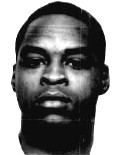
James Edward Clayton
Murderer Brian Kevin Rosenfeld
Murderer · USA · 1985
Brian Kevin Rosenfeld Brian Kevin Rosenfeld was sentenced to three concurrent l…
23 victims
Brian Kevin Rosenfeld
Murderer · USA · 1985
Brian Kevin Rosenfeld Brian Kevin Rosenfeld was sentenced to three concurrent l…
23 victims
 Yahweh ben Yahweh
Murderer · USA · 1980
Yahweh ben Yahweh was born and legally named Hulon Mitchell Jr. (October 27, 19…
23 victims
Yahweh ben Yahweh
Murderer · USA · 1980
Yahweh ben Yahweh was born and legally named Hulon Mitchell Jr. (October 27, 19…
23 victims
 Russell Ellwood
Murderer · USA · 1991
Russell Ellwood was a former taxi driver. Authorities suspected him of killing…
20 victims
Russell Ellwood
Murderer · USA · 1991
Russell Ellwood was a former taxi driver. Authorities suspected him of killing…
20 victims
 James Hairston
Murderer · USA · 1996
James Hairston was 27 years old and was of Grand Junction, Colo. James Hairston…
2 victims
James Hairston
Murderer · USA · 1996
James Hairston was 27 years old and was of Grand Junction, Colo. James Hairston…
2 victims
 Steven Oken
Spree killer · USA · 1987
Steven Oken (defendant) Steven Oken was adopted at birth and was raised in a st…
3 victims
Steven Oken
Spree killer · USA · 1987
Steven Oken (defendant) Steven Oken was adopted at birth and was raised in a st…
3 victims
 David Michael Krueger
Homicide · Canada · 1956
David Michael Krueger was best known by his birth name, Peter Woodcock. In 1982…
4 victims
David Michael Krueger
Homicide · Canada · 1956
David Michael Krueger was best known by his birth name, Peter Woodcock. In 1982…
4 victims
 Chai Soua Vang
Mass murderer · USA · 2004
Chai Soua Vang (born September 24, 1968) shot several deer hunters in northern…
6 victims
Chai Soua Vang
Mass murderer · USA · 2004
Chai Soua Vang (born September 24, 1968) shot several deer hunters in northern…
6 victims
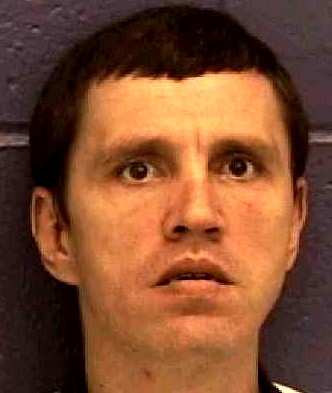 Earnest Morrison
Murderer · USA · 1987
Earnest Ulysses Morrison (also referred to as Earnest Morrison) was convicted i…
1 victim
Earnest Morrison
Murderer · USA · 1987
Earnest Ulysses Morrison (also referred to as Earnest Morrison) was convicted i…
1 victim
- Gender
- male
- Country
- USA
- Location
- Taylor County, Texas, USA
- Date of birth
- November 30, 1966
- Age at first offence
- 21
- Characteristics
- robbery, kidnapping
- Victim profile
- Lori M. Barrett (female, 27)
- Method of murder
- Shooting (.243 caliber rifle)
- Date(s) of murder
- September 17, 1987
- Years active
- 1987
- Date of arrest
- 6 days after
- Status
-
Executed
Executed by lethal injection in Texas on May 25, 2000
Case record: James Edward Clayton
Background
James Edward Clayton lived about a half block away from Lori Barrett’s home.
Lori Barrett was an elementary school teacher. She taught part-time at the Hawley, Texas, elementary school before she was hired full time at Hawley in September 1987. Barrett also worked a night job at the Dillard’s department store in Abilene, Texas. Barrett’s last confirmed activity was leaving her night job at Dillard’s on the evening of Sept. 17, 1987.
Clayton was described as a former clerical worker in reporting around his execution. The material described him as a New York native. The material also described him as an ex-soldier and as a former Abilene Christian University student and a member of the Reserve Officers Training Corps at Hardin-Simmons University.
The offence
Lori Barrett was last seen alive after she left her night job at Dillard’s on the evening of Sept. 17, 1987.
A co-worker, Pamela Cummings, unsuccessfully attempted to call Lori at home between 9:30 p.m. and 12:30 a.m. The next morning, Cummings again unsuccessfully tried to contact Lori. Lori failed to report to work on the morning of Sept. 18.
Cummings contacted Lori’s school principal. Hawley School District superintendent Cecil Davis decided that Lori’s unusual absence warranted a visit to her house. Davis drove to Lori’s house in Abilene, knocked on the door, and receiving no response asked neighbors whether they had seen Lori. Neighbors stated they had not seen Lori, and Davis went to an Abilene police station to report her missing.
Police later entered Lori’s house. The locked house appeared in normal condition, although the security chain had been left latched on the front door. On closer inspection, a bathroom window was slightly ajar, a sink tile was dislodged, and a small amount of grass was in the sink. The bathroom window was known to be difficult to operate, and Lori had always needed the assistance of her brother-in-law to open it.
A police officer found scrape marks on the outside of the bathroom window frame consistent with prying with a flat blade screwdriver. A screwdriver was found on a brick ledge nearby. Lori’s car was missing. Police also found an earring Lori had worn on Sept. 17 and a curling iron with the cord cut off.
Clayton was later linked to Lori’s missing car. A private investigator hired by the family questioned an acquaintance of Clayton who said Clayton was seen driving the car on Sept. 17 and that Clayton had borrowed the car from someone named Lori.
Police determined that Lori’s abandoned car belonged to Lori Barrett. Lori’s body was ultimately found on Sept. 29 in neighboring Jones County. The body was in a state of advanced decomposition and was wrapped in a blanket and secured with black electrical wire. The coroner found two “through-and-through” high velocity gunshot wounds to Lori’s head and neck. The coroner also noted that a ligature and gag had been applied to her neck and mouth. A Remington Peters .243 caliber cartridge case was also found.
Lori’s body was identified through dental records.
Medical findings described that mechanics of decomposition had been accelerated by mid-Sept. heat, and that it was impossible to determine whether other factors such as manual or ligature strangulation had contributed to Barrett’s death. The medical examiner stated strangulation could not be ruled out as a theoretical cause of death, and that the gunshot wounds were certainly fatal, with the proper cause of death to be listed as “homicidal violence.”
The material described that Clayton broke into Lori’s apartment through her bedroom window, and that her hands and ankles were tied with telephone cord. It also described that her body was wrapped in a blanket and dumped beside a rural road.
Investigation
A missing person investigation began after Davis’s report and another similar report by Lori’s sister prompted the Abilene Police Department to begin investigating.
In the interim, Lori’s family hired William Hurley, a private investigator. Hurley investigated the wrecked and abandoned car and questioned one of James Edward Clayton’s acquaintances. The acquaintance told Hurley that Clayton said he had borrowed the car from someone named Lori and that he had been seen with the car around 11:00 p.m. on Sept. 17 and around the time of the wreck on the morning of Sept. 18.
On Sept. 23, police officers went to Clayton’s residence, described as a garage apartment approximately half a block away from Lori’s house. Clayton was told police were investigating the accident involving Lori’s car. Clayton admitted he had been driving the car without her permission. After being advised of his rights, Clayton consented to a search of his apartment.
After questioning, Clayton declined to voluntarily accompany officers to the Abilene police station and was arrested for unlawful use of a motor vehicle.
In a trash dumpster outside Clayton’s apartment, Lori’s sister discovered the license plate from Lori’s car, mail with Lori’s name on it, and a bag. The bag contained a belt which Lori had worn on Sept. 17 and a partially eaten hamburger.
A search warrant for Clayton’s residence was obtained on Sept. 24. Police found an insurance card with Lori Barrett’s name on it.
After publicity in the local media and at Barrett’s church, a large-scale search began in the Abilene area. A hunter found Barrett’s body in a field northwest of Abilene. Another description placed her partially clad and decomposing body north of Interstate 20, just yards from the Tye city limits.
After the body was found, police obtained an evidentiary search warrant for certain items they had previously observed in Clayton’s apartment. Items seized included a pair of boots, a Winchester .243 caliber rifle, and .243 caliber ammunition.
Lab analysis produced a positive match between the rifle and ammunition and the cartridge case found at the scene.
Arrest
Clayton admitted he had been driving Lori’s car without her permission and was arrested for unlawful use of a motor vehicle.
Trial
Clayton was indicted in the 104th District Court of Taylor County, Texas on Dec. 10, 1987, for the capital offense of murdering Lori Barrett, in the course of committing burglary, kidnapping, and robbery, on or about Sept. 17, 1987.
Clayton pleaded not guilty. A jury found him guilty of three counts of capital murder on Nov. 3, 1988.
Following a separate punishment hearing, the trial court sentenced Clayton to death on Nov. 10, 1988.
The conviction and sentence were automatically appealed to the Texas Court of Criminal Appeals, which affirmed the conviction and sentence on Jan. 27, 1993.
The material described a separate statement by District Attorney James Eidson regarding the case, including the disqualification of Eidson from prosecuting due to a potential conflict of interest:
- The seven-man, five-woman jury deliberated about five hours over two days before finding Clayton guilty on three counts of capital murder.
- Jurors needed about three hours to sentence him to death by lethal injection.
- When State District Judge Billy John Edwards announced the sentence, two jurors and also the victim’s mother and sister openly wept.
- The material stated that Clayton did not react and that at no time during nine days of testimony and arguments did Clayton openly display any emotion.
“This case was a cold, calculating murder,” Eidson said. “This is the type of individual who is deserving of the death penalty.” The material also described sentencing and courtroom reactions:
Sentencing
The trial court sentenced Clayton to death on Nov. 10, 1988.
Appeals
Clayton’s petition for a writ of certiorari was denied by the United States Supreme Court on Oct. 4, 1993.
On Feb. 4, 1994, Clayton requested an appointment of counsel to file a state habeas corpus appeal; the Court of Criminal Appeals denied the motion on Mar. 1, 1994.
Clayton requested counsel in the United States District Court for the Northern District of Texas. On Feb. 25, 1994, the district court denied federal habeas counsel on the grounds that Clayton had not exhausted state court remedies by filing an application for writ of habeas corpus in state court.
Clayton appealed the denial of counsel to the Fifth Circuit Court of Appeals and the Supreme Court. The Supreme Court remanded the matter to the Fifth Circuit, which sent the case back to the district court. The district court granted Clayton’s request and appointed counsel to prepare a federal petition for writ of habeas corpus.
Before filing his federal petition, Clayton requested expert and investigative assistance on Feb. 3, 1995, and his request was denied. Clayton appealed to the Fifth Circuit, which denied the request on June 27, 1995.
Clayton then filed a petition for a writ of certiorari to the Supreme Court, which was denied on Feb. 20, 1996.
Clayton filed a federal habeas corpus petition, which was dismissed on Dec. 15, 1995, for failure to exhaust state court remedies.
The Court of Criminal Appeals granted Clayton’s second request for counsel on Dec. 16, 1996. Clayton filed an application for writ of habeas corpus in state court on Apr. 24, 1997. The trial court recommended that relief be denied on Dec. 5, 1997. The Court of Criminal Appeals denied relief based on the trial court’s recommendation on Jan. 28, 1998.
On Aug. 19, 1998, the United States District Court for the Northern District of Texas appointed counsel for the filing of a second federal petition for a writ of habeas corpus. The habeas petition was filed on Sept. 17, 1998, but the district court denied relief on Dec. 17, 1998. The district court denied permission to appeal on Jan. 19, 1999.
Clayton requested permission to appeal from the Fifth Circuit Court of Appeals on Apr. 20, 1999. Permission was subsequently denied on Oct. 1, 1999. The Supreme Court denied Clayton’s petition for writ of certiorari on Apr. 3, 2000.
The material described Clayton’s execution being delayed while state and federal courts heard his appeals. It also stated Clayton was slated to die in 1994 and that the U.S. Supreme Court granted a stay of execution the day before because it opened a review in a similar case involving another condemned prisoner; it said the court later retracted its stay.
Outcome
Clayton was executed by lethal injection in Texas on May 25, 2000. The material stated his execution was conducted in Huntsville behind the walls of the Huntsville Unit.
The material stated that Clayton was pronounced dead at 6:17 p.m.
The material included statements Clayton made before and during his execution proceedings. It stated that he maintained his innocence to the end and included the following quotes:
“I would like to use this moment as an example for Christ,” Clayton said. “I would like to follow his example and leave with peace in my heart and forgiveness. There is no anger in my heart about this entire situation.” Before his execution, Clayton was described as wanting “to follow Christ’s example and
leave with peace in my heart and forgiveness.''There is no anger in my heart about this entire situation,'' he said.”
A jailhouse interview on Wednesday included quotes:
“I’m just amazed by the love I’ve been shown for the past 14 years,” said the convicted murderer. “I never thought I was worthy of it.” It also included statements Clayton made about his journey and readiness: “It’s been a long road, like a battle when you are running in retreat,” Clayton said. “You see so much land to cross and the enemy is still there, at your heels.” “If I die, I die,” he said. “If you are in a position where you really cannot win, what are you supposed to do? Hang on, try to stay on until the ride is done.” The material also quoted Clayton on his regret and thoughts: “I have friends and family trying to understand all this,” he said. “I just hope the bloodlust of our society will be sated and they will stop executing people. “I’m locked up with men who know more about right and wrong than any politician,” he said. And regarding the victim’s family: “They have been duped,” he said. It further quoted Clayton about the days before execution: “I’ve been giving my property away,” he said. “I don’t want to leave anything important. It’s like when you go on vacation and you have the feeling you have forgotten something. But I can’t figure out what I forgot.”
A pen-pal request attributed to Clayton included additional quoted text:
“I’ve been on Texas Death Row for 10+ years. Amazing I know but I’m still here fighting. The latest fight has me wondering how a lower court can deny help the Supreme Court says I’m entitled to.” “The reason we appealed is because I've never been allowed investigative or forensic help and this is crucial in a habeaus and some judge just chooses not to give me what the Supreme Court has declared defendants are allowed.” “On top of that, the 5th Circuit Court of Appeals turned it down just because Texas is known to never allow such help and saw no need to reverse the ruling on the initial habeaus.” “I am looking for and requesting whether I can solicit help from those in the field of investigation and forensics ?” “My lawyer will confirm that this case is worse than a fabrication its right along the area of injustice and help is needed, but as is the case with many of us, we've no money for a competent fight against any death penalty case.” “After 10 years of seeing Texas law legally kill my fellow prisoners, I know that even an innocent man can be killed.” “I'm praying not to be listed among the "OOPS WE MADE A MISTAKE" victims so I'm asking your help for me and my severely overworked attorney, who you are very much invited to call and speak to.” “I do pray something can be done. Thank you for your time. Peace!” “Sincerely Texas Execution”
Aftermath
The material reported that four members of Barrett’s family and one family friend witnessed the execution. It also reported that Barrett’s mother, Myrna Insall, did not witness the execution but attended a news conference after the death sentence had been carried out.
The material included quotes from Barrett’s stepfather and from her mother:
“He lived too long and died too easy,” Joe Insall, Barrett’s stepfather, said after the execution. “She was a wonderful person,” the victim’s mother said as she broke into tears. “This never should have happened to her. This was terrible.” The material quoted Barrett’s brother, David Barrett: “I don’t think it’s painful enough,” the still-grieving brother said of Clayton’s demise. “I wish the judicial system was a little quicker. But according to the Constitution, even murderers have rights. “I don’t forgive him,” he added. The material also stated that David Barrett feared Clayton would attempt escape again, noting Clayton’s participation in an escape attempt from the Terrell Unit on Thanksgiving 1998.
The material described an escape attempt:
- Clayton was one of seven death row inmates who attempted an escape from the Terrell Unit on Thanksgiving 1998.
- Shots fired from a watchtower froze all but one inmate.
- Martin Gurule, described as a Corpus Christi killer, was found dead in a creek a week later.
- The six others surrendered.
- The material also stated that one inmate escaped but was shot by guards as he climbed a fence and later found dead in a creek not far from the prison.
The material reported that Clayton had a last meal of three fried chicken breasts, a lettuce and cucumber salad with light vinegar dressing, and a pitcher of ice water. It described that Clayton was dressed in black slacks and a blue shirt and was restrained with five restraint straps.
Prior criminal history and personal history
Clayton claimed he had stolen the rifle that was used as the murder weapon from a former roommate’s home about a week before the murder.
Clayton reportedly bragged that he had broken into people’s houses and considered himself a good burglar. Clayton told acquaintance Andy Vitez that his mind was “criminally oriented” and that he would never get caught. Clayton thought of himself as “very intimidating and violent and aggressive.”
The material said he charged an “enormous” telephone bill on a phone card stolen from Andy Vitez. It also said Clayton had confessed to using a credit card stolen in a burglary.
Clayton was found in possession of property taken from a neighbor’s home as well as property taken from others’ homes.
During a skiing trip, Clayton told acquaintances that he could “just go kill a guy . . . because he didn't like him,” referring to an unknown man walking by. The material stated Clayton said he would stick an ice pick into the back of the man’s neck and into his brain, scramble his brain, turn him into a vegetable, hide the body, and be long gone before anyone smelled it. The material described him performing a demonstration of how he would do it and how the man would flop.
Clayton entered a shuttle bus on the skiing trip saying he wanted to “hotwire” it. The material stated he also wanted to break into a motel room and kill everybody in it.
The material said Clayton admired his father for killing his neighbor’s dog because it barked. It said Clayton stated he wanted to be in the army because it was “a license to kill.”
On the same skiing trip, Clayton told a female classmate how to poke or pull someone’s eyes out and how he could snap someone’s neck. The material said he told the woman he was mad at his girlfriend and would kill her, knew the layout of her house, would break into her house, disarm the burglar alarm, smother her to death, and be gone so no one would ever know who did it.
The woman described him as “very full of hate,” “very frightening,” and not concerned with right and wrong, wanting people to be afraid of him.
The material also described Clayton stating he wanted to hit someone so hard it would crush his or her skull and make a loud noise.
Earlier in his life, Clayton was removed from his home as an alternative to incarceration as a juvenile offender for a burglary and for carrying a firearm. The material described him being at the Boles home for children, where he had “worn out his welcome” by the time he was a senior in high school due to discipline issues.
The material said he had been in trouble at school for crawling into the windows of girls’ rooms, was barred from the school for a year, and had stolen from a family who allowed him to stay in their home.
Drugs and/or alcohol
The material stated that there was no evidence of drug or alcohol use connected with the murder.
Other details
The material included narrative describing “attempt to collect insurance money” and “abduction/murder” characterization, but it did not provide additional legal findings beyond the murder capital counts and the course-of-offense elements used in the indictment.
The material also included additional execution-context figures: it stated that Texas carried out its third execution that week and that Clayton was the 217th overall since Texas resumed capital punishment on Dec. 7, 1982. It stated Clayton was the 38th condemned inmate to be put to death in the USA that year and the 636th overall since America resumed executions on Jan. 17, 1977.
It also included mention that Clayton was condemned for abducting and killing an elementary school teacher in 1987, and that the material linked the disappearance to Lori Barrett’s robbery of her apartment near Abilene Christian University.

Spotted an error, or have more information about this case?