Arthur Lee Jones
Murderer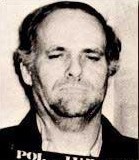 Ervil LeBaron
Murderer · USA · 1972
Ervil Morrell LeBaron (1925 to August 16, 1981) was the leader of a polygamous…
35 victims
Ervil LeBaron
Murderer · USA · 1972
Ervil Morrell LeBaron (1925 to August 16, 1981) was the leader of a polygamous…
35 victims
 Brian Kevin Rosenfeld
Murderer · USA · 1985
Brian Kevin Rosenfeld Brian Kevin Rosenfeld was sentenced to three concurrent l…
23 victims
Brian Kevin Rosenfeld
Murderer · USA · 1985
Brian Kevin Rosenfeld Brian Kevin Rosenfeld was sentenced to three concurrent l…
23 victims
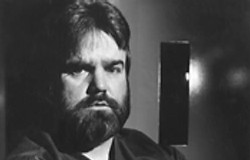 Marvin Gray
Murderer · USA · 1975
Marvin Gray was convicted killer who claimed responsibility for 23 slayings and…
23 victims
Marvin Gray
Murderer · USA · 1975
Marvin Gray was convicted killer who claimed responsibility for 23 slayings and…
23 victims
 Yahweh ben Yahweh
Murderer · USA · 1980
Yahweh ben Yahweh was born and legally named Hulon Mitchell Jr. (October 27, 19…
23 victims
Yahweh ben Yahweh
Murderer · USA · 1980
Yahweh ben Yahweh was born and legally named Hulon Mitchell Jr. (October 27, 19…
23 victims
 Russell Ellwood
Murderer · USA · 1991
Russell Ellwood was a former taxi driver. Authorities suspected him of killing…
20 victims
Russell Ellwood
Murderer · USA · 1991
Russell Ellwood was a former taxi driver. Authorities suspected him of killing…
20 victims
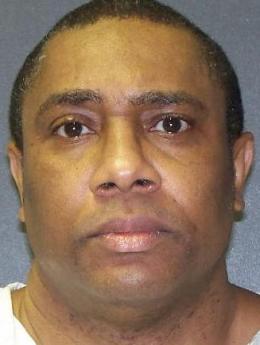 Kenneth Mosley
Murderer · USA · 1997
Kenneth Mosley was convicted of capital murder and was executed by lethal injec…
1 victim
Kenneth Mosley
Murderer · USA · 1997
Kenneth Mosley was convicted of capital murder and was executed by lethal injec…
1 victim
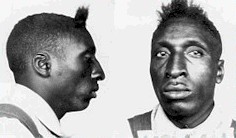 Grady Cole
Murderer · USA · 1942
Grady Cole was one of three defendants named as C. Levice, Charles Sanders, and…
1 victim
Grady Cole
Murderer · USA · 1942
Grady Cole was one of three defendants named as C. Levice, Charles Sanders, and…
1 victim
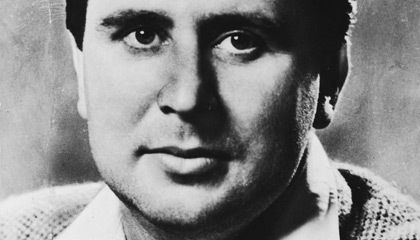 Brian Donald Hume
Murderer · United Kingdom/Switzerland · 1949
Brian Donald Hume partnered in illegal activities with Stanley Setty. Hume had…
2 victims
Brian Donald Hume
Murderer · United Kingdom/Switzerland · 1949
Brian Donald Hume partnered in illegal activities with Stanley Setty. Hume had…
2 victims
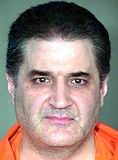 Richard Lynn Bible
Murderer · USA · 1988
Richard Lynn Bible was the defendant. Jennifer Wilson was the victim. · May 198…
1 victim
Richard Lynn Bible
Murderer · USA · 1988
Richard Lynn Bible was the defendant. Jennifer Wilson was the victim. · May 198…
1 victim
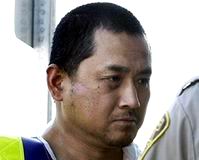 Vince Weiguang Li
Murderer · Canada · 2008
Vince Weiguang Li (simplified Chinese: 李伟光 ; traditional Chinese: 李偉光 ; pinyin:…
1 victim
Vince Weiguang Li
Murderer · Canada · 2008
Vince Weiguang Li (simplified Chinese: 李伟光 ; traditional Chinese: 李偉光 ; pinyin:…
1 victim
- Gender
- male
- Country
- USA
- Location
- Mobile County, Alabama, USA
- Date of birth
- J uly 26, 1938
- Age at first offence
- 43
- Characteristics
- robbery
- Victim profile
- Taxi driver
- Method of murder
- Shooting
- Date(s) of murder
- August 17, 1981
- Years active
- 1981
- Date of arrest
- —
- Status
-
Executed
Executed by electrocution in Alabama on March 21, 1986
Timeline
- August 17, 1981 — A taxi driver was hired at 12:45 a.m.; about thirty-five minutes later the driver was found robbed and shot to death.
- Three weeks after the murder — A pretrial line-up occurred shortly after Arthur Jones’ arrest, and "Shorty" Banks immediately and unequivocally recognized Jones.
- 1982 — Arthur Jones was convicted of murder and sentenced to death.
- 1983 — Direct appeals in state court proved unsuccessful; Jones v. State, 450 So.2d 165 (Ala.Crim.App.1983).
- 1984 — The state court affirmance was upheld; In re Jones, 450 So.2d 171 (Ala.), cert. denied.
- September 11, 1985 — Appeal from the United States District Court for the Southern District of Alabama.
- March 18, 1986 — A second petition for writ of habeas corpus was denied by the federal district court.
- March 20, 1986 — Federal appeals decision was issued; 786 F.2d 1011.
- March 21, 1986 — Arthur Jones was scheduled for execution in Alabama at 12:01 A.M. and was executed by electrocution.
Background
Arthur Lee Jones was convicted of murder and sentenced to death in 1982. Direct appeals in state court proved unsuccessful. Jones v. State, 450 So.2d 165 (Ala.Crim.App.1983), was affirmed by In re Jones, 450 So.2d 171 (Ala.), and certiorari was denied, with 105 S.Ct. 232 and 83 L.Ed.2d 160 noted.
After that, subsequent efforts to obtain coram nobis relief in state court failed. Jones then filed a federal action seeking habeas corpus relief, and the federal district court denied the petition.
The offence
The murder victim was a taxi driver Jones hired at 12:45 a.m. on the morning of August 17, 1981. Immediately after the taxi left the taxi stand, a dispatcher attempted to call the driver on a radio, but the driver failed to respond. Approximately thirty-five minutes later, the driver was found robbed and shot to death, lying in the street beside his car eight-tenths of a mile from Jones’ home in Plateau, a residential area in North Mobile, Alabama. The radio in the taxi was in working condition when found.
Investigation
A witness named "Shorty" Banks saw Jones hire the taxi and described him to the police shortly after the murder had been discovered. Banks recalled Jones as having said that he wanted a ride to Plateau.
Banks reviewed several photographic arrays but did not point to anyone as the suspect. A picture of Jones was not included among the photographs.
Arrest and pretrial identification
A line-up occurred shortly after Jones’ arrest and within three weeks of the murder. Banks immediately recognized Jones as the man he saw at the taxi stand.
Banks was five feet four inches tall. He was sitting on the hood of an automobile when he saw Jones at the taxi stand. Banks described Jones to police as being 5'5"' or 5'6"'—slightly taller than Banks—but Jones was five feet three inches tall, one inch shorter than Banks. Jones was the shortest person in the line-up.
Jones was represented at trial by two attorneys, both of whom had practiced as criminal defense lawyers for over twenty years. The first attorney appointed asked to be replaced because of disagreements with Jones over how to present his defense. The trial court did not replace this attorney but instead appointed a second attorney to assist. The state coram nobis court found that Jones had no problems with either attorney from then on.
Trial
Defence and witnesses
Jones’ primary defense tactic attacked Banks’ identification of him as the last one to ride with the slain taxi driver. At Jones’ insistence, however, an alibi defense was also proffered.
Two alibi witnesses testified that they saw Jones at a particular social club on the night of the murder. Jones claimed that seven other witnesses should have been located and subpoenaed to testify to the same effect.
The state coram nobis court found that Jones did not give the names of three of these additional witnesses to his attorneys before trial. The other four witnesses either were not located or refused to appear and testify.
The state court found that Jones’ attorneys made every reasonable effort to find these four potential witnesses, and the district court below adopted this finding as correct.
One of the potential witnesses, Bobby Vaughn, heard before the trial that Jones’ attorneys were looking for him. Vaughn called the attorneys and verified Jones’ claim that on the night of the murder he and Jones were arranging a marijuana sale, but Vaughn refused to give the attorneys his address and failed to appear and testify at trial as he had promised. Despite last minute attempts, Vaughn was never served with a subpoena. Jones’ attorneys did not move for a continuance and did not ask that funds be provided to hire a private investigator to locate Vaughn or the other witnesses. Vaughn was dead. None of the remaining alibi witnesses had been found. Thus, not one of the seven testified at the state coram nobis hearing that he or she would have appeared at trial and confirmed Jones’ alibi defense if requested.
Jury charge and identification instruction
Jones requested a specific jury charge on eyewitness identification. The requested instruction was:
The court charges the jury that the possibility of human error or mistake, and the probable likeness or similarity of objects and persons are elements that you must act upon in considering testimony as to identity. You must carefully consider these factors passing upon the credibility that you attach to the witness' testimony, and you must be satisfied beyond a reasonable doubt as to the accuracy of the witness' identification of the Defendant.
The trial court refused to give the instruction without explanation.
The requested instruction was described as an extremely truncated version of the "Telfaire" charge, which derives its name from a model charge recommended in United States v. Telfaire, 469 F.2d 552, 558-59 (D.C.Cir.1972). The court in Telfaire did not make its proposed charge mandatory, and it affirmed the defendant’s conviction because the trial court’s instructions, when considered in the overall context of the case, significantly focused the jury’s attention on the issue of identity. The material set out those Telfaire instructions as “both the initial instruction on the burden of proving beyond a reasonable doubt all the elements of the offense, and the follow-on instructions dealing with the defense of alibi, and the problem of mistaken identity.”
The decision in this matter held that the line-up did not taint Banks’ in-court identification, and that the charge given to the jury, when taken as a whole and considered along with the manner in which the case was tried, clearly conveyed to the jury the State’s burden of proving beyond all reasonable doubt that the defendant, and not someone else, committed the crime charged.
Alibi instruction
The trial court instructed on the alibi defence as follows:
The defendant in this case relies upon what we call an alibi defense. That is that he was not where and when of necessity he must have been in order to have committed the crimes with which he is charged. Now the law is that the burden does not shift to the defendant by reason of this defense. The burden is and continuously remains with the State to prove the guilt of the defendant beyond a reasonable doubt. Your verdict must be based upon the evidence, as I have told you, which is the testimony and the exhibits and the just and the reasonable inferences from that evidence. It may not be based upon speculation or conjecture. ... I charge you, members of the jury, that the defendant has introduced evidence that he was not present at the time and the place the alleged crime was committed. This is known in law as the defense of alibi. Alibi is a legal and proper defense and if after weighing the evidence in support of the alibi with all of the facts and circumstances in the case the jury has a reasonable doubt that the prosecution has proven that the defendant was present at the time and place that the alleged crime was committed it should find the defendant not guilty.
Appeals
Federal appeal before the Eleventh Circuit
The appeal involved the United States Court of Appeals for the Eleventh Circuit, 772 F.2d 668. Arthur Jones was the petitioner-appellant. Fred Smith, Commissioner, Alabama Department of Corrections, and Willie Johnson, Warden, Holman Unit, were respondents-appellees.
Three issues were presented:
- whether the pretrial line-up was unduly suggestive;
- whether the trial court erred in rejecting Jones’ requested instruction on eyewitness testimony;
- whether Jones received effective assistance of counsel during the trial proceedings.
The district court below did not hold an evidentiary hearing; it considered only the records made at trial and at the state coram nobis hearing. The appellate decision stated that the district court examined the record to determine whether the state court’s findings of fact were erroneous, and those findings were entitled to a presumption of correctness unless they were “not fairly supported by the record.”
The appellate decision affirmed the district court’s denial of habeas relief and affirmed the disposition of the legal issues presented.
Grigsby issue and prosecutorial argument issue (subsequent habeas appeal)
In a separate federal appeals context, a per curiam opinion identified that Arthur Jones was presently scheduled for execution in Alabama on Friday, March 21, 1986 at 12:01 A.M. It noted that his prior petition for habeas corpus relief had been affirmed in Jones v. Smith, 772 F.2d 668 (11th Cir.1985). The United States Supreme Court denied certiorari on January 13, 1986. It also noted that the Circuit Court of Mobile County dismissed another coram nobis petition filed on January 14, 1986, and that on March 13, 1986 the Alabama Supreme Court denied petitioner’s motion for a stay of execution. The federal district court entered its denial of relief on the second petition for writ of habeas corpus on March 18, 1986.
In that petition, Jones raised two issues: first, a Grigsby v. Mabry issue concerning a death oriented jury; second, that certain prosecutorial argument made during the guilt phase of the trial was improper. The per curiam decision denied both the petition for a certificate of probable cause and the petition for a stay of execution.
Death-qualification/Grigsby issue discussion
The panel stated that a venireperson was struck for cause because the venireperson expressed reservations about capital punishment and noted reluctance to consider imposing the death penalty. The venireperson did not indicate that her views would prevent her from fairly judging guilt or innocence. The opinion stated that the Eleventh Circuit had consistently rejected the contention accepted by the Eighth Circuit in Grigsby.
The decision cited Bowden v. Kemp, 774 F.2d 1494 (11th Cir.1985), and said it was unable to find any case in which the Eleventh Circuit had stayed an execution pending appeal to it because of the Grigsby issue since that issue had been settled by its decisions. It quoted and relied on language from Bowden about dismissal of successive petitions and the lack of authority to infer the basis of stays.
The opinion also recognized that the Supreme Court had granted stays in some cases involving the Grigsby issue, listing several cases with stay grants, including: James v. Wainwright (stay granted March 18, 1986), Adams v. Wainwright (stay granted March 6, 1986), Bowden v. Kemp (stay granted October 14, 1985), Moore v. Blackburn (stay granted October 3, 1985), and Celestine v. Blackburn (stay granted September 26, 1985). It stated that in none of those cases had certiorari been granted, and that the law in the circuit mandated a denial of relief on that issue.
Prosecutorial argument claim
The per curiam decision found no merit in the prosecutorial argument claim, stating that, aside from abuse of the writ and procedural default problems handled by the district court, it did not raise a substantial claim on which relief may be granted. It then stated:
“The petition for a certificate of probable cause and the petition for a stay of execution are DENIED.”
Dissent
Johnson, Circuit Judge, dissented. The dissent stated that the Supreme Court’s recent action on petitions for stay of execution in cases presenting Grigsby claims gave direction in determining whether a stay was warranted, and that the dissent would grant a stay of execution pending the Court’s decision in Lockhart.
The dissent explained that the panel majority declined to recognize that direction and instead relied on Bowden v. Kemp. The dissent distinguished Jones’ Grigsby claim from other situations by stating that Jones’ case was a straightforward Grigsby claim where a venireperson, Mrs. Summerall, was excused for cause on voir dire when she expressed reservations about imposing a death sentence, and that Mrs. Summerall did not indicate her views would prevent fairly judging guilt or innocence.
The dissent quoted part of Justice Powell’s concurrence to a denial of stay in Harich v. Wainwright, including:
The other capital case in which execution is scheduled for tomorrow is No. A-710, James v. Wainwright. I voted to grant a stay of execution in that case. Both James and Harich profess to present claims similar to that pending before the Court in Lockhart v. McCree, No. 84-1865. This case, however, presents an issue different from James and one without merit. In James, the Lockhart issue was at least arguably presented when persons on the venire who expressed reservations as to capital punishment were removed by peremptory challenges. In this case, petitioner "conced[ed] in this petition [before the Supreme Court of Florida] that at his trial 'no veniremen were excluded' during voir dire, either for cause or through peremptory challenge." Opinion of Supreme Court of Florida 2. Similarly, before this Court petitioner makes no allegation that persons on the venire were excluded during voir dire because of any objections to capital punishment. Accordingly, my vote is to deny the application for a stay of execution.
The dissent concluded by stating that when the Supreme Court spoke, the dissent believed the court was bound to listen, and the dissent would grant a stay.
Sentencing
Arthur Jones was convicted of murder and sentenced to death in 1982.
Outcome and execution
The appellate decision affirmed the denial of habeas relief. Jones was executed by electrocution in Alabama on March 21, 1986. The decision also stated that Jones was scheduled for execution in Alabama on Friday, March 21, 1986 at 12:01 A.M.
Other details
In the habeas corpus appeal discussion, the decision set out an example of jury charge language from a related case, including the following excerpt from a trial court jury instruction:
Now, the burden of proof on the State extends to every element of the crime charged and this [sic] include the burden of proving beyond a reasonable doubt the identity of the defendant as the perpetrator of the crimes with which he stands charged. If, after examining all the evidence, you have a reasonable doubt, as I will define it, to identification, you should find the defendant not guilty.
In discussing Telfaire, the decision included an alibi-focused instruction excerpt from United States v. Telfaire:
In this case the defendant has taken the stand and testified in his own defense with respect to what occurred on April 10, 1970. ... His defense is in the nature of an alibi and I wish to give you the following instruction of law with respect to an alibi. ... If, after full and fair consideration of all of the facts and circumstances in evidence you find that the government has failed to prove beyond a reasonable doubt that the defendant was present at the time when, and the place where, the offense charged was allegedly committed, you must find the defendant not guilty. United States v. Telfaire, supra, 469 F.2d at 556 n. 13.
Spotted an error, or have more information about this case?