
Earnest Morrison
Murderer Brian Kevin Rosenfeld
Murderer · USA · 1985
Brian Kevin Rosenfeld Brian Kevin Rosenfeld was sentenced to three concurrent l…
23 victims
Brian Kevin Rosenfeld
Murderer · USA · 1985
Brian Kevin Rosenfeld Brian Kevin Rosenfeld was sentenced to three concurrent l…
23 victims
 Yahweh ben Yahweh
Murderer · USA · 1980
Yahweh ben Yahweh was born and legally named Hulon Mitchell Jr. (October 27, 19…
23 victims
Yahweh ben Yahweh
Murderer · USA · 1980
Yahweh ben Yahweh was born and legally named Hulon Mitchell Jr. (October 27, 19…
23 victims
 Russell Ellwood
Murderer · USA · 1991
Russell Ellwood was a former taxi driver. Authorities suspected him of killing…
20 victims
Russell Ellwood
Murderer · USA · 1991
Russell Ellwood was a former taxi driver. Authorities suspected him of killing…
20 victims
 Robert Anthony Carter
Homicide · USA · 1981
Robert Anthony Carter was executed by lethal injection in Texas on May 18, 1998…
2 victims
Robert Anthony Carter
Homicide · USA · 1981
Robert Anthony Carter was executed by lethal injection in Texas on May 18, 1998…
2 victims
 Gary Leon Brown
Murderer · USA · 1996
Gary Leon Brown was indicted for the capital offense of the murder of Jack McGr…
1 victim
Gary Leon Brown
Murderer · USA · 1996
Gary Leon Brown was indicted for the capital offense of the murder of Jack McGr…
1 victim
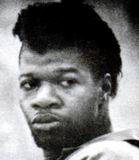 Christopher Scarver
Murderer · USA · 1990
Christopher Scarver (born July 6, 1969) was a convicted American murderer. Whil…
3 victims
Christopher Scarver
Murderer · USA · 1990
Christopher Scarver (born July 6, 1969) was a convicted American murderer. Whil…
3 victims
 Stephen Vrabel
Homicide · USA · 1989
Stephen Allen Vrabel was a white male who lived in an apartment in Struthers, O…
2 victims
Stephen Vrabel
Homicide · USA · 1989
Stephen Allen Vrabel was a white male who lived in an apartment in Struthers, O…
2 victims
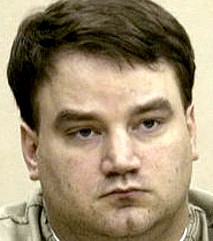 Charles McCoy
Murderer · USA · 2003
Charles McCoy Jr. was an admitted highway shooter in Ohio. His defense attorney…
1 victim
Charles McCoy
Murderer · USA · 2003
Charles McCoy Jr. was an admitted highway shooter in Ohio. His defense attorney…
1 victim
 Robert Benjamin Smith
Mass murderer · USA · 1966
Robert Benjamin Smith was sentenced to death in October 1967 for first-degree m…
5 victims
Robert Benjamin Smith
Mass murderer · USA · 1966
Robert Benjamin Smith was sentenced to death in October 1967 for first-degree m…
5 victims
- Gender
- male
- Country
- USA
- Location
- Richmond County, Georgia, USA
- Date of birth
- 1960
- Age at first offence
- 27
- Characteristics
- rape, robbery
- Victim profile
- Mary Edna Griffin, 54 (the wife of his uncle by marriage)
- Method of murder
- ???
- Date(s) of murder
- January 9, 1987
- Years active
- 1987
- Date of arrest
- —
- Status
-
Sentenced to death
Sentenced to death on November 17, 1987
Case record: Earnest Morrison
Name and identifiers
Earnest Ulysses Morrison (also referred to as Earnest Morrison) was convicted in Richmond County Superior Court.
Background
Morrison was 36 years old at sentencing in November 1987. He was a drifter who stayed with his uncle by marriage (his uncle’s first wife was Morrison’s aunt) for a few days. The uncle told him that he would have to get a job or leave.
Morrison was abandoned by his mother soon after birth. He spent his childhood in and out of, and running away from, foster homes and juvenile detention centers. He also spent his early childhood in foster homes and juvenile detention centers in the state of Ohio, and his juvenile court record was described as lengthy.
Dr. Everett Kuglar, one of the two psychiatrists who examined Morrison pursuant to the trial court’s order, described Morrison’s pattern of life and trouble with the legal system. The description included the following quotations:
“[Morrison] learned to fend for himself on the streets, apparently surviving in part by becoming somewhat self-sufficient and maybe taking other people's property. He immediately began to get in trouble with the legal system [from the time he he was six years old] and from late teenage on he spent almost all of his time incarcerated at one place or another in the legal system. I think he's probably never had any sort of decent human interaction with anyone over a period of more than a few days. He turned to drugs or probably alcohol, although he indicates it's been mostly drugs, as a way of solving whatever conflicts and problems he had. . . . Both psychiatrists who evaluated Morrison concluded that he has an anti-social personality and that, given his history, his prospects for rehabilitation are poor.”
Attorney O. L. Collins was appointed to represent Morrison. A month before trial, Morrison wrote a letter to the judge in which he admitted his guilt and stated that he had become a Christian. He asked to be sentenced to death to prevent himself from “break[ing] out and kill again.”
Morrison also contacted Tennessee authorities about conversations he had with a cellmate in Tennessee while awaiting return to Georgia. Morrison ultimately testified for the State of Tennessee at the former cellmate’s murder trial. The chief investigating officer in that Tennessee case testified in this case that Morrison’s information and testimony were crucial in obtaining a conviction and death sentence for the cellmate.
After receiving Morrison’s request to be executed, the trial judge appointed a second attorney, Percy J. Blount, to assist Collins with the case.
The offence
On January 9, 1987, Morrison raped and murdered Mary Edna Griffin, 54.
Morrison attacked the wife of his uncle by marriage. Morrison waited until the uncle left for work and then attacked the wife. Morrison reported that he intended to tie her up with duct tape and rape her, but she struggled so hard and was so strong that he wound up killing her. Morrison took her car and some valuables and went to Tennessee, where he was arrested.
The trial court later found aggravating circumstances that included that the murder of Edna Mary Griffin was committed:
- while Morrison was engaged in the commission of another capital felony, specifically the armed robbery of Edna Mary Griffin; and
- while Morrison was engaged in the commission of another capital felony, specifically the rape of Edna Mary Griffin; and
- while Morrison was a person who had escaped from a place of lawful confinement to wit, the common jail of Aiken County, South Carolina, where he was lawfully confined.
Morrison previously committed a similar crime in South Carolina, in which the victim was not killed. He had stayed with a couple; the husband told Morrison he would have to get a job or leave. When he went to work, Morrison tied up the wife with duct tape, raped her, and stole her car and some valuables.
Investigation
Morrison was awaiting trial in Georgia for rape and robbery and was described as an escapee from the Aiken jail where he was awaiting trial.
In Tennessee, Morrison provided information and later testimony about a violent murder and rape involving the death of a fourteen-year-old girl. The chief investigating officer in the Tennessee case testified that Morrison’s information and testimony were crucial in obtaining a conviction and death sentence for the cellmate.
Arrest and charges
After raping and murdering Mary Edna Griffin on January 9, 1987, Morrison took her car and valuables and went to Tennessee, where he was arrested.
Morrison was indicted May 12, 1987.
On October 30, 1987, Morrison entered a plea of guilty to murder, rape, armed robbery, theft by taking and escape. The trial court conducted a hearing and accepted the plea.
Trial
Morrison pleaded guilty and submitted to a second phase hearing and determination of punishment by the court alone after waiving his right to a jury determination.
At the sentencing phase, the trial court found statutory aggravating circumstances and also found mitigating and extenuating circumstances.
The sentencing decision announced on November 2, 1987 included verbatim findings and reasoning. The sentencing decision stated:
“[Morrison] entered his guilty plea in open court to the charges of murder, armed robbery, rape, theft by taking of motor vehicle and criminal attempt to escape on the 30th day of October, 1987. The defendant waived his right to a jury determination and submitted to the hearing and determination of the Court alone the issue of punishment in the second phase of the trial, which ensued following the acceptance of his guilty plea. After receiving and considering all the evidence and argument of counsel, from both state and accused in open court on the 30th day of October, 1987, the Court makes the following findings as to aggravating circumstances and mitigating or extenuating circumstances. Aggravating circumstances: The State had served notice of three aggravating circumstances. Taking them in the order in which they were notified, the order in which they were noticed to the accused: OCGA 17-10-30 (b) (2). The Court finds beyond a reasonable doubt that the murder of Edna Mary Griffin was committed by the defendant, Earnest Ulysses Morrison, while he was engaged in the commission of another capital felony, to wit, the armed robbery of Edna Mary Griffin. Number two, OCGA 17-10-30 (b) (2). Again, the Court finds beyond a reasonable doubt that the murder of Edna Mary Griffin was committed by the defendant, Earnest Ulysses Morrison, while he was engaged in the commission of another capital felony, to wit, the rape of Edna Mary Griffin. And the third aggravating circumstance, OCGA 17-10-30 (b) (9). The Court finds beyond a reasonable doubt that the murder of Edna Mary Griffin was committed by Earnest Ulysses Morrison, a person who had escaped from . . . a place of lawful confinement to wit, the common jail of Aiken County, South Carolina, where he was lawfully confined. [M]itigating and extenuating circumstances: The Court finds the following extenuating facts and circumstances . . . which do not constitute a justification or excuse for the offense but which in fairness and mercy, the Court considers as extenuating the degree of moral culpability and blame of the defendant, Earnest Ulysses Morrison. And while awaiting trial on these charges, the defendant, Earnest Ulysses Morrison, advised and assisted the Marion County, Tennessee Sheriff's Department in the prosecution of a violent murder and rape involving the death of a fourteen-year-old girl. The defendant had obtained the important information while incarcerated in Tennessee awaiting extradition to Georgia. The help he provided resulted in the conviction of an accused in that jurisdiction. The Marion County authorities acknowledged that without the help and assistance of the defendant, Earnest Ulysses Morrison, in providing information and later testimony in the trial, that a conviction would have been much less probable. The defendant, Earnest Ulysses Morrison, offered his help voluntarily without any hope of reward or benefit and out of his own desire to assist in that prosecution. In further mitigation and extenuation the Court finds beyond a reasonable doubt that Earnest Ulysses Morrison is a product of a disintegrated and chaotic family existence. He was rejected by his natural mother shortly after his birth and spent his formative years residing in a series of family homes, foster homes and later juvenile detention centers in the state of Ohio. His infancy and early childhood were years of abuse, abandonment and rejection by those to whom a child would and should naturally look for nurture, love, support and kindness. His early adolescent years were filled with angry, irresponsible and antisocial behavior. His juvenile court record is lengthy. He was declared by age 11 to be an unruly and incorrigible child, uncontrollable by the community, the school system and the state of Ohio. From the age of six years Earnest Ulysses Morrison has been in constant serious trouble with the authorities, ranging from bicycle theft at age 6 to breaking and entering at age 11 to grand larceny with firearm at age 11. Since his early teens he has been a heavy abuser of a large array of drugs and narcotics. He was arrested and subsequently convicted of felony auto theft in Jefferson County, Georgia at the age 17. He was arrested and subsequently convicted of criminal abduction of a 7-year-old girl in Ohio at age 19. Earnest Ulysses Morrison is a product of a chaotic and destructive infancy and childhood, was physically and emotionally abused, abandoned and rejected during those years and developed into an angry, sullen, impulsive adolescent and further into a violent and dangerous adult. Having found the above statutory aggravating circumstances beyond a reasonable doubt, and taking into consideration the mitigating and extenuating circumstances as noted above, the verdict of the Court is that Earnest Ulysses Morrison suffer death by electrocution as punishment for his conviction on the charge of the murder of Edna Mary Griffin. The evidence supports the trial court's finding of statutory aggravating circumstances, OCGA 17-10-35 (c) (2), and we find that the death sentence was not imposed under the influence of passion, prejudice or other arbitrary factor. OCGA 17-10-35 (c) (1).”
The trial court found no evidence of passion, prejudice, or other arbitrary factor in imposing the death sentence.
The trial court delivered its verdict on November 2, 1987.
Morrison did not have defense evidence presented at the sentencing phase at his request. Attorney Collins argued for a death sentence. The argument included verbatim quotations:
“has a right to choose and ask for [a death sentence] if he wants to” and “the duty as his representative to . . . take his side of it,”
Sentencing
After accepting the guilty plea, the trial court conducted a non-jury sentencing proceeding. It found statutory aggravating circumstances and sentenced Morrison to death.
The trial court sentenced Morrison to death on the murder count.
Morrison’s death sentence was described as death by electrocution.
Morrison asked Judge Pickett to sentence him to death.
Appeals
Morrison’s appellate brief was filed by attorney Blount, who contended that Morrison’s guilty plea was involuntary because he “had come under the influence of. . . attorney [Collins] in some manner in making his decision.”
The appellate decision reviewed the transcript of the plea hearing and found the evidence supported the court’s determination that the plea was voluntarily entered.
The appellate decision also addressed suppression issues that Morrison withdrew and waived, including that Morrison withdrew his motion to suppress and waived his right to raise the issue.
The appellate decision noted that the defense presented no evidence at the sentencing phase at Morrison’s request.
The appellate decision also addressed sentencing reliability in death penalty cases. It included quoted material about the role of defense counsel and independent representation:
“impose of an attorney is not merely the client's ‘alter ego’ functioning only as the client's ‘mouthpiece.’” and “independent. . . professional representative” and “ordinary agent.”
It quoted duties regarding investigation and informed legal advice:
“first must evaluate potential avenues and advise the client of those offering possible merit.”
The decision quoted and cited principles about the defendant making ultimate decisions. It also discussed that the defendant could insist on representing himself and that counsel functioned as an assistant rather than a master of the defense, including quotations:
“is still only an assistant to the defendant and not the master of the defense.”
It concluded that where a properly-informed, competent defendant preferred a death sentence to life imprisonment, counsel’s argument for a death sentence did not violate any right. It also stated that the defendant’s desires were not controlling and that the trial court could impose death only when statutory requirements were satisfied and after it satisfied itself beyond reasonable doubt about at least one statutory aggravating circumstance and considered whether death was appropriate considering all facts and circumstances.
The appellate decision further stated that the death sentence was neither excessive nor disproportionate, considering similar cases listed in the Appendix.
In reviewing the case, the appellate court referenced that death penalty review was automatic and included review under OCGA 17-10-35 (c) (1).
Outcome
Morrison’s death sentence was upheld. The appellate decision found that the death sentence was not imposed under the influence of passion, prejudice or other arbitrary factor, that the evidence supported the statutory aggravating circumstances, and that the death sentence was not excessive or disproportionate.
Timeline
- January 9, 1987 — Morrison raped and murdered Mary Edna Griffin, 54; he took her car and some valuables and went to Tennessee, where he was arrested.
- May 12, 1987 — Morrison was indicted.
- October 30, 1987 — Morrison entered a plea of guilty to murder, rape, armed robbery, theft by taking and escape.
- November 2, 1987 — The trial court announced its sentencing decision and findings as quoted in the sentencing decision.
- November 17, 1987 — Morrison was sentenced to death.
- June 1993 — A new sentencing trial to include the issue of mental retardation had been pending in Richmond County Superior Court since June 1993.
- March 14, 1988 — The case was docketed in the appellate court.
- May 10, 1988 — The case was orally argued.
- November 10, 1988 — The appellate decision was issued in MORRISON v. THE STATE (4887#258 Ga. 683; 4887#373 SE2d 506).
Other details
The appellate decision included docket number information: 45572.
The appellate decision listed participating legal officials for the appellee and for the appellant:
- Sam B. Sibley, Jr., District Attorney
- Michael J. Bowers, Attorney General
- Eddie Snelling, Jr., Assistant Attorney General, for appellee
- Glover & Blount, Percy J. Blount, O. L. Collins, for appellant
Notes included statements that the crime was committed on January 9, 1987; Morrison was indicted May 12, 1987; he pled guilty and a sentencing hearing was conducted on October 30, 1987; and the trial court delivered its verdict on November 2, 1987.
A note also stated that the chief investigating officer in the Tennessee murder case had been subpoenaed by Morrison’s attorneys, and although they did not call the witness, citing Morrison’s desire not to present evidence in mitigation, the court called him to the stand as the court’s witnesses to testify about Morrison’s cooperation and assistance in the Tennessee case.
The appellate decision also included case citation and appendix citations supporting imposition of a death sentence in similar cases: 272 (264 SE2d 209) (1980); Gates v. State, 244 Ga. 587 (261 SE2d 349) (1979); Brooks v. State, 244 Ga. 574 (261 SE2d 379) (1979); Collins v. State, 243 Ga. 291 (253 SE2d 729) (1979); Ruffin v. State, 243 Ga. 95 (252 SE2d 472) (1979); Johnson v. State, 242 Ga. 649 (250 SE2d 394) (1978); Morgan v. State, 241 Ga. 485 (246 SE2d 198) (1978); Moore v. State, 240 Ga. 807 (243 SE2d 1) (1978).


Spotted an error, or have more information about this case?