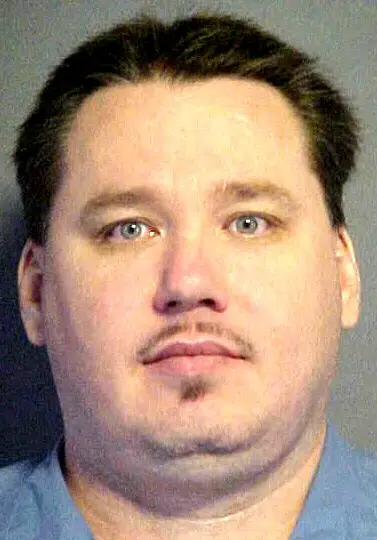
Norman Richard Cleary
Murderer
1known / alleged victims
Similar offenders
 Brian Kevin Rosenfeld
Murderer · USA · 1985
Brian Kevin Rosenfeld Brian Kevin Rosenfeld was sentenced to three concurrent l…
23 victims
Brian Kevin Rosenfeld
Murderer · USA · 1985
Brian Kevin Rosenfeld Brian Kevin Rosenfeld was sentenced to three concurrent l…
23 victims
 Russell Ellwood
Murderer · USA · 1991
Russell Ellwood was a former taxi driver. Authorities suspected him of killing…
20 victims
Russell Ellwood
Murderer · USA · 1991
Russell Ellwood was a former taxi driver. Authorities suspected him of killing…
20 victims
JO
Joseph Dewey Akin
Murderer · USA · 1990
Joseph Dewey Akin was a hospital nurse who killed patients. Akin worked at Coop…
18 victims
 Robert Martines Perez
Murderer · USA · 1994
Name: Robert Martines Perez · Other name used in proceedings: Robert Martinez P…
15 victims
Robert Martines Perez
Murderer · USA · 1994
Name: Robert Martines Perez · Other name used in proceedings: Robert Martinez P…
15 victims
 Billy Frank Vickers
Murderer · USA · 1993
Billy Frank Vickers Vickers was executed by lethal injection in Texas on Januar…
14 victims
Billy Frank Vickers
Murderer · USA · 1993
Billy Frank Vickers Vickers was executed by lethal injection in Texas on Januar…
14 victims
DA
Daniel Ray Troyer
Murderer · USA · 1985
Daniel Ray Troyer was 39 at the time he pleaded guilty to killing Drucilla Ovar…
13 victims
Random profiles
 John Nordlund
Mass murderer · Sweden · 1900
John Filip Nordlund (also known as ”Mälarmördaren”, ”Mordlund”, ”Svarte Filip”)…
5 victims
John Nordlund
Mass murderer · Sweden · 1900
John Filip Nordlund (also known as ”Mälarmördaren”, ”Mordlund”, ”Svarte Filip”)…
5 victims
 Joachim Kroll
Serial killer · Germany · 1955
Joachim Kroll was sentenced to 9 terms of life-imprisonment on April 8, 1982. H…
13 victims
Joachim Kroll
Serial killer · Germany · 1955
Joachim Kroll was sentenced to 9 terms of life-imprisonment on April 8, 1982. H…
13 victims
 Zhou Youping
Serial killer · China · 2009
Zhou Youping was a Chinese karaoke singer who organized sexually abusive chokin…
6 victims
Zhou Youping
Serial killer · China · 2009
Zhou Youping was a Chinese karaoke singer who organized sexually abusive chokin…
6 victims
 Cynthia Sommer
Justice miscarriage · USA · 2002
Cynthia Sommer was convicted of first-degree murder with the “special circumsta…
0 victims
Cynthia Sommer
Justice miscarriage · USA · 2002
Cynthia Sommer was convicted of first-degree murder with the “special circumsta…
0 victims
ER
Ernest Dobbert
Murderer · USA · 1972
Ernest John Dobbert Jr. was condemned for the 1971 killing of his 9-year-old da…
2 victims
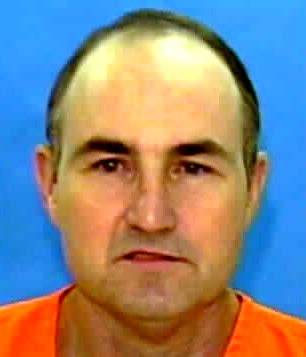 Larry Eugene Mann
Murderer · USA · 1980
Larry Eugene Mann (also known as Larry E Mann and Larry Eugene Mann) was a whit…
1 victim
Larry Eugene Mann
Murderer · USA · 1980
Larry Eugene Mann (also known as Larry E Mann and Larry Eugene Mann) was a whit…
1 victim
Case Facts
- Gender
- male
- Country
- USA
- Location
- Tulsa County, Oklahoma, USA
- Date of birth
- February 15, 1966
- Age at first offence
- 25
- Characteristics
- robbery, rape, alcohol
- Victim profile
- Wanda Neafus, 44 (housekeeper)
- Method of murder
- Shooting
- Date(s) of murder
- December 6, 1991
- Years active
- 1991
- Date of arrest
- —
- Status
-
Executed
Executed by lethal injection in Oklahoma on February 17, 2004
Case Summary
Case identifiers
- Name: Norman Richard Cleary
- Jurisdiction (trial): Tulsa County District Court
- Case number: CF-91-5395
- Presiding judge: B.R. Beasley
Timeline
- December 6, 1991 — Norman Richard Cleary, Kenneth “KC” Chandler, and Jack Bell drove around Tulsa in Cleary’s truck, with Cleary and Chandler deciding to burglarize a home; housekeeper Wanda Neafus answered the door of the third home, Cleary shot her five times in the face and neck, and the men took Neafus’s purse and a cane with an eagle hand grip from the hall tree.
- 1991 burglary in Tulsa — Cleary took a purse and a walking cane during the burglary.
- 1993 — An Oklahoma court sentenced Cleary to death by lethal injection.
- 01/05/2004 — The Oklahoma Court of Criminal Appeals set the execution date for Norman Richard Cleary.
- February 17, 2004 — Cleary was executed by lethal injection in Oklahoma; he was pronounced dead at 6:14 p.m.
- February 13, 2004 — A Pardon and Parole Board voted 4-1 to deny clemency for Cleary.
- March 27, 2003 — The Court of Appeals affirmed the district court’s denial of habeas relief; Cleary v. Mullin, 62 Fed. Appx. 243 (10th Cir. March 27, 2003).
- 1997 — Cleary v. State, 942 P.2d 736 (Okl. Cr. 1997) (Direct Appeal).
- January 18, 1995 — An unpublished opinion affirmed Cleary’s judgment and sentence; (F-92-1234, Jan. 18, 1995).
Background
- Norman Richard Cleary was executed in Oklahoma after being convicted of murder and burglary.
- Cleary’s parents, his sister, two friends, and two spiritual advisers attended his execution as witnesses.
- Cleary had written to the family of Wanda Neafus expressing grave remorse.
- At his trial, Cleary’s lawyer tried to show that Cleary had an abusive childhood.
- A juvenile case worker who had known Cleary said that as a child, Cleary frequently ran away form home.
- A psychologist description of Cleary was presented at the clemency proceeding: Dr. Michael Gelbort said Cleary was like a combat veteran who couldn’t react appropriately in panic situations, and Gelbort said Cleary had been abused and suffered brain damage and was unable to adjust to rapidly changing situations.
- Assistant Attorney General Robert Whittaker responded by calling Gelbort’s statements “garbage” and argued the brain-damage theory used information out of context.
The offence
- Norman Richard Cleary and Kenneth “KC” Chandler drove through Maple Ridge and cased the neighborhood.
- They knocked on the door of two homes and, when residents answered from upstairs windows, asked for the address of a fictitious person.
- Housekeeper Wanda Neafus answered the door of the third home.
- The handgun Chandler was carrying slipped out from under his coat; believing they had been found out, the men pushed open the storm door and entered.
- The men took Neafus to the basement, where Cleary shot Neafus five times in the face and neck.
- Neafus’s purse and a cane with an eagle hand grip from the hall tree were taken.
- According to trial facts, Cleary and his accomplice pushed their way inside when Neafus opened the front door, Cleary then took Neafus to the basement and shot her five times, killing her; they left taking Neafus’s purse and a walking cane.
- Prosecutors claimed Cleary acted so Neafus could not identify him to police.
- Cleary later maintained that Chandler was responsible for the murder; Cleary said he did not know that Chandler was going to kill Neafus and was not in the room when the shooting occurred.
- The only items homeowners determined missing were Neafus’ purse and a cane the family had purchased at the Smithsonian Institution.
- After Neafus saw a gun fall from Chandler’s coat, the men panicked and plans changed.
- Chandler fled as Cleary was about to pull the trigger; Chandler was sentenced to life in prison for his role.
Investigation
- The key evidence against Cleary included a confession and incriminating conversations Cleary had with his former girlfriend.
- Cleary’s former girlfriend testified that Cleary told her he had killed the housekeeper.
- The former girlfriend later claimed she lied about one of the conversations.
Trial
- Cleary was convicted following jury trial in the Tulsa County District Court.
- The jury convicted Cleary of First Degree Murder (violation of 21 O.S.1991, § 701.7) and First Degree Burglary After Former Conviction of Two Felonies (violation of 21 O.S.1991, § 1431).
- Following the sentencing stage, the jury found four aggravating circumstances:
- continuing threat,
- avoiding arrest or prosecution,
- prior felony conviction involving violence,
- murder committed while serving a term of imprisonment.
- The jury recommended a sentence of death for the murder and ninety-nine years’ imprisonment for the burglary.
- The co-defendant Kenneth Chandler was tried separately and sentenced to life imprisonment.
- A motion for new trial was filed after Cleary’s former girlfriend, Corlea Corbell, recanted her testimony regarding one of the conversations.
- After trial and before sentencing, Corbell contacted the public defender’s office and told an investigator and counsel that she had lied about the third conversation.
- The trial court denied the motion following a hearing held immediately prior to sentencing.
- The content of Corbell’s testimony was examined to determine the probable effect of the recantation.
- Corbell testified that the first conversation with Cleary occurred at the Swingers club a few days after the murder, and that Corbell’s sister Sally (Chandler’s girlfriend) told Corbell that Chandler had killed a woman.
- Corbell testified that she immediately took Cleary behind the bar and asked him: “... what was going on?”
- Corbell testified that Cleary told her Sally’s statement was true, but that Chandler had not “shot the lady,” he had.
- Corbell testified that Cleary also told her he shot the victim in the neck and head and gave the .22 hand gun to a friend named Mike.
- Corbell testified that the second conversation took place at the home of Corbell’s mother and involved Corbell, Cleary and Chandler.
- Corbell testified that Cleary detailed the two prior stops and said he “shot the lady.”
- Corbell testified that the conversation came to an abrupt halt when Sally came in yelling she didn’t want to hear any more about it.
- Corbell testified that she overheard the third conversation between Cleary and Chandler at the Fountains bar.
- Corbell testified that Cleary made fun of Chandler and called him a “pussy” for running up the stairs when Cleary fired the shots.
- At the hearing on the motion for new trial, Corbell testified she did not hear the third conversation but had been told about it by someone else.
- At the hearing, Corbell also testified that Cleary may not have told her that he killed the victim to avoid being identified, but she was confused, and he may well have told her that.
- Corbell “adamantly maintained” these were the only problems with her testimony.
- Mitigation included evidence of serious emotional and physical violence and abuse Cleary endured as a child and early drug usage, and the fact Chandler received a life sentence for the crime.
- The court stated that, after independently weighing mitigating evidence against aggravating circumstances, it found the jury’s determination that the aggravating circumstances outweighed the mitigating circumstances was supported by the record.
- The direct appeal opinion included issues regarding jury instructions and evidentiary admissions, and it concluded no error warranting reversal or modification.
Sentencing
- Cleary was sentenced to death for the murder of Wanda Neafus.
- The burglary sentence was ninety-nine years’ imprisonment.
- The jury found four aggravating circumstances and recommended death for the murder.
Appeals
Cleary v. State, 942 P.2d 736 (Okl. Cr. 1997) (Direct Appeal)
- Cleary was convicted following jury trial in the Tulsa County District Court, B.R. Beasley, J., of first-degree murder and first-degree burglary after former conviction of two felonies.
- The decision affirmed the judgment and sentence.
- The appellate court held that:
- a nondiscriminatory reason offered by the prosecution for a peremptory strike of an African-American venireman was supported by evidence in the record;
- evidence was sufficient to establish first-degree burglary elements of breaking and presence of person in home;
- letters written by the defendant’s cellmate on defendant’s behalf were admissible;
- the probative value of “styrofoam wig head pierced with foot-long dowels” was not substantially outweighed by danger of unfair prejudice;
- failure to sua sponte instruct that merely standing by does not make someone principal was not plainly erroneous;
- a pattern jury instruction permitting conclusion that any act of physical force by which obstruction to entry was removed constituted sufficient “breaking” to support first-degree burglary conviction was a correct statement of law;
- aggravating factor of “while serving a sentence of imprisonment on conviction of a felony” was properly applied to defendant on parole at time of murder;
- jury instructions on consideration of mitigating circumstances did not violate due process;
- the trial court was required to provide the sentencing phase jury with written copy of instruction concerning balancing aggravating and mitigating factors, and failure to do so was harmless error;
- prosecutor’s expression during closing argument of opinion as to defendant’s guilt did not contribute to the verdict and was therefore harmless; and
- statutorily mandated review revealed no error warranting reversal or modification.
- The opinion included a concurrence in results by Lumpkin, J., with a separate opinion in which Johnson, J., joined.
Cleary v. Mullin, 62 Fed. Appx. 243 (10th Cir. March 27, 2003)
- After affirmance of his conviction and Oklahoma death sentence, the district court denied defendant habeas relief, and Cleary appealed.
- The Court of Appeals affirmed the district court’s decision denying habeas relief.
- The Court of Appeals stated that Cleary’s attorneys’ representation at capital sentencing proceeding was not constitutionally ineffective because counsel failed to investigate and present several additional family members testimony.
- The Court of Appeals considered the claim’s merit and affirmed the denial of habeas relief.
Outcome
- Cleary was executed by lethal injection in Oklahoma on February 17, 2004.
- Cleary was pronounced dead at 6:14 p.m..
- The execution report stated he died three minutes after he was given the first of three injections.
- The execution report stated it was only two days after his 38th birthday.
- Cleary left a final statement expressing grief to the family of the woman he killed and love for his family.
- Cleary said in his final statement:
“Again, I'd like to apologize to my victim's family, to tell them how sorry I am for the pain I've caused them,”
“I hope that someday they can forgive me.
For my family, just thank you for loving me. Thank you and God bless you.” - As the injections began, Cleary “sniffled” and lay motionless with his eyes closed until a doctor pronounced him dead.
- Witnesses told one another, “he's free.”
Clemency and parole
- A Pardon and Parole Board voted 4-1 to deny clemency for Cleary.
- Moments before the vote, Cleary said he wanted to face his victim’s family and apologize; the family wanted no part of it.
- Without facing family members, Cleary apologized anyway.
- Cleary said:
“I've had a lot of time to think about it and I understand what I did to my victim's family,”
“I understand what a horrible thing I did to the Neafus family and I hope someday they can forgive me.
I'm very sorry for my actions.” - Anita Wilson said forgiveness was out of the question, and she said: “Even though God says I'm supposed to forgive, that's a little hard,”
- Cleary’s federal public defender, Kristi Christopher, told the Pardon and Parole Board that Cleary should not be executed because he suffered from brain damage and his attorneys through his trial and appeals process had been ineffective.
- Kristi Christopher said: “The question this board needs to consider is not whether he's been through the process, but whether the process he's been through justifies his execution,”
- Sid Conway, an assistant public defender from Tulsa County, called the case a train wreck and said: “The law presupposes that in a capital case everybody is going to do their job,” and “That didn't happen in this case. We didn't do our job.”
- Dr. Michael Gelbort testified and characterized Cleary like a combat veteran.
- Assistant Attorney General Robert Whittaker called Gelbort’s statements “garbage.”
- Whittaker said: “He learns. He learns you don't leave a victim behind that can identify you.”
- Whittaker said: “It was not a panic. It was choice.”
Other details
- A news release about setting the execution date included that Attorney General W.A. Drew Edmondson requested the date Dec. 1 after the United States Supreme Court denied the inmate’s final appeal.
- The Oklahoma Court of Criminal Appeals set Feb. 17 as the execution date for Tulsa County death row inmate Norman Richard Cleary.
- The Pardon and Parole Board matter occurred on February 13, 2004.
- Appeals described Cleary as convicted in 1993 for the murder of Tulsa housekeeper Wanda Neafus.
- In the criminal facts description, Cleary was said to have extensive record of burglary and assault.
- Prison records showed Cleary had been previously convicted of assault and battery, robbery by fear, and first degree burglary.
- The convictions stemmed from an attack on an elderly victim in which Cleary beat the victim bloody about her head and face.
- Cleary had also been previously convicted of burglary and attempted burglary.
- Cleary was on parole at the time of the murder of Neafus.
- A report stated Cleary had stabbed another inmate while in prison.
- Cleary’s parole officer believed Cleary posed a threat to society, regardless of whether he was in or out of prison.
- A report described Neafus as 44 and Cleary as 38 at the time of execution, and it stated Cleary was 25 at the time of the shooting.
- The report stated Neafus was working at a home in the upper-class Maple Ridge neighborhood in Tulsa.
- The report stated Neafus was found slumped in a chair on Dec. 6, 1991.
- A medical examiner testified that several shots were from close range.
- Wanda Neafus was shot five times in the face, neck and head, and in another description Cleary shot her five times in the face and neck.
- The appellate decision described the aggravating factor instruction details and referenced a styrofoam wig head pierced with foot-long dowels.
- The appellate decision referenced that Corbell contacted the public defender's office and told an investigator and counsel she had lied about the third conversation.
- The appellate decision included that judgments and sentence were affirmed and that no error warranted reversal or modification.
- The appellate decision included that Cleary’s trial attorney failed to present evidence of childhood abuse and an accident in which he was hit by a car, as raised by public defenders in news coverage.
- Cleary’s execution was described as carried out at the Oklahoma State Penitentiary.
- As his last meal, Cleary requested two foot-long chili-cheese hot-dogs, a large chocolate malt, a large vanilla malt and six pieces of extra-crispy chicken (two breasts, two thighs and two legs).
- Oklahoma state execution news mentioned other executions and scheduled executions: Tyrone Peter Darks was put to death last month for the 1994 shooting death of his ex-wife, Sherry Goodlow; Hung Thanh Le was scheduled to die Feb. 26; and a March 9 execution was scheduled for David Jay Brown.
- Oklahoma Daily commentary included the statement “Cleary is guilty as sin. The courts know it. The press knows it.” and continued with discussion about capital punishment; these statements were commentary and were not treated as findings about the case.
- A letter to the editor included “Lyndia Faihtinger, Mother of Norman R. Cleary Stockton, California.”
- A quote attributed to Cleary in pre-execution coverage stated: “No one can take her place,” said Becky Flippin, a sister of the murder victim.
Spotted an error, or have more information about this case?