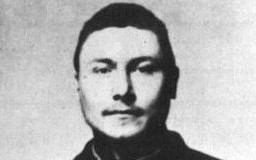
John Nordlund
Mass murderer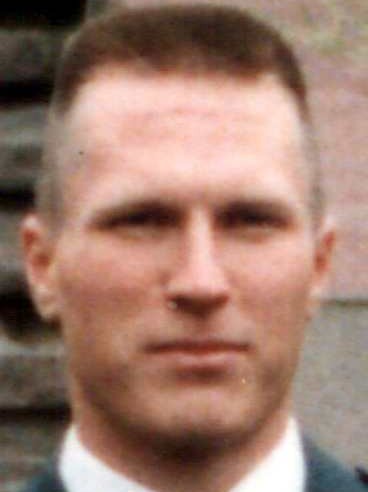 Mattias Flink
Mass murderer · Sweden · 1994
Mattias Flink (born March 8, 1970) was a Swedish army officer who killed 7 peop…
7 victims
Mattias Flink
Mass murderer · Sweden · 1994
Mattias Flink (born March 8, 1970) was a Swedish army officer who killed 7 peop…
7 victims
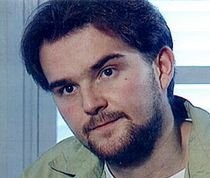 Tommy Zethraeus
Mass murderer · Sweden · 1994
Tommy Zethraeus and Guillermo Marques Jara had been refused to enter a night cl…
4 victims
Tommy Zethraeus
Mass murderer · Sweden · 1994
Tommy Zethraeus and Guillermo Marques Jara had been refused to enter a night cl…
4 victims
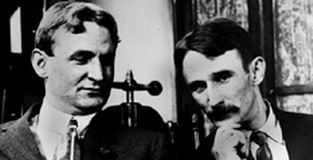 James & John McNamara
Mass murderer · USA · 1910
James B. (“J.B.”) McNamara · John J. (“J.J.”) McNamara · The brothers were Iris…
21 victims
James & John McNamara
Mass murderer · USA · 1910
James B. (“J.B.”) McNamara · John J. (“J.J.”) McNamara · The brothers were Iris…
21 victims
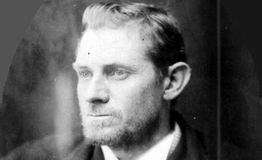 Frederick Deeming
Mass murderer · United Kingdom/Australia · 1891
Frederick Bailey Deeming (30 July 1853 – 23 May 1892) was an English-born Austr…
6 victims
Frederick Deeming
Mass murderer · United Kingdom/Australia · 1891
Frederick Bailey Deeming (30 July 1853 – 23 May 1892) was an English-born Austr…
6 victims
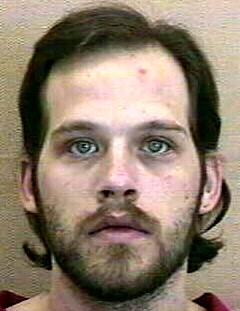 Raymond Rowsey
Murderer · USA · 1992
Name: Raymond Rowsey · Sex: Male · Race: White · Date of birth: 04/11/1971 · DO…
1 victim
Raymond Rowsey
Murderer · USA · 1992
Name: Raymond Rowsey · Sex: Male · Race: White · Date of birth: 04/11/1971 · DO…
1 victim
 Florence Maybrick
Murderer? · United Kingdom · 1899
Florence Elizabeth Maybrick (Florence Maybrick) was an American woman convicted…
1 victim
Florence Maybrick
Murderer? · United Kingdom · 1899
Florence Elizabeth Maybrick (Florence Maybrick) was an American woman convicted…
1 victim
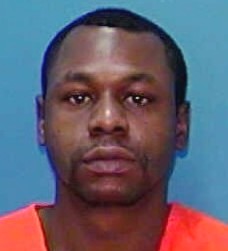 Jermaine Foster
Murderer · USA · 1992
Jermaine Foster was tried together with codefendants Booker, Henderson, and Cat…
2 victims
Jermaine Foster
Murderer · USA · 1992
Jermaine Foster was tried together with codefendants Booker, Henderson, and Cat…
2 victims
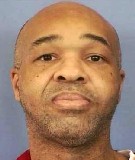 Eddie Lee Howard
Murderer · USA · 1992
Eddie Lee Howard, Jr. was a forty-one year old male. He was convicted and sente…
1 victim
Eddie Lee Howard
Murderer · USA · 1992
Eddie Lee Howard, Jr. was a forty-one year old male. He was convicted and sente…
1 victim
- Gender
- male
- Country
- Sweden
- Location
- In the sea, Sweden
- Date of birth
- March 23, 1875
- Age at first offence
- 25
- Characteristics
- robbery
- Victim profile
- The ship's captain (Olof Rönngren), a butcher, an old lady, a farmer and a cattle merchant
- Method of murder
- Shooting / St abbing with knife
- Date(s) of murder
- May 16, 1900
- Years active
- 1900
- Date of arrest
- Next day
- Status
-
Executed
Executed with an axe on December 10, 1900
Background
John Filip Nordlund (also known as ”Mälarmördaren”, ”Mordlund”, ”Svarte Filip”) was a Swedish criminal and mass murderer from Gävle. He was born in Säter near Falun and had two siblings: Joel, an older brother who was a mute, and a younger brother named Rickard.
Histories were told of Nordlund as an odd child who never laughed. In 1882 the family moved to Falun where Nordlund went to school, but he never finished school. Instead, he took to the road, at first with a classmate who was an orphan, in 1886. Later that year he was spotted by a friend of his parents in Hedemora and returned home. In 1887 he was on the run again, and as a person of both size and strength he had the ability to work, passing as an adult.
For a brief period of one and a half years, Nordlund worked at a lumber mill in Korsnäs, which he said was the only time he tried to live an honest life. He then forged a bill, which got him fired from the lumber mill. His parents had moved to Gävle and Nordlund also lived there for a short period.
In 1891 Nordlund was arrested and sentenced to four months in prison for cattle rustling by a court in Ljusdal. Later the same year he received his first long-term prison sentence, this time for stealing, and he was sentenced to three years in prison. The prison term was served at the county jail in Malmö.
In 1895 he received another three-year sentence to be served at the prison Långholmen in Stockholm, where he was enrolled as prisoner number two. Due to unruly behaviour in prison and other things, he was to serve four years. Letters written by himself in 1900 described how his plan for the future took its final and drastic shape.
On the 20th of April 1900, Nordlund was released from Långholmen. With the help of his younger brother, who was living in Stockholm and working as a clerk, Nordlund went home to Gävle. As an ex-convict he had difficulties getting a job, so he soon returned to his old life.
The offence
On the night of 16 May and 17 May 1900, Nordlund committed a mass murder on the steam boat ferry Prins Carl. He boarded the ferry in Arboga and bought a ticket for Stockholm. His luggage contained two guns, a knife and several padlocks. He planned to lock the door to the engine room.
His plan was to rob and kill as many people as possible on the ship and steal the ship’s register. To avoid early detection he also planned to torch the ship. His plan failed partly because scared passengers on the boat managed to attract the attention of another ferry, the “Köping”.
Nordlund still committed a rampage that left five people dead and eight wounded. Eight of the wounded survived. He also trashed the ship. The victims of Nordlund’s rampage included the ship’s captain, Olof Rönngren, a butcher, an old lady, a farmer, and a cattle merchant.
He did not manage to steal the ship’s register, leaving his booty at 800 kronor. He escaped from the ship because no one thought that one single man could be strong enough to put one of the life boats in the sea and row away.
Investigation
After the rampage, Nordlund could not give an explanation for his actions. He was said to have had only remorse that he had not killed the people he wounded.
During the events, several papers competed with each other over numbers of victims. In some papers the number of victims was exaggerated, claiming a much larger death toll. Several skillingtryck were made about the events on Prins Carl, with songs detailing the horrors of the night of May 17th. The act resulted in a media hysteria comparable to ones seen later.
Arrest
The next day Nordlund was arrested by three police officers at the train station in Skogstorp near Eskilstuna. He had bought some new clothes earlier and avoided detection.
He had planned to take the train to Oxelösund and travel to Copenhagen via Gothenburg. When he was arrested he was said to have shouted: “This was my revenge on humanity ” and “Be glad that you arrested me here – if I had gotten on the train several more would have been killed”.
After his arrest he was put in a holding cell in Eskilstuna, where the guards were barely able to keep an angry mob from killing him.
Trial
In the courts Nordlund did not try to act in a way that would receive a lighter sentence. He never pleaded insanity. He showed no remorse, and the only thing he regretted was that he had not killed everyone on the ferry.
On the 18th of May he wrote a letter to his family explaining what he had done and that he was responsible for the newspaper headlines. The letter was published by the newspapers Gefle Dagblad and Aftonbladet. In the letter he wrote that he had to explain himself to someone and that he realised that he would receive only one more sentence, capital punishment. He told them not to grieve and he welcomed the end since he never felt that he was a part of the society at all.
Nordlund was sentenced to death and to forever lose all privileges as a citizen for five murders, eight attempted murders and thievery.
Sentencing and prison conduct
Twice Nordlund tried to flee from his cell at Västerås county jail. In those escape attempts he hurt the jailors with a sharp object that he had somehow managed to make in the cell. He motivated one escape attempt by saying: “as one who was awaiting death penalty he had nothing to loose.”
Appeals
Nordlund had the possibility of writing a letter to the king, Oscar II, to plead for mercy, but he chose not to do so. He wrote a letter to the Supreme Court complaining about the fact that he had been wrongfully sentenced for robbery of people that he did not rob.
The Supreme Court replied that this was irrelevant and that the sentence passed by the court was correct. The reply was dated November 13th.
Execution
While awaiting his execution, Nordlund met his mother several times, with the last meeting occurring five days before his execution. The priest from Långholmen, August Hylander, came to visit him several times.
In his final letter to his parents he asked the lord for redemption and told his parents good bye.
On the morning of December 10th, on the prison yard of Västerås County Jail, Nordlund was executed by the high executioner Dahlman with an axe. His final words were: “ Gud vare mig syndare nådig och trygg i min Jesu armar ”.
Aftermath
Nordlund was buried in sacred ground since his body was claimed by his family after his death. Up until the 1870’s this type of burial would not have been legal, but as society was progressing the death penalty changed.
The year 1900 was described as one of the darkest for people who wanted to abolish capital punishment in Sweden, with three executions in the same year. In the period 1866-1921 there were 15 executions in total. People argued that one inherited the role as a criminal, while others argued to keep the death penalty, using Nordlund as an example of why it was necessary. People who wanted to abolish the death penalty, such as Hjalmar Branting, argued that it was unfortunate that Nordlund had been released from prison.
It was claimed that the way Nordlund acted after being caught proved insanity, and that his lack of empathy for his victims also proved this. It was also said that had he not committed the act in a time when several gruesome murders were committed, he would probably have received a lighter sentence or been sent to an insanity asylum.
The claims of insanity and the fact that two of the three persons executed in 1900 were claimed to have been insane were said to have affected the justice system, with a 10-year stretch of reprieves until Alfred Ander was executed.

Spotted an error, or have more information about this case?