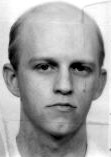
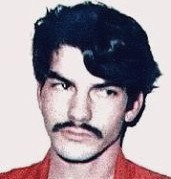
Ernest Dobbert
Murderer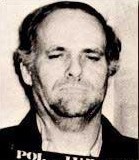 Ervil LeBaron
Murderer · USA · 1972
Ervil Morrell LeBaron (1925 to August 16, 1981) was the leader of a polygamous…
35 victims
Ervil LeBaron
Murderer · USA · 1972
Ervil Morrell LeBaron (1925 to August 16, 1981) was the leader of a polygamous…
35 victims
 Marvin Gray
Murderer · USA · 1975
Marvin Gray was convicted killer who claimed responsibility for 23 slayings and…
23 victims
Marvin Gray
Murderer · USA · 1975
Marvin Gray was convicted killer who claimed responsibility for 23 slayings and…
23 victims
 Yahweh ben Yahweh
Murderer · USA · 1980
Yahweh ben Yahweh was born and legally named Hulon Mitchell Jr. (October 27, 19…
23 victims
Yahweh ben Yahweh
Murderer · USA · 1980
Yahweh ben Yahweh was born and legally named Hulon Mitchell Jr. (October 27, 19…
23 victims
 Charles Manson
Murderer · USA · 1969
Charles Milles Manson (born November 12, 1934) was an American criminal and mus…
9 victims
Charles Manson
Murderer · USA · 1969
Charles Milles Manson (born November 12, 1934) was an American criminal and mus…
9 victims
 Taffy Hotene
Murderer · New Zealand · 2000
Taffy Hotene was born in Murupara in 1970. He was brought up in a chaotic and a…
1 victim
Taffy Hotene
Murderer · New Zealand · 2000
Taffy Hotene was born in Murupara in 1970. He was brought up in a chaotic and a…
1 victim
 George Rivas
Murderer · USA · 2000
George Rivas was convicted of capital murder and was sentenced to death. He was…
1 victim
George Rivas
Murderer · USA · 2000
George Rivas was convicted of capital murder and was sentenced to death. He was…
1 victim
 Charles Jason Baldwin
Homicide · USA · 1993
Charles Jason Baldwin was born April 11, 1977. At the time of his arrests, Jaso…
3 victims
Charles Jason Baldwin
Homicide · USA · 1993
Charles Jason Baldwin was born April 11, 1977. At the time of his arrests, Jaso…
3 victims
- Gender
- male
- Country
- USA
- Location
- Duval County, Florida, USA
- Date of birth
- 1938
- Age at first offence
- 34
- Characteristics
- parricide, torture, the bodies were never found
- Victim profile
- His daughter Kelly Ann, 9, and his son Ryder Scott, 7
- Method of murder
- Beating - Strangulation
- Date(s) of murder
- 1972
- Years active
- 1972
- Date of arrest
- —
- Status
-
Executed
Executed by electrocution in Florida on September 7, 1984
Case identification
Ernest John Dobbert Jr. was condemned for the 1971 killing of his 9-year-old daughter, Kelly Ann, and for second-degree murder for killing a son, Ryder. Their bodies were never found.
Timeline
- 1971 — Ernest John Dobbert Jr. killed his 9-year-old daughter, Kelly Ann (condemned for the killing).
- 1971 — Dobbert killed his son, Ryder (second-degree murder).
- early 1972 — Ernest John III was found battered and wandering in Jacksonville, Fla.
- 1972 — An arrest warrant was issued for Dobbert, who evidently fled the area.
- About a year later — Honore Elizabeth was found in a Ft. Lauderdale hospital with a note pinned to her clothing asking that she be sent to her mother in Wisconsin.
- Shortly thereafter — Dobbert’s abandoned automobile was found near a bridge with a suicide note on the front seat.
- After flight to Texas — Dobbert was eventually arrested and extradited to Florida.
- 1972 — Dobbert was arrested for beating and choking his nine-year-old daughter to death.
- 1974 — Dobbert was convicted in Circuit Court, Duval County, Florida, of first degree murder of his nine-year-old daughter, second-degree murder of his seven-year-old son, child torture of his eleven-year-old son, and child abuse of his five-year-old daughter.
- Spring 1974 — Dobbert was convicted in Circuit Court, Duval County, Florida (recited as “in the spring of 1974”).
- April 1974 — Dobbert’s conviction and sentence occurred in the Florida trial context described in the materials.
- Later — Dobbert’s case proceeded through Florida and federal appellate review; the U.S. Supreme Court affirmed in Dobbert v. Florida, 432 U.S. 282 (1977).
- 1982 — Dobbert was sentenced to death again after resentencing authority exercised under a U.S. Supreme Court decision; the Florida Supreme Court affirmed; the U.S. Supreme Court denied certiorari.
- January 27, 1982 — Dobbert filed a petition for writ of habeas corpus (scheduled for electrocution on February 2, 1982).
- February 2, 1982 — Electrocution date scheduled; Dobbert had filed habeas relief on January 27, 1982.
- January 28, 1982 — Dobbert’s collateral petition under Fla. R. Crim. P. 3.850 was affirmed by the Supreme Court of Florida.
- August 30, 1984 — Dobbert filed a federal habeas corpus petition raising an issue described in a dissent.
- September 3 — The Federal District Court denied relief but issued a certificate of probable cause to appeal (described in a dissent).
- September 6 — The Court of Appeals for the Eleventh Circuit affirmed the District Court’s judgment 2-1 in a dissent context (described in a dissent).
- September 7, 1984 — Dobbert was executed by electrocution in Florida.
Background
Ernest John Dobbert Jr. was a Florida child abuser.
In the spring of 1974, Dobbert was convicted in Circuit Court, Duval County, Florida, of:
- first degree murder of his nine-year-old daughter;
- second-degree murder of his seven-year-old son;
- child torture of his eleven-year-old son; and
- child abuse of his five-year-old daughter.
Only the first degree murder conviction and sentence were challenged in a described federal appeal.
Dobbert’s conviction and sentence were affirmed by the Florida Supreme Court: Dobbert v. State, 328 So.2d 433 (Fla.1976).
The U.S. Supreme Court granted certiorari on three issues not involved in the instant appeal and decided them all against Dobbert: Dobbert v. Florida, 432 U.S. 282, 97 S.Ct. 2290, 53 L.Ed.2d 344 (1977).
The offence
Dobbert was convicted of, among other counts:
- first-degree murder of one of his children;
- second-degree murder of his son Ryder Scott, aged 7;
- torturing his son Ernest John III, aged 11; and
- abusing his daughter Honore Elizabeth, aged 5.
The victims were his children:
- Kelly Ann, aged 9;
- Ryder Scott, aged 7;
- Ernest John III, aged 11; and
- Honore Elizabeth, aged 5.
The brutality and heinousness of the crimes were relevant to a motion for change of venue due to pretrial publicity and to the trial judge’s imposition of the sentence of death.
The trial judge’s factual summary at the sentencing phase described petitioner's treatment of his own offspring as:
"The evidence and testimony showed premeditated and continuous torture, brutality, sadism and unspeakable horrors committed against all of the children over a period of time." App. 47.
The judge then detailed some of the horrors inflicted upon Kelly Ann, upon which he relied to meet the statutory requirement that aggravating circumstances be found:
"Over the period of time of the latter portion of Kelly Ann's short, tortu(r) ous life the defendant did these things to her on one or many occasions:
"1. Beat her in the head until it was swollen.
"2. Burned her hands.
"3. Poked his fingers in her eyes.
"4. Beat her in the abdomen until 'it was swollen like she was pregnant.'
"5. Knocked her against a wall and 'when she fell, kicked her in the lower part of the body.'
"6. Held her under water in both the bath tub and toilet.
"7. Kicked her against a table which cut her head then defendant sewed up her wound with needle and thread.
"8. Scarred her head and body by beating her with a belt and board causing marks from her cheek, across the neck and down her back which injuries worsened without treatment 'until the body juices came out.'
"9. On one occasion beat her continuously for 45 minutes.
"10. On many occasions kicked her in the stomach with his shoes on, and on the night she died he kicked her a number of times.
"11. Kept her out of school so that the many scars, cuts and bruises on her body would not be seen by others.
"12. Defendant made no effort to get professional medical care and attention for the child and in fact actively prevented any out-siders from discovering her condition.
"13. Choked her on the night she died and when she stopped breathing he placed her body in a plastic garbage bag and buried her in an unmarked and unknown grave." Id., at 47-48.
A dissent described evidence as including that Kelly’s death was linked to strangling testimony and also described the recantation of that testimony. The dissent stated that there was abundant evidence of brutal acts toward his children, but that John III’s testimony was described as the sole evidence that Dobbert actually and deliberately strangled Kelly to death.
Investigation
This tale began to unravel in early 1972 when Ernest John III was found battered and wandering in Jacksonville, Fla.
An arrest warrant was issued for petitioner, who evidently fled the area.
About a year later, Honore Elizabeth was found in a Ft.
Shortly thereafter, petitioner's abandoned automobile was found near a bridge with a suicide note on the front seat.
Petitioner fled to Texas and was eventually arrested and extradited to Florida.
A motion for change of venue alleged that extensive publicity regarding Dobbert’s flight, extradition, and arrest, as well as a search for bodies by the Jacksonville Police Department, rendered impossible a fair and impartial trial in Duval County.
Arrest
An arrest warrant was issued for Dobbert in early 1972.
After fleeing to Texas, Dobbert was eventually arrested and extradited to Florida.
Trial
Dobbert applied to the Supreme Court of Florida for a Constitutional Stay of Trial, alleging the application of an ex post facto law and a violation of equal protection; the application was denied.
Dobbert also moved in the lower court for a change of venue, alleging that he was charged with “inherently odious” acts and that extensive publicity regarding his flight, extradition, and arrest, as well as a search for bodies by the Jacksonville Police Department, had rendered impossible a fair and impartial trial in Duval County.
The trial judge took the motion under advisement and issued an order enjoining anyone connected with the trial from releasing any statement about the case to the news media:
“(W)e find from the record that the trial judge did everything possible to insure an impartial trial for the defendant. The jurors, carefully and extensively examined by defense counsel to determine that they could be fair and impartial, were sequestered and (a) comprehensive gag order was placed on all participants of the trial.
"Appellant has failed to show that he did not receive a fair and impartial trial, that the setting of his trial was inherently prejudicial.” 328 So.2d, at 439-440.
The motion for change of venue was later denied.
At trial, the jury found Dobbert guilty of inter alia, murder in the first degree.
The sentencing hearing was held before the judge and jury. The jury by a 10-to-2 majority found sufficient mitigating circumstances to outweigh any aggravating circumstances and recommended a sentence of life imprisonment.
The trial judge overruled the jury’s recommendation and sentenced Dobbert to death, pursuant to the authority under the amended Florida statute.
The Florida Supreme Court affirmed over two dissents.
Sentencing
During the sentencing phase, the trial judge made factual findings summarizing Dobbert’s treatment of his children and detailed the listed horrors inflicted upon Kelly Ann.
The judge detailed conclusions supporting the sentence of death (quoted in the dissent):
"There are sufficient and great aggravating circumstances which exist to justify the sentence of death.
"In concluding my findings I would like to point out that my 22 years of legal experience have been almost exclusively in the field of criminal law.
"The Judge of this Court has been a defense attorney of criminal cases, a prosecutor for eight and one half years and a Criminal Court Judge and a Circuit Judge Felony Division for three and one half years.
"During this (sic ) 22 years I have defended, prosecuted and held trial of almost every type of serious crime. During these years of legal experience I have never known of a more heinous, atrocious and cruel crime than this one.
"My experience with the sordid, tragic and violent side of life has not been confined to the Courtroom. During World War II, I was a United States Army Paratrooper and served overseas in ground combat. I have had friends blown to bits and have seen death and suffering in every conceivable form.
"I am not easily shocked or (a)ffected by tragedy or cruelty but this murder of a helpless, defenseless and innocent child is the most cruel, atrocious and heinous crime I have eve(r) personally known of and it is deserving of no sentence but death." App. 49.
Appeals
U.S. Supreme Court: Dobbert v. Florida
The U.S. Supreme Court case was Ernest John DOBBERT, Jr., Petitioner, v. State of FLORIDA, No. 76-5306:
- Argued March 28, 1977.
- Decided June 17, 1977.
- Rehearing Denied Oct. 3, 1977.
The syllabus described the Florida death penalty statute requiring a separate sentencing hearing and an advisory jury decision, with the judge setting forth written findings of fact if imposing death.
The jury recommended life imprisonment based on mitigating and aggravating circumstances; the judge overruled the recommendation and sentenced petitioner to death.
The Florida Supreme Court affirmed.
Petitioner’s claims included ex post facto arguments and related equal protection and fair trial issues due to pretrial publicity.
The U.S. Supreme Court held:
Held: 1. The changes in the death penalty statute between the time of the murder and the time of the trial are procedural and on the whole ameliorative, and hence there is no ex post facto violation. Pp. 293-297. (a) …
2. … sufficient compliance with the ex post facto provision … Pp. 297-298.
3. … Petitioner, having been sentenced to death, may not complain of burdens attached to a life sentence … Pp. 298-301.
4. … did not deny him equal protection of the laws. P. 301.
5. … failed to show that under the "totality of circumstances" … pretrial news media coverage … denied him a fair trial. Pp. 301-303.
328 So.2d 433, affirmed.
The materials also included Justice REHNQUIST delivering the opinion.
The materials included quotations from the trial judge’s factual findings, and discussion of pretrial publicity, including the quotation describing jurors and publicity:
"Qualified jurors need not, however, be totally ignorant of the facts and issues involved. " 'To hold that the mere existence of any preconceived notion as to the guilt or innocence of an accused, without more, is sufficient to rebut the presumption of a prospective juror's impartiality would be to establish an impossible standard. It is sufficient if the juror can lay aside his impression or opinion and render a verdict based on the evidence presented in court.' " Id., at 799-800, 95 S.Ct., at 2036, quoting from Irvin v. Dowd, 366 U.S. 717, 723, 81 S.Ct. 1639, 1642, 6 L.Ed.2d 751 (1961).
Concurrence
The materials included a concurrence by Mr. Chief Justice BURGER, stating:
“I join the opinion of the Court.
A crucial factor in this case, for me, is that, as the Court's opinion recites, when petitioner committed the crime, a Florida statute permitted the death penalty for the offense. …”
Dissent(s)
The materials included dissents by Mr. Justice BRENNAN and Mr. Justice MARSHALL, and further dissents by Mr. Justice STEVENS, which included extended discussion and also referenced Lindsey v. Washington and criticized a “fair warning” approach.
U.S. Court of Appeals (11th Circuit): Dobbert v. Strickland
The materials included the 11th Circuit case:
- Ernest John Dobbert, Petitioner-Appellant, v. Charles G. Strickland, Jr., Et Al., Respondents-Appellees.
- No. 85-5121.
- Federal Circuits, 11th Cir.
- October 19, 1983.
- Appeal from the United States District Court for the Middle District of Florida.
The per curiam opinion stated that the appeal was from the denial of habeas corpus relief in a capital case, and concluded:
- AFFIRMED.
The materials listed the federal habeas corpus claims asserted in Dobbert’s petition in the district court, including:
- insufficiency of the evidence;
- refusal to consider relevant mitigating circumstances;
- striking aggravating circumstances;
- refusal to instruct jury on a lesser included offense;
- the Supreme Court of Florida's improper ex parte consideration of extra-record materials;
- systematic exclusion of death-scrupled jurors;
- improper overriding of jury's verdict of life imprisonment;
- unconstitutionality of trial court overriding jury verdict of life and imposing a sentence of death;
- improper restriction of mitigating circumstances;
- refusal to sever counts;
- improperly admitted prejudicial evidence;
- improper closing argument;
- unconstitutional aggravating evidence.
The per curiam opinion also explained that:
- “Our recent en banc opinion in Ford v. Strickland, 696 F.2d 804 (11th Cir.), cert. denied, … settled appellate issue one adversely to petitioner.”
- “Ford and the recent Supreme Court decision in Barclay v. Florida … control the decision as to issue two.”
- “Because the remaining contentions fail to present errors of constitutional magnitude, we affirm.”
A dissenting opinion by Senior Circuit Judge WISDOM disagreed, addressing the “Brown issue” and the Florida Supreme Court’s receipt of nonrecord materials.
State postconviction and coram nobis issues described in dissents
The materials described that John III recanted his testimony in 1982.
The materials included statements that Dobbert raised the recantation in state court twice:
- once in connection with request to file a petition for a writ of error coram nobis, where the Supreme Court of Florida held John III’s recantation was not “new evidence” and therefore did not deserve judicial attention;
- again via a motion to vacate the conviction, where Circuit Judge R. Hudson Olliff held that, even in the face of the recantation, there was no “evidence or proof” to support Dobbert's claim of perjury; and
- the Supreme Court of Florida affirmed that claim was “without merit” because “there is no evidence or proof to support present counsel's allegation of perjury .”
The materials quoted the dissent describing the trial judge’s reasoning:
Judge Olliff made this conclusion without any discussion or analysis of John III's recantation.
U.S. Supreme Court: September 7, 1984 certiorari and stay
The materials included an entry:
Ernest John DOBBERT, Jr. v. Louie L. WAINWRIGHT, Secretary, Florida Department of Corrections
No. 84-5378
September 7, 1984
On petition for writ of certiorari to the United States Court of Appeals for the Eleventh Circuit.
The application for stay of execution of the sentence of death presented to Justice POWELL, and by him referred to the Court, is denied.
The petition for a writ of certiorari is denied.
The materials included a dissent by Justice BRENNAN describing that the State of Florida intended to electrocute the applicant and discussing John III’s recantation, including the contention that the sole evidence for premeditation involved that testimony.
Other details
Governor statement at time of execution
Governor Bob Graham told the press:
"Ernest Dobbert has been executed because of his brutal actions toward his own children. I hope that this indication of the seriousness of child abuse will be an example of the value which the people of Florida place upon the lives of infants and young people in our state."
Bodies not recovered/found
Dobbert’s summary materials state that the bodies were never found, including Kelly Ann and Ryder.
John III testimony and recantation (verbatim recantation affidavit)
The materials included a quoted affidavit appended to a dissent, sworn by Ernest John Dobbert III (County of Eau Claire, State of Wisconsin). The affidavit stated that Ernest John Dobbert III was first duly sworn and deposed that he was the son of Ernest John Dobbert, Jr., and that he testified at trial.
The affidavit provided statements that included the following quotations and answers:
“I am the son of Ernest John Dobbert, Jr., who was convicted and sentenced to death in Jacksonville, Florida in April, 1974, for the murder of my sister, Kelly Ann Dobbert. I testified as a witness against my father at his trial. I did not testify truthfully about the cause of my sister Kelly's death at the trial... My father did not kill Kelly.”
The affidavit included statements about calling a friend and lawyer Paul Kelly after learning of an execution date.
The affidavit included questions and answers listed below:
Question: "Let me go back to the night before New Year's Eve. Did he [your father] do anything to Kelly the night before she died?" [T. T. 2113]
Answer at trial: "Yes."
Correct Answer: "No."
Question: "What did he do to her?" [T.T. 2113]
Answer at trial: "Kicked her."
Correct Answer: "Nothing."
Question: "Did he [your father] do anything to her [Kelly] the night she died?" [T.T. 2113]
Answer at trial: "Choked her."
- The affidavit included:
“All the answers indicating my father kicked Kelly the night before she died were untrue. My father did kick Kelly in much the way I described, but weeks before she died.”
- The affidavit included:
“All the answers indicating my father choked Kelly the night she died are untrue. He did not choke her that night, nor did he kill her. Her death was accidental. ”
- The affidavit described the affidavit-maker’s reasons for earlier testimony and included:
“At the time of the trial I was thirteen years old. I was still deathly afraid of my father after all I'd been through and seen, and wanted to be sure he'd be locked up where I'd be safe from him.”
“I was undergoing hypnosis in a psychologist's office in Wisconsin for about a year before the trial. (The therapy ended one month after the trial.) I was hypnotized approximately two times a week for a period of time, and then about once every week thereafter.”
“I was later kept heavily medicated on what I was told was thorazine, from 1972 to 1976, and then on other medication until 1978.”
“Although no one ever said it directly, I knew that my social worker, Mrs. Lenz, and other people on the staff at the children's home wanted me to testify that my father killed my sister.”
“Mrs. Lenz, in particular, influenced me. I saw her almost every day for the period before the trial . She developed some emotional difficulties herself, and began to obsess about my father.”
“I now want to make it known that I did not testify truthfully at my father's trial, as this affidavit shows. My father did not kill Kelly.”
- The affidavit ended:
“ERNEST JOHN DOBBERT, III”
- The materials also included Justice MARSHALL’s dissent quoting that the State’s execution was to proceed after an expedited timeline, and described a specific timing history of September 3 and September 6 actions in the lower courts.
Crime dates as presented in the U.S. Supreme Court opinion section
The murders were alleged to have occurred:
- on December 31, 1971 (Kelly Ann);
- between January 1 and April 8, 1972 (Ryder Scott).
Spotted an error, or have more information about this case?