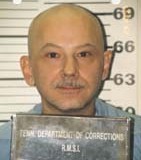
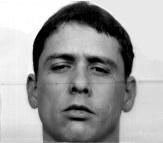
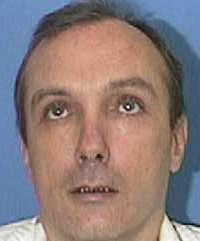
Robert Glen Coe
Murderer Ervil LeBaron
Murderer · USA · 1972
Ervil Morrell LeBaron (1925 to August 16, 1981) was the leader of a polygamous…
35 victims
Ervil LeBaron
Murderer · USA · 1972
Ervil Morrell LeBaron (1925 to August 16, 1981) was the leader of a polygamous…
35 victims
 Brian Kevin Rosenfeld
Murderer · USA · 1985
Brian Kevin Rosenfeld Brian Kevin Rosenfeld was sentenced to three concurrent l…
23 victims
Brian Kevin Rosenfeld
Murderer · USA · 1985
Brian Kevin Rosenfeld Brian Kevin Rosenfeld was sentenced to three concurrent l…
23 victims
 Marvin Gray
Murderer · USA · 1975
Marvin Gray was convicted killer who claimed responsibility for 23 slayings and…
23 victims
Marvin Gray
Murderer · USA · 1975
Marvin Gray was convicted killer who claimed responsibility for 23 slayings and…
23 victims
 Yahweh ben Yahweh
Murderer · USA · 1980
Yahweh ben Yahweh was born and legally named Hulon Mitchell Jr. (October 27, 19…
23 victims
Yahweh ben Yahweh
Murderer · USA · 1980
Yahweh ben Yahweh was born and legally named Hulon Mitchell Jr. (October 27, 19…
23 victims
 Marguerite Dixblanc
Murderer · United Kingdom · 1872
Marguerite Dixblanc was a Belgian cook. She entered the Park Lane household of…
1 victim
Marguerite Dixblanc
Murderer · United Kingdom · 1872
Marguerite Dixblanc was a Belgian cook. She entered the Park Lane household of…
1 victim
 Carmen Montelongo
Murderer · USA · 2011
Carmen Montelongo was a Riverside woman who was convicted of first-degree murde…
1 victim
Carmen Montelongo
Murderer · USA · 2011
Carmen Montelongo was a Riverside woman who was convicted of first-degree murde…
1 victim
 Charles Armentrout
Murderer · USA · 1995
Charles W. Armentrout was released from prison in August of 1994, having served…
1 victim
Charles Armentrout
Murderer · USA · 1995
Charles W. Armentrout was released from prison in August of 1994, having served…
1 victim
- Gender
- male
- Country
- USA
- Location
- Weakley County, Tennessee, USA
- Date of birth
- April 15, 1956
- Age at first offence
- 23
- Characteristics
- rape, kidnapping, torture, drug addict, history of mental illness
- Victim profile
- Cary Ann Medlin (female, 8)
- Method of murder
- St abbing with knife
- Date(s) of murder
- September 1, 1979
- Years active
- 1979
- Date of arrest
- 3 days after
- Status
-
Executed
Executed by lethal injection in Tennessee on April 19, 2000
Case record: Robert Glen Coe
Background
Robert Glen Coe (April 15, 1956 – April 19, 2000) was born in Hickman, Kentucky and lived in several small towns in Northwest Tennessee, typically in farm shacks with no running water. His sisters and brothers recalled on a defense-made videotape that the family lived in poverty and that the children often were beaten and sexually abused by their father.
Coe had a long history of family and drug abuse and repeated arrests for exposing himself in public. He had been committed to mental hospitals on four occasions prior to the murder.
The offence
On Saturday September 1, 1979, eight-year-old Cary Ann Medlin and her step-brother, Michael Stout, were riding bicycles in the neighborhood near her home in Greenfield, Tennessee on Labor Day weekend. Cary left her bicycle with Michael at the Primitive Baptist Church and got into Coe’s car.
Coe pulled up next to Cary and Michael and began to talk to them, acting as if he knew Cary’s father and needed directions to his house. Coe asked Cary to show him where her daddy lived, and she got into the car. Michael was told to watch the bicycles. Coe drove away with Cary and she was never seen alive again.
In his confession, Coe stated that after he finished his sex act, Cary told him, “Jesus loves me and that is when I got so upset and I decided to kill her.” He then described choking her and attempting to strangle her, with her turning blue in the face but not dying. He described making her walk down the road into weeds away from the car, then told her to shut her eyes, took out a pocketknife, and stabbed her in the neck. He stated that he watched her bleed to death and then wiped blood off his hands with leaves and ran to get away.
Coe’s statements and later trial evidence described sexual assault and killing by manual strangulation and stabbing.
Investigation
After Cary was reported missing, friends and neighbors in the close-knit community began a massive search to locate her or the man whose car she was last seen in. An intensive search took place after there was no ransom demand.
Her body was found at the end of a road on the outskirts of town the next day. An autopsy revealed that she had been sexually assaulted and that manual strangulation and a stab wound to the neck occurred while she was alive.
A forensic serologist analyzed swabs taken from the body of Cary Ann Medlin and found the presence of spermatozoa on both vaginal and anal swabs.
Coe was captured at a bus station after some of his family members had initially helped him evade capture by buying him a bus ticket to Georgia, until another notified the police.
Arrest
Police arrested Robert Glen Coe at the bus station in Huntingdon, Tennessee three days after the killing as he prepared to board a bus to Georgia.
He had identification tags on his baggage with the name James Watson. Agent Daniel and Inspector Blackwell transported Coe from Huntingdon to the Weakley County Jail in Dresden. Daniel testified that they did not question Coe during the trip. After arriving, Daniel and Inspector Blackwell spoke briefly to the District Attorney seeking to find out if Coe’s wife had been interrogated and then returned to the sheriff’s office.
When Daniel and Coe were alone, Coe said, “I did it,” and, in response to the question, “You did what, Robert?” he said, “I am the one that killed that little girl.”
Coe consented to talk to Daniel on tape. The questioning began at 7:49 P.M. on September 4, 1979, at the Weakley County Jail.
Confession (handwritten and recorded)
Coe gave two confessions to agents of the Tennessee Bureau of Investigation in September 1979: one taped and one handwritten. He admitted the kidnapping, rape, and murder of eight-year-old Cary Ann Medlin in Greenfield, Tennessee.
Handwritten confession (verbatim)
“On Saturday September 1, 1979, I worked at the Carroll County Collision Body Shop in McKenzie. While I was at work my boss sent me out for some parts and I took his old truck and went to Paris and tryed (sic) to flash but I did not see anyone to flash so I returned to work.
“I had had the urge to flash all day but could not find anyone to flash at. I drove around in Greenfield trying to find someone to flash at when I pulled into the parking lot of the church and parked and that is when I saw the little girl and boy on the bicycles. They were back to the right from the church. I pulled out and followed them and I lost sight of them so I circled the block and then I saw them again.
“I pulled up and stopped beside them and talked to the little girl. I ask her where her daddy was and she said at home. I ask her to show me where he lived. She said that she had to leave her bicycle somewhere so I told her to go back down to the church. I don't think I said anything to the little boy at that time.
“I told her I had not seen her daddy for awhile and that is when I ask her to show me where he lived. They followed me back to the church. When I got to the church I stopped and she got into my car a 1972 Ford Torino four-(4) door brown over greyish brown. She got into the front seat. She told the little boy to watch the bicycles. When she got into the car I drove down the street and turned left.
“She ask me where I was going and I told her for a ride. She just hung her head down and she did not say anything else.
“I drove around some streets and I drove up a gravel road to a ball park and turned around because some cars were parked there. I drove around on some more roads looking for a place to go and I finally found that gravel road. I did not know that road was there. I just found it.
“I also drove down some more roads looking for a place to stop. When I got to the gravel road I just pulled down the road and turned around and stopped.
“The little girl did not say anything. (Coe then describes in graphic detail how he raped Cary.)
“I told her to shut up as I finish my sex act. She told me that Jesus loves me and that is when I got so upset and I decided to kill her. When I finished the sex act I pulled up my pants and I got out of the car and I walked around the car and I opened the door on her side of the car and I caught her around the neck and and jerked her out of the car and I tryed to choke her to death with my hands. She turned blue in the face, but she woud not die so I choked her and made her walk down the road into the weeds away from the car. She walked backward down the lane and I pushed her and choked her.
“I stopped and I told her to shut her eyes and I took out my pocket knife and opened the blade and I caught her by the hair on her head and I pulled her head back and I stabbed her in the neck once and pushed her down on the ground.
“After she fell to the ground she ask me if I was going to kill her. She started jerking and grabbing at her shirt at the neck. I stood there and watched the blood come out of her neck like turning on a water hose. She struggled and jerked. I don't remember her shoes but I may have placed them by her body I don't know. I got some blood on my hands and I pulled some leaves off the bushes and wiped the blood on them. I then ran and tryed to get away from there.
“I pulled out of the gravel road onto the paved road and turned right as I was driving I hit some bumps in the road and I still had the knife in my hand and the blade stuck into my finger when I pulled off the paved road onto Highway #45 and turned right in the direction of Martin. I pulled out into the path of a big truck and he swerved ... around me.
“After he passed I threw out the knife into a bean field. I went to Martin and then onto Dresden to my sister-in-law Vicki Box's but my wife was not there and then I started back to McKenzie to find my wife. As I was driving by the nursing home in Dresden I threw my flip flops out of the car window because of foot prints I left at the scene where I killed the little girl. I went on to McKenzie and got me another pair of shoes. I came back to Dresden where my wife was at her sisters.
“I also changed the color of my hair from light brown to dark black. I did this Monday night. I also traded my 1972 Ford Torino for a 1972 Mustang at Crestview Motor in Gleason. I did this because of the description of the car and me on the news. I told my stepfather about stabbing someone and he laughed at me. I told Darrell Rose and my wife that I had stabbed a state trooper at Camden and that that was why I had to change the color of my hair and get out of town. They took me to the bus station in Huntingdon and I was going to travel under the name of James Watson. I was going to Georgia.
“Some of the towns that I have flashed in before are Tiptonville, South Fulton, Martin, Paris, Union City, Greenfield, Sharon, Gleason, Dresden, McKenzie, Henry, Lexington, Obion, Troy, Jackson and Samburg.
“The above statement is true and correct. I am giving this statement of my own free will.
“(Signed) Robert Glen Coe 9-7-79”
Recorded statement and reenactment
In the taped statement, Coe described driving to Greenfield, stopping the children, luring Cary into the car with him after attempts to flash, driving away to a church, and later driving around until he found a gravel road. He described that after raping the girl and hearing her say “Jesus loves you,” he choked her and stabbed her with his pocket knife.
The next day, September 5, 1979, Coe agreed to accompany officers in a State car and show them what he had done. He directed them to the church in Greenfield where the victim got in his car and the route to the murder scene, including the gravel lane off Bean Switch Road. On that route, he pointed out a house close to the road and said that a man sitting on the porch would remember him or his car.
In open court, the tape recording was played in the presence and hearing of the jury.
Trial
Coe confessed to the crime and was convicted in 1981. In January 1981, he was convicted of the Labor Day 1979 kidnapping, rape and murder of eight-year-old Cary Ann Medlin. The trial was moved to Shelby County to limit pre-trial publicity.
During the trial, Coe cursed and spat at prosecutors. Judge John Colton Jr. had Coe gagged and removed from the courtroom so he could watch the proceedings via television.
At trial in 1981, Coe received a death sentence for the murder and two life sentences for kidnapping and rape.
A forensic pathologist testified about the autopsy findings, including evidence of manual strangulation and a stab wound to the neck that could have produced death, and testified that both strangulation and stabbing were applied while Cary was alive. Bruises and lacerations in the vaginal and anal areas were described as “live” lesions inflicted prior to death.
Sentencing
In February 1981, Coe was convicted and sentenced to death for the murder of Cary Ann Medlin and received life sentences for aggravated kidnapping and aggravated rape.
Appeals
The Tennessee Supreme Court affirmed the judgment in 1983. The U.S. Supreme Court refused to review the case in 1984.
After that, Coe filed for post-conviction relief, and the trial court denied his petition. The Court of Criminal Appeals upheld the denial in 1986. Coe filed a writ of habeas corpus in federal court in 1987, and in 1989 the request was denied for failure to exhaust state remedies.
Coe filed a second state post-conviction petition that was denied six months later, affirmed on appeal, and denied review by the state Supreme Court.
Coe filed a second federal petition for writ of habeas corpus in 1992 citing constitutional errors in his trial.
In December 1996, U.S. District Judge John T. Nixon dismissed Coe’s conviction and death sentence, citing improper jury instructions and cumulative errors. Nixon threw out Coe’s convictions for 1st-degree murder, aggravated rape, and aggravated kidnapping, wiping out the death sentence for the murder conviction and two life sentences for the rape and kidnapping convictions.
Nixon reversed on the basis that the trial jury had been given improper instructions, including guidance on “heinous, atrocious and cruel,” “reasonable doubt,” and “malice.”
Tennessee appeals courts upheld Coe’s conviction, but Nixon’s ruling led to further proceedings in federal court.
In 1998, after reviewing an appeal by Tennessee, a three-judge panel of the Sixth U.S. Circuit Court of Appeals in Cincinnati reversed Nixon and on Nov. 16 reinstated Coe’s conviction and death sentence. The appeals court panel ruled 3-0 that Nixon wrongly reversed the conviction and reinstated both the conviction and the death sentence given by a Shelby County jury in 1981.
In March 1999, the Sixth Circuit refused Coe’s petition to have his case reviewed by the full panel of judges. Also in March 1999, the Tennessee Supreme Court denied Coe’s third post-conviction petition, filed in 1995 and denied by lower courts.
On October 4, 1999, the U.S. Supreme Court gave the go-ahead for Coe to be executed on Oct. 19. Coe’s execution was delayed by the Tennessee Supreme Court to allow his appeal for reconsideration to the U.S. Supreme Court by Oct. 29. On Nov. 19, Coe’s attorneys asked U.S. District Judge John Nixon to reopen the case and block his execution.
In 2000, Coe received stays of execution from federal courts within weeks of his scheduled lethal injection.
The Tennessee Supreme Court set a new execution date after a federal appeals court panel said Tennessee courts gave Coe a fair hearing on whether he was mentally competent to be executed.
Competency for execution (mental condition)
Before his execution, Coe underwent a competency hearing in Memphis in January, and Judge John Colton Jr. ruled that Coe met the standards required for execution.
Defense-recommended experts concluded that Coe was not mentally competent to be executed, including psychiatrist Dr. Daryl Matthews and psychologist Dr. Daniel Martell (recommended by state prosecutors) and psychiatrist Dr. James Merikangas and psychiatrist Dr. William Kenner (recommended by Coe’s defense team). The evaluations provided differing conclusions on whether Coe understood the fact of the impending execution and the reason for it.
Merikangas called Coe “a brain-damaged individual suffering from chronic paranoid schizophrenia” who was incompetent to be executed and would be incompetent on March 23. Kenner’s findings included that Coe was competent in two visits and not competent in two others, including one on Jan. 11 when Coe was described as strangely forgetful, suspicious, angry, and ordered him to leave.
Matthews said: “In my opinion, Mr. Coe is aware of his impending execution and the reason for it.” Another account of Matthews’ views included: “Mr. Coe does not understand the meaning of death, nor does he feel that being executed will be punishment,” though it also included Matthews’ opinion that Coe was aware of the impending execution.
Coe’s defense attorneys argued up to the 11th hour that Coe was delusional, psychotic, and incompetent to be executed. They had won three stays of execution in the past six weeks, but those were lifted after federal courts reviewed his challenges to the state’s competency procedures.
Coe also made statements about being prepared for execution and expressed beliefs related to reincarnation, as well as fears about other inmates.
Execution
On April 19, 2000, 21 years after the crime, Coe was executed by lethal injection in Tennessee.
He was moved to a death watch cell at noon on Monday, and on Tuesday evening had a last meal of fried catfish, white beans, hush puppies, coleslaw, french fries, pecan pie and sweet tea. He was given a lethal combination of drugs intravenously in both arms.
Shortly before 1 a.m., Davidson County Circuit Judge Thomas Brothers temporarily halted the execution, addressing issues raised by Coe’s attorneys about requiring prison health care workers to participate and questions about whether lethal injection procedures followed state laws governing setting Corrections Department policies. The execution proceeded after the halt was addressed by subsequent court action.
Coe was strapped to a gurney and wheeled into the execution chamber at the prison where intravenous catheters were inserted into each arm. He was allowed to make a final statement before the drugs were injected.
The sequence described included sodium pentathol to render him unconscious, followed by pancuronium bromide to stop breathing and then potassium chloride to stop his heart.
At the time of execution, Coe was the state’s first inmate to die by lethal injection. The death of Coe was Tennessee’s first execution in 40 years.
Co-defendants and community members gathered for remembrances and protests, including memorial services and religious gatherings.
Other details
Victim details
Cary Ann Medlin was eight years of age and lived in Greenfield, Tennessee with her mother, Charlotte Stout, her step-father, Mickey Stout, and her step-brother, Michael Stout, also eight years of age.
Her body was found in a field the next day after she was abducted. She was described as having been raped and stabbed and had evidence consistent with manual strangulation and stabbing to the neck.
Coe’s confession included that shortly before he killed her, she said to him, “Jesus loves you, Jesus loves you.” Her mother later described that as well, including her own statement quoted as: “I couldn't imagine going through that again,” about a decision that would have required a new trial.
Witness and evidence details (trial facts)
Her step-brother, Michael Stout, and other individuals provided observations of Coe’s interactions on the day of the offence. Herbert Clement, aged eighty-five, testified that he saw a car pass around 5:30 to 6:00 P.M. on September 1, 1979, recognized the little girl passenger because he had seen her riding her bicycle previously, and identified the victim, Cary Medlin, from a photograph. He was unable to describe the car or describe the man driving it.
Coe arrived at the Box home in Dresden about 7:45 or 8:00 P.M. on Saturday night, according to Donald Box.
Janet Ross testified that defendant told them he was in trouble with the law and said that he and his cousin had gone to Camden to get marijuana and acid and that his cousin had shot a state trooper, and that he had stabbed one in the throat.
On Monday Labor Day, Janet Ross and Coe’s wife bought hair dye at his request and that night dyed Coe’s hair black.
The Ford Torino and later trade for a 1972 blue Mustang were described, including changes in hair color and witnesses’ observations of the car that matched the car seen in Greenfield.
Prison and competency-related behavior (as stated)
Coe had suicide attempts and received death threats from other inmates. He shaved his head and chest because of a sensitivity to dust mites and drank instant decaf coffee, smoked up to 40 cigarettes a day, and watched nature shows on television. He cut his throat in 1989 when he was not receiving his lithium and, a year later, cut both forearms with broken glass from a television screen.
Coe told doctors he wanted his lawyers to prove him innocent rather than crazy and said he could not remember the name of the girl he was convicted of killing or the alleged motive.
Video and statements about execution process
A heavily censored 22-minute video of Coe’s transfer from his cell to the execution chamber was recorded by prison guards before 1 a.m. on April 19. Correction spokesman Steve Hayes said the tapes were made “to document the cell extraction” and “to make sure things were done correctly.”
Coe said moments before he was executed, “I want to make it easy, you know.” He also asked about the chemicals that would put him to death and said: “The stuff just comes in you, does it just go to sleep?” In response, the answer given was: “The first one puts you to sleep, the second one will stop the breathing, the third one stop the heart, OK.”
Defense attorney Robert Hutton was quoted: “I don't know whether it should be made public or not, honestly,” and also said: “On the one hand, out of respect for Robert -- he's been dragged through the mud enough -- I'm not sure it needs to be shown. On the other hand, I think it's important for people to see how barbaric this whole process is.” Victims rights advocate Rebecca Easley was quoted: “I worried the images would "elicit sympathy for Coe."” Federal Public Defender Henry Martin was quoted: “It just smacks too much of the Third Reich, as if they're treating people as experimental beings so that we learn how to more efficiently kill somebody. I can't see that as being consistent with a humane, caring society,” and also said: “I felt sorry for the family but would not quarrel with the newspaper's decision to publish the images.”
Quotes connected to Cary Ann Medlin’s final words
The memorial site statement included the line: “JESUS LOVES YOU.”
Spotted an error, or have more information about this case?