Clarence Richeson
Murderer William Hale
Murderer · USA · 1921
Name: William Hale · Known as: the so-called "King of the Osage Hills" · Occupa…
24 victims
William Hale
Murderer · USA · 1921
Name: William Hale · Known as: the so-called "King of the Osage Hills" · Occupa…
24 victims
 John S. Williams
Murderer · USA · 1910
John S. Williams was convicted of murder and sentenced to life imprisonment on…
18 victims
John S. Williams
Murderer · USA · 1910
John S. Williams was convicted of murder and sentenced to life imprisonment on…
18 victims
 Edward Adams
Murderer · USA · 1920
Edward J. "Eddie" Adams was born in 1887 on a farm in Hutchinson, Kansas as W.J…
7 victims
Edward Adams
Murderer · USA · 1920
Edward J. "Eddie" Adams was born in 1887 on a farm in Hutchinson, Kansas as W.J…
7 victims
 Floyd Allen
Murderer · USA · 1912
Floyd Allen (July 5, 1856 – March 28, 1913) was an American landowner and patri…
5 victims
Floyd Allen
Murderer · USA · 1912
Floyd Allen (July 5, 1856 – March 28, 1913) was an American landowner and patri…
5 victims
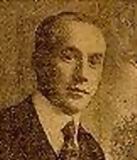 Carl Otto Wanderer
Murderer · USA · 1920
Carl Otto Wanderer (1887–1921) was described as a murderer known for what becam…
2 victims
Carl Otto Wanderer
Murderer · USA · 1920
Carl Otto Wanderer (1887–1921) was described as a murderer known for what becam…
2 victims
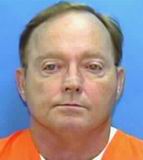 Fred Lewis Way
Murderer · USA · 1983
Fred Lewis Way was sentenced to death on January 23, 1984, resentenced to death…
2 victims
Fred Lewis Way
Murderer · USA · 1983
Fred Lewis Way was sentenced to death on January 23, 1984, resentenced to death…
2 victims
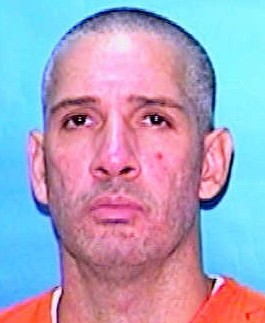 Jesus Delgado
Murderer · USA · 1990
08/29/90 — Date of offense. · 08/30/90 — Marlene McField witnessed the Rodrigue…
2 victims
Jesus Delgado
Murderer · USA · 1990
08/29/90 — Date of offense. · 08/30/90 — Marlene McField witnessed the Rodrigue…
2 victims
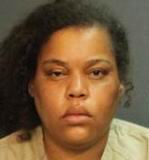 Marilyn Edge
Murderer · USA · 2013
Marilyn Edge was a mother from Scottsdale, Arizona, accused of poisoning and ki…
2 victims
Marilyn Edge
Murderer · USA · 2013
Marilyn Edge was a mother from Scottsdale, Arizona, accused of poisoning and ki…
2 victims
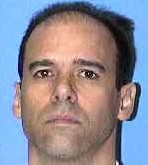 Reinaldo Dennes
Murderer · USA · 1996
Reinaldo Dennes was born in Havanna, Cuba, on 2/9/56. His family came to the US…
1 victim
Reinaldo Dennes
Murderer · USA · 1996
Reinaldo Dennes was born in Havanna, Cuba, on 2/9/56. His family came to the US…
1 victim
- Gender
- male
- Country
- USA
- Location
- Boston, Massachusetts, USA
- Date of birth
- February 15, 1876
- Age at first offence
- 35
- Characteristics
- poisoner
- Victim profile
- Avis Willard Linnell, 19
- Method of murder
- Poisoning ( cyanide )
- Date(s) of murder
- October 14, 1911
- Years active
- 1911
- Date of arrest
- —
- Status
-
Executed
Executed in an electric chair on 21 May 1912 at 12:17 A.M.
Case record: Clarence Richeson
Status
Clarence Richeson was executed in an electric chair on 21 May 1912 at 12:17 A.M. The death affidavit was signed 15 minutes later. It was the fourteenth such execution since Massachusetts adopted the electric chair, and it was described as the most successful to that time since the current only had to be applied once.
Timeline
- 13 March 1911 — A Hyannis newspaper, the Patriot, published the announcement of Richeson’s engagement to Violet Edmands.
- 19 December 1908 — Richeson gave Avis Linnell an engagement ring on her 17th birthday.
- 19 December 1910 — Richeson gave a gold engagement ring to Avis Linnell on her 17th birthday.
- Saturday 14 October 1911 — Avis Linnell died.
- 20 October 1911 — Clarence Richeson was taken into custody.
- 2 November 1911 — Richeson wrote a letter of resignation to the church; the church voted 30 to 15 not to accept the resignation; a grand jury brought an indictment with five counts.
- 13 November 1911 — Richeson was arraigned and pleaded “Not Guilty”.
- 15 January 1912 — Trial was set for this date.
- 20 December — At 4 in the morning, 20 December, Richeson partially emasculated himself in his cell with a sharp piece of metal.
- 5 January — Richeson retracted his plea of “Not Guilty” and pleaded guilty to murder in the first degree.
- 9 January 1912 — The guilty plea was made before Judge Sanderson, and the judge had no sentencing options other than death.
- 24 April 1912 — Two alienists individually made reports on this date regarding insanity.
- 8 May — An alienist report was made on this date regarding insanity.
- 16 May — Governor Foss denied Richeson’s petition for clemency.
- 19 May — The prior Sunday, crowds outside the prison became so large that the outer gates were closed to prevent the crowd encroaching on the prison premises, and a special police patrol was assigned.
- 21 May 1912 — More than two thousand people stood outside the prison walls for hours in pouring rain; Richeson was executed in an electric chair at 12:17 A.M.
People
- Clarence Richeson — defendant; Reverend Clarence Virgil Thompson Richeson.
- Avis Willard Linnell — victim; died after the poisoning described in the indictment.
- Violet Edmands — fiancée; engaged to Richeson.
- Rose Edmands — Violet and Rose Edmands; referenced as one of Moses Grant Edmands’ and Lydia “Lilly” Caroline Benton Edmands’ children.
- Moses Grant Edmands — father of Violet and Rose Edmands.
- Lydia “Lilly” Caroline Benton Edmands — wife of Moses Grant Edmands; mother of Violet and Rose Edmands.
- Milton Estes — referenced in Richeson’s time in El Paso, TX.
- Dr. Thompson W. Grace — called to Richeson’s home in July 1907.
- Dr. Ferdinand A. Binford — removed a callous from Richeson’s hand and was later called to Richeson’s boarding room.
- Dr. Charles Harwood — met Richeson in the summer of 1909 and investigated a robbery report.
- Dr. David C. Dow — called to Richeson on 18 June; provided an affidavit.
- Dr. Lloyd Vernon Briggs — Director of the MA Mental Health Society; examined Richeson for Governor Eugene N. Foss.
- Governor Eugene N. Foss — requested the examination and denied clemency.
- Dr. Cooper — saw Richeson at age 17 and gave him something that caused him to break out all over.
- Dr. Phillip C. Palmer — refused Richeson’s request for castration.
- Dr. G. M. Phillips — provided an affidavit in 1912; Richeson’s health evaluation included “Neurasthenia sexualis.”
- Judge Sanderson — accepted the guilty plea on 9 January and set death as the sentencing outcome.
- The pharmacist — told police of the purchase of cyanide.
- Edwin Grozier — owner of the Boston Post; assigned reporters to the story.
Background
Clarence Virgil Thompson Richeson was executed for the murder of Avis Willard Linnell. Avis Linnell “committed suicide” October 14, 1911 at the YWCA in Boston, and the case later involved an investigation and an indictment alleging poisoning.
Edwin Grozier, owner of the Boston Post, assigned every available reporter to the story. The Boston Post called for police to investigate Avis Linnell’s suicide. The Boston Post found the druggist in Newton who had sold Clarence Richeson the cyanide. The Boston Post called for Rev. Richeson’s arrest, which occurred 10 days after Avis’s death. The Boston Post with front-page headlines worked all of New England into a fever pitch. The New York Times provided extensive coverage extending beyond the date of execution. The New York Daily Post reviewed the episode Mar 24, 2007 under the headline “Murdered by the Minister.”
Early history and medical evaluations (through 1910)
Dr. Lloyd Vernon Briggs, Director of the MA Mental Health Society, was asked by Governor Eugene N. Foss on 29 April 1912 to examine Richeson and determine his mental condition. Much of what was known about Richeson came from a large variety of affidavits from people with close contact with Richeson, and from discussions with Richeson recorded by Dr. Briggs.
Richeson was born at Amherst, VA, son of a tobacco farmer and his first wife (of three). Affidavits taken in 1912 revealed a strong family history of mental health problems. An uncle on his mother’s side had been committed in 1883 to Western State Hospital, Staunton, VA, and died there in the violent-patient ward a year later. A first cousin was confined to an asylum in Missouri. Seven other first or second cousins were described as deranged or insane. Throughout his life physicians and alienists thought heredity played some role in his mental disorders.
At age three, Richeson fell down the front steps, leaving a lifetime “knubble” on the back of his head. This was the first of at least five significant traumas to the head he received during his lifetime. When he was six, his brother struck him in the head; he “slept” until the doctor arrived and that left a 2 1/2 inch scar. At age seven, he fell off a horse and his head struck a rock, leaving a 3 inch bald spot. He had a headache and ringing in his head for the next five years. Also in childhood, he was hit in the head by a child holding a rock and was unconscious for 24 hours.
He left home at age 13 and moved to Lynchburg, VA, working at a number of jobs. Throughout much of his life he worked at a variety of different jobs. Early on, he was ambitious and wanted to be a clergyman. He began preparing for college at Amherst Academy in Amherst, VA.
From 1892 to 1895, he worked for his cousin W. J. Richeson and continued his studies at the academy in Carrollton, MO. He joined the Trotter Baptist Church of Carroll County, MO.
At age 17, he went into an unconscious state and was in bed 1–2 days after a nocturnal emission. He saw Dr. Cooper who gave him something that caused him to break out all over. Throughout his life, he had a history of similar attacks many of which he attributed to nocturnal emissions. He was described as inordinately obsessive about his own sexuality.
Before he was 18, he had been engaged to two girls at the same time. They broke off the engagements when they learned of a third fiancée in Kansas City. In 1895 (age 19) he was found in Saint Louis, MO, at the Third Baptist Church. In 1896 he took a brief “vacation” in southern MO, met a girl, and again became engaged; this engagement was soon broken off.
He grew quite ill once in 1896 and went to stay with a cousin in Potosi, MO. One night he became quite delirious and was walking around outside. A doctor was sent for and stayed through the night; he gave Richeson quieting medicine and declared him as crazy as can be.
On the advice of the doctor, she took Richeson to Missouri Baptist Sanitarium (now Missouri Baptist Medical Center). He remained there for weeks. There were no medical records of his stay except “he apparently had some kind of mental derangement.”
He returned home in VA and stayed for three years. In 1899 he entered the William Jewell College at Liberty, MO. While a student, he made an appointment with Dr. Phillip C. Palmer, M.D. Richeson said: “I know you will think I am crazy but . . . I want you to castrate me.” Dr. Palmer replied: “I am sure you must be crazy” and refused. Richeson explained he wanted to become a minister and did not think he could associate with women without losing control of himself.
From December 1901 until March 1902, he saw Dr. G. M. Phillips of Saint Louis. In 1912, Dr. Phillips gave an affidavit that was among the most detailed insight into Richeson’s health along with Dr. Briggs’s records from 1912. Richeson complained of pains in his head, back, testes, and limbs, that he was dizzy, that his memory was poor, and that he was unable to concentrate mentally, and that he was “a perfect picture and complete picture of 'Neurasthenia sexualis.” He discovered a mild varicocele and obsessed over it, ascribed his wretched physical and mental state to it, despaired of ever being made well again, and rather courted death. Dr. Phillips recommended not removing the varicocele, but Richeson consented to his request and the varicocele was surgically removed in January 1902. Afterwards Richeson showed pronounced improvement and became hopeful and cheerful.
Dr. Phillips concluded that Richeson “at this time he was not responsible for his any act that was associated with his sexual organs; that such conditions as these, in my judgment are competent to set in motion sexual manifestations to the end that all reason is overbalanced, and one's acts are beyond control.”
While living in MO, he matriculated at The Southern Baptist Seminary in Louisville, KY. He was ordained as a Baptist minister at the Third Baptist church.
As a student residing in Liberty, MO, he became preacher at the Budd Park Baptist Church in Kansas City from 1901-1904. One Sunday after his sermon, three girls approached him weeping, each claiming he had asked her to marry him. The trustees wrote for his resignation, ending what may have been his longest preaching tenure. He also preached at a mission church in Kansas City.
Richeson later in 1912 claimed to Dr. Briggs that his first sexual encounter was not until 1904 and he had no others until 1910 with Avis Linnell. He was expelled from college for cheating in 1905. An officer of the college wrote Richeson’s father that “Clarence had become deranged” and that they could no longer keep him as a student.
Religious training and engagements (1905–1910)
Reverend Richeson entered Newton Theological Seminary, Newton, MA in the fall of 1906, graduated in 1909, and took a postgraduate class in 1910.
In 1907, he was again engaged, possibly to two women at the same time. April to September 1907, he accepted a call to a church in El Paso, TX. During that time, he was an “inmate” in the home of Milton Estes. He was described as being afflicted with a mental disorder that rendered him insane for a considerable period. Dr. Thompson W. Grace was called to the house in July and found him in a cataleptic state. He raved against some men and imagined that someone was seeking to do him injury. Paranoid thinking began to be more a part of his life.
After four months, in August 1907, he returned to a friend’s house in Georgetown, MA. He first met Violet and Rose Edmands in 1907. Violet and Rose Edmands were the only two children of Moses Grant Edmands and his wife Lydia “Lilly” Caroline Benton Edmands. He referred to his wife and daughters as his three flowers.
Violet and Richeson began seeing each other weekly from December 1910 until the engagement was announced in March. He took a pastorate at the Baptist Church in Hyannis, MA on Cape Cod in June 1908, where he first met Avis Linnell. Avis’s mother stated that she loved him as a son.
On Avis’s 17th birthday, 19 December 1908, he gave her a gold engagement ring, and the engagement was announced at a small party. Dr. Ferdinand A. Binford removed a callous from the Pastor’s hand; that night Dr. Binford was called to Richeson’s boarding room. When he arrived, he found two or three members of the Church restraining Richeson. Richeson appeared partly conscious at times and at other times practically unconscious with no knowledge of what he was doing or saying. Richeson talked irrationally, raved incoherently, and physically manifested an abnormal degree of strength. Dr. Binford gave him a shot of morphine that quieted him. In the morning, he was rational but physically weak and apparently as “normal as he ever was.”
Dr. Charles Harwood met Richeson in the summer of 1909. Early in December 1909, Richeson reported a robbery from his room. The State Police asked Dr. Harwood to investigate the robbery because of curious circumstances. Dr. Harwood inadvertently met Richeson on a train and discussed the robbery. Dr. Harwood concluded “his whole state of mind appeared insane.” On a subsequent meeting, he confirmed the impression of a man suffering from insanity.
In April 1910, Richeson resigned his pastorate after two years in Hyannis due to adverse feeling in the Church. On 20 May 1910, the prominent Immanuel Baptist Church in Newton, MA voted to call him as minister and he first preached there 1 June 1910.
He soon met 16-year-old Avis Linnell and on 19 December, her birthday, he gave her an engagement ring. Miss Linnell left Hyannisport in September 1910 to study at the New England Conservatory of Music. She took a room at the Boston YWCA. The date for her marriage was set for October 1910. She wore the engagement ring until Christmas 1910, when she gave it back to Richeson “to be repaired.”
Events of 1911 and 1912
In 1911, the engagement was affected by broken off plans. Early in March, Avis’s mother received a letter from Avis that her engagement was broken off. In 1911, Richeson’s engagement to Violet Edmands was announced on 13 March in the Patriot.
In April 1911, Richeson suffered another very severe trauma to his head when he was stepping from an elevator and the operator mistakenly started it. A physician was called; he was in bed for three days. When he got up, he dragged one of his legs when he walked. The difficulty worsened until it seemed he had lost the use of both legs and could not bear his own weight. The trouble with his legs then passed.
On 1 May 1911, Richeson appeared at the Edmands house and had one of his attacks. Mrs. Edmands went every day to Richeson’s lodging house and stayed until evening from 1 May to 28 June. The evening of 18 June, Dr. David C. Dow was called to Richeson. The next morning, Dow told Mrs. Edmands that Richeson should be committed to an institution, not necessarily and insane hospital, and strongly advised her to put him under the care of men well versed in mental diseases. Richeson was granted a two month leave from his Church for a “mental breakdown.”
On 1 July, he returned to Hyannis for the two months and resumed intimacy with Avis who was home for the summer. Around July, she became pregnant. People of Hyannisport knew the engagement had been broken and assumed the couple spending so much time together had renewed the engagement. At the end of summer, Richeson returned to his Church; Avis returned to her studies in Boston and her room at the Y.W.C.A.
The cyanide was purchased 10 October, and Avis’s death was not until Saturday 14 October, four days later. The pharmacist told police of the purchase of cyanide, and Richeson was taken into custody on 20 October.
The marriage date for Miss Edmands was set for Oct 31, 1911 (Reformation Day). Avis Linnell’s death was 17 days before the scheduled wedding.
Richeson wrote a letter of resignation to the church on 2 November. The church voted 30 to 15 not to accept his resignation. A grand jury brought an indictment on 2 November containing five counts: that he gave; that he sent and conveyed; that he caused the poison to be taken and swallowed; that he gave it pretending it was a medical preparation; and that he did assault and poison with intent to murder by this giving and causing to be taken.
Richeson was arraigned and pleaded “Not Guilty” on 13 November. Trial was set for 15 January 1912.
At 4 in the morning on 20 December, Richeson partially emasculated himself in his cell with a sharp piece of metal. At the jail hospital, Dr. Lothrop found it necessary to complete the emasculation and closed the wound. A few days later, Richeson pulled the stitches from the wound and Dr. Lothrop was called in again.
On 5 January, he retracted his plea of “Not Guilty” and pleaded guilty to murder in the first degree. The guilty plea was made before Judge Sanderson on 9 January. The judge had no sentencing options other than death. The date for electrocution was set for 19 May.
Only after sentencing did his lawyers raise the question of insanity. They employed two alienists who individually made reports on 24 April and 8 May. Governor Foss denied Richeson’s petition for clemency on 16 May.
In the clemency-related statement that followed, the narrative included: “. . . family is heavily afflicted with insanity, that he himself is neurotic, a somnabulist, and a neurasthenic; that he is subject to extreme emotional disturbances, marked by loss of memory, . . . diagnosed as hysterical insanity . . . (or) hysterical delirium hysterical insanity . . . (or) hysterical delirium . . . these attacks are of brief duration . . .his crime was not committed by him during such and attack.”
Trial, plea, and sentencing
Richeson pleaded “Not Guilty” on 13 November and trial was set for 15 January 1912. Trial did not proceed because on 5 January he retracted his plea of “Not Guilty” and pleaded guilty to murder in the first degree.
Appeals
His lawyers raised the question of insanity only after sentencing. Two alienists produced individual reports dated 24 April and 8 May. Governor Eugene N. Foss denied Richeson’s petition for clemency on 16 May.
Outcome and after-execution details
Richeson was executed in an electric chair on 21 May 1912 at 12:17 A.M. It was described that more than two thousand people stood outside the prison walls for hours in pouring rain on the day of execution. The prior Sunday, 19 May, crowds outside the prison had become so large that the outer gates were closed to prevent crowd encroachment and a special police patrol was assigned. After the execution, the crowd lingered through the night and did not fully disperse until the following morning.
Later analysis of behavior and motives
Nine years later, in 1921, L. Vernon Briggs, M.D., reviewed what was known of Clarence Richeson. Dr. Briggs had previously prepared a report for Governor Eugene Foss on Richeson’s condition for the Governor’s consideration of clemency, and Governor Foss also consulted with other alienists.
In “The Manner of Man That Kills,” Briggs concluded that Clarence Richeson “was, I think the only man ever executed in Massachusetts without a trial. He was a victim of hysteria with delusions, hallucinations, amnesic periods, and delirium. He had exhibited signs and had had attacks of this disease for years, had been recognized as mentally unsound by several physicians who advised specialists in mental diseases to attend him. Still, he was allowed to 'carry on' until his acts resulted in the death of a young girl in this state.”
Based upon the Spencer, Czolgosz, Richeson cases and others, Briggs proposed reforms for early recognition and management of mentally ill individuals before situations of this sort could arise.
A contrary view was put forth by Theodore Dreiser, who wrote: “In 1892, he “began to observe a certain type of crime in the United States that proved very common. It seemed to spring form the fact that almost every young person was possessed of an ingrown ambition to be somebody financially and socially.” “Fortune hunting became a disease” with the frequent result of a peculiarly American kind of crime.”
Dreiser’s commentary used the murder of Avis Linnell as an example. By 1919, this murder was the basis of one of two separate novels begun by Dreiser. Dreiser’s 1906 murder of Grace Brown by Chester Gillette became the basis for “An American Tragedy.”
After the murder, Violet removed from Massachusetts to a settlement house in New York City and devoted the rest of her life to the settlement movement.
Violet’s younger sister, Rose Edmands, was engaged in 1911 to Reverend George Herbert Holt. Holt was also a graduate of Andover Newton Theological Seminary having entered before 1912. Rose Edmands and George Herbert Holt were married in April 1912 before the execution but in Barre, VT where he had his first church assignment and not in Brookline. Their first of four children was born in Barre on May 10, 1913. Rose and her husband devoted much of their lives to Baptist missionary work. They later left Brookline, MA and moved to Pasadena, CA. They both died in California.
Other details
Dr. Phillips recommended not removing the varicocele, but Richeson consented to the request and the varicocele was surgically removed in January 1902, after which Richeson improved.
Spotted an error, or have more information about this case?