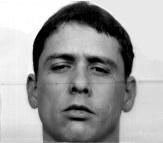
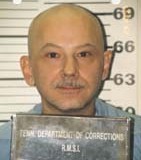
John William Cockrum
Murderer Brian Kevin Rosenfeld
Murderer · USA · 1985
Brian Kevin Rosenfeld Brian Kevin Rosenfeld was sentenced to three concurrent l…
23 victims
Brian Kevin Rosenfeld
Murderer · USA · 1985
Brian Kevin Rosenfeld Brian Kevin Rosenfeld was sentenced to three concurrent l…
23 victims
 Yahweh ben Yahweh
Murderer · USA · 1980
Yahweh ben Yahweh was born and legally named Hulon Mitchell Jr. (October 27, 19…
23 victims
Yahweh ben Yahweh
Murderer · USA · 1980
Yahweh ben Yahweh was born and legally named Hulon Mitchell Jr. (October 27, 19…
23 victims
 Russell Ellwood
Murderer · USA · 1991
Russell Ellwood was a former taxi driver. Authorities suspected him of killing…
20 victims
Russell Ellwood
Murderer · USA · 1991
Russell Ellwood was a former taxi driver. Authorities suspected him of killing…
20 victims
 Antonyo Gipson
Murderer · USA · 2006
Defendant: Antonyo Gipson (23), of the 1100 block of North Kedvale Avenue · All…
3 victims
Antonyo Gipson
Murderer · USA · 2006
Defendant: Antonyo Gipson (23), of the 1100 block of North Kedvale Avenue · All…
3 victims
 Diane Borchardt
Murderer · USA · 1994
Court: Court of Appeals of Wisconsin, District IV; State of Wisconsin v. Diane…
1 victim
Diane Borchardt
Murderer · USA · 1994
Court: Court of Appeals of Wisconsin, District IV; State of Wisconsin v. Diane…
1 victim
 Marion Hedgepeth
Murderer · USA · 1870
Name: Marion Hedgepeth · Also known as: “Handsome Bandit,” “Debonair Bandit,” “…
2 victims
Marion Hedgepeth
Murderer · USA · 1870
Name: Marion Hedgepeth · Also known as: “Handsome Bandit,” “Debonair Bandit,” “…
2 victims
 Tanya Nelson
Murderer · USA · 2005
Tanya Jaime Nelson (46) — defendant; of Roanoke Rapids, North Carolina; sentenc…
2 victims
Tanya Nelson
Murderer · USA · 2005
Tanya Jaime Nelson (46) — defendant; of Roanoke Rapids, North Carolina; sentenc…
2 victims
 Efren Saldivar
Serial killer · USA · 1989
Efren Saldivar (born 30 September 1969) was an American serial killer who murde…
50 victims
Efren Saldivar
Serial killer · USA · 1989
Efren Saldivar (born 30 September 1969) was an American serial killer who murde…
50 victims
 Robert Dewey Glock
Murderer · USA · 1983
Robert Dewey Glock, II was a Florida prison inmate who was convicted and senten…
1 victim
Robert Dewey Glock
Murderer · USA · 1983
Robert Dewey Glock, II was a Florida prison inmate who was convicted and senten…
1 victim
- Gender
- male
- Country
- USA
- Location
- Bowie County, Texas, USA
- Date of birth
- December 20, 1958
- Age at first offence
- 28
- Characteristics
- robbery, alcohol
- Victim profile
- Eva May, 69 (store owner)
- Method of murder
- Shooting (.22 caliber pistol)
- Date(s) of murder
- May 29, 1986
- Years active
- 1986
- Date of arrest
- Next day
- Status
-
Executed
Executed by lethal injection in Texas on September 30, 1997
Case identity
John William Cockrum (offender #854) was sentenced to death for the May 29, 1986, shooting death of Eva May, an elderly clerk at a store in DeKalb, Texas.
The offence
Before dawn on May 29, 1986, Cockrum entered a rural convenience store attached to Eva May’s residence. He robbed May and shot her in the head at close range. Eva May was an elderly lady who ran a rural convenience store and was known to keep cash for use in cashing payroll checks.
Jerry Morgan drove Cockrum to the scene and remained in the car. Morgan did not learn of the slaying until later.
Background
During the punishment phase of Cockrum’s trial, the defense called Wayne Green, a corrections officer at the jail where Cockrum was held pending trial. Green testified that Cockrum had been a good prisoner.
The defense also called Cockrum’s mother and two sisters. They provided brief and direct testimony describing him as a loving son and brother who “ought not be executed.”
The defense knew of Cockrum’s chronic drug use. The defense decided not to pursue his drug history and did not attempt to use his drug problems as an explanation of the murder. The defense also knew that when Cockrum was seventeen years old he had killed his own father, but counsel chose not to mention it to the jury during the punishment phase.
The state called three law enforcement officers from the local area who testified that Cockrum’s reputation for being a law-abiding citizen was bad. The state also presented evidence of Cockrum’s three prior felony convictions: burglary of a building in 1979, attempted burglary in 1985, and possession of marijuana in 1986.
The jury did not learn about a long list of Cockrum’s other violent and destructive acts, including the killing of his father.
Cockrum’s execution was later scheduled for April 21, 1993.
Timeline
- May 29, 1986 — Cockrum entered the store attached to Eva May’s residence before dawn, robbed Eva May, and shot her in the head at close range.
- 1979 — Cockrum committed burglary of a building.
- 1984 — Cockrum’s marriage to Blackburn’s daughter ended in divorce (the record states the divorce occurred in 1984).
- 1985 — Cockrum committed attempted burglary.
- 1986 — Cockrum committed possession of marijuana; the trial ultimately ended in a death sentence for the May 29, 1986, murder.
- 1986 (December) — The case went to trial.
- 1986 — Cockrum was sentenced to death.
- 1988 — Cockrum v. State, 758 S.W.2d 577 (Tex. Crim. App. 1988) affirmed the conviction and sentence.
- 1989 — The Supreme Court denied Cockrum’s petition for a writ of certiorari (489 U.S. 1072).
- 1993 — Cockrum wrote to the federal district court and to his attorneys asking that the state be allowed to carry out the death sentence on April 9, 1993.
- 1993 (April 9) — Cockrum asked that the state be allowed to carry out the death sentence.
- 1993 (April 16) — Dallas attorney Alan Rich filed a petition for a writ of habeas corpus on behalf of Cockrum.
- 1993 (April 26) — The federal trial court stayed the execution and forwarded Cockrum’s letter to the state’s counsel.
- 1993 (April 21) — The trial court scheduled his execution for April 21, 1993.
- 1994 (April 11-12; July 5-6) — The district court conducted a hearing on Cockrum’s competency to waive collateral review.
- 1994 (August 4) — The district court held that Cockrum was not competent to waive collateral review.
- 1995 (December 12) — A deposition of Barbara Sutherland occurred on December 12, 1995.
- 1996 (February) — The district court conducted a hearing on four claims remaining after other claims were voluntarily dismissed.
- 1996 (July 25) — The district court issued a detailed opinion filed on July 25, 1996.
- 1997 (July 29) — The United States Court of Appeals for the Fifth Circuit issued its opinion.
- 1997 (September 30) — Cockrum was executed by lethal injection in Texas.
Investigation and preparation for trial
The case proceeded with court-appointed counsel and an investigator. After the death sentence and unsuccessful appeal, a federal district judge refused to allow Cockrum to forgo further review in federal court.
The appellate opinion described that, in 1986, two court-appointed lawyers and an investigator had six months to prepare for a trial that ended in a death sentence for John Cockrum. The opinion stated that the state district judge presided over the jury trial in a small community in far east Texas and ran the court with no secretary or law clerk. The lawyers were paid $3,500 and $3,200 respectively for their time.
Arrest
No arrest facts were included in the provided material.
Trial
In Bowie County, Texas, a jury convicted Cockrum of the murder of Eva May, an elderly lady who ran a rural convenience store and was known to keep cash for use in cashing payroll checks.
The case went to trial in December of 1986. Confronted with powerful physical evidence and corroborating testimony from Morgan, who entered a plea agreement, Cockrum’s counsel failed to convince the jury not to convict Cockrum of capital murder.
During the punishment phase, the defense called Wayne Green and also called Cockrum’s mother and two sisters, who described him as a loving son and brother who “ought not be executed.”
The jury sentenced Cockrum to death.
Cockrum v. State, 758 S.W.2d 577 (Tex. Crim. App. The Supreme Court denied Cockrum’s petition for a writ of certiorari (cert. denied, 489 U.S. 1072, 109 S. Ct. 1358, 103 L. Ed. 2d 825 (1989)).
Sentencing
During collateral review in state court, the state trial judge rejected Cockrum’s petition for collateral review of his conviction and sentence without conducting an evidentiary hearing, entering findings of fact and conclusions of law that trial attorneys were not ineffective in defending him during the sentencing phase.
The Texas Court of Criminal Appeals denied Cockrum’s application for a writ of habeas corpus, finding the trial court’s findings supported by the record.
Appeals
State court
Cockrum v. State, 758 S.W.2d 577 (Tex. Crim. App. Certiorari was denied by the Supreme Court (489 U.S. 1072).
Federal habeas proceedings
On April 9, 1993, Cockrum wrote to the federal district court and to his attorneys to ask that the state be allowed to carry out the death sentence. The federal court appointed Dallas attorney Alan Rich as Cockrum’s counsel.
On April 16, 1993, Rich filed a petition for a writ of habeas corpus on behalf of Cockrum in the Eastern District of Texas. The federal trial court stayed the execution. On April 26, it forwarded to the state’s counsel a copy of Cockrum’s letter.
On April 11-12 and July 5-6, 1994, the district court conducted a hearing on Cockrum’s competency to waive collateral review. On August 4, 1994, the district court held that he was not competent to do so. Rich was then appointed to act as Cockrum’s next friend.
Rich ultimately filed a federal habeas petition with twenty-five separate claims for relief. The district court allowed discovery under the Federal Rules of Civil Procedure, allowed Rich to withdraw, and appointed two lawyers from the Texas Defenders Service—Mandy Welch and Richard H. Burr, III—as new next friends.
In February of 1996, nearly three years after Cockrum’s first federal petition was filed, the district court conducted a hearing on four claims remaining, with all others having been voluntarily dismissed:
- Suppression of evidence and failure to correct misleading testimony regarding Morgan’s plea bargain
- Trial venue
- Jury misconduct in discussing the possibility of parole at the punishment phase
- Ineffective assistance of counsel at the punishment phase
The district court issued a careful and detailed opinion filed on July 25, 1996. It held that the state trial court’s findings on collateral review enjoyed no presumption of correctness because they were tainted by ex parte discussion on the merits between the trial judge and the state’s counsel. It rejected the first three claims and upheld the claim of ineffective assistance of counsel. The district court issued a writ directing Cockrum’s release or retrial.
Fifth Circuit
The United States Court of Appeals for the Fifth Circuit issued its opinion deciding the appeal on July 29, 1997, in the case caption “John COCKRUM, Petitioner-Appellee, v. Gary L. JOHNSON, Director, Texas Department of Criminal Justice, Institutional Division, Respondent-Appellant. No. 96-40793.”
The Fifth Circuit described the district court’s conclusion that calling certain acquaintances to the stand and dwelling on Cockrum’s difficult past would have made a large difference, concluding prejudice under Strickland. The Fifth Circuit held that Cockrum failed to show a reasonable probability that the result would have been different and reversed the judgment of the district court.
Other details
Cockrum’s letter and last statement
The appellate record described that after the state trial judge rejected his petition for collateral review and the trial court scheduled his execution for April 21, 1993, Cockrum wrote to the federal district court and his attorneys on April 9, 1993 to ask that the state be allowed to carry out the death sentence.
Cockrum’s last statement at execution was: “I would like to apologize to the victim’s family for all of the pain I have caused them. I would like to tell my family I love them and I hope to see them again soon. Lord Jesus, thank you for giving me the strength and the time in my life to find Jesus Christ and to be forgiven for all of my sins. Thank you for the changes in my life you have given me, the love and closeness of my family, and my beautiful daughter. Thank you for using me - John William Cockrum was sentenced to death for the May 29, 1986, shooting death of Eva May, an elderly clerk at a store in DeKalb.”
The appellate record also stated that Cockrum’s last words were spoken as the lethal mixture of drugs tool effect: “Thank you for the change in my life you have given me, the love and closeness of my family and my beautiful daughter. Thank you for using me...”
Character evidence and mitigation discussion in the federal opinion
The federal proceedings included discussion of suppression of evidence and ineffective assistance relating to the punishment phase. The appellate opinion described potential mitigation evidence and why it could be double-edged.
The appellate opinion discussed that Cockrum was connected to testimony that included:
- J.R. O’Rear, who would have testified about Cockrum’s employment and personality but also that he ultimately refused to allow Cockrum to continue working due to drug and alcohol abuse.
- Blackburn’s daughter Brenda, married to Cockrum for several years and divorced in 1984; the couple lived on Blackburn’s property and Cockrum worked on Blackburn’s construction crew. Blackburn described potential implications based on bruises he saw on Brenda’s body and ill feelings toward Cockrum because of the failed marriage.
- Miledge Oglesby, who knew Cockrum from the seventh grade and described school efforts to help him, including ransacking the band hall and a transfer decision involving Hooks, and that after apprehension Cockrum became a youthful offender and spent a year away from his abusive home environment; the account included that within a year of returning home, he killed his father.
The appellate opinion included discussion of Cockrum’s father being a Bowie County deputy sheriff and that local authorities did not prosecute Cockrum because Cockrum’s father told fellow deputies in a dying declaration that the shooting was an accident.
The appellate opinion included a verbatim quote from Barbara Sutherland, Cockrum’s mother, from a December 12, 1995 deposition: “I felt like they had put it very harshly, that there was no child abuse. I mean, I don't know what people call child abuse. Nowadays, all you have to do is hit a child and it's reported child abuse. But we grew up in a loving family and I know that there was times that the children were whipped--if you want to say this--or punished by their father, more so when he was drinking, and it was because he wanted them to be better than maybe what he was doing right then with his life.”
The appellate opinion also stated that Sutherland admitted her husband was sometimes abusive when he was drinking but said that the lawyers had misrepresented Cockrum’s family life, and it stated that habeas counsel carefully steered clear of asking her about the killing of her husband.
The appellate opinion discussed Dr. Price’s testimony and a proposed line of questioning about an alleged stabbing of a fellow inmate; it stated that the federal trial judge refused to allow that line of questioning.
Prior felony convictions mentioned
The appellate opinion stated that the jury heard evidence of three prior felony convictions: burglary of a building in 1979, attempted burglary in 1985, and possession of marijuana in 1986.
Family and relationship facts mentioned
The appellate opinion stated that Cockrum married and had one daughter, but his marriage failed. It also stated that Cockrum’s sisters testified during the punishment phase and that his mother testified during the punishment phase.
The appellate opinion stated that Cockrum’s marriage to Brenda Blackburn occurred for several years, produced a daughter, and ended in 1984. It also stated that Blackburn repeatedly confronted Cockrum about bruises he saw on Brenda’s body and told Cockrum that he disapproved of Cockrum’s abuse of alcohol.
Spotted an error, or have more information about this case?