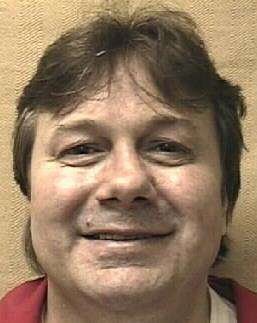
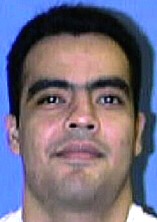
Ronald Wayne Frye
Murderer Brian Kevin Rosenfeld
Murderer · USA · 1985
Brian Kevin Rosenfeld Brian Kevin Rosenfeld was sentenced to three concurrent l…
23 victims
Brian Kevin Rosenfeld
Murderer · USA · 1985
Brian Kevin Rosenfeld Brian Kevin Rosenfeld was sentenced to three concurrent l…
23 victims
 Russell Ellwood
Murderer · USA · 1991
Russell Ellwood was a former taxi driver. Authorities suspected him of killing…
20 victims
Russell Ellwood
Murderer · USA · 1991
Russell Ellwood was a former taxi driver. Authorities suspected him of killing…
20 victims
 Robert Martines Perez
Murderer · USA · 1994
Name: Robert Martines Perez · Other name used in proceedings: Robert Martinez P…
15 victims
Robert Martines Perez
Murderer · USA · 1994
Name: Robert Martines Perez · Other name used in proceedings: Robert Martinez P…
15 victims
 Billy Frank Vickers
Murderer · USA · 1993
Billy Frank Vickers Vickers was executed by lethal injection in Texas on Januar…
14 victims
Billy Frank Vickers
Murderer · USA · 1993
Billy Frank Vickers Vickers was executed by lethal injection in Texas on Januar…
14 victims
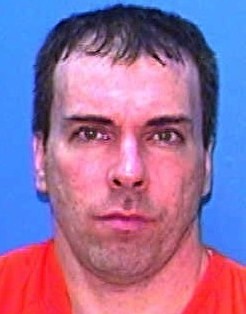 Michael Allen Griffin
Murderer · USA · 1990
Michael Allen Griffin was born on 03/27/70. He was tried in the Eleventh Judici…
1 victim
Michael Allen Griffin
Murderer · USA · 1990
Michael Allen Griffin was born on 03/27/70. He was tried in the Eleventh Judici…
1 victim
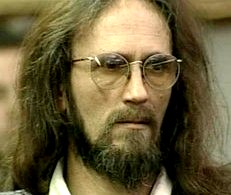 Jules Mikus
Murderer · New Zealand
Jules Pierre Nicholas Mikus (born September 28, 1958) was convicted of the abdu…
1 victim
Jules Mikus
Murderer · New Zealand
Jules Pierre Nicholas Mikus (born September 28, 1958) was convicted of the abdu…
1 victim
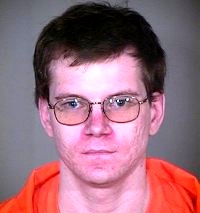 Christopher Hargrave
Murderer · USA · 2002
Christopher Hargrave worked at Jack in the Box from April to May of 2002 and ha…
3 victims
Christopher Hargrave
Murderer · USA · 2002
Christopher Hargrave worked at Jack in the Box from April to May of 2002 and ha…
3 victims
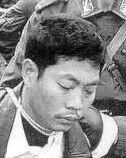 Huang Hu
Frustrated murderer · China · 2002
Huang Hu was born in 1973 in Wuchuan, Guangdong, China. He died on January 3, 2…
0 victims
Huang Hu
Frustrated murderer · China · 2002
Huang Hu was born in 1973 in Wuchuan, Guangdong, China. He died on January 3, 2…
0 victims
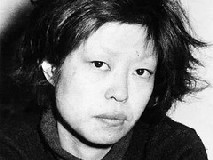 Hiroko Nagata
Murderer · Japan · 1972
Hiroko Nagata (Japanese leftist radical; also sometimes mistakenly referred to…
14 victims
Hiroko Nagata
Murderer · Japan · 1972
Hiroko Nagata (Japanese leftist radical; also sometimes mistakenly referred to…
14 victims
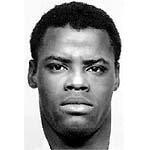 William Prince Davis
Murderer · USA · 1978
William Prince Davis (#614). Davis was 21 years old at the time of the offence…
1 victim
William Prince Davis
Murderer · USA · 1978
William Prince Davis (#614). Davis was 21 years old at the time of the offence…
1 victim
- Gender
- male
- Country
- USA
- Location
- Catawba County, North Carolina, USA
- Date of birth
- October 9, 1958
- Age at first offence
- 35
- Characteristics
- robbery
- Victim profile
- Ralph Childress, 70 ( his landlord )
- Method of murder
- St abbing with scissors
- Date(s) of murder
- January 24, 1993
- Years active
- 1993
- Date of arrest
- February 1993
- Status
-
Executed
Executed by lethal injection in North Carolina on August 31, 2001
Overview
Ronald Wayne Frye was convicted on November 15, 1993 of first-degree murder and robbery with a dangerous weapon for the slaying of his landlord, Ralph Childress. The jury found him guilty on all charges and recommended a sentence of death for the first-degree murder. The trial court sentenced him to death on the murder charge and arrested judgment on the robbery conviction because it was the basis for an aggravating circumstance found by the jury in the capital case. The Supreme Court of North Carolina held that he had a fair trial free of prejudicial error and that the sentence of death was not disproportionate. The United States Supreme Court denied certiorari. Frye was executed by lethal injection in North Carolina on August 31, 2001.
Timeline
- 23 January 1993 — Leroy Childress testified that he and the victim spent the afternoon together on Saturday; the victim wrote and signed two notes ordering Frye to vacate the trailer and the notes were affixed to the front and back doors.
- 24 January 1993 — The victim telephoned Leroy at about 2:00 a.m. and told him that Frye would vacate the trailer in the morning; Leroy called police after finding the victim dead on the floor near the storm door with a pair of scissors embedded in his chest.
- 30 January 1993 — Leroy and his daughter, Linda Cline, returned to the victim’s house to clean it and Cline found a piece of white paper with duct tape in the bedroom reading, “Get out now,” in Leroy’s handwriting and bearing Leroy’s signature.
- 2 February 1993 — Leroy turned the duct-taped note over to police.
- 15 November 1993 — Frye was convicted of first-degree murder and robbery with a dangerous weapon; the jury recommended death for first-degree murder, and the trial court sentenced accordingly on the murder charge.
- 10 May 1995 — Frye’s appeal was heard in the Supreme Court of North Carolina.
- April 24 1998 — The superior court Criminal Superior Court of Catawba County denied Frye’s Motion for Appropriate Relief after an evidentiary hearing.
- April 8 1999 — The Supreme Court of North Carolina denied certiorari.
- March 9 2000 — The district court granted the State’s motion for summary judgment and dismissed Frye’s habeas petition.
- December 22, 2000 — The United States Court of Appeals for the Fourth Circuit denied a certificate of appealability and dismissed the appeal.
- August 31, 2001 — Frye was executed by lethal injection in North Carolina.
Background
Leroy Childress testified that the victim owned a trailer across the street from his home and had leased it to Frye for about a year prior to his death. Frye could not always pay the rent, so the victim occasionally allowed him to perform yard work in exchange for rent owed. The victim had been trying to evict Frye for two or three months before the murder, but Frye had not left.
Several provisions of Frye’s background and defense preparation were described in later proceedings:
- Frye was characterized in mitigation testimony and sentencing-phase evidence as having lived in several foster homes and an orphanage and as having suffered extreme physical abuse at the hands of his first foster father.
- Frye was diagnosed by Dr. Jerry Noble with three psychiatric disorders: paranoid, mixed substance abuse, and mixed personality; Dr. Noble also believed he suffered from child abuse syndrome and that he had diminished capacity to know right from wrong and to conform his behavior to social requirements.
- A clinical psychologist, Dr. Noble, testified that Frye requested that Dr. Noble not talk with his family and that the doctor spoke only with Frye and defense counsel.
- Dr. Noble opined that the victim represented a benign father figure to Frye.
- Frye’s jail behavior during pretrial detention was described by Paul Burgess, the chief jailer at the Catawba County Jail, who testified that Frye caused no problems while incarcerated for nine months awaiting trial and that he had previously demonstrated an ability to conform to prison life.
The offence
Frye was tried capitally for first-degree murder and robbery with a dangerous weapon of Ralph Childress, his landlord.
Events leading to discovery of the victim
Leroy testified that on Saturday, 23 January 1993, the victim wrote and signed two notes ordering Frye to vacate the trailer; Leroy also signed them. One note was affixed to the front door of the trailer and the other to the back door. The brothers then drove to Leroy’s house to retrieve the victim’s truck. The victim drove off to run an errand, and Leroy never again saw him alive.
Leroy testified that the victim telephoned him at about 2:00 a.m. on Sunday, 24 January, stating that Frye had been at his house trying to sell him a couch and would vacate the trailer in the morning. Leroy said the victim called because he was upset about Frye’s visit. At the end of the conversation, Leroy told the victim he would see him at breakfast later that morning. Leroy called the victim again about one-half hour before he planned to pick him up for breakfast. The victim did not answer; Leroy arrived between 7:30 and 8:00 a.m. and found the storm door open and the victim lying on the floor near the door with a pair of scissors embedded in his chest.
Because the telephone had been disconnected, Leroy called the police from a neighbor’s house. Hickory police officers arrived about 8:01 a.m. They found the victim with the scissors in his chest and blood around his neck area. A bloody wallet, devoid of money, lay open between his legs. The investigation revealed no sign of forced entry.
Scene findings and items found
Police found:
- Living room furniture knocked over.
- A .38 Special revolver under a cushion behind a footstool.
- A bloody knife blade under the cushion of an easy chair.
- A small file box next to the chair appeared to have been opened; police removed a latent fingerprint from the box.
- The television still on.
- The light in the victim’s bedroom on, with bed covers pulled back revealing a blood smear on the mattress.
- The cord to the telephone on the nightstand pulled out of the wall.
- Desk drawers open and clothes scattered about the room.
- A knife handle discovered on the floor near the bedroom door.
- A pair of bloodstained khaki pants just inside the door.
- Bloodstains in the kitchen around the sink area, including the faucet handles.
- A silver Derringer .22-caliber pistol on the kitchen table with blood on its handle.
Leroy testified that the .38 Special belonged to the victim and was normally kept under the cushion of the footstool in front of the easy chair; he said the victim never kept the gun loaded and stored the cartridges in the nightstand beside the chair. Leroy also testified that the victim owned the Derringer and ordinarily kept it in his top dresser drawer.
Notes found
On 30 January 1993, Leroy and his daughter, Linda Cline, returned to clean the house. Cline found a piece of white paper with duct tape on it in the bedroom. It said, “Get out now,” in Leroy’s handwriting and bore Leroy’s signature. Leroy identified the paper as one of the two notes attached to Frye’s trailer and turned it over to police on 2 February 1993.
Investigation
Dr. Joseph Vogel testified about the autopsy results:
- The victim’s body contained six discrete wounds to the neck and chest region.
- Dr. Vogel determined that blood loss from the stab wound to the chest from which the scissors were removed caused the victim’s death.
- The wound penetrated through the skin and sternum into the aorta.
- The victim bled one and one-half liters of blood into his left chest cavity and one liter into the right.
- The other chest wounds were inflicted prior to death by a relatively dull instrument, such as scissors; they would have caused pain but not unconsciousness.
- Bruising occurred around the chest wounds and three ribs were broken.
- The victim sustained two neck wounds that could have been inflicted by a knife blade or sharp scissors.
- One neck wound was almost one and one-half inches deep and cut into smaller blood vessels and some neck muscles.
- The other neck wound was one-half inch wide and penetrated to the bone under the chin.
- Dr. Vogel testified these wounds could have been inflicted sometime before the fatal chest wound, occurred prior to death, and nothing indicated the victim would have lost consciousness prior to death.
Michael Ramseur testified about a drug-related conversation and robbery planning:
- Ramseur said defendant bought seventy-five dollars’ worth of crack from him late on a Friday night in January 1993.
- After smoking it, Ramseur said Frye traded jewelry, old coins, and a microwave for more crack.
- Ramseur said he returned to Frye on Saturday morning out of money, and Frye told him he knew he could get some money from “that landlord.”
- Ramseur said Frye suggested Ramseur rob the man, who would recognize Frye if he did it, but Ramseur refused.
- Ramseur said Frye told him to meet at 11:30 on Sunday morning and Frye would have money to buy more crack.
- Ramseur testified that on Sunday he saw Frye and sold him more drugs and Frye had a roll of money including five or six hundred-dollar bills.
Other witnesses placed Frye near the victim’s home and linked him to cash and drugs:
- Kenneth Berry testified he lived next door to the victim and that Frye came to his house between 11:30 p.m. on 23 January and 1:00 a.m. on 24 January, trying to sell the green army jacket he was wearing and two tires. Berry told Frye not to sell his jacket and sent him away; Berry testified defendant did not have a cut on his hand at that time.
- Doug Propst testified Frye visited him between 8:30 and 9:00 on 24 January and paid him the one hundred dollars he owed. Propst testified the two smoked some crack; Frye laid a large number of hundred-dollar bills on the counter totaling three thousand dollars and replied “Ask me no questions, I’ll tell you no lies” when Propst asked where he obtained the money. Propst testified Frye stayed with him until Tuesday when he was arrested.
- Franki Bryson testified she saw Frye on a Sunday morning in 1993 smoking crack and that Frye asked her to buy crack for him. She testified she did so and continued to buy drugs with Frye’s money, two or three hundred dollars at a time, from Sunday until the time of his arrest. Bryson testified that when she first saw Frye, his hand was cut, and Frye kept all his money in a roll.
- Kevin Templeton testified he used drugs with Frye in the past and knew the victim. Templeton testified he spoke with Frye several times after the murder and that Frye told him he spent some money on drugs and gave some to a girl. Templeton also testified Frye said he had “only meant it to be a robbery” and “got carried away,” and that Frye said he had obtained almost five thousand dollars.
SBI serology and DNA testimony described physical evidence:
- SBI Special Agent Jennifer Elwell testified about blood she found on various pieces of evidence. She determined blood on the knife handle, Derringer, mattress, three areas of defendant’s army jacket, and defendant’s blue jeans was consistent with defendant; and blood on the khaki pants, knife blade, and the left sleeve of defendant’s army jacket was consistent with the victim.
- SBI Special Agent Mark Boodee analyzed DNA content and determined bloodstains from the knife blade and the army jacket matched the blood sample taken from the victim and that bloodstains from the mattress matched the sample taken from defendant.
Leroy and Cline’s cleaning of the house occurred after the murder, and Cline identified the note found in the bedroom.
Arrest
The habeas corpus proceeding recounted that three days after the murder, police arrested Frye at the apartment of a local crack dealer.
The Supreme Court of North Carolina decision also described that Frye stayed with Doug Propst until Tuesday when he was arrested. Police officers conducted a consent search of Propst’s house and seized the army jacket Frye was wearing when he arrived on 24 January, among other items.
Trial
Charges and verdict
The jury found Frye guilty of all charges and recommended a sentence of death for the first-degree murder. The trial court sentenced accordingly on the murder charge and arrested judgment on the robbery conviction because it was the basis for an aggravating circumstance found by the jury in the capital case.
Guilt-phase evidence
The state introduced evidence including:
- The eviction context and notes prepared ordering Frye to vacate the trailer.
- The victim carrying five thousand dollars in his pocket in a roll consisting primarily of hundred-dollar bills.
- The discovery of the victim’s body with scissors embedded in his chest and signs of blood and searching.
- Testimony that Frye had attempted to enlist a drug dealer to rob the victim.
- Testimony placing Frye in the possession of substantial cash and drugs near the time of the murder.
- Testimony about Frye being drunk and attempting to sell the green army jacket and tires near the time window.
- Physical evidence including blood on various items and DNA matching.
Defendant presented no evidence during the guilt phase and the State introduced no additional evidence at sentencing.
Jury selection issues
Frye raised numerous claims regarding jury selection:
- He challenged four statements made by the trial court to prospective jurors.
- He challenged the trial court’s excusal of prospective juror Mallonee for cause.
- He challenged prosecutors’ comments during voir dire and closing at sentencing regarding mitigating circumstances.
- He challenged the trial court’s ruling allowing only one attorney to conduct voir dire from each side during objections.
- He challenged excusal of prospective juror Kenneth Pless for cause without allowing further questioning.
- He challenged the court’s handling of jurors’ exposure to media coverage.
The Supreme Court of North Carolina overruled each challenge and held Frye had a fair trial free of prejudicial error.
Specific verbatim trial court comments included during preliminary instructions:
- “You will become in effect officers of the Court and collaborators in judgment with me.”
The verbatim voir dire question that Frye challenged included:
- “If chosen to sit as a juror will you require the state to satisfy you of the defendant's guilt beyond a reasonable doubt before you find him guilty?”
The Supreme Court of North Carolina included verbatim discussion of the trial court’s role and standards in jury selection and addressed each of Frye’s arguments, including that no reasonable juror would interpret certain questions as expressing a court opinion on guilt, that some jurors could be excused for cause based on views about the death penalty, and that the instructions on aggravating and mitigating evidence were accurate.
Guilt-phase closing argument quotations
Frye challenged prosecutors’ closing arguments; the Supreme Court of North Carolina reproduced several quotations.
The first prosecutor stated, inter alia: “[Defendant] comes over to his house. And we don't know if he broke down the door or had problems with the door or whatever. . . . And he wants some money. . . . I am being thrown out, I've got to leave tomorrow. Okay I'll leave, but I want some money. Wallet's open. . . . But it was empty between his legs. Where's your money? . . . Broke the knife on him. Jabbed him through the fat, through the skin, and through the bone, and broke the knife. [The victim] sat through five wounds to tell [where] his money [was]. He finally said okay, my money is under the mattress. That's how the defendant got the blood under the mattress. He went to get his money under the mattress. . . . Why was [the bedroom] torn up? Why that place look so messy? . . . Why was the Derringer in the kitchen? That man's alive. I'm not going to kill him until I find his money. . . . Remember the bloody Derringer was found in the sink area in the kitchen. He was just moving it around so he couldn't get it and shoot him with it. . . . The defendant is keeping him alive. Until he finds his money. How about the pants? The pants had [the victim's] blood. Now [the victim] was in [the] living room stabbed to death. The pants are back in the bedroom. [Defendant] cut himself. Slicing up [the victim]. . . . So [defendant] picks up [that] pair of pants, wherever they were. He wipes [his] hand off. Why? Because he's walking to the bedroom. Why? Because that's where the mattress is. Why? That's where the money is. And right when he gets to the door, he throws those pants down. . . . Now I think you've heard [about] proximate cause from the doctor. He talked a lot about the wounds. He said the first five were not fatal. Said that makes sense, those first five were just to get him to talk. Wasn't going to kill him until he got his money. Washed everything off, went to the sink, had the handles, washed everything. And as he was leaving he gave him the deathblow after he had his money.”
The Supreme Court of North Carolina also reproduced the second prosecutor’s statements, inter alia: “And while [defendant is] . . . searching, ransacking it, [the victim] is laying here on the floor bleeding. He's suffering. He's not lost consciousness because the doctor said 'Hey, those wounds to his neck wouldn't cause him to lose consciousness.' That old man was suffering. He's suffering.”
and: “While [the victim is] alive, laying here bleeding, he's running through the house trying to find the money. Finds the money, then tries to go wash his hands. On his way out [the victim] moved. . . . [O]ld man, . . . you can't stay here, you know who I am, you can identify me.”
Sentencing-phase evidence and arguments
Sentencing included testimony from Paul Burgess about jail behavior, and from Dr. Jerry Noble about psychological testing and diagnoses. Dr. Noble testified Frye did not talk about the victim’s death and never directly expressed feelings of remorse for the murder, but did speak well of the victim and considered him a friend.
Rebuttal evidence included testimony of Frye’s criminal record, including convictions for damage to property, damage to city property, assault on an officer, destruction of property, felonious breaking and entering, and possession with intent to sell or deliver drugs.
Frye’s jury found two statutory aggravating circumstances:
- The murder was committed while Frye was engaged in a robbery with a dangerous weapon.
- The murder was especially heinous, atrocious, or cruel.
The Supreme Court of North Carolina summarized Frye’s challenges to sentencing jury instructions and closing argument statements. One sentencing closing argument quotation included: “Do you think he might have asked why Ronny, why you doing this to me, I loved you, I treated you like a son and you're doing this to me? . . . Do you think that might have been a psychological torture the old man had to go through? The pain of that knife going through his chin. The slash on his throat. Laying there, blood dripping out of his neck. And the only thing he could think of was why Ronny, why?”
Sentencing
Frye was sentenced to death by a jury in North Carolina for the first-degree murder of Ralph Childress. The Supreme Court of North Carolina conducted proportionality review and held the death sentence was not imposed under passion, prejudice, or any other arbitrary factor and was not excessive or disproportionate to penalties imposed in similar cases.
Dr. Vogel’s medical evidence supported inferences about the victim’s pain and survival after earlier wounds. The Supreme Court described the aggravating factor “especially heinous, atrocious, or cruel” as requiring that any brutality exceeded that normally present in any killing or that the murder was a conscienceless or pitiless crime unnecessarily torturous to the victim.
Appeals
Supreme Court of North Carolina (direct appeal and rulings)
The appeal was an appeal of right pursuant to N.C.G.S. § 7A-27(a) from a judgment imposing a sentence of death entered by Hyatt, J., at the 1 November 1993 Criminal Session of Superior Court, Catawba County, on a jury verdict finding Frye guilty of first-degree murder and robbery with a dangerous weapon. The Supreme Court of North Carolina (Whichard, Justice) held:
- Frye had a fair trial free of prejudicial error.
- The sentence of death was not disproportionate.
- No error occurred (NO ERROR).
The Supreme Court addressed Frye’s assignments of error, including:
- Trial court instructions to prospective jurors and excusals for cause.
- Prosecutor comments during jury selection and closing arguments at sentencing about aggravating and mitigating circumstances.
- Chain of custody for admission of a sample of blood as State’s Exhibit 22 during the guilt phase.
- Prosecutorial closing arguments during both guilt and sentencing phases.
- Sufficiency of evidence to submit first-degree murder theories and to avoid instruction on second-degree murder.
- Submission of the (e)(9) aggravating circumstance and statutory mitigating circumstance issues, including (f)(1) and (f)(6).
- Refusal to submit certain nonstatutory mitigating circumstances separately and instruction issues regarding mitigating circumstances.
- Numerous preservation-related issues that the Supreme Court ruled against Frye’s positions.
Fourth Circuit habeas corpus appeal
The United States Court of Appeals for the Fourth Circuit described Frye’s post-conviction history:
- Frye filed a petition for a writ of habeas corpus under 28 U.S.C. § 2254 after state post-conviction proceedings.
- The district court granted the State’s motion for summary judgment in a Memorandum of Opinion dated March 9, 2000.
- The district court denied an application for a certificate of appealability on May 30, 2000.
- The Fourth Circuit denied a certificate of appealability and dismissed the appeal.
The Fourth Circuit described two constitutional claims:
- Ineffective assistance of counsel, alleging failures to prepare and present mitigation evidence during sentencing.
- Jury instructions relating to the “heinous, atrocious, or cruel” aggravating circumstance being unconstitutionally vague and overbroad.
The Fourth Circuit held Frye failed to make a substantial showing of denial of a constitutional right, declined to grant a certificate of appealability, and dismissed his appeal.
The Fourth Circuit addressed counsel performance and the role of Frye’s refusal to allow contact with family members in mitigating evidence preparation. It also addressed the claim of counsel alcohol dependency and held that there was no evidence of specific instances of deficient performance attributable to alcohol. The court further addressed the “heinous, atrocious, or cruel” instruction and held the limiting provision, as found by the state courts, provided sufficient guidance.
Outcome
Frye’s conviction and death sentence were affirmed. Frye’s post-conviction habeas petition was dismissed, and the Fourth Circuit dismissed his appeal.
Other details
Direct evidence details reiterated in federal proceedings
The Fourth Circuit recounted that the crime occurred on January 24, 1993 in Catawba County when Frye repeatedly rammed a pair of scissors into the neck and chest of his seventy-year-old landlord, Ralph Childress. Local police responding to a call from the decedent’s brother found Childress dead on the floor with a pair of scissors protruding from his chest. An empty wallet was discovered on the floor, and blood stains appeared throughout the residence. Childress had been stabbed five other times. The Fourth Circuit recounted that police arrested Frye three days later at the apartment of a local crack dealer. The Fourth Circuit recounted that Frye’s blood was found at the murder scene on a mattress, on a knife, and on one of Childress’s pistols; and that blood discovered on Frye’s jacket matched that of the victim. The Fourth Circuit also stated that Frye’s attorneys presented no evidence in defense during the guilt phase.
Procedural and sentencing structure described
- North Carolina law required a separate sentencing proceeding for a capital felony.
- The jury was instructed under North Carolina law that if one or more jurors found a mitigating circumstance present, the jury would answer “Yes” on the verdict form indicating presence of that circumstance; the Fourth Circuit described the jury answering “Yes” to thirty-four of the fifty-nine asserted mitigating circumstances.
- The Fourth Circuit described that the jury found the aggravating circumstances outweighed those in mitigation and recommended death; the trial judge accepted the recommendation and imposed the death penalty.
Death penalty advocacy and clemency requests (quoted organization statements)
The case record included statements from People of Faith Against the Death Penalty and Amnesty International urging clemency and halt of execution, including verbatim quotations attributed to officials. These were:
- Amnesty International’s Ari Kohen stated: “Because the lawyer was drinking rather than working to save his client's life, the jury heard only the most minimal account of the mitigating circumstances in Ronnie Frye's case,” and also stated: “The jury was unaware that Frye was beaten severely while in foster care as a young child, and forced to witness his biological father beat up his stepmother. Instead, the jury was left to guess whether Frye's story was the truth, because the readily-available corroborating evidence of the severe abuse he endured was not presented in court.”
- Amnesty International’s Sue Gunawardena-Vaughn said: “The governor's power of executive clemency exists to compensate for flawed cases like that of Ronald Frye. We urge Governor Easley not to promote this miscarriage of justice and continue the cycle of violence by allowing this execution to proceed.”
- People of Faith Against the Death Penalty included a quote attributed to Ms. Marilyn Ozer: “They seem obsessed.”
- Ms. Ozer was also quoted: “seems particularly atrocious.”
These statements were part of the narrative material presented in the case record and did not alter the legal outcome, which remained execution by lethal injection on August 31, 2001.
Scheduled execution reference in narrative
The case record included a narrative stating: “Ronald Frye Scheduled Execution Date and Time: 8/31/01, 2:00am EST.”
Spotted an error, or have more information about this case?