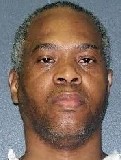
Carl Henry Blue
Murderer Brian Kevin Rosenfeld
Murderer · USA · 1985
Brian Kevin Rosenfeld Brian Kevin Rosenfeld was sentenced to three concurrent l…
23 victims
Brian Kevin Rosenfeld
Murderer · USA · 1985
Brian Kevin Rosenfeld Brian Kevin Rosenfeld was sentenced to three concurrent l…
23 victims
 Russell Ellwood
Murderer · USA · 1991
Russell Ellwood was a former taxi driver. Authorities suspected him of killing…
20 victims
Russell Ellwood
Murderer · USA · 1991
Russell Ellwood was a former taxi driver. Authorities suspected him of killing…
20 victims
 Robert Martines Perez
Murderer · USA · 1994
Name: Robert Martines Perez · Other name used in proceedings: Robert Martinez P…
15 victims
Robert Martines Perez
Murderer · USA · 1994
Name: Robert Martines Perez · Other name used in proceedings: Robert Martinez P…
15 victims
 Billy Frank Vickers
Murderer · USA · 1993
Billy Frank Vickers Vickers was executed by lethal injection in Texas on Januar…
14 victims
Billy Frank Vickers
Murderer · USA · 1993
Billy Frank Vickers Vickers was executed by lethal injection in Texas on Januar…
14 victims
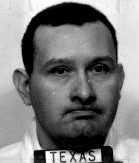 Doil Edward Lane
Homicide · USA · 1980
Doil Edward Lane was sentenced to death in Texas on February 25, 1994. His deat…
2 victims
Doil Edward Lane
Homicide · USA · 1980
Doil Edward Lane was sentenced to death in Texas on February 25, 1994. His deat…
2 victims
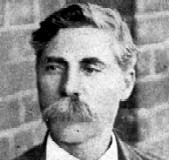 Floyd Allen
Murderer · USA · 1912
Floyd Allen (July 5, 1856 – March 28, 1913) was an American landowner and patri…
5 victims
Floyd Allen
Murderer · USA · 1912
Floyd Allen (July 5, 1856 – March 28, 1913) was an American landowner and patri…
5 victims
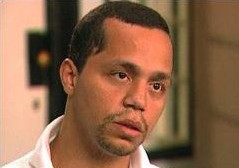 Matias Reyes
Homicide · USA · 1988
Matias Reyes was a juvenile at the time of the events described as part of a se…
2 victims
Matias Reyes
Homicide · USA · 1988
Matias Reyes was a juvenile at the time of the events described as part of a se…
2 victims
 Ronald Allen Smith
Murderer · USA · 1982
Ronald Allen Smith (born September 7, 1957) was a Canadian man. He was sentence…
2 victims
Ronald Allen Smith
Murderer · USA · 1982
Ronald Allen Smith (born September 7, 1957) was a Canadian man. He was sentence…
2 victims
 Gabriel Avila
Murderer · USA · 2003
Gabriel Avila was a 27-year-old Mexican national. Katie Sepich was 22 and from…
1 victim
Gabriel Avila
Murderer · USA · 2003
Gabriel Avila was a 27-year-old Mexican national. Katie Sepich was 22 and from…
1 victim
- Gender
- male
- Country
- USA
- Location
- Brazos County, Texas, USA
- Date of birth
- January 9, 1965
- Age at first offence
- 29
- Characteristics
- murder-for-hire, revenge, crack addict, drugs, alcohol
- Victim profile
- Carmen Richards, 38 ( his former girlfriend )
- Method of murder
- T hrew gasoline on her and set her on fire
- Date(s) of murder
- August 19, 1994
- Years active
- 1994
- Date of arrest
- Same day (surrenders)
- Status
-
Sentenced to death
Sentenced to death on June 14, 1995
Case details
Carl Henry Blue was sentenced to death for capital murder involving Carmen Richards-Sanders in the course of committing or attempting to commit burglary.
Timeline
- June 14, 1995 — Blue was sentenced to death.
- October 27, 1994 — A Brazos County grand jury indicted Blue for capital murder.
- December 4, 1996 — Blue’s conviction and sentence were affirmed by the Texas Court of Criminal Appeals.
- January 13, 1999 — An application for habeas corpus relief was denied.
- December 4, 2000 — Blue was granted habeas relief by the U.S. District Court for the Southern District of Texas, Houston Division, and was granted a new punishment trial on the basis of Saldano error.
- October 10, 2001 — Blue was again sentenced to death.
- October 22, 2003 — Blue’s sentence was again affirmed by the Court of Criminal Appeals.
- October 4, 2004 — A petition for a writ of certiorari was denied by the U.S. Supreme Court.
- November 10, 2004 — The Court of Criminal Appeals denied Blue’s state habeas application stemming from the second punishment trial.
- March 7, 2007 — The Court of Criminal Appeals dismissed a third state habeas application alleging that Blue was mentally retarded and therefore ineligible to be executed.
- August 19, 2010 — The U.S. District Court for the Southern District of Texas, Houston Division denied Blue’s petition for writ of habeas corpus.
- December 22, 2011 — The Fifth Circuit rejected Blue’s appeal and affirmed the denial of habeas corpus relief by the district court.
- October 1, 2012 — The U.S. Supreme Court denied certiorari review.
- November 15, 2012 — The 272nd state district court scheduled Blue’s execution for February 21, 2013.
- February 21, 2013 — Blue was executed in Texas.
The offence
Events leading to the killing
Blue left his College Station apartment in the early morning hours of August 19, 1994. He walked seven miles to Bryan, where the victim, his ex-girlfriend Carmen Richards-Sanders, lived.
Blue entered a convenience store across the street from her apartment complex three times: once to purchase a beer, once to pay for fifty cents worth of gasoline, and once to obtain a soda cup.
At about eight o’clock, Carmen prepared to leave. Larence Williams was an eyewitness to the events that followed. When Carmen unlocked the door, Blue threw it open from the outside and entered the apartment.
Blue doused Carmen with gasoline and set her on fire with a lighter. As Williams stepped out of the kitchen, Blue threw gasoline on him and also lit him on fire.
Blue then turned to Carmen, emptied the last bit of gasoline from his cup, and said “I told you I was gonna get you.” Blue threw the cup down and left.
Injury and death
Williams rolled on the floor but could not entirely put the flames out. He struggled to the bathroom shower and extinguished the remaining sparks. Carmen, still burning, stumbled into the bathroom, and Williams helped her into the shower.
Because Blue’s assault also set the room aflame, Williams and Carmen staggered from the apartment. Williams spent two weeks in the hospital recovering.
Blue’s assault caused third degree burns over 40% of Carmen’s body. Carmen died 19 days later from multi-system organ failure resulting from her burns. Carmen was taken to Brazos Valley Medical Center and was then Life-Flighted to Hermann Hospital in Houston. She remained on dialysis and a respirator for over two weeks until she died on the 19th day after the attack.
Second victim and survival
Williams was also Life-Flighted to Hermann Hospital at serious risk of death but survived. He suffered burns from the front of his thighs up and received three skin graft surgeries. He remained in the hospital from August 19 to November 12.
Property damage
The fire at the apartment complex where Carmen lived destroyed four other units and left 20 residents at the building homeless.
Investigation and arrest
Hours after the attack, Blue turned himself in to police.
Blue told police in a tape-recorded statement played at his trial: “When I went to knock, she snatched the door open and had a cigarette. I wasted gas on both of them. And she caught on fire, and he caught on fire, and I took off running ... I was scared, man.”
Trial
Charges and conviction
On October 27, 1994, a Brazos County grand jury indicted Blue for capital murder.
In 1994, a Brazos County jury found Blue guilty of murdering Carmen Richards-Sanders in the course of committing or attempting to commit burglary.
Evidence regarding future dangerousness (new punishment hearing)
At the second punishment hearing, the evidence showed that, pursuant to a pre-meditated plan, Blue burst into his former girlfriend’s apartment, threw gasoline on her and set her on fire, and she died 19 days later from the burns.
The evidence also showed Blue had a history of violence, especially toward current and former girlfriends. Blue presented character evidence and evidence that he had a drug and alcohol problem at the time of the offense. Blue presented evidence from various prison employees that he had no record of violence during the seven years he was incarcerated on death row after his first trial. The prosecution responded through cross-examination, including evidence that his nonviolent behavior on death row could have been due to death row inmates being limited in their movements and spending most of the time locked in their cells. The prosecution also presented evidence that Blue was a disciplinary problem while incarcerated in the county jail for the new punishment hearing.
At trial during the punishment hearing, evidence was presented about Blue refusing to come out of a tank and reacting with “pounding and screaming” at county jail personnel after he refused instructions to come out of his cell to get ready for court. In closing jury arguments, Blue claimed he would not be dangerous in prison if he received a life sentence, meaning he would not be eligible for parole until he had served 40 years. The prosecution responded that Blue was dangerous and that a life-sentenced Blue would be dangerous in prison.
Blue’s psychiatric expert testified that there was no more than a 48 percent statistical probability that Blue would commit future acts of violence. The expert also testified that Blue’s violence was “relationship driven” with “most of his major stuff” due to “some problem with women.” In that expert testimony, Blue’s lawyer used a probability definition of “more likely than not,” and the expert described that, based on data cited, the statistical probability did not exceed 48 percent. The expert also testified that the actuarial and clinical analysis showed an elevated risk against the general population, and that the future dangerousness special issue made no distinction between prison and real life.
During closing, the prosecution presented evidence that Blue had a history of violence and disciplinary problems.
Testimony excerpt related to jail conduct
A witness testified under questioning with the following exchanges:
Q. This is [appellant]? A. [Appellant] refused to come out of the tank. I asked him what was going on. He said it was too early for him to be dressed-out, that he did not need to be in court until 9:00 o'clock, and that he needed his rest and it was a bunch of bull to get him dressed-out that early and to put him in one of the holding cells up front.
Q. And what did you say in response? A. I went through, telling him that we had to get him dressed-out early enough so he would not be late for court, that he would be on time for court, and that we had other people and other things to do, and he had to be the priority.
Q. And what was his response to that? A. He still refused to come out of the tank; stating over and over that it was too early, that he refused; and that he wasn't coming out and that he did not want to sit in that holding cell for that long a period of time.
Q. How long did you talk to him and try to explain to him that he was coming out? A. Between five and seven minutes.
Q. And the other officers had already been there for about 15 minutes; is that correct? A. That's correct.
Q. What did he say, and what was his response to you when you said that he had to come out of the cell? A. Well, when I got there, he was mad. And then he got angry, and then he started pounding his fists into the palms of his hand and started screaming at me and refusing to come out of the tank.
Q. Can you demonstrate in front the [sic] jury when you say "pounding the palm of his hand?" A. He had one hand like this and he was doing like this. And as he was doing that, he was screaming. (Indicating).
Q. And who was he directing that to? A. To me.
Q. And in response to that, what did you do? A. I told him he was coming out, and he said he was not. And I told him, fine, I would go call the [Detention Response Team] and he would come out.
Q. Before you told him you were going to call the DRT team-and we'll get into that-did you try and get that control door between the tank and the vestibule? A. Yes, ma'am, but the noise was so loud that the control room person could not hear me telling him to shut the inside door, which is the sliding door that separates him from the vestibule into the tank.
Q. Why was the noise loud? A. Because [appellant] was pounding and screaming at me.
Jury deliberations and special issues
During sentencing instructions, the jury was instructed that it should consider all evidence submitted to it during the whole trial as to the defendant’s background or character or the circumstances of the offense that militates for or mitigates against the imposition of the death penalty.
The jury was instructed that the burden of proof as to Special Issue No. 1 rested upon the State, and it must be proved beyond a reasonable doubt that the answer to Special Issue No. 1 should be “Yes.” The instructions included unanimity requirements for answering “Yes” and ten-or-more jurors requirements for answering “No.” In the event the jury was unable to agree, the presiding juror would not sign either form, and jurors were instructed not to discuss or consider the effect of the failure to agree.
The instructions provided: SPECIAL ISSUE NO. 1, with forms for answers, is as follows: Is there a probability that the defendant, Carl Henry Blue, would commit criminal acts of violence that would constitute a continuing threat to society? ANSWER: We the jury unanimously find and determine beyond a reasonable doubt that the answer to Special Issue No. 1 is “Yes,” with a signature space for the Presiding Juror, or ANSWER: We, the jury, because at least ten jurors have reasonable doubt as to the probability that the defendant would commit criminal acts of violence that would constitute a continuing threat to society, determine that the answer to Special Issue No. 1 is “No,” with a signature space for the juror.
The instructions provided: SPECIAL ISSUE NO. 2: Taking into consideration all of the evidence, including the circumstances of the offense, the defendant's character and background, and the personal moral culpability of the defendant, do you find that there is a sufficient mitigating circumstance or circumstances to warrant that a sentence of life imprisonment rather than a death sentence be imposed?
Sentencing
First punishment phase and death sentence
Blue was sentenced to death on April 19, 1995, having been convicted of capital murder.
Second punishment phase and death sentence
Blue was granted a new punishment trial after Saldano error and was again sentenced to death on October 10, 2001. The trial court sentenced appellant to death pursuant to the jury’s answers to the special issues submitted at the second punishment hearing.
Appeals
Texas Court of Criminal Appeals
Blue’s conviction and sentence were affirmed by the Texas Court of Criminal Appeals on December 4, 1996.
On October 22, 2003, Blue’s sentence was again affirmed by the Court of Criminal Appeals.
The Court of Criminal Appeals denied Blue’s state habeas application stemming from the second punishment trial on November 10, 2004.
U.S. Supreme Court
A petition for a writ of certiorari was denied by the U.S. Supreme Court on October 4, 2004.
The Supreme Court denied certiorari review on October 1, 2012.
Federal habeas and circuit appeal
On August 19, 2010, the federal district court denied Blue’s petition for writ of habeas corpus.
After oral argument, the Fifth Circuit rejected Blue’s appeal on December 22, 2011, and affirmed the denial of habeas corpus relief by the district court.
Third state habeas and mental retardation claim
Blue filed a third state habeas application alleging that he was mentally retarded and therefore ineligible to be executed. After oral argument, the Court of Criminal Appeals dismissed this application pursuant to Texas Code of Criminal Procedure Article 11.071, Section 5(a)(3) on March 7, 2007.
Fifth Circuit decision on COA-related issues (summary of Atkins and jury-instruction claims)
The U.S. Court of Appeals for the Fifth Circuit denied Blue’s request for a certificate of appealability, holding that Blue failed to make a prima facie showing of mental retardation under Texas law as the basis for an Atkins claim invoking the Eighth Amendment’s prohibition of execution of the mentally retarded. The motion was denied.
Other details
Relationship and background leading to the attack
Carl Henry Blue and Carmen Richards-Sanders lived together for four or five months during the early part of 1994. Their relationship was apparently fraught with arguments.
Blue broke Carmen’s nose once at a family reunion after which he threatened her, “If you ever mess off on me, I'll kill you.”
Blue also threatened to beat Carmen’s sister.
Carmen broke off her relationship with Blue around early summer 1994 and moved into her own apartment in College Station. Soon after her move, Carmen met and began dating the surviving victim, Larence D. Williams.
Approximately one week before the murder, Blue went to Carmen’s apartment uninvited and told her visiting brother, “I love her but I'll kill her.”
On the evening of August 18, 1994, Blue again went to Carmen’s apartment. Williams arrived because he and Carmen had dinner plans, and Carmen asked Williams to take Blue back to Bryan where he lived. Williams testified that Blue seemed angry on the ride back and asked if he and Carmen were “messing around.” Williams said they were just friends. When they arrived, Blue stated, “Well, man, I'll go and buy me some gas and burn down that apartment and whoever's in there.”
Prior violence described through testimony
One woman testified that Blue would hit her with his fists and kick her, and described instances in which Blue sexually assaulted her, threatened to kill her, and broke into her house.
A second woman testified that Blue beat her. During one of these instances, Blue beat her while she was eight months pregnant and cocked a gun and put it to her head threatening to kill her. The woman further related times when Blue kicked her in the ribs and hit her in the face and jaw until she was unable to eat.
A Bryan police officer, Mark Barnett, related an instance when he tried to place Blue under arrest and Blue’s response was to violently struggle with him and attempt to kick him.
Several officers testified to various times when they had tried to detain or arrest Blue and he took off running, showing a complete lack of respect for authority.
John Krakin testified that Blue had been outside of his home waving a gun and repeatedly saying “I'm gonna kill that bitch.”
Alcohol and drugs described in connection with the attack
Prosecutors said Blue walked seven miles from his home to a convenience store on August 19, 1994 and had been drinking malt liquor and smoking crack behind the store, when he bought 50 cents’ worth of gasoline and put it in a “Big Gulp” cup.
In his final statement, the lead defense attorney, John Quinn, described the defense claim that the incident was sparked by jealousy rather than a prank gone wrong; the article also described that Blue claimed it was a prank gone wrong and prosecutors said it was an intentional attack sparked by jealously.
Execution-related statements and conduct
On February 21, 2013, Blue was executed in Texas.
In his final statement, Blue greeted the victim’s daughter, Terrella Richards, as she entered the death chamber viewing area by telling her he loved her. Blue said: “I never meant to hurt your mama,” “If I could change that, I would. ... I hope you can forgive me.”
He told his parents that he loved them and acknowledged he had done something wrong. He said he was “paying the ultimate justice. ... It may be crooked justice but I forgive those people.”
He also said: “Cowboy up. I'm fixin' to ride, and Jesus is my vehicle.”
The lethal drug began taking effect, and he took about a dozen breaths. He said he could “feel it,” then slipped into unconsciousness before being pronounced dead at 6:56 p.m.
A statement attributed to Blue included: “I did something wrong, and now I am paying the ultimate justice,” “It may be crooked justice, but I forgive these people.”
Terrella Richards was described as declining to take questions after the execution and saying: “I can move on with my life.” “My journey has ended today.”
Blue’s mother, Joann Gooden, was described as breaking into tears as she witnessed her son’s passing.
Blue addressed the victim’s daughter, Terrella Richards, from the death chamber and said:
Blue said to family he loved them and that he knew why he was being executed, even though he called it “crooked justice.” The lethal dose began at 6:30 p.m., and Blue took several deep breaths and said “I feel it ... love ... love” before losing consciousness.
Additional final-words quotation attributed in later material
Blue’s very last words as he took his final breath in the death chamber were reported as: “Cowboy up. I’m fixin’ to ride. Jesus is my ride.”
Address to prison pen-pal relationship (additional personal material)
A person described as Jan McDonnell was portrayed as having a pen-pal relationship with Carl Blue. The material included a quotation attributed to Blue just moments before he was given a lethal injection: “I’m getting a ranch up in the sky and when you get there we will ride our horses together.”
Spotted an error, or have more information about this case?