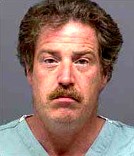
Ward Weaver
Murderer Robert Martines Perez
Murderer · USA · 1994
Name: Robert Martines Perez · Other name used in proceedings: Robert Martinez P…
15 victims
Robert Martines Perez
Murderer · USA · 1994
Name: Robert Martines Perez · Other name used in proceedings: Robert Martinez P…
15 victims
 Billy Frank Vickers
Murderer · USA · 1993
Billy Frank Vickers Vickers was executed by lethal injection in Texas on Januar…
14 victims
Billy Frank Vickers
Murderer · USA · 1993
Billy Frank Vickers Vickers was executed by lethal injection in Texas on Januar…
14 victims
 Ria Ramkissoon
Murderer · USA · 2007
Ria Ramkissoon was convicted for starving her one-year-old son to death on the…
1 victim
Ria Ramkissoon
Murderer · USA · 2007
Ria Ramkissoon was convicted for starving her one-year-old son to death on the…
1 victim
 Johann Otto Hoch
Serial killer · USA · 1890
Johann Otto Hoch (1855 - 1906) was the most famous and last-used alias of a Ger…
15 victims
Johann Otto Hoch
Serial killer · USA · 1890
Johann Otto Hoch (1855 - 1906) was the most famous and last-used alias of a Ger…
15 victims
 Bruce Edwin Callins
Murderer · USA · 1980
Bruce Edwin Callins filed a petition for certiorari that was docketed in Johnso…
1 victim
Bruce Edwin Callins
Murderer · USA · 1980
Bruce Edwin Callins filed a petition for certiorari that was docketed in Johnso…
1 victim
 Stephen Port
Serial killer · United Kingdom · 2014
Stephen Port (born 1975) was a convicted British rapist and serial killer who m…
4 victims
Stephen Port
Serial killer · United Kingdom · 2014
Stephen Port (born 1975) was a convicted British rapist and serial killer who m…
4 victims
 Billy Wayne Hayes
Homicide · USA · 1967
Billy Wayne Hayes was convicted of second-degree murder and sentenced in 1968 t…
1 victim
Billy Wayne Hayes
Homicide · USA · 1967
Billy Wayne Hayes was convicted of second-degree murder and sentenced in 1968 t…
1 victim
- Gender
- male
- Country
- USA
- Location
- Oregon City, Oregon, USA
- Date of birth
- April 6, 1963
- Age at first offence
- 39
- Characteristics
- serial rapist, child molester, rape, torture
- Victim profile
- Ashley Marie Pond, 12 / Miranda Diane Gaddis, 13
- Method of murder
- ???
- Date(s) of murder
- January 9/March 8, 2002
- Years active
- 2002
- Date of arrest
- August 13, 2002
- Status
-
Life imprisonment
Sentenced to four terms of life in prison without parole as a result of the plea bargain agreement on September 22, 2004
Case record: Ward Francis Weaver III
Background
Ward Francis Weaver III was born April 6, 1963. His father abandoned the family in 1967. Weaver’s mother, Trish, later married Bob Budrow, an abusive alcoholic.
Weaver first exhibited antisocial behavior as a teenager. His sister, Tammi, later said that he physically and sexually abused at least one family member by the time he was 12.
In 1981, a teenaged relative reported that Weaver had repeatedly raped and beat her. Police investigated allegations of abuse in 1981, but Multnomah County prosecutors decided not to pursue charges because Weaver had enlisted in the armed services and would be leaving Portland.
Weaver joined the US Navy Reserve in 1981. He was discharged on May 17, 1982, for heavy drinking and dereliction of duty. While in the Navy, he met his future wife, Maria Stout. The couple moved in with Weaver’s parents, and she was soon pregnant.
Weaver attacked Maria Stout when she was five months pregnant and put her in the hospital, but she refused to press charges. Maria Stout eventually bore Weaver a son, followed by a daughter seven years later.
At about the time of his son’s birth, Weaver’s father was convicted of murder and sentenced to death.
Weaver and his wife later moved in with the Ordanas family. One night, an intoxicated Weaver attacked 15-year-old Jennifer Ordanas with a concrete block. Jennifer Ordanas escaped, and Weaver was sentenced to three years in prison for assault.
In 1993, Maria Weaver filed a restraining order against Weaver, and their marriage ended in divorce.
In July 1995, Weaver beat his new girlfriend, Kristi Sloan, with a cast-iron skillet. Weaver was jailed for the incident, but Sloan refused to testify against him. By October, they were back together, and in February 1996 they married. The marriage lasted four years.
The offence
In August 1997, Weaver began an affair with a woman he met at work. They eventually moved into his rental house on South Beavercreek Road in Oregon City.
Weaver’s 12-year-old daughter became friends with Ashley Marie Pond (born March 1, 1989) and Miranda Diane Gaddis (born November 18, 1988).
In August 2001, Ashley accused Weaver of attempting to rape her, but the police did not investigate.
On January 9, 2002, Ashley disappeared on her way to school. Friends and family, including Miranda, began to search for Ashley.
Two months later, on March 8, Miranda vanished. Neither girl was ever seen alive again.
After the girls vanished, Weaver (with the help of his son) dug a hole in his yard and covered it with cement. Weaver told his son it was a pad for a hot tub.
Investigation
On August 13, 2002, Weaver was arrested for raping his son’s 19-year-old girlfriend. Upon calling 9-1-1, Weaver’s son told emergency dispatchers that Weaver admitted killing Ashley and Miranda.
On the weekend of August 24–25, FBI agents found the remains of Ashley Pond beneath the concrete slab in Weaver’s backyard. The next day they found the remains of Miranda Gaddis in a bag in the storage shed.
Portland Tribune reporter Jim Redden got two tips early on: one from Linda O’Neal, a private investigator and a relative of Pond. These tips prompted Redden to interview Weaver.
Weaver told Redden that he was the FBI’s prime suspect, at a time when it was generally believed there was no such suspect. KATU television news reporter Anna Song conducted an interview with Weaver prior to his arrest.
During the interview, Weaver stood on top of the concrete slab where one of the bodies was buried. O’Neal later went on to write a book about the case. The book was somewhat fictionalized, featuring composite characters and reconstructed conversations. O’Neal contended that the substance of the book was accurate, but the FBI criticized the book and took exception to O’Neal’s characterization of how the case was solved.
Weaver continued to defend himself after the bodies were found and he was charged with murder. During a series of jailhouse interviews, he offered reporters documents that he said proved prosecutors had no direct evidence linking him to the murders. Weaver said the police were withholding evidence that proved the girls had been killed by a shadowy network of drug dealers and outlaw bikers.
The autopsies on the girls’ bodies had been unable to determine where, when, or how they had died. Prosecutor Greg Horner said the murder case against Weaver was circumstantial, although he was confident a jury would have found him guilty of killing both girls.
Herndon imposed a gag order after Weaver’s jailhouse interviews were broadcast. Shortly afterward, Weaver’s attorneys said they wanted off the case, complaining that Weaver was no longer communicating with them. After the request was turned down, the lawyers filed a motion saying Weaver was mentally unfit to stand trial.
Weaver sat quietly with his head down throughout an April 21 hearing on his condition. After the hearing, Herndon sent him to the Oregon State Hospital for evaluation. After the evaluation was completed, the lawyers withdrew their motion. Weaver still appeared drained at an Aug. 25 hearing where they announced he had “regained” the ability to defend himself. Weaver did not even attend the change of venue hearing.
Arrest
Trial
On October 2, 2002, Weaver was indicted and charged with six counts of aggravated murder; two counts of abuse of a corpse in the second degree; one count of sexual abuse in the first degree; one count of attempted rape in the second degree; one count of attempted aggravated murder; one count of first degree attempted rape; one count of sexual abuse in the first degree; one count of sexual abuse in the second degree; and two counts of sexual abuse in the third degree.
Weaver did not offer to plead guilty to murdering Ashley Pond and Miranda Gaddis until after the judge refused to move his trial to a different county. The surprise move was that Weaver pleaded guilty to the murders Wednesday.
Clackamas County District Judge Robert Herndon held a hearing Sept. 15 on Weaver’s request to move the trial. Weaver’s attorneys argued that he could not receive a fair trial in Clackamas County. They presented a public opinion survey that showed the majority of potential jurors believed Weaver killed Ashley and Miranda. Herndon refused to move the trial and said he would begin calling potential jurors to the courthouse on Jan. 24. Herndon issued his ruling Sept. 16.
Prosecutor Greg Horner said Weaver’s attorneys first approached his office with the change of plea offer on Sept. 17, the day after Herndon declined to move the trial. Horner would not disclose details of the discussions.
Terri Hyne, the sister of Miranda’s mother Michelle Duffey, said Weaver had originally wanted prosecutors to dismiss charges of sexual abuse of a young girl and the rape and attempted murder of his son’s girlfriend, rather than taking responsibility for all his crimes. Hyne said:
“The DA’s office originally told us he was willing to plead guilty to the murders, but that he didn’t want anything to happen with the other charges. The DA’s office said they rejected that offer because they wanted Weaver to be held responsible for everything he did,” Hyne said.
In the end, Weaver pleaded no contest to the sexual assault, rape, and attempted murder charges. The Tribune was unable to reach Michael Barker, Weaver’s attorney, and Peter Fahy, Weaver’s other attorney, by press time. The Tribune was also unable to reach Michelle Duffey or Lori Pond, Ashley’s mother, for comment.
Weaver emphasized the impression that he was pleading guilty out of concern for his daughter. He held a small picture of her in his hands as he stood slumped and handcuffed in court.
Sentencing
Clackamas County District Judge Robert Herndon sentenced Weaver to four terms of life in prison without parole as a result of the plea bargain agreement.
The plea bargain allowed him to avoid the death penalty.
Weaver pleaded guilty to the murders. He pleaded no contest to the sexual assault, rape, and attempted murder charges. As described, the sentence resulted from the plea bargain agreement on September 22, 2004.
Appeals
No appeals were described.
Outcome
Weaver was convicted and sentenced to life in prison without parole for sexual assault, rape, attempted murder, and the murders of Ashley Pond and Miranda Gaddis in Oregon City, Oregon.
Ashley Pond and Miranda Gaddis were never seen alive again and their remains were found under a concrete slab beneath Weaver’s yard and in a bag in a storage shed, respectively.
Aftermath
On March 4, 2007, Weaver was walking to the barber shop at the Snake River Correctional Institution for a hair cut when the barber revealed a makeshift knife and attacked him, causing neck and shoulder injuries. Weaver was treated at the prison. The barber was placed in the disciplinary unit.
Authorities identified the barber as Marvin Lee Taylor, 44. Taylor was charged with assault, possession of a weapon, and supplying contraband. Dan Norris, Malheur County District Attorney, said the stabbing occurred:
“during the course of giving Weaver a haircut at the prison,”
Norris said:
“We're not sure of the motive,”
Norris also said:
“But it does demonstrate the difficulty the Department of Corrections has with dealing with infamous inmates such as Mr. Weaver.”
The Associated Press reported that it was the first incident involving Weaver since he arrived in June 2005. Amber Campbell, a prison spokeswoman, said Weaver was serving two life sentences at the Eastern Oregon prison. She also said there were 45 inmates in the administrative segregation unit that required protection from the rest of the prisoners, and that inmate barbers used electric razors instead of scissors.
Campbell said Weaver and Taylor were the only two inmates in the day room of the administrative segregation unit where both were housed. She said a guard stopped the attack. After the attack, Taylor was held in a separate disciplinary segregation unit. Taylor was to enter a plea May 21.
Behavior described during media interviews included Weaver denying knowing where the girls were and denying involvement when the story was picked up by other media outlets. During an interview, Weaver stood on top of the concrete pad where Ashley’s body was later found buried. He denounced Ashley’s mother as an irresponsible parent on the “Good Morning America” show and allowed “Inside Edition” to film him smoking a cigarette in a sleeveless white shirt and jet black sunglasses.
Other details
Weaver’s sister’s name was Tammi. Weaver’s stepfather’s name was Bob Budrow. Weaver’s future wife’s name was Maria Stout.
Weaver’s children included a son and a daughter.
Weaver’s son told emergency dispatchers that Weaver admitted killing Ashley and Miranda.
The KATU television news reporter was Anna Song.
The Portland Tribune reporter was Jim Redden.
The private investigator and relative of Pond was Linda O’Neal.
Weaver was indicted and charged with multiple counts including abuse of a corpse in the second degree and sexual abuse in the first, second, and third degree, along with attempted rape and attempted aggravated murder.
Terri Hyne was identified as the sister of Miranda’s mother, Michelle Duffey.

Spotted an error, or have more information about this case?