Hubert Ernest Dalton
Murderer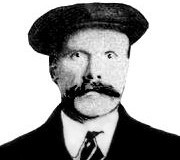 Albert Burrows
Murderer · United Kingdom · 1920
Albert Burrows (also named Albert Edward Burrows): married farm labourer who to…
4 victims
Albert Burrows
Murderer · United Kingdom · 1920
Albert Burrows (also named Albert Edward Burrows): married farm labourer who to…
4 victims
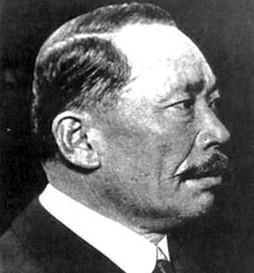 Lock Ah Tam
Murderer · United Kingdom · 1925
Lock Ah Tam was 54 when he killed his wife and two daughters. He had been a suc…
3 victims
Lock Ah Tam
Murderer · United Kingdom · 1925
Lock Ah Tam was 54 when he killed his wife and two daughters. He had been a suc…
3 victims
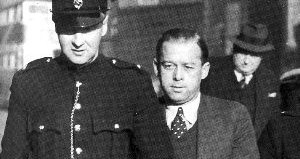 Walter Graham Rowland
Murderer · United Kingdom · 1934
Defendant: Walter Graham Rowland Age: 39 (labourer) Residence/Origin: from Mell…
2 victims
Walter Graham Rowland
Murderer · United Kingdom · 1934
Defendant: Walter Graham Rowland Age: 39 (labourer) Residence/Origin: from Mell…
2 victims
 Donnie Lee Roberts
Murderer · USA · 1991
Donnie Lee Roberts was convicted in Texas of capital murder and was sentenced t…
2 victims
Donnie Lee Roberts
Murderer · USA · 1991
Donnie Lee Roberts was convicted in Texas of capital murder and was sentenced t…
2 victims
 Radcliffe Haughton
Murderer · USA · 2012
Radcliffe Franklin Haughton was tentatively identified as the shooter. He was 4…
3 victims
Radcliffe Haughton
Murderer · USA · 2012
Radcliffe Franklin Haughton was tentatively identified as the shooter. He was 4…
3 victims
 Jesse de la Rosa
Murderer · USA · 1979
Name: Jesse de la Rosa Jesse de la Rosa was executed by lethal injection in Tex…
1 victim
Jesse de la Rosa
Murderer · USA · 1979
Name: Jesse de la Rosa Jesse de la Rosa was executed by lethal injection in Tex…
1 victim
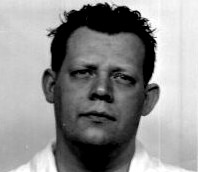 Ronald Clark O'Bryan
Murderer · USA · 1974
Ronald Clark O'Bryan (also recorded as Ronald C. O’Bryan) was executed by letha…
1 victim
Ronald Clark O'Bryan
Murderer · USA · 1974
Ronald Clark O'Bryan (also recorded as Ronald C. O’Bryan) was executed by letha…
1 victim
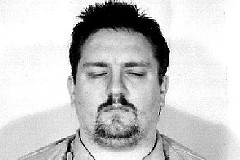 Russell Ernest Boyd
Murderer · USA · 1982
Russell Ernest Boyd was sentenced to death on October 4, 1983. He later receive…
1 victim
Russell Ernest Boyd
Murderer · USA · 1982
Russell Ernest Boyd was sentenced to death on October 4, 1983. He later receive…
1 victim
- Gender
- male
- Country
- United Kingdom
- Location
- Yorkshire, England, United Kingdom
- Date of birth
- 1885
- Age at first offence
- 39
- Characteristics
- robbery
- Victim profile
- Francis Ward, 68 (workmate)
- Method of murder
- Hitting with a hammer
- Date(s) of murder
- October 3, 1924
- Years active
- 1924
- Date of arrest
- Next day
- Status
-
Executed
Executed by hanging in Hull on June 10, 1925
Case details
Hubert Ernest Dalton was a railway platelayer convicted of the murder of a workmate, sixty eight year old Francis Ward.
The offence
Francis Ward was murdered and sustained horrific throat wounds. Ward’s watch and money were taken from his body.
Background
Hubert Dalton and Francis Ward were long time friends and usually spent Friday evenings drinking and playing dominoes in their local pub.
Hubert Dalton was known to friends as “Jerry”. Dalton lived not far from Ward at Poultry House Crossing, while Ward lived at the foot of the incline in Bank Foot Cottage.
Ward was described as a neat, meticulous and thrifty man who worried about the safety of his savings. Ward had a distrust of banks and, since his cottage had been broken into earlier that year and some of his money had been stolen, he always took his savings with him when he left the house. Ward had lent Dalton cash on occasion during the week, and Dalton was described as always managing to pay him back.
Dalton was described as a bit of a spend thrift.
Timeline
- 3 October 1924 (Friday evening) — Ward failed to appear at the pub.
- 4 October 1924 (next morning) — Dalton’s mother-in-law found Ward’s body close to Dalton’s house.
- late afternoon autumn — Ward and Dalton were described as working on the railway line and then going homeward down the Ingleby Incline rail track.
- 11:30 (by Violet, the evening before the discovery) — Violet went outside to see if she could see the light of her father’s lantern coming up the rough track from the Ingelby/Battersby road.
- midnight (by Violet, same evening) — Violet experienced an unexplained shiver of foreboding and had still not seen Ward.
- 2 o’clock (by Violet, same evening) — Violet was almost out of her mind with worry and went outside again and called his name.
- until dawn (by Violet, same evening) — Violet kept vigil until she ran to the nearby cottage of Edward Carpenter.
- after dawn (same day) — Edward Carpenter agreed to call the police; a search revealed Ward’s body lying near a haystack in a pool of blood.
- December 31 (year not specified in record) — Dalton was charged with murdering his friend Frank Ward; committal proceedings were held in Stokesley Town Hall.
- spring 1925 — Dalton was tried before Mr Justice McCardie at York Assizes and pleaded insanity; the jury announced that they had failed to reach a verdict.
- May 1925 — The case was reconvened for the next Assizes at Leeds before the same Judge; Dalton pleaded insanity again.
- 10 June 1925 — Dalton was hanged in Hull by Thomas Pierrepoint and Robert Baxter.
Investigation
Dalton’s mother-in-law found Ward’s body close to Dalton’s house. Ward had horrific throat wounds and had been robbed of his watch and money.
During routine questioning, the police called at thirty nine year old Dalton’s house but he was not home.
A search of the outhouse unearthed Ward’s purse and other items taken from the body.
The police began searching for Dalton and later saw him staggering towards them from the nearby railway line. Dalton had a self inflicted throat wound and claimed he had administered it when the police had arrived at his house just before fleeing.
PC Falgate, stationed at Battersby, described seeing Hubert Dalton in the same field staggering towards the railway embankment where he collapsed. The constable picked him up and discovered his clothes soaked in blood from an apparent cut to the throat.
Later Inspector Prest from Thornaby said how a razor and a linen collar was found in a pool of blood near the corner of the adjoining field.
Dr Robert Murray from Great Ayton was called to attend to Dalton. He sewed up the wound and transferred him to North Ormesby hospital.
In one of the outbuildings at Dalton’s cottage, police discovered a black leather purse containing eleven pounds ten shillings and a railway ticket made out to Frank Ward (his holiday ticket to Whitby).
A sack was also discovered at the far end of the field containing a blood stained hammer.
Arrest and charges
Dalton was charged with murdering his friend Frank Ward.
Committal proceedings were held in Stokesley Town Hall. An incongruous note was struck that the room was gaily decorated in preparation for a ball.
Evidence was heard by Major R.B. Turton and Mr Henry Kitching. The prosecution case was opened by Mr G.R. Paling.
Dalton followed the proceedings in an impassioned manner.
When asked by the clerk — Mr Lowther Carrick — if he had anything to say, the prisoner in a husky voice replied: “I want a solicitor”.
Dalton was remanded to York Assizes.
Trial
Dalton was tried before Mr Justice McCardie at York Assizes in the spring of 1925 and pleaded insanity.
The trial ended when the jury announced that they had failed to reach a verdict. The charge was remitted to the Yorkshire Assizes at Leeds before Mr Justice McCardie and a jury.
At Leeds in May, the defence was insanity and Dalton pleaded not guilty.
Mr G.L.L. Mortimer, KC for the prosecution claimed that Dalton had set out to kill and rob Ward, and later, troubled by the fact that he might not have completed his gruesome task, returned to the body and cut the throat. Mortimer claimed that Dalton, to give the impression that he too had been a victim, had subjected himself to a self inflicted wound.
Medical evidence
Dr Robert Murray examined the victim and found he had received seven wounds to the head, and one of these had penetrated his skull causing a haemorrhage to the brain. He agreed these could have been inflicted by a hammer.
Dr Murray said the throat wound had been done with a sharp instrument and in his opinion had been inflicted some hours after Ward had died.
Defence evidence and testimony
Dalton told the court that on the night in question he had seen Ward approaching his house, but at the time remembered nothing more about it.
Dalton testified that when he got up the following morning he had a headache and when he saw Ward’s body by the haystack he recollected that he had been “chucking a hammer about” and that he had dragged the body there.
Dalton claimed that he did not know that Ward carried his money about with him. He admitted he saw the body near the stack, but he did not remember when he took the money from his pockets.
Mr R.F. Burnand for the defence told the jury that Dalton had suffered an epileptic attack at the time which had temporarily rendered him insane.
Verdict and sentencing
The defence cut no ice with the jury, which took just five minutes to return a verdict of guilty.
Mr Justice McCardie told Dalton that the jury had found him so on the clearest of evidence.
The court usher placed the black cap on the judge’s head. Dalton listened impassively as he heard the “dreaded words -that he was to be taken to a place where he would hang by the neck until dead.”
Dalton was sentenced to death.
Appeals
There was no appeal.
Outcome
Dalton was hanged in Hull on the 10th June 1925 by Thomas Pierrepoint and Robert Baxter.
Other details
Edward Carpenter met the men at the bottom of the incline and gave out their weekly pay packets.
Ward checked his packet and opened it, placing two pounds nine shillings and sixpence in a small purse secured in his back pocket.
Ward’s daughter and housekeeper, Violet, greeted Ward at the door after tea.
Ward changed out of his working clothes and set out along the lonely path for Ingleby Greenhow three miles away.
In one hand he had a lantern, and in the other, he carried a canvas bag containing his life savings of about one hundred pounds. He intended to pay his debts to the village tradesmen with whom he dealt, and later to call in at The Dudley Arms for a pint of beer.
In Ward’s absence, Violet began preparing for their holiday to Whitby the following day.
Violet went outside at 11:30 to see if she could see the light of her father’s lantern coming up the rough track from the Ingelby/Battersby road, and later called his name at two o’clock.
After Edward Carpenter was called, the police search revealed Ward’s body lying near a haystack in a pool of blood. Ward’s skull had been crushed and his throat cut and his pockets were turned out, with his money and two watches missing.
The landlord of the Dudley Arms confirmed that Dalton had been in the pub the previous evening playing dominoes, and had appeared a little agitated when some of the locals had remarked on the absence of Frank Ward.

Spotted an error, or have more information about this case?