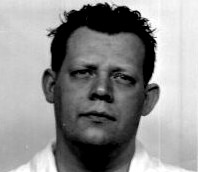
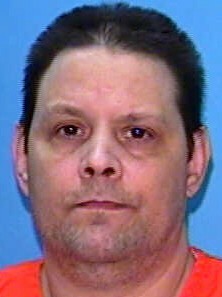
Ronald Clark O'Bryan
Murderer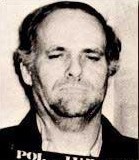 Ervil LeBaron
Murderer · USA · 1972
Ervil Morrell LeBaron (1925 to August 16, 1981) was the leader of a polygamous…
35 victims
Ervil LeBaron
Murderer · USA · 1972
Ervil Morrell LeBaron (1925 to August 16, 1981) was the leader of a polygamous…
35 victims
 Marvin Gray
Murderer · USA · 1975
Marvin Gray was convicted killer who claimed responsibility for 23 slayings and…
23 victims
Marvin Gray
Murderer · USA · 1975
Marvin Gray was convicted killer who claimed responsibility for 23 slayings and…
23 victims
 Yahweh ben Yahweh
Murderer · USA · 1980
Yahweh ben Yahweh was born and legally named Hulon Mitchell Jr. (October 27, 19…
23 victims
Yahweh ben Yahweh
Murderer · USA · 1980
Yahweh ben Yahweh was born and legally named Hulon Mitchell Jr. (October 27, 19…
23 victims
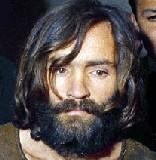 Charles Manson
Murderer · USA · 1969
Charles Milles Manson (born November 12, 1934) was an American criminal and mus…
9 victims
Charles Manson
Murderer · USA · 1969
Charles Milles Manson (born November 12, 1934) was an American criminal and mus…
9 victims
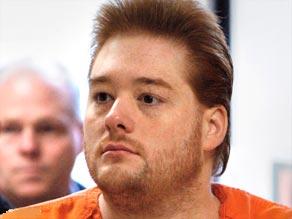 Kevin Underwood
Murderer · USA · 2006
Kevin Ray Underwood (born December 19, 1979) was a convicted murderer from Purc…
1 victim
Kevin Underwood
Murderer · USA · 2006
Kevin Ray Underwood (born December 19, 1979) was a convicted murderer from Purc…
1 victim
 Melissa Webb
Murderer · USA · 2011
Melissa Webb was a Lee County woman who later admitted to the murder of her ex-…
1 victim
Melissa Webb
Murderer · USA · 2011
Melissa Webb was a Lee County woman who later admitted to the murder of her ex-…
1 victim
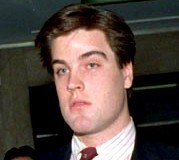 Robert Chambers
Murderer · USA · 1986
Robert Emmet Chambers, Jr. (born 25 September 1966) was an American murderer, n…
1 victim
Robert Chambers
Murderer · USA · 1986
Robert Emmet Chambers, Jr. (born 25 September 1966) was an American murderer, n…
1 victim
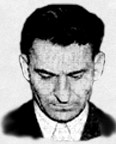 Walter Dworecki
Murderer · USA · 1939
Walter (“Iron Mike”) Dworecki lived in Camden, N.J. He led the First Polish Bap…
1 victim
Walter Dworecki
Murderer · USA · 1939
Walter (“Iron Mike”) Dworecki lived in Camden, N.J. He led the First Polish Bap…
1 victim
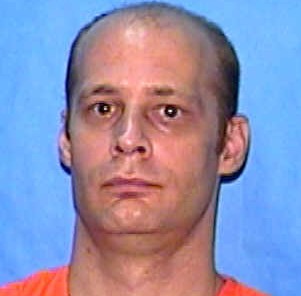 John Christopher Marquard
Murderer · USA · 1991
John Christopher Marquard was sentenced to death on February 5, 1993. The Flori…
1 victim
John Christopher Marquard
Murderer · USA · 1991
John Christopher Marquard was sentenced to death on February 5, 1993. The Flori…
1 victim
- Gender
- male
- Country
- USA
- Location
- Harris County, Texas, USA
- Date of birth
- October 19, 1944
- Age at first offence
- 30
- Characteristics
- poisoner, attempt to collect insurance money
- Victim profile
- Timothy O’Bryan, 8 (his son)
- Method of murder
- Poisoning (cyanide-laced candy )
- Date(s) of murder
- October 31, 1974
- Years active
- 1974
- Date of arrest
- —
- Status
-
Executed
Executed by lethal injection in Texas on March 31, 1984
Case details
Ronald Clark O'Bryan (also recorded as Ronald C. O’Bryan) was executed by lethal injection in Texas on March 31, 1984. He was also referred to by the nickname “The Candyman.”
Status and last statement
O’Bryan’s last statement included an appeal for forgiveness and comments about his death. His last statement was:
“What is about to transpire in a few moments is wrong! However, we as human beings do make mistakes and errors. This execution is one of those wrongs yet doesn’t mean our whole system of justice is wrong. Therefore, I would forgive all who have taken part in any way in my death. Also, to anyone I have offended in any way during my 39 years, I pray and ask your forgiveness, just as I forgive anyone who offended me in any way. And I pray and ask God’s forgiveness for all of us respectively as human beings. To my loved ones, I extend my undying love. To those close to me, know in your hearts I love you one and all. God bless you all and may God’s best blessings be always yours. Ronald C. O’Bryan
P.S. During my time here, I have been treated well by all T.D.C. personnel.”
He was pronounced dead at 12:48 A.M.
Timeline
- October 31, 1974 — O’Bryan’s son Timothy died after eating poisoned candy laced with cyanide.
- September 26, 1979 — O’Bryan’s conviction and sentence were affirmed by the Texas Court of Criminal Appeals.
- 1980 — O’Bryan’s application for a writ of certiorari to the United States Supreme Court was denied.
- September 1, 1982 — O’Bryan’s second application for state habeas corpus relief was denied; an execution date was set for October 31, 1982.
- October 20, 1982 — The district court denied O’Bryan’s application for the writ and a stay of execution.
- October 27, 1982 — A stay was granted pending full appellate review, and a request for a certificate of probable cause was granted.
- August 30, 1983 — The federal appeals decision in Ronald Clark O’Bryan, Petitioner-Appellant, v. W.J. Estelle, Jr., Director, Texas Department of Corrections, Respondent- Appellee (No. 82-2422) was issued.
- March 31, 1984 — O’Bryan was administered a lethal injection by Texas authorities and pronounced dead.
Background
O’Bryan worked as an optician at Texas State Optical Company and had serious financial problems. The family was delinquent on loans and had been forced to sell their home. He increased life insurance coverage on his two children, Timothy and Elizabeth Lane, during 1974. He had previously tried unsuccessfully to obtain cyanide where he worked, and in August 1974 he tried unsuccessfully to obtain cyanide at Texas State Optical Company. In September 1974, he called a friend at Arco Chemical Company and discussed the varieties and availability of cyanide. Shortly before Halloween, he appeared at Curtin Matheson Scientific Company in Houston and asked where he could obtain a smaller amount of cyanide when he discovered the company had cyanide available only in large quantities.
The offence
Victim and method
O’Bryan murdered his eight-year-old son, Timothy, by poisoning candy laced with cyanide in order to collect life insurance proceeds. Cyanide was found in fluids aspirated from Timothy’s stomach and in Timothy’s blood, and the quantity of cyanide in the blood was well above the fatal human dose.
Insurance scheme and planned and executed events
O’Bryan took out life insurance policies on his children. The record reflected months of premeditation and planning, including taking out new and additional life insurance policies on both children as Halloween neared. He also made plans for the children to go trick-or-treating, bought the children’s costumes, and began making plans to spend the money he would collect upon his children’s deaths.
On Halloween, Thursday, October 31, 1974, the O’Bryan family dined at the home of the Bates family. The children of both families planned to go “trick or treating” together in the Bates’ neighborhood. O’Bryan and Mr. Bates accompanied O’Bryan’s children and Bates’ son on the Halloween outing.
When the party arrived at the Melvins’ home, the lights were out, but O’Bryan and the children went up to the home anyway. When no one answered, the children went on to the next house; O’Bryan remained behind for about thirty seconds. He then ran up to the children, “switching” at least two “giant pixy styx” in the air and exclaiming that “rich neighbors” were handing out expensive treats. O’Bryan offered to carry the pixy styx for the children.
Back at the Bates’ home, O’Bryan distributed the pixy styx to his and Bates’ two children and gave a fifth stick to a boy who came to “trick or treat” at the door. After the Halloween festivities were completed, O’Bryan took his children home while his wife went to visit a friend.
Administration and death
O’Bryan informed the children that they could each have one piece of candy before going to bed; Timothy chose the pixy stick. Timothy had trouble getting the candy out of the tube, so O’Bryan rolled the stick in his hand to loosen the candy for his son. When Timothy complained that the candy had a bitter taste, O’Bryan gave him some Kool-Aid to wash it down. Timothy immediately became ill and ran to the bathroom, where he began vomiting. When Timothy became sicker and went into convulsions, O’Bryan summoned an ambulance. Timothy died within an hour after arriving at the hospital.
Additional poisoned candy and attempted cover-up
During the days following Halloween, O’Bryan gave conflicting stories as to the origin of the pixy styx, but he eventually claimed that the pixy styx came from the Melvin home. Mr. Melvin was at work until late in the evening on Halloween. O’Bryan was charged with and convicted of capital murder.
In the sentencing and factual narrative described in the federal appellate decision, O’Bryan attempted to commit murder four more times and intentionally distributed four additional poisoned pixy styx to other children, including the two children of his friend Jimmy Bates, another child who attended O’Bryan’s church, and his own daughter, whose life was also heavily insured. The jury also received evidence of his attempt to implicate another person for the poisoning death by identifying another man as the source of the candy when evidence showed this could not have been true.
There was conflicting testimony at trial concerning the extent to which O’Bryan showed remorse at the hospital and at his son’s funeral.
Handling of remains/other children
Officers retrieved remaining tampered candy before any other children ingested it. An additional child was described as having been given one of the tainted pixy styx and later found asleep in bed with the tube of poisoned candy in his arms, unable to pry out the staples used to reseal the plastic container.
Investigation and evidence
After an investigation, O’Bryan was charged with the murder of Timothy. An insurance agent called police a few days after Timothy was buried, reporting that O’Bryan had taken out policies on the two children shortly before Halloween, unknown to his wife. Detectives also learned that O’Bryan was deep in debt and had been boasting to co-workers at Texas State Optical about his financial health improving. O’Bryan quizzed a customer, a chemist, about poisons, and he seemed particularly curious about potassium cyanide and asked where it could be purchased.
Investigators scoured the family home and found O’Bryan’s pocketknife with traces of plastic and powdered candy stuck to the blade.
Arrest
O’Bryan was arrested and charged after investigation.
Trial
Charges and legal basis
O’Bryan was convicted of murdering his eight-year-old son, Timothy, for remuneration or the promise of remuneration, namely the proceeds from a number of life insurance policies on Timothy’s life, under Tex. Penal Code Ann. § 19.03(a)(3) (Vernon 1974).
Voir dire and juror exclusion issue
O’Bryan’s federal habeas claims included challenges to the exclusion of jurors who expressed conscientious objections to the death penalty. The federal appellate decision addressed the Witherspoon issue, including challenges involving jurors Wells, Pfeffer, and Bowman, which centered on whether the jurors were excluded in accordance with Witherspoon v. Illinois, 391 U.S. 510.
The federal appellate court concluded that the district court’s denial of habeas corpus relief should be affirmed.
Juror Wells
The federal appellate record included the following exchange during Wells’s voir dire, which was transcribed as follows:
“Q. Mr. Wells, I'm Mike Hinton, as the Court told you awhile ago for the State, and this is my co-counsel, Mr. Vic Driscoll. We come here representing the State of Texas in this case in which we are seeking as the punishment for this defendant the penalty of death. Let me begin then by asking you whether or not you have any conscientious, moral or religious scruples against the imposition of the penalty of death in the electric chair?
A. Let me say that morally, I do, and I don't think that I am capable of issuing a penalty of death to any man.
Q. All right. Again, as Judge Price told you a moment ago, no one is here to quarrel with your feelings and you certainly are entitled to your opinions as all of us are in our good country, and that includes your feelings about the death penalty. But under the law I must ask you this further additional question, Reverend, which is, I take it from your answer that you cannot imagine a case of murder where you could, as one of twelve jurors, vote to send someone to the electric chair as a punishment for their offense even though it was authorized by statute?
A. Would you repeat yourself now, please?
Q. Yes, sir. My question that I must ask you then, based upon your former answer is, I take it that because of the feelings that you do have that you are entitled to have, moral feelings, religious feelings, that you cannot imagine a case where you, sitting on a jury, could vote to send someone to death in the electric chair as a punishment for their crime even though the law authorizes such penalty?
A. I can imagine it, but I can't see myself doing it.
Q. All right. Then, I believe we must [be] somewhere between our hypothetical case where you can imagine a jury doing it?A. Yes.
Q. But you can't imagine yourself doing it as one of those jurors, is that correct, sir?
A. I can hardly see myself doing it, yes.
Q. All right. Now, I don't want you to get angry with me and I'm not trying to argue with you, but I have to ask you for your answer, because this lady is taking down your testimony at this time for the record. I take it then from your answer that because of your religious and moral principles and feelings that you are certainly entitled to have, you cannot imagine a case where you would vote for the imposition of death in the electric chair. Is that correct, sir?
A. No, I can't.
MR. HINTON: I thank you, sir. We submit that the juror is not qualified, Your Honor.
EXAMINATION BY THE COURT
Q. Mr. Wells, let me ask you a question before they have the right to ask you questions. Because of your moral or religious scruples, would you, if you were a member of the jury, would you automatically vote against the imposition of capital punishment no matter what the trial revealed?
A. As far as the electric chair is concerned?
Q. Would you personally, if you were a member of a jury, would you automatically vote against the imposition of the death penalty no matter what the trial revealed?
A. Yes, I would.
Q. All right. A. I would vote against it.”
The federal opinion also reproduced further questioning and Wells’s answers during the voir dire, including the exchange:
“Q. All right. You understand of course, nobody would ask you personally to put somebody to death. You understand that. You personally do not have to pull the switch or something?
A. I understand that.
Q. Surely. And of course there's a lot of steps to go to between the time you start trial and the time you end the testimony and the defense puts on their testimony and of course, there's a finding of guilt. You understand that. You do now if you haven't before. Is that correct?
A. Yes.
Q. All right. And then, after a finding of guilt, if there is one, certain questions will be submitted to you as a juror. Now, are you saying at this time that under no circumstances, regardless of what the testimony would be, under no circumstances could you vote for the death penalty?
A. I don't think there are any that I possibly could vote for the death penalty.
Q. All right. Let me ask you this, sir, if you were selected as a juror, even though the State has asked for the death penalty, could you consider these two issues--and I'll ask you the issues that you would perhaps be asked to consider.
A. All right.
Q. ...
Q. And that wouldn't have any trouble with your conscience, would it?
A. No.
Q. Then of course there would be another question, and that would be whether there is [a] probability that the defendant would commit criminal acts of violence that would constitute a continuing threat to society. Now, could you possibly answer that question?
A. Yes, I possibly could answer that question.
Q. And would you have any quarrel or any problem with those questions?
A. I don't think so.
Q. ... Those are merely questions that you answer to the Court. Isn't that correct?
A. I would say yes.
Q. Could you do that, sir?
A. I could be as liberal in answering the questions as I could.
Q. And you would answer those questions truthfully, would you not?
A. Yes, as far as my opinions are concerned.
Q. I know you're a minister, are you not?
A. Yes, sir. That's correct.
Q. And you could answer those questions to the best of your ability and truthfully, could you not?
During review of the Witherspoon issue, the appellate court held the exclusion of Wells for cause was proper under Witherspoon and its progeny.
Juror Pfeffer
The federal appellate record included testimony from juror Pfeffer during voir dire, including these excerpts:
“THE COURT: Well, the law requires that we have to have a definite answer.
JUROR PFEFFER: I understand, right.
THE COURT: Because the law does allow people to be excused because of certain beliefs that could be prejudicial or biased for one side or the other, and both sides just want to know if you can keep an open mind, consider the entire full range of punishment, whatever that may be, and under the proper set of circumstances, if they do exist and you feel they exist, that you could return that verdict. And that's in essence what they're asking.
JUROR PFEFFER: Indirectly, I guess I would have to say no.
THE COURT: You could not?
JUROR PFEFFER: I would have to say no then, to give you a yes or no answer.
THE COURT: Then, am I to believe by virtue of that answer that regardless of what the facts would reveal, regardless of how horrible the circumstances may be, that you would automatically vote against the imposition of the death penalty?
JUROR PFEFFER: As I say, I don't know.
THE COURT: Well, that's the question I have to have a yes or no to.
JUROR PFEFFER: Right.
THE COURT: And you're the only human being alive who knows, Mr. Pfeffer.
JUROR PFEFFER: Right, I understand. If I have to make a choice between yes and no, I would say that I couldn't make the judgment.”
The federal appellate decision quoted further answers from Pfeffer, including:
“THE COURT: From listening to the way you've explained your answers, I take it that you're not necessarily opposed to it, but it would take an extreme set of circumstances for you to ever give it?
JUROR PFEFFER: That's correct.”
During further questioning, the federal appellate decision reproduced:
“Q. ... Then, under no circumstances, Mr. Pfeffer, could you even think of voting or answering those questions if the result of those questions were to be to, in effect, give somebody the death penalty. Is that correct?
A. I think at the present time that's correct, yes.”
The federal appellate court concluded the exclusion of Pfeffer did not violate Witherspoon.
Juror Bowman
The federal appellate decision addressed the exclusion of Bowman for cause. It stated that Bowman’s response about being able to impose the death penalty only if the victim were in his family did not invalidate his exclusion.
Verdict and sentencing at trial
At the sentencing proceeding, the State reintroduced the evidence presented at trial. O’Bryan presented nine lay witnesses who stated that they did not believe he would be likely to be a danger to society in the future. The jury answered two special issues affirmatively and O’Bryan was sentenced to die. The federal appellate decision also described the Texas statute setting up special issues and that, in O’Bryan’s case, the jury answered the required questions affirmatively.
The federal appellate decision described the jury as answering “yes” to the questions put to them as required by Article 37.071(b). The conviction and sentence were affirmed by the Texas Court of Criminal Appeals on September 26, 1979.
Appeals
Federal habeas petition and claims
O’Bryan filed federal habeas corpus relief and contended (1) that exclusion of three jurors who expressed conscientious objections violated Witherspoon v. Illinois; (2) that the Texas death penalty procedure was unconstitutional because it did not provide for jury instructions concerning mitigating circumstances; (3) that constitutional rights were violated when the trial court permitted the prosecutor to comment on defense counsel’s failure to ask defense witnesses certain questions about O’Bryan’s reputation; and (4) that refusal to instruct the jury about parole law as it relates to persons sentenced to life imprisonment violated due process rights.
The federal appeals court held that the denial of habeas corpus relief should be affirmed. It stated it concluded the district court’s denial should be affirmed and included numbered holdings:
- that jurors Wells, Pfeffer and Bowman were not excluded in violation of Witherspoon v. Illinois because each made it unmistakably clear that he could not vote for the death penalty no matter what the law required;
- that O’Bryan’s failure to request an instruction concerning mitigating circumstances at trial precluded him from challenging the court’s failure to give such an instruction;
- that the prosecutor’s comments did not deprive O’Bryan of a fundamentally fair trial; and
- that O’Bryan’s complaint about refusal to give an instruction concerning Texas parole law was not cognizable in federal habeas proceedings.
Rejection of appeals
The federal appellate decision described that O’Bryan appealed his case several times, twice to the Supreme Court, and all appeals were rejected. The decision itself noted that the denial of habeas relief was affirmed.
Sentencing
O’Bryan was sentenced to death at the sentencing proceeding based on the jury’s affirmative answers to the special issues submitted under Tex. Code Crim. Pro. Ann. art. 37.071.
Outcome
Aftermath
After O’Bryan’s crimes became public, Halloween safety programs were implemented in Pasadena, teaching parents methods for evaluating the safety of door-to-door treats by visual inspection.
A musical group, Siouxsie & the Banshees, recorded a song about O’Bryan titled “Candyman,” the first track on their album Tinderbox.
Other details
Education and age
O’Bryan had some college education. He was recorded as being 39 years old at execution and had a listed date range of October 19, 1944 to March 31, 1984.
Quotes attributed to others in the narrative
The federal appellate decision and additional narrative contained statements attributed to specific people. The following were included verbatim:
“the high-water mark of shame in our community.” — Vic Driscoll
“This is a contemporary legend that speaks to our anxiety about kids,”
“Most of us don't believe in ghosts and goblins anymore, but we believe in criminals.” — University of Delaware Professor Joel Best
“We were all shocked that someone would kill their own son, their own flesh and blood, for a lousy ... $40,000 life insurance policy,” — former Harris County Assistant District Attorney Mike Hinton
“I had too much pride in my research,” — Joel Best
“But I think my wife checked them.” — Joel Best
“He didn't have enough strength to get it open,” — Mike Hinton
“It just sends shivers down your spine.” — Mike Hinton
“Candyman,” — Siouxsie & the Banshees (song title)
Prosecutor closing argument quote
The federal appellate decision included a quote from the prosecutor during closing statement:
Prosecutorial comments about witnesses
The federal appellate decision reproduced the prosecutor’s remarks as follows (verbatim):
“People that know [the defendant] and know him well told you he is not worthy of belief under oath. He has a bad reputation for truth and veracity. You didn't hear any of the witnesses that he called say anything about his reputation in the community for being a peaceful and a law abiding citizen, or for being a person of truth and veracity. No, and they weren't asked that question by these defense lawyers because those witnesses would have told you the truth in that respect. They have a moral obligation if, in fact, this defendant has a good reputation in his community for being a peaceful citizen, a law abiding citizen, a citizen of truth, a citizen of veracity, to come in here and bring you those witnesses, and there are none.”
Named individuals in the appeal
The federal appellate decision named the following:
- Patrick E. Higginbotham (Circuit Judge)
- Randall and Higginbotham (Circuit Judges)
- Buchmeyer (District Judge)
- Mike Hinton (State prosecutor at voir dire excerpts)
- Vic Driscoll (co-counsel referenced in voir dire; also prosecutors in the case)
- W.J. Estelle, Jr. (Director, Texas Department of Corrections) as Respondent-Appellee
- Ronald Clark O’Bryan (Petitioner-Appellant)
- Jurors Wells, Pfeffer, and Bowman
Trial courts and other references
The federal appellate decision referenced:
- Texas Court of Criminal Appeals
- United States District Court for the Southern District of Texas
- United States Supreme Court
- Texas Code of Criminal Procedure, including article 37.071
- Tex. Penal Code Ann. § 19.03(a)(3) (Vernon 1974)
Spotted an error, or have more information about this case?