Willie Clisby
Homicide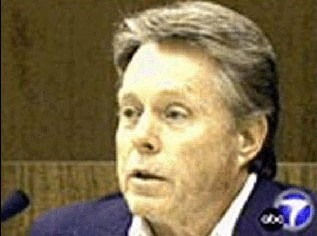 Edward Charles Allaway
Homicide · USA · 1976
Edward Charles Allaway Edward Charles Allaway was found not guilty by reason of…
7 victims
Edward Charles Allaway
Homicide · USA · 1976
Edward Charles Allaway Edward Charles Allaway was found not guilty by reason of…
7 victims
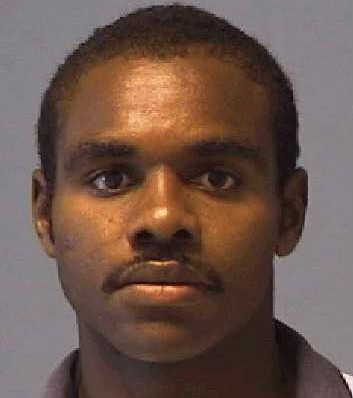 Clinton Bankston
Homicide · USA · 1987
15 August 1987 — Ann Morris (63), her sister Sally Nicholson (59), and Sally’s…
5 victims
Clinton Bankston
Homicide · USA · 1987
15 August 1987 — Ann Morris (63), her sister Sally Nicholson (59), and Sally’s…
5 victims
 David Francis Brom
Homicide · USA · 1988
David Francis Brom (born October 3, 1971) killed his parents, brother, and sist…
4 victims
David Francis Brom
Homicide · USA · 1988
David Francis Brom (born October 3, 1971) killed his parents, brother, and sist…
4 victims
 Richard Drinkard
Murderer · USA · 1985
Richard Gerry Drinkard was convicted in Texas of capital murder in the deaths o…
3 victims
Richard Drinkard
Murderer · USA · 1985
Richard Gerry Drinkard was convicted in Texas of capital murder in the deaths o…
3 victims
 James William Hamblen
Murderer · USA · 1984
James William Hamblen was a state prisoner in Florida who was condemned to die.…
2 victims
James William Hamblen
Murderer · USA · 1984
James William Hamblen was a state prisoner in Florida who was condemned to die.…
2 victims
 Gordon Wardell
Murderer · United Kingdom · 1994
Gordon Wardell was the husband of Carol Wardell. Carol Wardell was the manager…
1 victim
Gordon Wardell
Murderer · United Kingdom · 1994
Gordon Wardell was the husband of Carol Wardell. Carol Wardell was the manager…
1 victim
- Gender
- male
- Country
- USA
- Location
- Jefferson County, Alabama, USA
- Date of birth
- 1948
- Age at first offence
- 31
- Characteristics
- robbery, alcohol, drug addict
- Victim profile
- Fletcher Handley, 58
- Method of murder
- Beating with an ax
- Date(s) of murder
- November 15, 1979
- Years active
- 1979
- Date of arrest
- Same day
- Status
-
Executed
Executed by electrocution in Alabama on April 28, 1995
Name
Willie Clisby
Status
Willie Clisby was executed by electrocution in Alabama on April 28, 1995.
Background
Willie Clisby was diagnosed as mentally ill. He was described as borderline mentally retarded and having a long history of drug and alcohol abuse.
A federal judge had declared that Clisby’s death sentence was unconstitutional and unfair because Clisby was denied the resources to prove his mental illness. The state appealed, and the ruling was reversed by a higher federal court.
The offence
Willie Clisby, Jr. broke into the home of Fletcher Handley, a 58 year-old, handicapped black man. Clisby stole eighty dollars from Handley and killed him with an ax. The killing occurred in a break-in at Handley’s home in Birmingham in 1979.
Clisby was convicted under Alabama Code Sec. 13-11-2(a)(4) of night-time burglary during which the victim is intentionally killed. The jury recommended the death penalty, and the judge imposed the death penalty.
Willie Clisby was convicted of killing an acquaintance with an ax in a robbery and was executed as scheduled for an early execution in Alabama.
Investigation
Willie Clisby was arrested on November 15, 1979.
Pursuant to a court order, Dr. Robert Estock examined Clisby for competency to stand trial on December 7, 1979. Counsel for Clisby did not object to the adequacy of Dr. Estock’s competency examination.
Trial
Competency and psychiatric examinations
Clisby underwent psychiatric evaluations relevant to competency to stand trial and to sentencing proceedings.
Clisby’s trial occurred after he was convicted of night-time burglary during which the victim was intentionally killed. The jury recommended the death penalty, and the judge imposed it.
Psychiatric assistance for sentencing
Ake v. Oklahoma was litigated as a due process issue regarding access to competent psychiatric assistance for sentencing purposes. Clisby argued that psychiatric assistance was not timely enough to allow mitigating evidence to be considered by the advisory jury and that the assistance was inadequate.
Dr. John Callahan, a psychiatrist affiliated with the University of Alabama School of Medicine in Birmingham, was appointed. Dr. Callahan examined Clisby twice over the course of several days, performed tests, and interviewed him.
Dr. Callahan determined that Clisby was able to stand trial and understood the nature and implications of the charges and was aware of the requirements of law. Dr. Callahan also determined that Clisby suffered from no mental disorder except “possibly anti-social personality disorder.” Dr. Callahan also determined that Clisby may have been under the voluntary influence of alcohol or other mind altering drugs at the time of the crime.
After an evidentiary hearing at which Dr. Callahan testified, the trial judge again sentenced Clisby to death in May 1983. The trial judge recognized Clisby’s personality disorder as a mitigating factor, while determining that aggravating factors outweighed mitigating factors.
Sentencing
First death sentence and vacatur
Clisby’s first death sentence was handed down in February 1981. It was vacated by Alabama’s highest court.
Upon remand, the trial court granted Clisby’s counsel’s motion for additional psychiatric examination and appointed Dr. John Callahan.
Subsequent death sentence
After Dr. Callahan’s examination and testimony, the trial judge sentenced Clisby to death again in May 1983. The two aggravating circumstances were that the murder had occurred during a burglary and that the defendant had been previously convicted of another violent felony.
A district court granted habeas relief under Ake based on psychiatric assistance during the sentencing phase, but the appellate court vacated the grant and remanded for further proceedings consistent with the opinion.
Following remand after appellate proceedings, the judge sentenced Clisby to death again.
Appeals
Federal appellate proceedings on habeas relief and Ake
A panel opinion vacated the grant of habeas relief and remanded. The panel withdrew its original opinion and issued a new opinion reaching the same result on different grounds.
The United States Court of Appeals, Eleventh Circuit, reversed the district court’s order granting habeas relief and affirmed it on all other grounds, and remanded for disposition of all remaining claims. The court instructed district courts to resolve all constitutional claims in one federal habeas proceeding under 28 U.S.C. § 2254 before granting or denying relief.
In Clisby’s Ake-related challenge, the appellate court held that Ake requires access to a neutral or independent competent psychiatrist and that the state meets its obligation when it provides a properly qualified psychiatrist. The court held Dr. Callahan was a competent psychiatrist for Ake purposes based on education, training, licensure, and experience.
The appellate court declined to reach whether Ake applied retroactively to final convictions preceding Ake, because it found the claim without merit.
The appellate court also indicated that some Sixth and Eighth Amendment claims relating to alleged incompetence of psychiatric assistance were reserved because the district court had not yet ruled on them.
Supreme Court decision on a stay
As the scheduled 12:01 A.M. execution approached, the Supreme Court denied a stay in a 6-to-3 ruling.
Specific appellate docket and dates included in the record
- United States Court of Appeals, Eleventh Circuit (No. 89-7209), July 25, 1990: appeal from the United States District Court for the Northern District of Alabama.
- United States Court of Appeals, Eleventh Circuit, May 4, 1992: appeals from the United States District Court for the Northern District of Alabama.
- 93-6537), July 12, 1994: appeal from the United States District Court for the Northern District of Alabama.
Outcome
Aftermath
Inmates in the cells above the execution chamber at Holman Prison started banging on the walls as the scheduled 12:01 A.M. execution approached. Clisby, 47, sat impassively in the chair and made no last statement.
Clisby was convicted of killing Fletcher Handley, 58, in a break-in at Handley’s home in Birmingham in 1979. The two men had worked together at a cemetery.
In Clisby’s final appeals, his lawyer argued that the electric chair was a cruel form of punishment. Judge A. L. Edmondson of the United States Court of Appeals for the 11th Circuit rejected the request for a stay of the execution.
Other details
Dr. John Callahan testimony quoted verbatim
Dr. Callahan testimony included the following verbatim excerpts:
Q. Could you give us, please, sir, some of your educational background? A. Yes, sir. Q. As it relates to your medical training. A. I received my medical training at the University of Rome, Italy. I graduated from there in 1960 and came to the United States. Did an internship at the [sic] New York State at Lawrence Hospital for one year, did a two year residency in anaesthesia at the Grasslands Hospital which is the West Chester Hospital. Went to Boston for one year of fellowship in anaesthesia for open heart surgery and practiced as anesthesiologist on Long Island at Mercy Hospital on [sic] Rockefeller Center in New York for approximately thirteen years. I decided to go into psychiatry and took a residency training program PGY two and three at Cherokee Mental Health Institute in Cherokee, Iowa and transferred for my third year of specialty training to the University of Alabama and graduated from that program in approximately October 1979. Since that time I'm also licensed in the State of Alabama.... I have been licensed in medicine since 1961 in New York State and Mississippi. After starting as attending assistant professor at the University of Alabama following my training one year later I took and passed the written boards for the American Board of Psychiatry and Neurology and one year later I passed and completed taking the oral portion in 1982 of June [sic]. I have been working for about three years at the Smolian Clinic in the out patient department, the crisis center and I worked about two one-half days a week at the County Jail doing interviews for competency. .... Q. I notice on Defendant's Exhibit Number One, please, sir, there is a category there that says, reason for interview and item one is checked which states competency and then handwritten out beside that is the word stand trial, is that correct? A. Yes, sir, that is my feeling that was what it was for. Q. If that was the purpose of the interview what are you looking for in that regard during your interview? .... A. I would divide it roughly into two parts even three. Number one the persons [sic] ability to understand legal proceedure [sic]. His understanding of legal proceedure [sic]. The function of the jury, the function that the judge performs in the Courtroom. The various attorney [sic] in the Courtroom, his understanding of his charges. His understanding of the seriousness of his charges, possible penalties that he faces from the charges, just get a general idea of how much he knows about the legal system. I would then be interested in finding out if this person had any of the recognized mental illnesses. Q. What do you mean if he had any recognized mental illnesses? A. Well, whether I detect any types of psychosis, neurosis or character disorder or whatever. Whether he was perhaps organically impaired leading to dementia and diminished intellectual capacity or diminished memory. .... Q. Was that what you have outlined to us just now was that in fact, the nature of the interview that you had with Mr. Clisby? A. Yes, sir, and to add the third item which I didn't. I would also be interested during the interview to see what his report [sic]--how he developed report [sic] with me and if he would be able to do that with his attorney in aiding in his own defense. .... Q. What test did you give Mr. Clisby during this interview, if anything? .... A. Number one I think I did a mental status examination which tests the patient's memory, intellectual functioning, perceptions, judgments, insights. I did some tests to determine his ability to do calculations. I did specific tests to determine his ability to register new items, to recall new items, to test his long and short term memory. Q. Did you do any other tests? A. In the line of general psychiatric examination I questioned him regarding various symptoms of the major mental illinesses [sic].
Q. What questions did you ask Mr. Clisby? A. At the time of that examination I went into as much as the Defendant would allow the circumstances around which the events occurred which brought him to trial. His past psychiatric history. I discussed his family relationships and what influence they might have had on his present condition. I attempted to elicit any evidence of an emotional or mental disturbance which may have influenced his actions. I tried to determine what his capacity for understanding the nature of his act and conforming his behavior to the requirements of the law might be. Q. And at the time, ... you were made aware that there was a previous homicide? A. Yes, sir. Q. As well as a homicide involved in the present case, is that correct? A. Yes, sir. Q. So, you were aware of two homicides? A. Yes, sir. Q. And you were aware some what [sic] of his family background, the fact that his mother is deceased as well as his father, is that correct? A. Yes, sir. Q. And he was raised by someone other than his parents from adolescent years on? A. Yes, sir. Q. With those facts in mind would that give you any indication that there may be some disorder with Mr. Clisby? A. In speaking to the Defendant I was unable to determine any disorder other than possibly anti-social personality disorder. Q. What do you mean anti-social personality disorder? A. That he has had difficulty in the past in conforming his conduct to the rules of society. That he is not respectful of the rights of others, that he has a poor work history. That his ability or his---- [sic] to set long term goals is somewhat different.
Claims and reserved matters included in the record
The appellate court described that Clisby’s petition had sixteen “grounds for relief” breaking down into twenty-five separate constitutional claims, including claims relating to psychiatric assistance and ineffective assistance of counsel, Miranda rights, jury composition, appellate review, proportionality and discrimination claims, closing argument, and resentencing.
Specific quoted arguments and responses during sentencing proceedings
During the sentencing hearing on remand, the following quoted exchange appeared:
Q. Have you ever had occasion to read or become aware of Alabama's capital homicide statute and the listing or verbage [sic] of the aggravating and mitigating circumstances contained therein? A. No, I haven't. Q. Are you familiar with the capital murder statute at all? A. Only vaguely? Q. And yet you have been dealing in the psychiatric field as it concerns criminal conduct or criminals for three or three and one-half years? A. I have not been called in to testify in regard to the mitigating circumstances in a capital murder case. I didn't feel that today I was going to be called in to that. I was seeing the patient as was listed on the things for competency to stand trial and therefore I didn't review that law.
When petitioner's counsel responded to the trial court during the sentencing proceedings:
When the trial court inquired whether “[i]n view of Doctor Callahan's testimony ... the defendant wish[ed] to be further examined,” counsel for petitioner responded “Yes, sir, sure do.”
Earlier, counsel acknowledged:
“[w]e had a doctor who testified here today ... that [petitioner] is competent to stand trial.” (Emphasis supplied.)
Counsel also stated:
“competency to stand trial is not the test and is not the criteria [sic] which is put in the statute concerning the proof or availability of proving mitigating circumstances.”
Other individuals and roles named in the record
- Charlie Jones, Warden, Holman Unit, Alabama Department of Corrections (respondent-appellant/cross-appellee in earlier federal appellate proceedings)
- Judge A. L. Edmondson (11th Circuit)
- United States Court of Appeals, Eleventh Circuit judges included: EDMONDSON and COX; TJOFLAT, Chief Judge and FAY, KRAVITCH, HATCHETT, ANDERSON, EDMONDSON, COX, BIRCH and DUBINA
- Fred Smith, Commissioner, Alabama Department of Corrections; W.E. Johnson, Warden, Holman Unit (respondents-appellees in a later appeal)
Spotted an error, or have more information about this case?