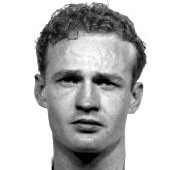
Charles William Bass
Murderer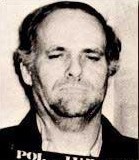 Ervil LeBaron
Murderer · USA · 1972
Ervil Morrell LeBaron (1925 to August 16, 1981) was the leader of a polygamous…
35 victims
Ervil LeBaron
Murderer · USA · 1972
Ervil Morrell LeBaron (1925 to August 16, 1981) was the leader of a polygamous…
35 victims
 Brian Kevin Rosenfeld
Murderer · USA · 1985
Brian Kevin Rosenfeld Brian Kevin Rosenfeld was sentenced to three concurrent l…
23 victims
Brian Kevin Rosenfeld
Murderer · USA · 1985
Brian Kevin Rosenfeld Brian Kevin Rosenfeld was sentenced to three concurrent l…
23 victims
 Marvin Gray
Murderer · USA · 1975
Marvin Gray was convicted killer who claimed responsibility for 23 slayings and…
23 victims
Marvin Gray
Murderer · USA · 1975
Marvin Gray was convicted killer who claimed responsibility for 23 slayings and…
23 victims
 Yahweh ben Yahweh
Murderer · USA · 1980
Yahweh ben Yahweh was born and legally named Hulon Mitchell Jr. (October 27, 19…
23 victims
Yahweh ben Yahweh
Murderer · USA · 1980
Yahweh ben Yahweh was born and legally named Hulon Mitchell Jr. (October 27, 19…
23 victims
 Olaf Däter
Serial killer · Germany · 2001
Olaf Däter (born September 25, 1969 in Bremerhaven) was a German serial killer…
5 victims
Olaf Däter
Serial killer · Germany · 2001
Olaf Däter (born September 25, 1969 in Bremerhaven) was a German serial killer…
5 victims
 Edward Lester Gibbs
Murderer · USA · 1950
Edward Lester Gibbs Edward Lester Gibbs was electrocuted in Pennsylvania on Apr…
1 victim
Edward Lester Gibbs
Murderer · USA · 1950
Edward Lester Gibbs Edward Lester Gibbs was electrocuted in Pennsylvania on Apr…
1 victim
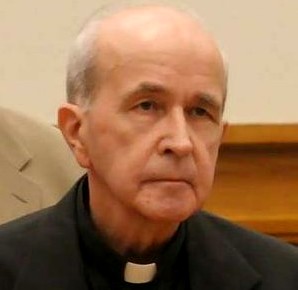 Rev. Gerald Robinson
Murderer · USA · 1980
Rev. Gerald Robinson (born April 14, 1938) was an American murderer and a Roman…
1 victim
Rev. Gerald Robinson
Murderer · USA · 1980
Rev. Gerald Robinson (born April 14, 1938) was an American murderer and a Roman…
1 victim
 Deidre Hunt
Murderer · USA · 1989
Deidre Michelle Hunt was born 2/9/69. She was sentenced from Volusia County on…
2 victims
Deidre Hunt
Murderer · USA · 1989
Deidre Michelle Hunt was born 2/9/69. She was sentenced from Volusia County on…
2 victims
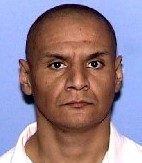 Santos Minjarez
Murderer · USA · 2001
Santos Minjarez was convicted of capital murder and sentenced to death on March…
1 victim
Santos Minjarez
Murderer · USA · 2001
Santos Minjarez was convicted of capital murder and sentenced to death on March…
1 victim
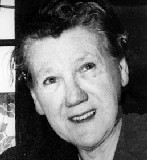 Mary Elizabeth Wilson
Serial killer · United Kingdom · 1955
Mary Elizabeth Wilson (c. 1893 - 1963), also known as the Merry widow of Windy…
4 victims
Mary Elizabeth Wilson
Serial killer · United Kingdom · 1955
Mary Elizabeth Wilson (c. 1893 - 1963), also known as the Merry widow of Windy…
4 victims
- Gender
- male
- Country
- USA
- Location
- Harris County, Texas, USA
- Date of birth
- January 10, 1957
- Age at first offence
- 22
- Characteristics
- robbery
- Victim profile
- Charles Henry Baker, 51 (Houston City Marshall)
- Method of murder
- Shooting (.380 automatic pistol)
- Date(s) of murder
- August 16, 1979
- Years active
- 1979
- Date of arrest
- 4 days after
- Status
-
Executed
Executed by lethal injection in Texas on March 12, 1986
Case details
Name: Charles William Bass Case number: 662 Age: 29
Timeline
- 1979 — Charles William Bass murdered a uniformed police officer, Charles Henry Baker, while Baker was attempting to apprehend him after catching Bass with loot from a bar robbery.
- 1980 — Charles William Bass was tried and his state conviction and death sentence were later confirmed on direct appeal.
- 1981 — Bass v. State, 622 S.W.2d 101 (Tex.Cr.App.1981), confirmed Bass’s state conviction and death sentence.
- February 4, 1983 — Charles William Bass, Petitioner-Appellant, v. W. J. Estelle, Jr., Director, Texas Department of Corrections, Respondent-Appellee: Fifth Circuit appeal heard.
- May 19, 1983 — Charles William Bass, Petitioner-appellant, v. W. J. Estelle, Jr., Director, Texas Department Of Corrections, Respondent-appellee: rehearing matter addressed with denial of petition for rehearing.
- December 20, 1985 — An execution was scheduled for March 12, 1986.
- March 5, 1986 — A successive petition for writ of habeas corpus and motion for stay of execution were filed in the district court.
- March 10, 1986 — The successive petition for writ of habeas corpus and motion for stay of execution were denied in the district court.
- March 11, 1986 — Charles William Bass appealed those denials to the Fifth Circuit seeking a stay; the panel addressed a certificate of probable cause.
- March 12, 1986 — Charles William Bass was executed by lethal injection and declared dead at 1:21 a.m. EST at the Walls Unit of the Texas Department of Corrections.
- April 12, 1986 — The case summary listed an additional date under “Date of Execution” for Charles William Bass.
The offence
In 1979, Charles William Bass murdered a uniformed police officer, Charles Henry Baker. The appellate opinion stated that Baker had caught Bass “red-handed with loot from a bar robbery that he had just committed,” and was attempting to apprehend him when the shooting occurred.
Investigation
Charles Henry Baker was investigating a $300 holdup when he stopped Bass who was walking down the street. A fight ensued in which Bass was injured and Baker was fatally wounded.
Arrest
Charles William Bass was later arrested in Kentucky after relatives tipped police off to his whereabouts.
Trial
Charles William Bass’s state conviction and death sentence were confirmed on direct appeal. The direct appeal confirmation is reflected in Bass v. State, 622 S.W.2d 101 (Tex.Cr.App.1981).
Venire issues: Witherspoon and waiver (Mrs. Marian Hall)
Bass asserted that one member of the venire, Mrs. Marian Hall, was improperly excused under Witherspoon v. Illinois, 391 U.S. 510 (1968), and Adams v. Texas, 448 U.S. 38 (1980). The appellate opinion described her testimony as indicating she was “an educated, intelligent woman of strong character” and that she had scruples against the death penalty. It also stated that she said she could follow the law, and that she could assess the penalty “if there’s no other way to make sure they are not back on the streets.” The opinion further stated that she later indicated she would be unable to take the required oath under Texas law regarding the mandatory death penalty.
The appellate court assumed, “without deciding,” that Mrs. Hall’s dismissal was improper but held Bass’s failure to object waived the point because Texas required a contemporaneous objection to exclusion of a venireman to preserve the issue for review.
“if there’s no other way to make sure they are not back on the streets.”
Juror Turner (Marilyn Turner) and refusal to discharge juror
About a month after being selected as the fourth juror and before trial commenced, Juror Marilyn Turner awakened to find a knife-bearing intruder in her bedroom. She approached the court seeking to be excused due to doubts about her impartiality, distraction resulting from her fright, and inability to concentrate. At a hearing, she testified to her agitated state, including physical symptoms such as nausea and sleeplessness, but also testified that she was willing to perform her civic duty and would do her best to follow the court’s instructions on the law.
Bass refused to consent to her release unless he was granted additional peremptory challenges after his peremptory challenges were exhausted. The trial court declined to grant additional peremptory challenges or discharge her, and the Texas Court of Criminal Appeals agreed.
Bass claimed the determinations violated his constitutional rights to due process and an impartial jury, and the appellate court rejected these contentions, concluding there was no abuse of discretion.
Refusal of continuance for new counsel
Two days before trial, Bass sought permission to dismiss his court-appointed counsel and for a continuance to permit his representation by new counsel from Alabama, counsel who knew nothing of the case and were just commencing a lengthy trial in Georgia. Bass’s case had been set for trial for two months. The court refused these requests after hearing argument.
Bass asserted that refusing these requests denied him effective assistance of counsel; the appellate opinion rejected the contention.
Sentencing
Bass was convicted and sentenced to death. The appellate court noted that his state conviction and death sentence were confirmed on direct appeal and reflected in Bass v. The later federal proceedings addressed challenges to the conviction and death sentence.
Appeals
Fifth Circuit appeal (82-2341) and scope of review
Charles William Bass, Petitioner-Appellant, v. W. J. Estelle, Jr., Director, Texas Department of Corrections, Respondent-Appellee, No. 82-2341, was decided by the Fifth Circuit on February 4, 1983, arising from an appeal from the United States District Court for the Southern District of Texas.
The appellate opinion addressed:
- Witherspoon issue regarding Mrs. Marian Hall and Bass’s waiver.
- Juror Turner and the refusal to discharge juror.
- Refusal of continuance for new counsel.
- A motion to dismiss without prejudice and arguments relating to ineffective assistance claims.
The opinion stated that it declined to reach claims not presented to the state courts or the court below and denied the motion to dismiss.
Remand for hearing on exhausted ineffective-assistance claims
The appellate court addressed claims of ineffective assistance of counsel that had been exhausted in state courts and advanced in the court below. It listed trial counsel ineffectiveness claims as stemming from:
- Counsel’s failure to investigate the offense in question.
- Counsel’s failure to challenge, legal proffer, the initial stop, search and subsequent arrest of the defendant.
- Counsel’s failure to challenge the identification procedure and legal proffer that the proceeding was tainted by an illegal confession.
- Counsel’s failure to exercise the fundamental right of cross-examination regarding Witherspoon jurors. Additionally, Bass presented and exhausted a claim regarding counsel’s failure to object to the dismissal of Mrs. Hall.
The appellate opinion stated that no hearing had ever been held on these exhausted claims and remanded the cause to the district court for a hearing on the exhausted claims. It stated that no others needed to be considered and affirmed in all other respects.
Special concurrence by Goldberg
GOLDBERG, Circuit Judge, wrote a special concurrence stating he concurred in the result but regretted aspects of the analysis in the majority opinion, including what he described as an apologia juxtaposed to the remanding words.
“I concur in the result in this case, but write with a regretful pen because I do not embrace the apologia juxtaposed to the remanding words.”
The concurrence stated that he agreed with remanding for a hearing on Bass’s exhausted claims of ineffective assistance of trial counsel and addressed the necessity of close scrutiny in death penalty cases, including references to Supreme Court reasoning.
The special concurrence included extensive quoted constitutional reasoning and referenced several Supreme Court cases.
Petition for rehearing denial (May 19, 1983) (Henry v. Wainwright discussion and related Texas decisions)
W. J. Estelle, Jr., Director, Texas Department Of Corrections, Respondent-Appellee; 784 F.2d 658 (May 19, 1983) addressed Bass’s motion for rehearing.
In the motion for rehearing, Bass contended that three Texas decisions handed down since submission abolished the state’s contemporaneous objection rule as to jurors wrongfully excluded under provisions of Texas state law, prior to Adams v. Texas, and argued the rule was not strictly and regularly applied. The Fifth Circuit found that the Texas decisions relied on by Bass did not go as far as Bass argued. The court concluded that Texas’s contemporaneous objection rule required some expression of dissent from the dismissal of a juror before it could be complained of on appeal and stated it saw no basis to re-examine its holding.
The court denied the petition for rehearing.
“IT IS ORDERED that the petition for rehearing filed in the above entitled and numbered cause be and the same is hereby DENIED.”
Successive habeas petition and execution stay motion (86-2151)
O. L. McCotter, Director, Texas Department of Corrections, Respondent-Appellee; No. 86-2151; March 11, 1986 was decided in the Fifth Circuit.
PER CURIAM:
- The execution was scheduled for March 12, 1986.
- The successive petition for writ of habeas corpus and motion for stay of execution were filed March 5 and denied March 10.
- Despite denial of the writ, the district judge granted a certificate of probable cause, and the Fifth Circuit stated it was obliged to address the merits.
- The Fifth Circuit held telephonic conference hearings on March 10 and again on March 11.
The Fifth Circuit concluded that claims were conclusively refuted by the state habeas court’s findings. It stated that the record supported the state habeas court’s findings and held that Cuyler v. Sullivan did not apply because there was no showing of conflict of interest for the person found to have represented Bass at trial, and the conflict claim was directed at another person found by the trial court not to have acted as trial counsel.
The court:
- Affirmed the denial of habeas.
- Denied the motion for stay of execution.
“The order denying habeas is AFFIRMED, and the motion for stay of execution is DENIED.”
Outcome
Charles William Bass was executed by lethal injection in Texas on March 12, 1986 and was declared dead at 1:21 a.m.
Last statement and last words
Bass’s last statement included: “I deserve this. Tell everyone I said goodbye.” The case summary also included “Don’t feel bad, Momma. I deserve this.” as his famous last words. The summary stated that Bass refused his last meal and ate only a cheese sandwich and coffee four hours before his execution.
“I deserve this. Tell everyone I said goodbye.”
“Don’t feel bad, Momma. I deserve this.”
Execution context mentioned in the case summary
The execution date was set for both Bass and another convicted murderer, Roger “Animal” DeGarmo. DeGarmo was granted a last minute stay. The case summary also stated that Bass died eight minutes after his lethal injection.
Aftermath
The case summary stated that Charles Bass’s story was the subject of a documentary titled “Murder in Houston,” directed by Frenchman Francois Richenbach.
Other details
The case summary stated that Bass was the 52nd executed in the nation since 1976 reinstatement of the death penalty.

Spotted an error, or have more information about this case?