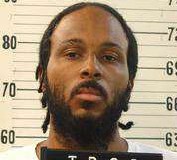
Cristopher Anthony Davis
Murderer Brian Kevin Rosenfeld
Murderer · USA · 1985
Brian Kevin Rosenfeld Brian Kevin Rosenfeld was sentenced to three concurrent l…
23 victims
Brian Kevin Rosenfeld
Murderer · USA · 1985
Brian Kevin Rosenfeld Brian Kevin Rosenfeld was sentenced to three concurrent l…
23 victims
 Russell Ellwood
Murderer · USA · 1991
Russell Ellwood was a former taxi driver. Authorities suspected him of killing…
20 victims
Russell Ellwood
Murderer · USA · 1991
Russell Ellwood was a former taxi driver. Authorities suspected him of killing…
20 victims
 Robert Martines Perez
Murderer · USA · 1994
Name: Robert Martines Perez · Other name used in proceedings: Robert Martinez P…
15 victims
Robert Martines Perez
Murderer · USA · 1994
Name: Robert Martines Perez · Other name used in proceedings: Robert Martinez P…
15 victims
 Billy Frank Vickers
Murderer · USA · 1993
Billy Frank Vickers Vickers was executed by lethal injection in Texas on Januar…
14 victims
Billy Frank Vickers
Murderer · USA · 1993
Billy Frank Vickers Vickers was executed by lethal injection in Texas on Januar…
14 victims
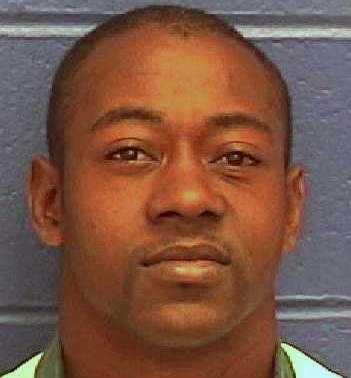 Timothy Tyrone Foster
Murderer · USA · 1986
Timothy Tyrone Foster was 29 when he was sentenced to death in Floyd County in…
1 victim
Timothy Tyrone Foster
Murderer · USA · 1986
Timothy Tyrone Foster was 29 when he was sentenced to death in Floyd County in…
1 victim
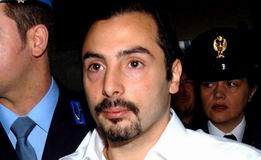 Nicola Sapone
Murderer · Italy · 2004
Nicola Sapone was one of the members of the suspected satanic cult “The Beasts…
3 victims
Nicola Sapone
Murderer · Italy · 2004
Nicola Sapone was one of the members of the suspected satanic cult “The Beasts…
3 victims
 Changyin & Changping Shen
Serial killers · China · 1999
Changyin Shen and Changping Shen were convicted and sentenced to death for kill…
12 victims
Changyin & Changping Shen
Serial killers · China · 1999
Changyin Shen and Changping Shen were convicted and sentenced to death for kill…
12 victims
 Lizzie Borden
Murderer? · USA · 1892
Lizzie Andrew Borden (July 19, 1860 – June 1, 1927) was an American woman who w…
2 victims
Lizzie Borden
Murderer? · USA · 1892
Lizzie Andrew Borden (July 19, 1860 – June 1, 1927) was an American woman who w…
2 victims
- Gender
- male
- Country
- USA
- Location
- Davidson County, Tennessee, USA
- Date of birth
- October 15, 1976
- Age at first offence
- 19
- Characteristics
- robbery, kidnapping
- Victim profile
- Adriane Dickerson, 12 / Gregory Ewing, 18, and D'Angelo Lee, 19
- Method of murder
- Shooting
- Date(s) of murder
- 1995 / February 27, 1996
- Years active
- 1995–1996
- Date of arrest
- February 27, 1996
- Status
-
Death sentences affirmed; execution scheduled for March 15, 2005, unless otherwise ordered by this Court or other proper authority
Parties
- Defendant: Christopher Anthony Davis (also referred to as Christopher A. Davis), a Nashville recruiter for the Gangster Disciples gang; convicted of killing execution-style slayings of two cousins, Gregory Ewing and D'Angelo Lee.
- Co-defendant and fellow gang member: G'dongalay Parlo Berry (referred to as Gdongalay Berry).
- District Attorney General: Victor S. Johnson
- Trial judge: J. Randall Wyatt Jr. (also referenced as J. Randall Wyatt)
Timeline
- February 27, 1996 — Antonio Cartwright testified that he was smoking marijuana in an apartment located on Herman Street in Nashville with Christopher Davis, Yakou “Kay” Murphy, Gdongalay Berry, and an individual nicknamed “Sneak.”
- Early morning of February 28, 1996 — The bodies of Gregory Ewing and D'Angelo Lee were discovered in a remote part of a construction site in the Berry Hill area of Nashville, Tennessee.
- February 28, 1996 — Christopher Davis was taken to the Criminal Justice Center in the back of a patrol car with Antonio Cartwright, and an interview occurred after Miranda warnings, including a written waiver and videotaping.
- February 28, 1996 — Davis requested an attorney during questioning; later he re-initiated conversation and signed a written waiver.
- July 2000 — A jury found Christopher Davis guilty and sentenced him to death for the premeditated first-degree murder counts involving Gregory Ewing and D'Angelo Lee.
- 2003 — The Court of Criminal Appeals affirmed Christopher Davis’s convictions, death sentences, and related sentences.
- 2004 — The state Supreme Court affirmed the death sentences.
- August 25, 2004 — Opinion delivered: E. Riley Anderson, J., with Frank F. Drowota, III, C.J., Janice M. Holder, and William M. Barker joining; Adolpho A. Birch, Jr. filed a dissenting opinion.
- March 15, 2005 — Davis was scheduled to be executed unless otherwise ordered by this Court or other proper authority.
Background
Christopher Anthony Davis was a recruiter for the Gangster Disciples gang. He was convicted in the double-murder case involving the execution-style slayings of two cousins, Gregory Ewing (18) and D'Angelo Lee (19), in the Berry Hill area of Nashville in 1996. He was a co-defendant and fellow gang member of G'dongalay Parlo Berry.
The two defendants were also convicted in the 1995 murder of Adriane Dickerson and serving a life sentence for that killing; that conviction was overturned after prosecutors learned a witness lied on the stand.
The offence
Victims and locations
- Gregory Ewing (18) and D'Angelo Lee (19) were killed in Berry Hill in 1996.
- The bodies were discovered in a remote part of a construction site in the Berry Hill area of Nashville, Tennessee.
Shooting and injuries
- Gregory Ewing had been shot seven times, including three gunshot wounds to his head.
- D'Angelo Lee had been shot five times, including three gunshot wounds to his head.
Charges for the February 1996 case
Christopher A. Davis was charged with and later convicted of:
- Two counts of premeditated first degree murder
- Two counts of felony murder (merged into the first two counts after trial)
- Two counts of especially aggravated kidnapping
- Two counts of especially aggravated robbery
Investigation
Detectives assigned
- Detectives Mike Roland and Pat Postiglione were assigned to investigate the homicides.
Tip from Crimestoppers and apartment search
Postiglione and other detectives went to an apartment at 2716-B Herman Street to investigate a tip they received from “Crimestoppers” regarding an unrelated murder near Tennessee State University (“TSU”).
While the detectives were questioning Ronald Benedict (the lessee of the apartment) and fourteen-year-old Antonio Cartwright, they noticed a rifle under a bed in an adjacent room.
Davis’s entry and flight
As the detectives were discussing whether to search the apartment, Christopher Davis walked in unannounced with Dimitrice “Dee” Martin, Berry, and Brad Benedict (Ronald Benedict’s brother). Davis was talking on a cell phone and one man carried an assault rifle. When the detectives announced their presence and drew their weapons, Davis, Berry, and Brad Benedict fled.
- Davis was caught one block from the apartment.
- A .45 caliber automatic handgun discarded during the chase and an assault rifle carried by another man were recovered.
- Berry and Brad Benedict were not apprehended that day.
Evidence uncovered in the Herman Street apartment
After Davis was arrested, taken back to the Herman Street apartment, and while the apartment was searched, the search of Davis’s bedroom uncovered:
- a nine millimeter handgun
- an M-1 assault rifle
- three SKS assault rifles
- several handguns
- ammunition
- $1,400 in currency inside a Crown Royal bag
- two pair of muddy gloves
- muddy tennis shoes
- handcuffs
- a pager
- a cell phone
- a backpack containing cans of spray paint
- A pair of green tennis shoes with yellow laces later identified as belonging to the victim, D'Angelo Lee
Discovery of gold cross necklace connection
- Detective Postiglione also saw the pair of green tennis shoes with yellow laces later identified as belonging to D'Angelo Lee.
- Willie Mae Lee, D'Angelo Lee’s mother, testified that a gold cross necklace worn by Davis after the offenses had belonged to her son.
Patrolling car and police interview transport
- Davis was taken to the Criminal Justice Center in the back of a patrol car with Antonio Cartwright.
Arrest
Davis fled when detectives announced their presence, was caught one block away, and was later arrested, taken back to the Herman Street apartment, and placed in a patrol car while the apartment was searched.
Trial
Evidence and witness testimony during trial
Antonio Cartwright (age 14)
Antonio Cartwright testified that on February 27, 1996, he smoked marijuana in an apartment on Herman Street with:
- Christopher Davis
- Yakou “Kay” Murphy
- Gdongalay Berry
- “Sneak”
Cartwright testified that Davis said there was going to be a “highjacking ․ and a gun deal” involving D'Angelo Lee and Gregory Ewing and that Davis planned to “draw down on him.”
Cartwright testified that Davis told the group they would have to kill Lee and Ewing because the two victims knew where they lived.
Cartwright testified that when Davis, Berry, Murphy, and “Sneak” left the apartment on foot that evening, Davis was carrying a nine millimeter handgun and Berry was armed with a .45 caliber handgun.
Cartwright testified that about an hour later Davis and Berry returned in a white Cadillac with:
- four or five assault rifles
- a pair of green tennis shoes with yellow laces
- a black and blue jacket
- an additional .45 caliber handgun
- a gold cross necklace
Cartwright testified that Davis told him he had killed the two victims, said he “shot Lee nine times in the head,” and said the bodies had been dumped where they could not be found. Cartwright testified that Berry said they needed to burn the Cadillac.
Cartwright testified that while riding in the patrol car, Davis told him to remove the gold cross necklace from Davis’s neck and place it in Davis’s pocket.
Christopher Loyal
Christopher Loyal testified that he saw Davis and Berry on the night of February 27, 1996 and that he helped carry assault rifles from the white Cadillac into Davis’s room in the Herman Street apartment. Loyal saw a backpack with guns and noticed Davis wearing a gold chain with a cross on it.
Loyal testified that Davis said they had gone to get some guns and that he “unloaded his clip.”
Loyal testified that Davis told him one victim began crying and begging for his life and that they shot him. Loyal testified that Berry seemed upset but Davis appeared “hyper.”
Evidence recovered and letters
- Dimitrice “Dee” Martin testified that she was Davis’s girlfriend.
- Martin testified that after waiting with Davis at the Criminal Justice Center, Davis asked her to take a gold cross necklace from his pocket and put it in her purse.
- Martin testified that Davis said Berry and others had purchased guns the previous night and returned with the victims tied up in their car.
- Martin testified that Davis said he and Berry drove somewhere, took the victims from the car, and began shooting the victims.
- Martin testified that Davis said Berry had shot both victims and Davis shot D'Angelo Lee.
- Martin testified that Davis told her to call Ronald Benedict’s girlfriend and ask her to “get rid of” a pair of green and gold tennis shoes left in the apartment.
- Martin testified she received two letters from Davis after his arrest telling her to “take the fifth” and to not testify against him or in cases involving other members of the Gangster Disciples.
Detectives at trial
Detectives Mike Roland and Pat Postiglione investigated the homicides.
Detective Roland interview and invocation of right to counsel
- Roland questioned Davis regarding the homicides; Davis denied involvement or knowledge of the murders.
- Roland stopped the interview after 30 minutes because Davis requested an attorney.
- Roland testified that later, while typing criminal warrants, Davis asked to talk.
- Davis signed a written waiver and gave a videotaped statement.
In the videotaped statement (as recounted in the opinion):
- Davis said Gdongalay Berry and Yakou “Kay” Murphy met with Ewing and Lee to buy guns and later returned in a Cadillac with the victims tied up in the car.
- Davis said Berry brought guns into the Herman Street apartment, and Davis accompanied Berry and Murphy in the Cadillac to another location to get the victims out of the car.
- Davis said Berry shot Ewing five times with a .45 caliber handgun.
- Davis said Murphy shot Lee four times in the back of the head with a nine millimeter handgun.
- Davis said they returned to the Herman Street apartment after burning the car.
Family identification
Evidence was identified by family members:
- Willie Mae Lee, Lee’s mother: testified the gold cross necklace Davis wore after the offenses had belonged to her son; she testified her son borrowed her car, a white Cadillac, on the evening of February 27, 1996, wearing green tennis shoes with yellow laces.
- Brenda Ewing Sanders, Ewing’s mother: testified that a jacket found in the Herman Street apartment had belonged to her son.
Medical examiner testimony
Dr. Bruce Levy testified as the medical examiner who performed the autopsies were no longer employed and lived out of state.
Dr. Levy testified:
- Ewing was shot seven times, including three shots to his head.
- Bullets recovered from Ewing’s shoulder and abdomen appeared to be a different caliber than one recovered from his head.
- Lee had been shot three times in the head and once or twice in the hands.
- One bullet was recovered from the hand wounds.
Tommy H. Heflin, supervisor of firearms identification with the Tennessee Bureau of Investigation, testified he received bullets recovered from the victims, a nine millimeter handgun, two .45 caliber handguns, four fired cartridges from a .45 caliber handgun, and eight fired cartridges from a nine millimeter handgun.
Heflin concluded:
- the nine millimeter bullets recovered from the victims were fired from the nine millimeter handgun he tested;
- although he could not conclude “absolute certainty” that nine millimeter cartridges were fired from that handgun, he concluded they had been fired from that handgun or one very similar;
- the four .45 caliber cartridges had been fired from the same handgun but not from two .45 caliber handguns given to examine;
- two .45 caliber bullets recovered from the victims had been fired from the same handgun.
Defense evidence
- Davis’s grandmother Susie Boykin testified that on February 27, 1996, Gregory Ewing stopped by her house looking for Davis.
- Boykin testified that Davis later arrived at about 7:00 p.m., was told Ewing was looking for him, left, returned shortly after, and said he could not find Ewing.
- Boykin testified Davis ate dinner and stayed until 10:15 p.m., after which she asked him to stop coming in and out because she needed to get to sleep.
Other defense witnesses included:
- Dallas Blackman: testified he saw Davis and Antonio Cartwright at the Court Villa apartments between 9:30 p.m. and 10:30 p.m., and that Davis asked him to rent a motel room.
- Donald Moore: testified that Yakou Murphy told him he killed Ewing and Lee after tying them up and making them get on their knees; Moore said Murphy never liked Ewing and “set up” Davis, Berry, and Moore.
- Yakou Murphy: testified he did not kill Ewing or Lee and was not involved; he denied telling anyone he killed the victims and testified that Davis and Berry asked him to go buy guns, and later he saw Davis and Berry drive a white Cadillac with two men appearing tied up.
Defendant’s testimony
Christopher Davis, age 18 at the time of the offenses, testified:
- he went to his grandmother’s house at about 6:45 to 7:00 p.m. on February 27, 1996;
- he returned around 7:15 to 7:20 p.m. after leaving briefly to look for Ewing;
- he left multiple times to smoke marijuana with Antonio Cartwright and to sell cocaine;
- after returning around 10:15 p.m., Yakou Murphy asked him to help carry guns and other items into Davis’s bedroom;
- Murphy told him he and Berry had robbed someone;
- Berry later said Berry and Murphy shot Ewing and Lee;
- Davis stated he purchased a necklace from Berry for $200;
- Davis testified his police statement was a “big lie,” said he had not been feeling well and had received a blood transfusion at Vanderbilt Hospital for an apparent spider bite.
Vanderbilt medical testimony
Dr. Steven Wolff testified:
- Davis was admitted at Vanderbilt on February 18, 1996, and received a blood transfusion to treat anemia.
- Wolff testified there was a lesion on Davis’s arm consistent with a spider bite that could result in anemia.
- Wolff testified Davis did not appear in distress and had a normal red blood cell count when discharged.
Verdicts
After hearing evidence and deliberating, the jury convicted Davis of:
- two counts of felony murder
After the trial court merged the felony murder convictions with premeditated first degree murder convictions, sentencing proceeded for punishment.
Sentencing
Aggravating circumstances relied upon for death
The prosecution relied on three aggravating circumstances for the death penalty:
- that the defendant was previously convicted of one or more felonies whose statutory elements involved the use of violence to the person
- that the murders were committed for the purpose of avoiding, interfering with, or preventing a lawful arrest of the defendant
- that the murders were knowingly committed, solicited, directed, or aided by the defendant while the defendant had a substantial role in committing or attempting to commit a robbery or kidnapping
Prior violent felony evidence
For the prior violent felony aggravating circumstance, the prosecution introduced evidence that Davis had prior convictions for:
- first degree murder (occurring in 1999)
- attempted second degree murder (occurring in 1997)
Victim impact and age testimony during sentencing
- Brenda Ewing Sanders testified Ewing was 18 when he was killed and that Ewing was a “good boy,” who had a young daughter.
- Willie Mae Lee testified Lee was 19 when he was killed and that she had a close relationship with him, and that Lee had a six-year-old son who believed his father would come home after the trial.
Mitigation evidence
The defense presented mitigation witnesses, including:
- Felicia Davis (defendant’s mother): testified she attended college and maintained regular employment while Davis’s father, Christopher Davis, Sr., stayed home with the children and sold illegal drugs; she testified she and her husband were addicted to drugs; she testified Christopher Davis, Sr. had been incarcerated several times for drug-related offenses.
- Felicia Davis testified Davis’s brother was killed in a drug deal several months before Davis’s trial.
- Witnesses testified Davis was bright, intelligent, and stubborn; he attended private schools until the ninth grade, was a “fast learner,” was a good student, and was once listed in “Who’s Who Among American High School Students.”
- Witnesses described Davis having behavior problems, being expelled from private school for threatening a teacher, transferring to a public school, and dropping out in the eleventh grade.
- Donald Moore testified Davis had been selling marijuana and cocaine and that he and Davis smoked marijuana every day.
- Marcus Lattimore (defendant’s cousin) testified there was drug use in the Davis family, and that Davis began selling drugs to obtain a recording studio.
Death sentence and additional terms
The jury sentenced Davis to death for the premeditated first degree murders of Ewing and Lee after finding the evidence of three aggravating circumstances outweighed mitigation beyond a reasonable doubt.
The trial court later imposed:
- concurrent 25-year sentences for the two especially aggravated kidnapping convictions
- concurrent 25-year sentences for the two especially aggravated robbery convictions
Execution date and affirmance in Supreme Court opinion
The Tennessee Supreme Court affirmed the death sentences and concluded they were not arbitrary or disproportionate. The opinion stated the defendant’s sentence of death was affirmed and “shall be carried out on the 15th day of March, 2005,” unless otherwise ordered.
Appeals
Supreme Court of Tennessee (August 25, 2004)
The Supreme Court affirmed the Court of Criminal Appeals’ judgment and addressed the issues it listed, including:
- sufficiency of evidence supporting the convictions
- refusal to disqualify the District Attorney General
- refusal to allow defense counsel to withdraw
- death sentences not invalid due to aggravating circumstances not being set out in the indictment
- refusal regarding “prior violent felony” aggravating circumstance based on an offense committed as a juvenile
- sufficiency supporting the jury’s findings of three aggravating circumstances and their outweighing mitigating evidence beyond a reasonable doubt
- death sentences not arbitrary or disproportionate
The opinion included citations to Tennessee statutes and cases and expressly addressed each numbered issue it held.
Court of Criminal Appeals (March 25, 2003)
The Court of Criminal Appeals affirmed:
- the convictions
- the sentences of death imposed by the jury
- the sentences imposed by the trial court
The appellant raised issues including:
- denial of motion to disqualify the District Attorney General’s office
- denial of motion prohibiting use of prior murder conviction as an aggravating circumstance because the conviction was for a crime committed while appellant was a juvenile
- denial of suppression of the statement made to police
- denial of defense counsel’s request to withdraw
- denial-related rulings on discovery of expert testimony for mental health issues
- testimony by Dr. Bruce Levy regarding autopsies
- admission of victim impact evidence
- sufficiency of evidence
- sufficiency of aggravating evidence and weighing
- constitutionality of Tennessee’s death penalty statute in multiple respects
- cumulative effect of errors
Other details
Motion to disqualify District Attorney General’s office
At a pre-trial hearing, Philip Wehby testified he had worked as a law clerk for trial judge J. Randall Wyatt and had attended “one or two” ex parte hearings regarding the case. Wehby testified he did not work on the case after being hired by the District Attorney General and had never discussed the case within the office. He stated it was “understood” he was to have no involvement in the prosecution.
The trial court denied the motion to disqualify.
Motion to withdraw defense counsel
A motion to withdraw was filed prior to trial. The motion was transferred to a different trial court, which denied the motion after an ex parte hearing and placed the order and transcript under seal. On appeal, the Court of Criminal Appeals held review was waived based on counsel’s refusal to have the trial court’s order and transcript unsealed. The Supreme Court held the defendant was entitled to no relief on this issue.
Suppression issues (statement to police)
During the pretrial and appellate discussion:
- Davis was questioned initially regarding a cab driver murder near the TSU campus, received Miranda warnings, and later, in interview questioning about Ewing and Lee, requested an attorney.
- Approximately one hour passed between invoking counsel and later re-initiating conversation with Detective Roland.
- The courts discussed whether detectives’ actions amounted to interrogation under Innis and whether delay before a magistrate created grounds for suppression.
- The trial court found Davis’s statement voluntary under the totality of the circumstances.
Expert testimony discovery at penalty phase
The Supreme Court discussion referenced that the defendant was required to file pre-trial notice regarding expert testimony relating to mental disease or defect at guilt or penalty phases in capital cases, citing State v. Reid.
Testimony of Dr. Bruce Levy and chain of custody
Appellate discussion included:
- Dr. Levy did not personally perform the autopsies but testified about findings and bullets based on procedures and reports.
- Appellant challenged chain of custody, and the trial court ruled the State established the proper chain of custody and allowed Dr. Levy to testify.
Victim impact evidence
Appellate discussion included that victim impact evidence was declared constitutional by the United States Supreme Court and Tennessee Supreme Court, including Payne v. Tennessee and State v. Nesbit, and addressed confrontation concerns.
Prior convictions and mitigation references
The Supreme Court’s sentencing analysis discussed:
- Davis’s prior convictions for violent felonies, including first degree murder
- the role of drug use and family background in mitigation
- Davis’s age at the time of the murders (18) and that there was no evidence of physical, mental, or emotional difficulties impairing judgment or relevant to the offenses.
Notes included in the Supreme Court opinion
- It stated the defendant was also convicted of two counts of felony murder but the trial court merged them with premeditated first degree murder convictions.
- It noted Harold Kirby testified he loaned Davis a nine millimeter handgun on the day before arrest.
- It referenced Martin’s testimony about hearing Davis and Lee discussing purchase of guns on the evening of February 27, 1996; later she saw Davis and Berry return to the Herman Street apartment with assault rifles, green and gold tennis shoes, a coat, and a duffle bag.
- It referenced Martin’s pending charges at the time of her testimony and that she hoped her testimony would warrant consideration.
- Footnotes referenced Davis’s prior attempt to suppress statements based on feeling ill, not recalling Miranda warnings, and alleged coercion.
- Footnote referenced Davis admitted involvement with “Gangster Disciples” and that he had been selling cocaine since he was 13 or 14 years of age.
Outcome
- The Supreme Court of Tennessee affirmed the judgment of the Court of Criminal Appeals.
- The death sentences were affirmed and the defendant’s sentence of death was to be carried out on March 15, 2005, unless otherwise ordered by the Court or other proper authority.
- Costs of the appeal were taxed to the State because the defendant was indigent.
- A dissenting opinion was filed by Adolpho A. Birch, Jr., J. regarding proportionality review protocol.
Spotted an error, or have more information about this case?