Charles William Davis
Serial killer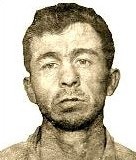 Donald Henry Gaskins
Serial killer · USA · 1969
Donald Henry Gaskins, also known as Donald “Pee Wee” Gaskins, was a serial kill…
200 victims
Donald Henry Gaskins
Serial killer · USA · 1969
Donald Henry Gaskins, also known as Donald “Pee Wee” Gaskins, was a serial kill…
200 victims
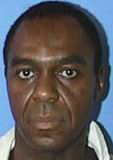 Carl Eugene Watts
Serial killer · USA · 1974
Carl Eugene Watts (born November 7, 1953; died September 21, 2007), also known…
100 victims
Carl Eugene Watts
Serial killer · USA · 1974
Carl Eugene Watts (born November 7, 1953; died September 21, 2007), also known…
100 victims
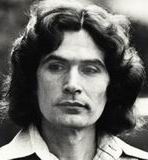 Rodney Alcala
Serial killer · USA · 1977
Rodney James Alcala (born August 23, 1943) was also known as Rodrigo Jacques Al…
100 victims
Rodney Alcala
Serial killer · USA · 1977
Rodney James Alcala (born August 23, 1943) was also known as Rodrigo Jacques Al…
100 victims
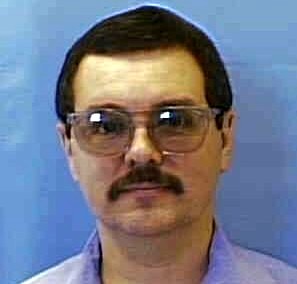 Donald Harvey
Serial killer · USA · 1970
Donald Harvey was known as an American serial killer and a self-professed “Ange…
87 victims
Donald Harvey
Serial killer · USA · 1970
Donald Harvey was known as an American serial killer and a self-professed “Ange…
87 victims
 Donald Leroy Evans
Serial killer · USA · 1975
Donald Leroy Evans (born July 5, 1957) was an American serial killer who murder…
60 victims
Donald Leroy Evans
Serial killer · USA · 1975
Donald Leroy Evans (born July 5, 1957) was an American serial killer who murder…
60 victims
 Michael Swango
Serial killer · USA · 1981
Michael Swango (Joseph Michael Swango) was a physician and American serial kill…
60 victims
Michael Swango
Serial killer · USA · 1981
Michael Swango (Joseph Michael Swango) was a physician and American serial kill…
60 victims
 David Hebbert Hard
Homicide · USA · 1984
Dorothy Biggs was a resident of the tiny Lincoln County community of Eddyville.…
1 victim
David Hebbert Hard
Homicide · USA · 1984
Dorothy Biggs was a resident of the tiny Lincoln County community of Eddyville.…
1 victim
 Claude Bloodgood
Murderer · USA · 1969
Claude Frizzel Bloodgood (born Klaus Frizzel Bluttgutt III; July 14, 1937 – Aug…
1 victim
Claude Bloodgood
Murderer · USA · 1969
Claude Frizzel Bloodgood (born Klaus Frizzel Bluttgutt III; July 14, 1937 – Aug…
1 victim
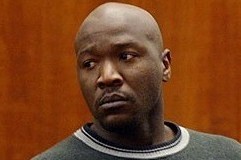 Christopher McCowen
Murderer · USA · 2002
Christopher McCowen was an African American who was convicted in the 2002 rape…
1 victim
Christopher McCowen
Murderer · USA · 2002
Christopher McCowen was an African American who was convicted in the 2002 rape…
1 victim
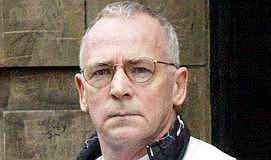 Angus Sinclair
Serial killer · United Kingdom · 1961
Angus Sinclair was sentenced to life in prison for the murders of Helen Scott a…
8 victims
Angus Sinclair
Serial killer · United Kingdom · 1961
Angus Sinclair was sentenced to life in prison for the murders of Helen Scott a…
8 victims
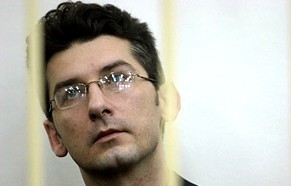 Krystian Bala
Murderer · Poland · 2000
Krystian Bala (born 1973) was a Polish writer and photographer. In 2007, he was…
1 victim
Krystian Bala
Murderer · Poland · 2000
Krystian Bala (born 1973) was a Polish writer and photographer. In 2007, he was…
1 victim
- Gender
- male
- Country
- USA
- Location
- Maryland, USA
- Date of birth
- ???
- Characteristics
- rape, kidnapping, torture, drugs
- Victim profile
- Kathleen Cook / Peggy Pumpian
- Method of murder
- Strangulation
- Date(s) of murder
- December 31, 1975 / August 24, 1976
- Years active
- 1975–1976
- Date of arrest
- September 1, 1977
- Status
-
Life imprisonment
Sentenced to life in prison in 1978
Case record: Charles William Davis
Background
Charles William Davis killed five women in the late 1970s in Maryland. He was the son of a police lieutenant. Davis worked as a part-time ambulance driver.
The offence
Davis stalked his victims until they parked in a vulnerable area outside of a store or restaurant. Using his father's contacts, he had the woman's license plate number run through. After obtaining the name of his soon-to-be victim, Davis had her paged claiming that her car's lights were on.
When the women came out into the parking lot to investigate, Davis abducted them, raped them, and strangled them. Seeking a bigger thrill than simply rape and murder, Davis dumped the bodies in the open along roadways that were in his ambulance's territory.
Investigation
The circumstances described in the case included that Davis dumped victims along roadways in his ambulance territory and phoned in reports; after the responses, he retrieved bodies.
Arrest
Davis was arrested following a sequence of events involving a search of his Volkswagen and the discovery of an uninstalled CB radio.
On July 20, 1977, Maryland State Troopers David Horan and Gary Hartman were driving in Baltimore City when they passed Davis driving his Volkswagen in the opposite direction. Trooper Horan recognized Davis as an individual who had been questioned several months earlier in connection with the murder of Kathleen Cook, and the August 24, 1976 murder of one Peggy Pumpian. Trooper Horan also had information that the license plates on the Volkswagen were “switch tags”, i.e., that they had not been issued to the Volkswagen Davis was driving.
Trooper Horan turned around and followed Davis. A radio call to Maryland State Police Headquarters confirmed the fact that the license plates had been issued to another vehicle. Davis was stopped by the troopers for the motor vehicle violation. Davis admitted that he had switched tags and was told by Trooper Horan that citations for this and other motor vehicle violations (driving “without any registration plates at all” and “operating a vehicle without any insurance”) would be issued.
Trooper Horan asked, “Can I search your vehicle, Charlie?” Davis consented to the search. There was no claim on appeal that Davis did not voluntarily and willingly consent to the search or that the scope of the search was limited by the consent given.
During the search, Trooper Hartman saw an uninstalled CB radio under one of the seats. Trooper Hartman grabbed and pulled it out and, since it was not attached to anything, looked at the serial number, jotted it down, and called it in to check whether it was stolen. The information received back was that the CB radio was stolen. Davis was arrested for receiving stolen property.
Subsequent investigation showed that the radio had been purchased with a stolen credit card belonging to the husband of one Carol Willingham. Mrs. Willingham was the victim of an alleged rape and robbery that occurred in Baltimore City on February 23, 1977, during the course of which the credit card was taken from her. Eventually Carol Willingham made a photographic identification of Davis as her assailant.
On August 30, 1977, an arrest warrant was obtained from the Maryland District Court in Baltimore City charging Davis with the rape and robbery of Carol Willingham.
Davis went to Reno, Nevada, where he worked for an ambulance service. On August 31, 1977, Troopers Horan and Hartman, accompanied by Marshall Feldman, Esq., an assistant State’s Attorney for Baltimore City, traveled by airplane to Reno to obtain custody of Davis and return him to Maryland for trial on the Willingham rape and robbery charges.
At approximately 1:20 A.M. on September 1, 1977, Reno police, accompanied by Troopers Horan and Hartman, arrested Davis, advised him of his rights, and placed him in the Reno jail. Before being taken to the jail Davis told Trooper Horan that he wanted to talk to him privately. Trooper Horan replied that he was busy at that time but that “he [Davis] would get an opportunity later to speak with me if he wanted to”. Later during the same day September 1, Trooper Horan went to the jail and asked Davis if he still wanted to speak with him. Davis said he did not and no questions were asked of him.
On the afternoon of September 2, Trooper Horan went to the Reno jail to photograph Davis. Davis told the trooper that “about every six months -- he did something big and he gets into trouble” and that there were “two things” he wanted to talk about. After the trooper made arrangements for a room in which they could have privacy and after Davis had been given Miranda warnings and asked again if he “wish[ed] to talk to me”, Davis replied, “Only with a lawyer”. No further interrogation took place.
On September 3, 1977, Davis appeared before a Nevada judge and waived extradition. The extradition hearing ended at approximately 10:15 A.M., at which time the troopers made arrangements to fly to San Diego to pick up an escapee from the Maryland House of Correction. They left Reno with Davis at approximately 1:30 P.M.
At 6:30 the following morning, September 4, the four men (Horan, Hartman, Davis and the escapee) left San Diego and after a short stop in Chicago, Illinois, arrived at Baltimore-Washington International Airport at 5:31 P.M. Their intention was then to drive to Baltimore to deliver Davis to the Baltimore City Police Department. Before doing so they stopped at Jessup, Maryland, to deliver the escapee to the House of Correction.
When they arrived at the prison, Trooper Hartman remained in the car with Davis while Trooper Horan took the escapee inside. While waiting in the car Davis told Trooper Hartman that he wanted to talk about the Pumpian homicide. When Trooper Horan arrived back in the car a few minutes later Davis again said he wanted to talk about the Pumpian homicide. Before making any statement Davis was advised of his Miranda rights. He then confessed to the Pumpian crime and agreed to repeat it on tape.
He was driven to the Waterloo Barracks of the Maryland State Police where at 6:43 P.M. his statements were recorded on voice tape. The taping session lasted until approximately 10:30 P.M. and included inculpatory statements concerning not only the Pumpian murder but the Kathleen Cook murder as well.
Trial
On April 12, 1978, at a jury trial in the Circuit Court for Allegany County (Getty, J., presiding), Charles William Davis, Jr. was convicted of murder in the first degree and the use of a handgun in the commission of that crime of violence.
The murder victim was Mrs. Kathleen Cook. She was shot to death behind a shopping center parking lot in Baltimore County on the night of December 31, 1975. Mrs. Cook, with her husband, had gone to a night club located in the shopping center to meet some relatives and friends for a New Year’s Eve party.
At trial, over appellant’s objection and following pre-trial suppression hearings, Davis’s oral confessions were admitted in evidence. The confessions were given to the police on September 4 and 5, 1977.
Statements given on September 4 were recorded on tape in the appellant’s own voice and transcribed. At trial the tapes were admitted in evidence and heard by the jury, and the transcriptions were also admitted in evidence.
The confession of September 5 was presented to the jury through the testimony of Maryland State Trooper David Horan. Trooper Horan related the appellant’s detailed account, given at the scene of the crime, of how on New Year’s Eve 1975 Davis lured Mrs. Cook, thinking she was someone else, from the night club onto the parking lot of the shopping center, had sexual intercourse with her, beat her, fired four .38 calibre bullets into her body, and left the scene.
Davis elected not to testify either at the suppression hearings or at trial and presented no evidence to contradict the State’s evidence concerning the corpus delicti of the crimes or his criminal agency.
Sentencing
Davis was sentenced to life in prison in 1978.
Appeals
Davis appealed the judgments of conviction.
He argued that the judgments of conviction must be reversed because the trial judge erred in admitting his confessions into evidence. He did not contend that his confessions were involuntary in the traditional sense or that any of his rights set forth in Miranda v. Arizona, 384 U.S. 436, 86 S. Ct. 1602 (1966) were violated so as to invoke the exclusionary rule.
Instead, he invoked two exclusionary rules:
- the Fourth Amendment exclusionary rule followed in Ryon v. State, 29 Md. App. 62, 349 A.2d 393 (1975), aff’d. 278 Md. 302, and
- the per se exclusionary rule adopted in Johnson v. State, 282 Md. 314, 384 A.2d 709, decided April 6, 1978.
He also argued that the trial judge erred by failing to instruct the jury that it was for the jury to determine whether or not the rule of Johnson applied to the case.
The Court of Special Appeals of Maryland addressed:
- The Fourth Amendment claim: whether the confessions were barred by reason of an assumed illegality tied to the “seizure” of the serial number of the CB radio at the time the Volkswagen was searched.
- The Johnson v. State claim: whether the Johnson exclusionary rule required automatic exclusion due to alleged delay in presentment before a judicial officer.
- The jury-instruction contention regarding M.D.R. 723 a.
The appeals court held that there was no merit to any of the appellant’s contentions and affirmed the judgments of conviction.
Outcome
Judgments affirmed. Costs were to be paid by appellant.
Other details
Court and parties
The case was titled: Charles William Davis, Jr. v. State of Maryland. It involved an appeal from the Circuit Court for Allegany County. Getty, J. presided at trial.
On appeal, Melvin, J., delivered the opinion of the Court of Special Appeals of Maryland, with Liss and Couch, JJ. participating.
The decision date was June 6, 1979.
Confessions timeline and related procedural steps
- Davis was recorded on voice tape at 6:43 P.M. on September 4, 1977 at the Waterloo Barracks of the Maryland State Police.
- and included inculpatory statements concerning the Pumpian murder and the Kathleen Cook murder.
- Davis’s confession to the Cook murder was recorded on tape beginning at 8:25 P.M. on Sunday, September 4, 1977, at the Waterloo Barracks of the State Police in Howard County. The confession was completed at 10:30 P.M.
- Davis’s confession of September 5, 1977 was presented at trial through the testimony of Trooper David Horan.
Statements about voluntariness and Miranda compliance
The appeals court noted that Davis did not contend that the State failed to show the confessions were voluntary under Fifth Amendment standards and that there was no evidence of coercion, threats, promises, or undue influence by police.
The court stated that the record showed full compliance with the Miranda safeguards before Davis decided to confess.
Four days and intervening circumstances
The appeals court stated that the arrest preceded the confessions by nearly four days and that during that time Davis was not questioned at all concerning the Cook and Pumpian murders. It also stated that conversations that took place were initiated by Davis.
Judge Getty’s memorandum opinion following the March suppression hearing included the statement:
“. . . The confession was separated from the arrest by a period of four days. The conversations that took place were initiated by the Defendant. He was before a Judge for the purpose of waiving extradition and made one or two phone calls to his girl friend from the west coast. Davis' decision to confess strikes the Court as a battle with his own conscience and not a result of impermissive actions by the two police officers. The tape recording indicates an atmosphere of quiet reflection and free expression.”
Johnson v. State holding as quoted in the appeal
The appeals decision quoted Johnson v. State’s major holding and also quoted additional portions of reasoning. The Johnson holding was quoted as:
“We therefore hold that any statement, voluntary or otherwise, obtained from an arrestee during a period of unnecessary delay in producing him before a judicial officer, thereby violating M.D.R. 723 a, is subject to exclusion when offered into evidence against the defendant as part of the prosecution's case-in-chief. A statement is automatically excludible if, at the time it was obtained from the defendant, he had not been produced before a commissioner for his initial appearance within the earlier of 24 hours after arrest or the first session of court following arrest, irrespective of the reason for the delay.”
The additional quoted statement was:
“We note also that a truly spontaneous 'threshhold' confession or statement uttered at the time of arrest or shortly thereafter would not be excludible on the grounds that police subsequently failed to act diligently in complying with M.D.R. 723 a. In such cases there is manifestly no connection between the delay and the statement, and since police misconduct does not in any way contribute to the making of the confession, the exclusionary rule would logically not apply. United States v. Mitchell, 322 U.S. 65, 70, 64 S. Ct. 896 , 88 L.Ed. 1140 (1944); United States v. Seohnlein, 423 F. 2d 1051, 1053 (4th Cir.), cert. denied, 399 U.S. 913 (1970); 1 C. Wright, Federal Practice and Procedure (Criminal) ? 73, at 79-80 (1969).”
The appeals court also quoted Johnson’s statement about purpose:
“the purpose of the rule [M.D.R. 723] is to insure that an accused will be promptly afforded the full panoply of safeguards provided at the initial appearance.”
The appeals court quoted the list of protections provided by the rule as:
- “a prompt hearing at which a neutral judicial officer must determine whether sufficient probable cause exists for the continued detention” of a defendant arrested without a warrant,
- the obligation of the judicial officer “at the initial appearance to make a determination of the defendant's eligibility for pretrial release under M.D.R. 721”,
- the right of the accused to be informed “of every charge brought against him”,
- the right of the accused to be informed “of his right to counsel, and, if indigent, to have counsel appointed for him”, and
- the right of the accused “to request a full preliminary hearing” under M.D.R. 727 where the defendant has been charged with a felony over which the District Court lacks subject matter jurisdiction.
Judge Getty instruction ruling discussion
The appeals court discussed Davis’s contention that the trial judge erred in refusing to instruct the jury that if M.D.R. 723 a had not been complied with, the confession should not be considered as evidence and should be excluded. It stated that Judge Getty declined the instruction because he found the question “to be a matter of law”.
The court further quoted that Johnson’s per se exclusionary rule had “nothing whatsoever to do with voluntariness, the Fifth Amendment, or any other constitutional right of criminal defendants” and that it operated upon “any statement, voluntary or otherwise”.
The appeals court also included the following quote from the State’s brief:
“. . . The situation is analogous to the questions of law surrounding admission of evidence claimed to have been obtained by an illegal search and seizure. Despite the Maryland constitutional provision establishing a criminal jury as the judge of the law and the fact, the preliminary ruling on the [42 MdApp Page 562] admissibility of evidence remains a matter exclusively for the trial judge. Brady v. State, 373 U.S. 83, 89-91, 83 S. Ct. 1194 , 1198, 10 L.Ed.2d 215 (1963); Hepple v. State, 31 Md. App. 525 , 554, aff'd, 279 Md. 265 (1976); Linkins v. State, 202 Md. 212, 221 (1953).”
Prior charges and related offences mentioned in the appeal
The proceedings included references to:
- The Willingham rape and robbery.
- The Pumpian homicide.
- The Kathleen Cook murder.
- An allegation that Carol Willingham was the victim of an alleged rape and robbery on February 23, 1977, in Baltimore City during which a credit card was taken from her.
- Reference to Davis being questioned in connection with the August 24, 1976 murder of Peggy Pumpian.
Spotted an error, or have more information about this case?