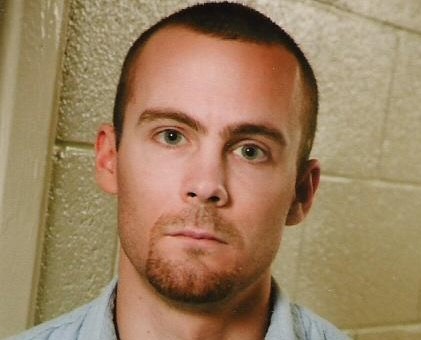
Jacob Lee Davis
Murderer Russell Ellwood
Murderer · USA · 1991
Russell Ellwood was a former taxi driver. Authorities suspected him of killing…
20 victims
Russell Ellwood
Murderer · USA · 1991
Russell Ellwood was a former taxi driver. Authorities suspected him of killing…
20 victims
 Robert Martines Perez
Murderer · USA · 1994
Name: Robert Martines Perez · Other name used in proceedings: Robert Martinez P…
15 victims
Robert Martines Perez
Murderer · USA · 1994
Name: Robert Martines Perez · Other name used in proceedings: Robert Martinez P…
15 victims
 Billy Frank Vickers
Murderer · USA · 1993
Billy Frank Vickers Vickers was executed by lethal injection in Texas on Januar…
14 victims
Billy Frank Vickers
Murderer · USA · 1993
Billy Frank Vickers Vickers was executed by lethal injection in Texas on Januar…
14 victims
 Paul Bernardo
Serial killer · Canada · 1990
Paul Kenneth Bernardo (born August 27, 1964 in Toronto, Ontario) was a Canadian…
3 victims
Paul Bernardo
Serial killer · Canada · 1990
Paul Kenneth Bernardo (born August 27, 1964 in Toronto, Ontario) was a Canadian…
3 victims
 Harlan Drake
Murderer · USA · 2009
September 11, 2009 — James Lawrence Pouillon was shot dead in front of Owosso H…
2 victims
Harlan Drake
Murderer · USA · 2009
September 11, 2009 — James Lawrence Pouillon was shot dead in front of Owosso H…
2 victims
 Sheila Garvie
Murderer · United Kingdom · 1967
Sheila Garvie was convicted of the murder of her husband, Maxwell Garvie. Sheil…
1 victim
Sheila Garvie
Murderer · United Kingdom · 1967
Sheila Garvie was convicted of the murder of her husband, Maxwell Garvie. Sheil…
1 victim
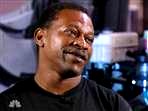 Sterling Spann
Murderer? · USA · 1981
Sterling Spann was a former death row inmate whose death sentence was overturne…
1 victim
Sterling Spann
Murderer? · USA · 1981
Sterling Spann was a former death row inmate whose death sentence was overturne…
1 victim
- Gender
- male
- Country
- USA
- Location
- Lincoln County, Tennessee, USA
- Date of birth
- 1980
- Age at first offence
- 18
- Characteristics
- jealousy, school shooting
- Victim profile
- Robert "Nick" Creson, 18 (his romantic rival)
- Method of murder
- Shooting (.22-caliber rifle)
- Date(s) of murder
- May 19, 1998
- Years active
- 1998
- Date of arrest
- Same day
- Status
-
Life imprisonment
Sentenced to life in prison on July 29, 1999
Case name and defendant
Jacob Lee Davis
Timeline
- May 19, 1998 — Robert "Nick" Creson was shot in a parking lot behind Roy Clark Field House at Lincoln County High School in Fayetteville, Tennessee; emergency personnel worked on him and Creson died about 15 minutes after being brought to the hospital.
- July 29, 1999 — A jury sentenced Jacob Davis to life in prison with the possibility of parole after 51 years.
- July 30, 1999 — A summary of the conviction and sentencing appeared referencing a Tennessee case context with a CourtTV item.
- 2001 — A Court of Criminal Appeals of Tennessee opinion was referenced.
- 2004 — A Court of Criminal Appeals of Tennessee opinion was referenced.
Background
Jacob Davis was 19 years old at the time of his conviction. He had no prior criminal record and was described as an honor student.
Tonya Bishop was identified as Davis’s romantic partner. The case involved a “teen love triangle” between Davis, Bishop, and Robert “Nick” Creson. Davis was angered when he learned Creson had slept with Bishop, and prosecutors believed rage prompted him to ponder—and carry out—the shooting.
Davis’s attorneys did not deny that he killed Creson. They argued that Davis was so severely depressed over Bishop’s infidelity that he suffered from diminished capacity and could not form the intent to kill. Defense counsel Ray Fraley suggested Davis did not fully realize what he was doing when he shot Creson and sought a conviction of a lesser charge such as second-degree murder or manslaughter.
Prosecutors largely relied on letters Davis wrote to Bishop and to his physics teacher Tiffany Roberts to prove that he planned Creson’s death. Before the shooting, Davis wrote a letter to Bishop that mentioned his desire to shoot Creson and write lyrics of a rock song on his truck in Creson’s blood. Prosecutors said the letters illustrated Davis’s murderous intent, and jurors agreed. Prosecutors psychiatrists agreed that Davis suffered from depression at the time of the slaying, but not so severely that he could not form intent to kill.
The offence
Robert “Nick” Creson was an 18-year-old member of the Lincoln County High School football team in Fayetteville, Tennessee. He was murdered in the school parking lot the week of his pending graduation by classmate Jacob Davis.
Witness accounts described a dispute over a girl and stated Davis left school about noon after an argument with Creson over Tonya Bishop. Davis went home, got a .22-caliber rifle, and returned to the parking lot to wait for Creson. When Creson walked up shortly after 2 p.m., police said Davis got out of his car and shot at him once from 15 to 20 feet away.
The account then stated:
- It was unclear whether the bullet struck Creson.
- Nick told him, “Quit messing around,”.
- The second shot hit Creson in the chest and he fell backwards.
- There was another shot fired into Nick as he was on the ground.
Creson was wounded in the chest and abdomen and died a short time later at a hospital.
The dozen or so students who witnessed the shooting said Davis never uttered a word. At the scene, Davis surrendered without further incident after laying the rifle on the pavement and sitting with his head in his hands until police came. Police also found several photographs of Davis and his girlfriend in his car.
Davis left a two-page letter in his car:
- The letter told his mother and father how much he appreciated them.
- The letter told his girlfriend how much he loved her.
- It described him as asking forgiveness for what he was about to do.
People involved
Defendant
Jacob Lee Davis — convicted of first-degree murder for the May 1998 shooting death of his romantic rival Nick Creson; convicted also of reckless endangerment and illegal weapons possession on school property.
Victim
Robert “Nick” Creson — 18-year-old member of the Lincoln County High School football team in Fayetteville, Tennessee; murdered in the school parking lot behind Roy Clark Field House at Lincoln County High School.
Romantic partner
Tonya Bishop — Davis’s girlfriend; the case was linked to Creson’s relationship with Bishop.
Defendant’s family
Phyllis Davis — Davis’s mother; suggested to jurors that her son felt remorse after the shooting and did not fully realize the consequences of his actions.
Legal and investigative-related participants
Ray Fraley — defense attorney who led the defense and sought a lesser conviction such as second-degree murder or manslaughter.
Witnesses and other named individuals
Louis Thompson — Lincoln County High School football coach; testified that dozens of students were present when Davis shot Creson three times.
Brad Schrimsher — student eyewitness; told jurors that he felt something burn against his face as Creson was gunned down and suggested that he could have been shot by Davis.
Tiffany Roberts — Davis’s physics teacher; letters Davis wrote to her were described as part of the prosecution’s proof of intent.
Chris Thornton — correction officer; added that Jacob Davis had been a “model prisoner” since his incarceration and that he spends most of his time in isolation, drugged on antidepressants.
Investigation and evidence
The prosecution used letters Davis wrote to Bishop and to physics teacher Tiffany Roberts to show planning and intent. Prosecutors presented Davis’s letter to Bishop in which he mentioned his desire to shoot Creson and write the lyrics of a rock song on his truck in Creson’s blood.
Photographs of Davis and his girlfriend were found in his car.
Trial
The jury convicted Jacob Davis of:
- first-degree murder for the May 1998 shooting death of Nick Creson,
- reckless endangerment,
- illegal weapons possession on school property.
The defense argued diminished capacity based on severe depression over Bishop’s infidelity. Defense counsel Ray Fraley pursued a lesser charge such as second-degree murder or manslaughter. The prosecution argued intent using letters written by Davis; jurors agreed that the letters illustrated Davis’s murderous intent.
Sentencing
On July 29, 1999, a jury sentenced Davis to life in prison with the possibility of parole after 51 years. The sentencing turned aside the prosecution’s pleas for life without parole.
The life sentence was described as meaning Davis would be at least 70 years old before release.
In addition to first-degree murder, Davis received a one-year sentence for reckless endangerment and illegal weapons possession on school property, and that one-year sentence was to be served concurrently with his life sentence.
During Davis’s sentencing, prosecutors sought life without parole by alleging one aggravating factor: that he put the lives of other students in danger when he killed Creson.
Appeals
The Court of Criminal Appeals of Tennessee opinion was referenced in 2001 and 2004.
Outcome
Jacob Davis remained sentenced to life in prison with the possibility of parole after 51 years following the July 29, 1999 jury sentencing.
Aftermath
Tonya Bishop moved away from her Lincoln County community and settled in Alabama. Bishop claimed she never intended to be the cause of Creson’s murder, but some members of her now-former community held her responsible, at least in part, for the tragedy.
A correction officer described Davis as a “model prisoner” since his incarceration and spending most of his time in isolation, drugged on antidepressants.
The case and its aftermath were described as being subjects of television documentaries, including on “American Justice” and CourtTV, and a November 28, 2000 episode of Dateline NBC centered around the case.
Other details
The account described the shooting as occurring in a parking lot behind Roy Clark Field House at Lincoln County High School in Fayetteville, Tennessee.
Spotted an error, or have more information about this case?