
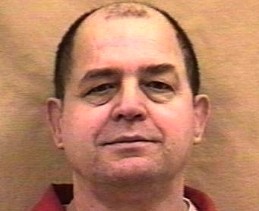
Jeffrey Keller Davis
Murderer Brian Kevin Rosenfeld
Murderer · USA · 1985
Brian Kevin Rosenfeld Brian Kevin Rosenfeld was sentenced to three concurrent l…
23 victims
Brian Kevin Rosenfeld
Murderer · USA · 1985
Brian Kevin Rosenfeld Brian Kevin Rosenfeld was sentenced to three concurrent l…
23 victims
 Russell Ellwood
Murderer · USA · 1991
Russell Ellwood was a former taxi driver. Authorities suspected him of killing…
20 victims
Russell Ellwood
Murderer · USA · 1991
Russell Ellwood was a former taxi driver. Authorities suspected him of killing…
20 victims
 Robert Martines Perez
Murderer · USA · 1994
Name: Robert Martines Perez · Other name used in proceedings: Robert Martinez P…
15 victims
Robert Martines Perez
Murderer · USA · 1994
Name: Robert Martines Perez · Other name used in proceedings: Robert Martinez P…
15 victims
 Billy Frank Vickers
Murderer · USA · 1993
Billy Frank Vickers Vickers was executed by lethal injection in Texas on Januar…
14 victims
Billy Frank Vickers
Murderer · USA · 1993
Billy Frank Vickers Vickers was executed by lethal injection in Texas on Januar…
14 victims
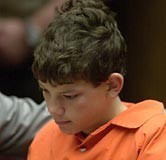 Charles Andrew Williams
Homicide · USA · 2001
Charles Andrew “Andy” Williams was born on February 8, 1986, in Frederick, Mary…
2 victims
Charles Andrew Williams
Homicide · USA · 2001
Charles Andrew “Andy” Williams was born on February 8, 1986, in Frederick, Mary…
2 victims
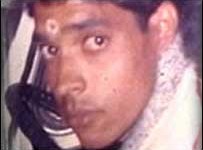 Dhananjoy Chatterjee
Murderer · India · 1990
Dhananjoy Chatterjee was born in Kuludihi, West Bengal, India on August 14, 196…
1 victim
Dhananjoy Chatterjee
Murderer · India · 1990
Dhananjoy Chatterjee was born in Kuludihi, West Bengal, India on August 14, 196…
1 victim
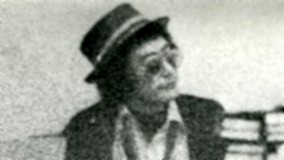 Akiyoshi Umekawa
Murderer · Japan · 1963
Akiyoshi Umekawa ( 梅川 昭美 , Umekawa Akiyoshi , March 1, 1948 - January 28, 1979)…
5 victims
Akiyoshi Umekawa
Murderer · Japan · 1963
Akiyoshi Umekawa ( 梅川 昭美 , Umekawa Akiyoshi , March 1, 1948 - January 28, 1979)…
5 victims
 Kenneth Bartley
Homicide · USA · 2005
Defendant: Kenneth Bartley Jr., 15-year-old student (also referred to as Kennet…
1 victim
Kenneth Bartley
Homicide · USA · 2005
Defendant: Kenneth Bartley Jr., 15-year-old student (also referred to as Kennet…
1 victim
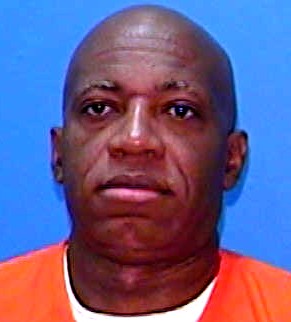 Meryl Stanley McDonald
Murderer · USA · 1994
Meryl Stanley McDonald was convicted in a Florida case involving a murder-for-h…
1 victim
Meryl Stanley McDonald
Murderer · USA · 1994
Meryl Stanley McDonald was convicted in a Florida case involving a murder-for-h…
1 victim
 Sandra Bridewell
Murderer? · USA · 1982
Sandra Bridewell used multiple names and aliases, including Sandra Camille (Pow…
2 victims
Sandra Bridewell
Murderer? · USA · 1982
Sandra Bridewell used multiple names and aliases, including Sandra Camille (Pow…
2 victims
- Gender
- male
- Country
- USA
- Location
- Greene County, Mississippi, USA
- Date of birth
- May 24, 1960
- Age at first offence
- 31
- Characteristics
- robbery, drugs
- Victim profile
- Linda Hillman
- Method of murder
- Shooting - Stabbing with knife
- Date(s) of murder
- July 12, 1991
- Years active
- 1991
- Date of arrest
- Same day (surrenders)
- Status
-
Executed
Executed by lethal injection in June 10, 1992
Overview
Jeffrey Keller Davis was sentenced in Greene County, Mississippi, in May 1992 for the 1991 robbery and murder of Linda Hillman. Hillman was shot and stabbed in her rural Greene County trailer during a robbery. Davis was convicted in May 1992 of capital murder of Linda Hillman while engaged in robbery, and his death sentence was affirmed by the Mississippi Supreme Court in Davis v. State, 684 So.2d 643 (Miss.1996), cert. denied, Davis v. Mississippi, 520 U.S. 1170, 117 S.Ct. 1437, 137 L.Ed.2d 544 (1997).
Davis filed his Application for Leave to File Motion to Vacate Judgment and/or Sentence of Death in the Mississippi Supreme Court on April 1, 1998. The Mississippi Supreme Court granted leave to proceed on certain ineffective-assistance-of-counsel issues in the Greene County Circuit Court and remanded the case for further proceedings consistent with the opinion.
Timeline
- May 1992 — Jeffrey Keller Davis was sentenced in Greene County, Mississippi, for the 1991 robbery and murder of Linda Hillman; he was convicted of capital murder while engaged in robbery and received a death sentence.
- Friday, July 12, 1991 — Greene County Sheriff Tommy Miller received a phone call at home from Jeffrey Keller Davis; Davis identified himself and told Miller that he had killed Linda Hillman.
- July 11, 1991 — Davis went to Hillman's trailer early on the morning of July 11 to get money to buy drugs; Hillman refused to give him money, and Davis shot and stabbed her to death.
- 1996 — Davis v. State, 684 So.2d 643 (Miss.1996), affirmed Davis’s conviction and death sentence.
- 1997 — cert. denied, Davis v. Mississippi, 520 U.S. 1170, 117 S.Ct. 1437, 137 L.Ed.2d 544 (1997).
- April 1, 1998 — Davis filed his Application for Leave to File Motion to Vacate Judgment and/or Sentence of Death.
- June 30, 1993 — Report of the Trial Judge Where Death Penalty Imposed was completed by Circuit Court Judge William Jones and filed with the Mississippi Supreme Court pursuant to Miss.Code Ann. § 99-19-105(1)(1994).
- January 17, 1995 — Davis filed a Motion to Strike Trial Judge's Responses to Death Penalty questionnaire and for Other Relief.
- June 20, 1996 — The court denied the Motion to Strike Trial Judge's Responses to Death Penalty questionnaire and for Other Relief by order dated June 20, 1996.
- July 01, 1999 — Application for Leave to File Motion to Vacate Judgment and/or Sentence of Death was granted in part and denied in part, and the case was remanded to the Greene County Circuit Court for further proceedings.
Background
The case involved the capital murder of Linda Hillman while engaged in robbery. Davis was sentenced in Greene County, Mississippi, in May 1992 for the 1991 robbery and murder of Hillman. Hillman was found dead in her rural Greene County trailer on her bed.
The offence
Hillman was shot and stabbed to death in her rural Greene County trailer during a robbery. Davis told Sheriff Tommy Miller that he went to Hillman’s trailer early on the morning of July 11, 1991 to get money to buy drugs. He stated that Hillman refused to give him money; he then shot and stabbed her to death.
Investigation
Greene County Sheriff Tommy Miller received a phone call at his home on Friday, July 12, 1991 from Jeffrey Keller Davis. Davis identified himself and told Miller that he had killed Linda Hillman. Sheriff Miller knew Davis and Hillman.
Davis told Miller to come and get him at his home. Miller and deputy Henry Benjamin went to Davis’s home. Miller read Davis his Miranda rights, and Davis told Miller that he understood his rights and finished telling his story. Miller later went to Hillman’s trailer and found her lying dead on her bed.
Miller took Davis to the sheriff’s office, advised him again of his rights under the Constitution and required by Miranda, and required Davis to sign a waiver of rights form. Davis retold the story to Miller. Miller and Benjamin found items submerged in separate creeks, including clothing and shoes that Davis had worn the morning of the murder.
Miller accompanied by Davis found Hillman’s body at her trailer and discovered that she was dead on her bed.
Arrest and custody events
Davis was taken into custody on the evening of July 12, 1991. Davis alleged that he was not given a timely initial appearance before a judge pursuant to then Uniform Criminal Rule of Circuit Court Practice 1.04, while the State obtained a court order from Circuit Judge Kathy King Jackson on Saturday, July 13 to get blood samples from Davis.
Statements to law enforcement
Davis gave multiple statements to Sheriff Tommy Miller.
Davis told Miller over the phone that he had killed Linda Hillman in her trailer and wanted Miller to come get him. Davis told Miller during pickup that he had gone to Hillman’s trailer early Thursday morning, July 11, 1991; that he killed Hillman about 6:00 a.m.; that he had borrowed two hundred dollars from Hillman the previous Monday; that he knew she had more money; that he went there to rob Hillman to buy more drugs; that he killed her when she refused to give him more money; that after the killing he walked through a corn field; and that he went to Pascagoula, Mississippi to buy more drugs.
Davis admitted stabbing Hillman with a knife, had the knife on him, gave the knife to Sheriff Miller, and provided the location of clothing and shoes worn the morning of the murder. After retrieving these items from separate creeks, Miller and Benjamin took Davis to the sheriff’s office and advised him again of his rights under the Constitution and required by Miranda. Davis signed a waiver and retold the story.
Sheriff Miller stated that Davis was very calm and unemotional when he arrived to pick Davis up and that Davis acted normal and did not smell of alcohol. Miller saw what he believed to be more than one needle mark on Davis’s arm. Kevin Fortenberry observed Davis while his house was being searched and stated that Davis had a calm, cocky attitude. Don Sumrall also observed Davis while his house was being searched and stated that Davis was calm and showed no remorse.
Physical evidence and searches
Sheriff Miller found Hillman lying dead on her bed at her trailer.
The investigation included retrieval of clothing and shoes that Davis had told Miller the location of, submerged in separate creeks.
Davis consented to a search of his home and truck. Evidence collected from the house included a .22 caliber rifle which had fired one of the spent cartridges found in Hillman’s trailer, marijuana, and the shirt Davis said he was wearing when he killed Hillman. A search of Davis’s truck revealed blood on the seat and on a jack, and a “shooter's kit” with syringes.
A photograph of Davis’s right arm was also admitted through Kevin Fortenberry.
Dr. Stephen Hayne testified during autopsy that Hillman’s body was in the early stages of decomposition and there was a slight green discoloration to the face. He gave an opinion that due to the summer temperatures at the time of Hillman’s death and the fact that she was found in a trailer without air conditioning, “one could see this level of decomposition as early as eight hours.”
Trial
Conviction
In May 1992, Jeffrey Keller Davis was convicted in Greene County for the capital murder of Linda Hillman while engaged in robbery. His conviction and death sentence were affirmed by the Mississippi Supreme Court in Davis v. State, 684 So.2d 643 (Miss.1996).
Jury-related matters
Juror Denmark served on Davis’s jury. During voir dire, District Attorney Harkey asked prospective jurors: “Now, does anybody know Mr. Davis, the defendant in this particular case? Anybody know him? Does anybody know Mr. Davis' family. I believe some family members may be seated out in the audience.”
Davis’s mother, Christine Davis, worked as a nurse at the South Mississippi Correctional Facility in Greene County.
During the sentencing proceedings and trial process, issues included allegations of improper contact between prospective jurors and the State, including a jury tour of the Greene County Jail where Davis was held and discussion of Davis’s case with guards. The jury also mingled with Assistant District Attorney Daryl Dryden the week prior to trial. Davis alleged additional contacts involving prospective jurors and individuals at the jail.
Witness testimony and evidence
Dr. Stephen Hayne testified regarding decomposition of the victim’s body. Defense counsel did not object to this testimony, and Davis later argued ineffective assistance for failure to object.
Clayton Evans was a witness in the sentencing phase, and the trial court limited examination of Evans regarding his knowledge of the victim, including bail bonds and possible criminal offenses charged.
The State introduced a photograph of Davis’s right arm. Defense counsel objected, stating: “He don't know when that was done, or how it was done, or by whom it was done, or what object did it.”
Defense arguments included concerns about testimony regarding Davis’s alleged lack of remorse.
Instructions
Davis challenged sentencing instructions, including Sentencing Instruction S-2 and Sentencing Instruction S-3. Davis also challenged the use of Instruction S-4 relating to voluntary intoxication and argued that counsel should have raised the M'Naghten Rule in contesting the instruction.
Davis argued that the signature line under Instruction S-3 appeared only under the death option and made the life option appear secondary. The Mississippi Supreme Court previously found that defense counsel had objected to S-3 on numerous grounds but not on this basis, making that issue procedurally barred on direct appeal and without merit on the merits.
Davis challenged unanimity requirements in sentencing instructions, arguing that the instructions failed to inform the jury that unanimity was not required for mitigating circumstances.
Davis also challenged instructions concerning the “especially heinous, atrocious or cruel” aggravating circumstance and argued that the jury was given an unconstitutional definition of that aggravating circumstance, as well as that the evidence did not support applying it.
Prosecution conduct at sentencing and closing arguments
Davis asserted that the State made improper arguments and elicited improper evidence regarding his alleged lack of remorse. Davis also alleged prosecutorial misconduct, including:
- the State’s closing sentencing argument that Davis was protected by rights he had not allowed Linda Hillman to enjoy;
- the State’s rebuttal of Davis’s lack of criminal history by arguing drug use was equivalent to criminal activity;
- the State impugning defense counsel’s ethics; and
- the State attempting to recreate Hillman’s dying thoughts in closing argument.
These claims were raised and rejected on direct appeal and later treated as procedurally barred by res judicata.
Sentencing
The conviction carried a death sentence. The Mississippi Supreme Court addressed the trial court’s submission of aggravating circumstances including a pecuniary gain factor and the “especially heinous, atrocious or cruel” aggravator.
Davis argued that the aggravating circumstance of whether the capital offense was committed for pecuniary gain was invalid and should not have been submitted to the jury. Davis also argued that the jury should not have been instructed to consider the “especially heinous, atrocious or cruel” aggravating circumstance under the facts in his case, and that the jury was given an unconstitutional definition of that aggravating circumstance in the sentencing phase.
Davis also alleged errors in the sentencing instructions, including that the instructions failed to inform the jury about how unanimity applied to mitigating circumstances.
Appeals and post-conviction proceedings
Direct appeal
Davis’s conviction and death sentence were affirmed by the Mississippi Supreme Court in Davis v. State, 684 So.2d 643 (Miss.1996).
Application for leave to file motion to vacate judgment and/or sentence of death
Davis filed his Application for Leave to File Motion to Vacate Judgment and/or Sentence of Death on April 1, 1998. The Mississippi Supreme Court considered multiple issues raised in the application.
Issues raised
Davis’s application raised the following issues: I. Davis was denied effective assistance of counsel, including multiple sub-issues:
- counsel failed to contest constitutionality of Davis’s confession;
- counsel failed to move to suppress evidence retrieved from Davis’s home and truck;
- counsel’s cross-examination of the sheriff bolstered the State’s case;
- counsel failed to contest evidence retrieved prior to the initial appearance even though a judge was available;
- counsel failed to object to admission of testimony regarding decomposition of the victim’s body;
- counsel’s defense in sentencing phase was deficient for failing to investigate character witnesses and inadequately preparing the witnesses called;
- Davis was not assigned two attorneys for capital defense;
- counsel failed to request a change of venue;
- counsel failed to move to quash the jury based on improper contact with the State;
- counsel failed to investigate or offer independent evidence of cocaine psychosis;
- counsel failed to explain a plea bargain offered to Davis;
- counsel failed to object to Instruction S-3;
- counsel failed to request a special jury venire prior to trial date;
- counsel failed to have the court reporter record the jury selection process;
- counsel failed to object to nonconformity between S-3, S-2, and the indictment;
- counsel failed to raise the M'Naghten Rule in contesting the voluntary intoxication instruction;
- counsel failed to pose a specific objection to pain testimony by Dr. Hayne;
- counsel failed to require a proper foundation for introduction of a photograph of Davis’s right arm;
- cumulative errors deprived Davis of Sixth Amendment rights.
II. Juror Denmark worked with Davis’s mother but failed to reveal this fact during voir dire.
III. The prosecution improperly elicited evidence regarding Davis’s alleged lack of remorse at trial.
IV. Many instances of prosecutorial misconduct violated Davis’s right to a fair trial.
V. The trial court erred in denying defendant’s instruction on the lesser included offense of murder.
VI. The trial court erred in limiting examination of witness Clayton Evans regarding knowledge of the victim.
VII. The trial court erred in prohibiting evidence concerning the victim’s prior conviction for possession of marijuana.
VIII. The aggravating circumstance of pecuniary gain was invalid and should not have been submitted to the jury.
IX. The jury should not have been instructed to consider the “especially heinous, atrocious or cruel” aggravating circumstance under the facts.
X. The jury was given an unconstitutional definition of the “especially heinous, atrocious or cruel” aggravating circumstance in the sentencing phase.
XI. Sentencing instructions were erroneous because they failed to inform the jury that it need not be unanimous in finding mitigating circumstances.
XII. The trial court erred in allowing the district attorney to ask prospective jurors about their ability to return a death sentence given specific facts.
XIII. Use of the trial judge questionnaire and Miss.Code Ann. § 99-19-105 violated constitutional rights.
XIV. The court’s proportionality review was based on erroneous evidence.
XV. The death sentence should be vacated as cruel and unusual and disproportionate given circumstances and background.
XVI. Cumulation of error demands reversal.
Court’s determinations
The Mississippi Supreme Court’s opinion granted leave to proceed on some ineffective-assistance issues and denied others, and it remanded to the Greene County Circuit Court for further proceedings consistent with the opinion.
In particular, the Mississippi Supreme Court concluded:
- Davis failed to show deficient conduct and prejudice for the claims relating to suppression of Davis’s statements (I(1)) and search evidence from the home and truck (I(2)) and for the claim that cross-examination bolstered the State’s case (I(3)).
- The claim regarding contesting evidence retrieved prior to initial appearance (I(4)) was without merit.
- The claim that counsel failed to object to decomposition testimony (I(5)) was without merit.
- The Mississippi Supreme Court granted leave to proceed on the ineffective-assistance claim relating to sentencing phase character witnesses (I(6)).
- The claim that Davis was not assigned two attorneys in violation of the Fifth and Sixth Amendments (I(7)) was without merit.
- The claim that counsel failed to request a change of venue (I(8)) was without merit.
- The Mississippi Supreme Court granted leave to proceed on issues involving improper contact between prospective jurors and the State and counsel’s failure to move to quash (I(9)) together with the special venire issues, and it also granted leave regarding related special venire issues (I(13)).
- The claims regarding cocaine psychosis (I(10)), explanation of plea bargain (I(11)), and other sub-issues were addressed in the opinion; the plea-bargain-related claim resulted in leave to proceed in the trial court on that issue.
- The Mississippi Supreme Court found several claims barred by res judicata because they had been raised and rejected on direct appeal.
- The Mississippi Supreme Court found the juror Denmark co-worker relationship claim procedurally barred and without merit (II).
At the conclusion, the Mississippi Supreme Court stated that Davis’s Application for Leave to File Motion to Vacate Judgment and/or Sentence of Death was granted so that he could proceed in the Greene County Circuit Court on:
- I(6), investigation and preparation of character witnesses;
- I(9), improper contact between the State and prospective jurors;
- I(11), failure to convey or explain a plea agreement; and
- I(13), failure to request a special jury venire.
In all other respects, the application was denied. The case was remanded to the Greene County Circuit Court for further proceedings consistent with the opinion.
Other details
Parties and counsel
The opinion referenced:
- Attorneys for appellant: Samuel E.L. Anderson (Jackson), Cynthia L. Eldridge (Ridgeland);
- Attorneys for appellee: Office of the Attorney General by Leslie S. Lee (Attorney for Appellee).
Additional procedural motion
Davis also filed a Motion for Appointment of Counsel, Payment of Reasonable Litigation Expenses and Suspension of Briefing. The Mississippi Supreme Court granted that motion in a manner directing the Greene County Circuit Court to appoint counsel for Davis and to consider reasonable litigation expenses.
The Mississippi Supreme Court noted that three attorneys filed the Application for Leave to File Motion to Vacate Judgment and/or Sentence of Death but that nothing mandated appointment of any or all of those attorneys for the issues granted leave to proceed.
Trial judge questionnaire dispute
Davis alleged that the Report of the Trial Judge Where Death Penalty Imposed violated due process because it allowed the Mississippi Supreme Court to consider facts not entered into evidence and sought gratuitous opinions of the trial judge. The report was completed by Circuit Court Judge William Jones and filed with the Mississippi Supreme Court on June 30, 1993 pursuant to Miss.Code Ann. § 99-19-105(1)(1994).
Davis stated that defense counsel Shaddock denied that he was ever “given the opportunity by anyone to review the trial judge questionnaire.” Judge Jones stated that he received no comments before submitting the report to the Mississippi Supreme Court. Davis filed a Motion to Strike Trial Judge's Responses to Death Penalty questionnaire and for Other Relief on January 17, 1995; the motion was denied by order dated June 20, 1996. The court treated the issue as barred by res judicata because it was raised and rejected on direct appeal.
Dissent
The opinion included separate discussion and notes of dissent, including a dissent joined by Cobb, J. The dissenting justice stated that the majority’s conclusions were incorrect, and additional reasoning was provided regarding the procedural and evidentiary posture of claims.

Spotted an error, or have more information about this case?