
Kenneth Leon Davis
Murderer Brian Kevin Rosenfeld
Murderer · USA · 1985
Brian Kevin Rosenfeld Brian Kevin Rosenfeld was sentenced to three concurrent l…
23 victims
Brian Kevin Rosenfeld
Murderer · USA · 1985
Brian Kevin Rosenfeld Brian Kevin Rosenfeld was sentenced to three concurrent l…
23 victims
 Yahweh ben Yahweh
Murderer · USA · 1980
Yahweh ben Yahweh was born and legally named Hulon Mitchell Jr. (October 27, 19…
23 victims
Yahweh ben Yahweh
Murderer · USA · 1980
Yahweh ben Yahweh was born and legally named Hulon Mitchell Jr. (October 27, 19…
23 victims
 Russell Ellwood
Murderer · USA · 1991
Russell Ellwood was a former taxi driver. Authorities suspected him of killing…
20 victims
Russell Ellwood
Murderer · USA · 1991
Russell Ellwood was a former taxi driver. Authorities suspected him of killing…
20 victims
 Robert Martines Perez
Murderer · USA · 1994
Name: Robert Martines Perez · Other name used in proceedings: Robert Martinez P…
15 victims
Robert Martines Perez
Murderer · USA · 1994
Name: Robert Martines Perez · Other name used in proceedings: Robert Martinez P…
15 victims
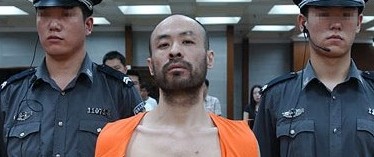 Fu Hegong
Serial killer · China · 2002
October 21, 2004 — Fu Hegong sneaked into Beixin Kindergarten in Dongcheng Dist…
5 victims
Fu Hegong
Serial killer · China · 2002
October 21, 2004 — Fu Hegong sneaked into Beixin Kindergarten in Dongcheng Dist…
5 victims
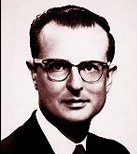 John Emil List
Mass murderer · USA · 1971
John Emil List was a devout member of the Lutheran church who taught Sunday sch…
5 victims
John Emil List
Mass murderer · USA · 1971
John Emil List was a devout member of the Lutheran church who taught Sunday sch…
5 victims
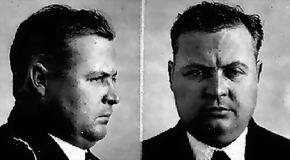 David Curtiss Stephenson
Murderer · USA · 1925
David Curtiss “Steve” Stephenson (21 August 1891 – 28 June 1966) was an America…
1 victim
David Curtiss Stephenson
Murderer · USA · 1925
David Curtiss “Steve” Stephenson (21 August 1891 – 28 June 1966) was an America…
1 victim
 Jose Angel Moreno
Murderer · USA · 1985
Jose Angel Moreno Jose Angel Moreno was sentenced to death on January 14, 1987.…
1 victim
Jose Angel Moreno
Murderer · USA · 1985
Jose Angel Moreno Jose Angel Moreno was sentenced to death on January 14, 1987.…
1 victim
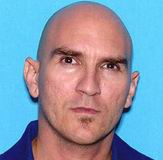 Pedro Alberto Vargas
Mass murderer · USA · 2013
Pedro Alberto Vargas carried out a shooting rampage at an apartment complex in…
6 victims
Pedro Alberto Vargas
Mass murderer · USA · 2013
Pedro Alberto Vargas carried out a shooting rampage at an apartment complex in…
6 victims
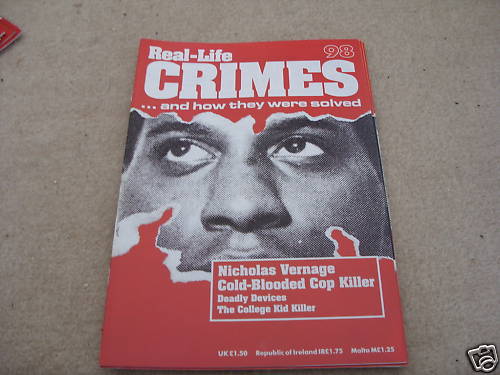 Nicholas Vernage
Murderer · Canada · 1991
Nicholas Vernage (26) murdered Sgt Alan King and also killed Lorna Bogle and Ja…
3 victims
Nicholas Vernage
Murderer · Canada · 1991
Nicholas Vernage (26) murdered Sgt Alan King and also killed Lorna Bogle and Ja…
3 victims
- Gender
- male
- Country
- USA
- Location
- Hinds County, Mississippi, USA
- Date of birth
- July 14, 1962
- Age at first offence
- 27
- Characteristics
- robbery
- Victim profile
- Bobby Joe Biggert (an off-duty policeman)
- Method of murder
- Shooting
- Date(s) of murder
- February 23, 1989
- Years active
- 1989
- Date of arrest
- —
- Status
-
Sentenced to death
Sentenced to death on June 15, 1989
Case record: Kenneth Leon Davis
Timeline
- February 23, 1989 — Kenneth Leon Davis entered Dr. Duck's Pawn Shop in Jackson, pointed a pistol at Tammy Slaton, demanded store cash, demanded the keys to Slaton's car, forced Slaton into a storeroom, tied her hands with a piece of bed sheet, confronted off-duty police officer Bobby Joe Biggert with the pistol, fired a shot that struck Biggert in the head, fled in Slaton's 1980 maroon Camaro, and Biggert died two days after the shooting.
- 1983 — Kenneth Leon Davis was convicted of two counts of burglary in Louisiana.
- 1985 — Kenneth Leon Davis was convicted of burglary in Scott County.
- 1985 — Kenneth Leon Davis was convicted of possession of a concealed firearm by a convicted felon and felony escape from Forrest County.
- 1988 — Kenneth Leon Davis was paroled in 1988.
- June 26, 1997 — The Mississippi Supreme Court granted Kenneth Leon Davis permission to pursue his petition for post-conviction relief in the trial court.
- September 11, 1997 — The Mississippi Supreme Court issued an order of clarification determining that Davis could present five specific claims of ineffective assistance of counsel in post-conviction proceedings.
- December 2001 — The Circuit Court of Hinds County held a hearing on Davis's petition for post-conviction relief.
- December 3, 2001 — The hearing on Davis's petition for post-conviction relief took place.
- July 01, 2004 — The Mississippi Supreme Court affirmed the circuit court's order denying post-conviction relief.
- 1991 — Davis's direct appeal was affirmed by this Court in 1991.
- 1996 — The United States Supreme Court denied certiorari in Davis v. Mississippi, 517 U.S. 1192, 116 S.Ct. 1684, 134 L.Ed.2d 785 (1996), and denied rehearing in Davis v. Mississippi, 518 U.S. 1039, 117 S.Ct. 7, 135 L.Ed.2d 1102 (1996).
Background
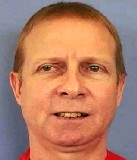
Kenneth Leon Davis was convicted of capital murder in the shooting death of Bobby Joe Biggert, an off-duty polieman, during a robbery in Jackson, Mississippi, on February 23, 1989. The Hinds County jury sentenced Davis to death.
Davis v. State, 660 So.2d 1228 (Miss.1995) affirmed the conviction and sentence. The United States Supreme Court denied certiorari, Davis v. Mississippi, 517 U.S. 1192, 116 S.Ct. 1684, 134 L.Ed.2d 785 (1996), and rehearing. Davis v. Mississippi, 518 U.S. 1039, 117 S.Ct. 7, 135 L.Ed.2d 1102 (1996).
Thereafter, Davis sought post-conviction relief by filing a petition in the Mississippi Supreme Court. The Mississippi Supreme Court granted Davis permission to file his petition for post-conviction relief in the Circuit Court of Hinds County and allowed Davis to present several specific claims of ineffective assistance of counsel; all other claims were dismissed. After a hearing, the trial judge determined that Davis had not shown any constitutional deprivation of effective assistance of counsel, and the request for post-conviction relief was denied. Davis's appeal from that order was before the Mississippi Supreme Court.
The offence
At approximately four o'clock in the afternoon on February 23, 1989, Tammy Slaton was at work at Dr. Duck's Pawn Shop in Jackson. Kenneth Davis entered the store, pointed a pistol at her, and demanded that she give him the store's cash. Davis also demanded the keys to Slaton's car which was parked outside. Slaton gave Davis approximately $400 in cash and her keys.
Davis then forced her at gunpoint into a storeroom where he tied her hands with a piece of bed sheet.
While Davis was with Slaton in the storeroom, Bobby Joe Biggert, an off-duty policeman, entered the pawnshop as a customer. Biggert found no one in the main part of the store and came into the storage area looking for assistance. Davis immediately confronted Biggert with the pistol. Shortly thereafter, Davis fired one shot from the small caliber pistol. The shot struck Biggert in the head, and Biggert fell to the ground.
Slaton asked Davis not to hurt her, and Davis told her that he was not going to hurt her. Davis fled the scene in Slaton's 1980 maroon Camaro. Slaton was able to untie her wrists and call for help. Emergency personnel rushed Biggert to the hospital but his wound proved to be fatal. Biggert died two days after the shooting.
Investigation
Law enforcement authorities immediately began searching for the maroon Camaro. The car was found in a wooded area near Lake Dockery in the Byram area. A search of the area around the location of the automobile was conducted.
Officers found a .22 caliber pistol, a box of .22 caliber ammunition, a hunting knife, a knife scabbard, a pair of faded red overalls, a denim jacket, a baseball type cap, and a hood.
One identifiable fingerprint was found on the knife. Authorities matched that fingerprint to a print of Davis's which the F.B.I. had on file.
The pistol was traced through A.T.F. records to a house burglary in Jackson which occurred the day before Biggert's shooting. After further investigation of the burglary and after determining that Davis's fingerprint was on the knife found near the stolen car, officers named Kenneth Davis as a suspect in both the house burglary and the pawn shop shooting.
Pursuant to a warrant, officers performed a search of Davis's trailer in Rankin County. Inside the trailer, officers found a white bed sheet with a floral pattern. Part of the sheet had been torn or cut away. The floral patterned sheet found in the trailer matched the piece of sheet with which Slaton's hands had been tied. Officers also found items stolen in the home burglary in Davis's trailer.
Police officers canvassed businesses in the area around the pawn shop. At trial, two employees of the Dairy Queen, located across the street from the pawn shop, testified that Davis had been in the restaurant immediately prior to the robbery. Two Dairy Queen customers also identified Davis and stated that Davis had been in the Dairy Queen shortly before the shooting. Additionally, a motorist on the street outside the pawn shop testified that he saw Davis cross the street in front of him and walk into Dr. Duck's.
Slaton's positive identification of Davis at trial as the robber and killer was described as the most damaging testimony to Davis.
Arrest and charges
Davis was convicted of capital murder. The Mississippi Supreme Court determined that the Hinds County jury sentenced him to death.
Trial
The Hinds County jury sentenced Davis to death for capital murder in the shooting death of Bobby Joe Biggert, an off-duty polieman, during a robbery in Jackson, Mississippi, on February 23, 1989.
During the sentencing phase, the State attempted to prove statutory aggravating factors. The jury found that the murder had been committed while Davis was under sentence of imprisonment and that aggravating factor was used as a basis for the penalty of death.
The jury found additional aggravating circumstances: the capital murder was committed intentionally while Davis was engaged in the commission of armed robbery or flight after committing the armed robbery, and the capital murder was committed for pecuniary gain.
Sentencing
Davis received a death sentence. The Mississippi Supreme Court later affirmed the conviction and sentence in Davis v. State, 660 So.2d 1228 (Miss.1995). The United States Supreme Court denied certiorari and rehearing in Davis v. Mississippi, 517 U.S. 1192 (1996), and Davis v. Mississippi, 518 U.S. 1039 (1996).
The sentencing phase evidence included testimony from an Assistant Director for the Louisiana Division of Probation and Parole and from a Field Officer with the Mississippi Department of Corrections.
The Assistant Director for the Louisiana Division of Probation and Parole testified that Davis was on parole in Louisiana for the two burglary convictions he had there. The Field Officer testified that Davis had been paroled in 1988, and that he was paroled after serving a portion of three consecutive sentences.
The State offered evidence that Davis had been on parole and under sentence of imprisonment at the time of Biggert's killing. The State offered proof of Davis's convictions for two counts of burglary in Louisiana in 1983, burglary in Scott County in 1985, possession of a concealed firearm by a convicted felon and felony escape from Forrest County in 1985. The State alleged that Davis was still under parole conditions for each of those five convictions and thus met the requirements for the aggravator of being under a sentence of imprisonment.
Appeals
Direct appeal
Davis's direct appeal was affirmed by the Mississippi Supreme Court in 1991 in Davis v. State, 660 So.2d 1228 (Miss.1995).
Mississippi, 517 U.S. 1192, 116 S.Ct. 1684, 134 L.Ed.2d 785 (1996), and Davis v. Mississippi, 518 U.S. 1039, 117 S.Ct. 7, 135 L.Ed.2d 1102 (1996).
Post-conviction relief appeal (ineffective assistance of counsel)
After the Mississippi Supreme Court granted Davis permission to file his petition for post-conviction relief, the circuit court held a hearing in December 2001. The circuit court denied post-conviction relief, and Davis's appeal from that denial was before the Mississippi Supreme Court.
The Mississippi Supreme Court discussed the standard for determining ineffective assistance of counsel using Strickland v. Washington, 466 U.S. 668, 686, 104 S.Ct. 2052, 80 L.Ed.2d 674 (1984), and cited cases including Stringer v. State, 454 So.2d 468, 477 (Miss.1984); Washington v. State, 620 So.2d 966 (Miss.1993); Mohr v. State, 584 So.2d 426, 430 (Miss.1991); Yarborough v. Gentry, 540 U.S. 1, 124 S.Ct. 1, 4, 157 L.Ed.2d 1 (2003); Bell v. Cone, 535 U.S. 685, 702, 122 S.Ct. 1843, 152 L.Ed.2d 914 (2002); Kimmelman v. Morrison, 477 U.S. 365, 382, 106 S.Ct. 2574, 91 L.Ed.2d 305 (1986); United States v. Cronic, 466 U.S. 648, 656, 104 S.Ct. 2039, 80 L.Ed.2d 657 (1984); Williams v. Taylor, 529 U.S. 362, 390-91, 120 S.Ct. 1495, 146 L.Ed.2d 389 (2000); State v. Pittman, 744 So.2d 781, 786 (Miss.1999); and other cases including Neal v. State, 525 So.2d 1279, 1281 (Miss.1987), and Foster v. State, 687 So.2d 1124, 1130 (Miss.1996).
Davis's claims of ineffective assistance of counsel were:
- Trial counsel was ineffective in failing to “use an F.B.I. crime lab report to demonstrate that hair belonging to someone else, not petitioner, was found on items of clothing supposedly worn by the perpetrator.”
- Trial counsel was ineffective in failing to adequately object to false evidence concerning the aggravating circumstance that “the capital offense was committed by a person under sentence of imprisonment.”
- Conflict of interest involving trial counsel and the prosecutor.
The Mississippi Supreme Court affirmed the circuit court's order denying post-conviction relief.
Outcome
The Mississippi Supreme Court found that Davis received effective assistance of counsel and that the petition for post-conviction relief was properly denied. The judgment was affirmed.
Other details
At trial and on appeal, Davis was represented by William Kirksey and Merrida Coxwell. The Mississippi Supreme Court stated that at the time of their representation, both attorneys had extensive criminal defense experience in both capital and non-capital cases.
Bobby Delaughter, Assistant District Attorney for Hinds County, prosecuted the case for the State.
Davis also presented issues regarding the trial judge's rulings during the post-conviction proceedings, including limitations on the scope of the proceedings and denial of attempts to broaden the scope, as well as denial of a continuance relating to time to prepare and present and prepare for the hearing on the petition. The Mississippi Supreme Court concluded that the trial judge did not err in declining to allow Davis to amend his petition beyond the five specific claims authorized for hearing, citing the limited remand order, and found no prejudicial error regarding discovery production and timing. The court also found no error in denying the motion for continuance.
FBI hair and fiber evidence and quotations
The FBI report stated:
“No hairs like the known hairs of the suspect ․ were found on or in specimen Q52 [the hood] ․ No hairs of value for comparison purposes were found on the Q53 cap ․ [N]o hairs were found on Q51 [the coveralls].”
During cross-examination at trial, a Jackson homicide detective testified in a series of questions and answers. The exchange included:
Q. So the hood, the baseball cap, and the pair of coveralls was submitted to the FBI? That's what this report says?
A. Yes. That's what that one says.
Q. And the request was for-for you or for the bureau to do a hair and fiber examination; is that correct? That's what these reports say; isn't it?
A. That's correct.
Q. Is it safe to say, or since you and I do this a lot, that when you make these requests, Mr. Crisco, is what they do is they take the known hair and-known hair from a defendant, examine any fibers or hairs that they get from the evidence submitted, and see if there's any matching or similar to character-characteristics? Isn't that what they do?
Q. And then if there is a match they will send you back a report saying: On known sample K1, being a hat, or whatever the item is, we find that this-this item contains hair of a similar character as that of the suspect provided as known exhibit two?
A. Yes. Yes.
Q. That's basically what they do?
A. Correct.
Q. Did you ever receive any report from the Bureau, FBI Bureau, Federal Bureau of investigation, in Washington, D.C., telling you that there were any hairs from these items that matched that of the Defendant in this case, to your knowledge?
A. To my knowledge, we did not receive a report from the FBI in regards to that information.
The Mississippi Supreme Court concluded that Davis's trial attorney adequately demonstrated to the jury that no hair found on the hood matched Davis's hair and that the failure to ask subsequent questions about other persons' hairs did not amount to ineffective assistance of counsel.
Sentencing aggravating circumstance objections
Davis's post-conviction claim argued that trial counsel failed to adequately object to false evidence concerning the aggravating circumstance that “the capital offense was committed by a person under sentence of imprisonment.”
The Mississippi Supreme Court stated that Davis's attorneys actually objected repeatedly to any use of the Forrest County sentences as support for the “under sentence of imprisonment” aggravator and raised the issue on appeal. It also stated that this Court explicitly found that the State's commenting on the escape conviction was not improper in the direct appeal and affirmed the conviction and sentence. It concluded that even if the Forrest County convictions were improperly used, the State produced sufficient evidence that Davis was under sentence of imprisonment at the time of the shooting.
The Mississippi Supreme Court also concluded that even if the aggravating circumstance related to commission while under sentence of imprisonment were discarded, it would affirm the death sentence based on the jury's findings that the killing occurred in the course of the pawn shop robbery and that the killing was done for pecuniary gain and referenced McGilberry v. State, 843 So.2d 21, 29 (Miss.2003) and Miss.Code Ann. § 99-19-105(5)(b) (Rev.2000).
Conflict of interest and quotations
The conflict of interest claim involved trial counsel William Kirksey and prosecutor Bobby Delaughter, with Davis arguing that Kirksey represented him while under a conflict of interest because Kirksey had represented Delaughter in Delaughter's divorce proceedings.
Kirksey testified at the post-conviction relief hearing and stated:
“never going to change what I do inside the rail. My loyalty is to the oath I took and to do the best I could do inside the rail for my client. And I, quite frankly, don't care who's on the other side period ․ If anything, my knowledge of Bobby Delaughter would have aided and assisted me in the defense of Kenny Davis because I anticipated what Bobby Delaughter might do.”
Judge William Coleman testified that Delaughter and Kirksey were often on opposing sides in criminal trials and that he had not observed any “pulled punches” from either lawyer, and he gave his opinion that “Mr. Kirksey wanted to win every case he walked in in the courtroom.”
Case adjudicators
The Mississippi Supreme Court opinion was issued by WALLER, Presiding Justice, for the Court. COBB, P.J., EASLEY, CARLSON, GRAVES, DICKINSON AND RANDOLPH, JJ., concur. SMITH, C.J., and DIAZ, J., did not participate.
Spotted an error, or have more information about this case?